REVIEW · LUXOR
3-Day Luxor Aswan and Abu Simbel Historical Sites Private Tour
Book on Viator →Operated by Luxortourguide · Bookable on Viator
Three days, and Egypt’s big names pass by. This private Luxor–Aswan–Abu Simbel trip handles the heavy lifting with hotel pickup and a first-class train between Luxor and Aswan, so you can focus on temples and tombs instead of logistics.
I especially like the way the Egyptologist guide turns restricted viewing areas into real learning moments. And I love how Karnak and Luxor Temple give you two different scales of the same Theban dream—Karnak’s forest of columns, then Luxor Temple’s quieter, more intimate drama.
The main consideration: entrance fees aren’t included, and that means you’ll budget for site tickets (plus extras like the optional King Tutankhamun tomb). You should also be ready for a long 8-hour Abu Simbel day with lots of driving time.
In This Review
- Key things that make this tour worth your time
- Price and Logistics: What you really get for $251.29
- A private tour that lets you breathe (a little)
- Day 1 West Bank: Valley of the Kings and Hatshepsut’s Temple
- Valley of the Kings: what you can see when guides can’t enter
- Temple of Hatshepsut: a female ruler’s bold political strategy
- Colossi of Memnon: short stop, big impact
- Karnak Temple and Luxor Temple: Thebes at two different volumes
- Karnak: start on the Avenue of Sphinx and work through time
- Luxor Temple: Ramses II, hieroglyphs, and an Alexander twist
- Day 2 Aswan: Philae Temple on an island, moved for survival
- Philae Temple: a temple that had to travel
- Unfinished Obelisk: the quarry lesson behind a cracked stone
- Aswan High Dam: Egypt’s modern landmark in the middle of ancient country
- Day 3 Abu Simbel: UNESCO relocation and the temple rules you can plan around
- What makes Abu Simbel feel mythic
- Why the guide can’t go inside (and how you still get value)
- The Egyptologist factor: where commentary actually helps
- What to pack and how to not feel wrecked by day three
- Should you book this 3-day Luxor–Aswan–Abu Simbel private tour?
- FAQ
- What’s included in the tour price?
- Are entrance fees to temples and tombs included?
- Is the Valley of the Kings included in full, including King Tut’s tomb?
- How do you visit Philae Temple?
- How long is the Abu Simbel day?
- Can I cancel for a full refund?
Key things that make this tour worth your time
- First-class train Luxor → Aswan saves you time and stress
- Egyptologist guidance despite access limits (tombs and Abu Simbel have rules)
- Philae Temple reaches you by motorboat and is set on an island
- Aswan stops feel practical and human: High Dam, Unfinished Obelisk, quarry craft
- Private pacing means your group moves together without bargaining or chasing strangers
Price and Logistics: What you really get for $251.29
At $251.29 per person, the biggest value is not just “you get to see the sights.” You’re paying for the transport system, the guide, and the time-saver pieces that are annoying to DIY.
Here’s what’s included that you’d normally spend effort (or money) assembling yourself:
- Hotel pickup and drop-off
- Air-conditioned vehicle transportation
- A first-class train ticket between Luxor and Aswan
- A boat journey to Philae Temple
- Egyptologist guide service
- Fuel surcharge, parking fees, and other service charges/taxes
What’s not included matters for budgeting. Entrance fees for each site are separate, and food/drinks aren’t covered unless specified. Gratuities are recommended, and any accommodations are by request.
If you’re visiting with limited time and you’d rather spend your energy on hieroglyphs than on ticket counters and taxi negotiations, this package is built for that.
You can also read our reviews of more private tours in Luxor
A private tour that lets you breathe (a little)
This is a private tour, meaning only your party participates. That’s not a small detail in Egypt’s major temple sites, where schedules, crowd control, and heat can turn a day into a sprint.
You also get built-in pockets of freedom. At a few stops, you’ll have time to wander after the guided portion—so you can linger at the details that catch your eye rather than feeling rushed.
One more practical note: the tour lists moderate physical fitness as a requirement. You’ll be walking around temple areas and through sites that don’t always offer smooth, shaded routes, so plan for comfortable shoes and sun protection.
Day 1 West Bank: Valley of the Kings and Hatshepsut’s Temple
Day 1 is a classic Luxor mix: the royal necropolis on the West Bank, then a signature monument of one of Egypt’s most fascinating rulers.
Valley of the Kings: what you can see when guides can’t enter
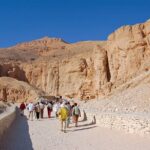
You’ll start at the Valley of the Kings, with a brief stop at the visitor center. Here’s the key practical part: guides are not permitted inside the tombs. Instead, your guide will coach you on what to look for once you’re viewing the decorated rooms from the allowed area.
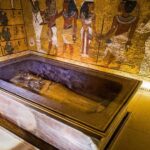
There’s also an optional decision point. If you want to visit the tomb of King Tutankhamun, there’s an additional cost you’ll pay directly. If you’re aiming for the “big one,” it’s worth planning ahead mentally so you’re not surprised once you’re there.
Temple of Hatshepsut: a female ruler’s bold political strategy
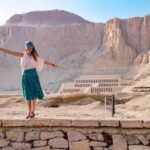
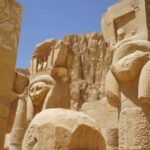
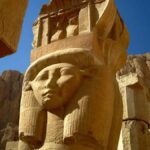
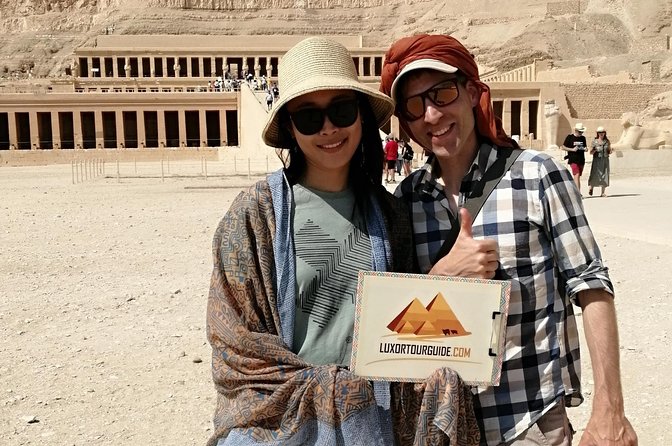
Next is the Temple of Hatshepsut, which is famous not just for its scale, but for the story behind it. Your guide explains how Queen Hatshepsut ruled as a woman while using male imagery and messaging to secure legitimacy.
The temple experience includes actual space to wander. You’ll get free time to explore the large courtyards and study the intricate hieroglyphic decorations at your own pace—perfect if you like details rather than speed.
A drawback: temple courtyards can feel exposed. If you’re sensitive to heat, go slow and use any shade breaks your guide recommends.
You can also read our reviews of more historical tours in Luxor


Colossi of Memnon: short stop, big impact
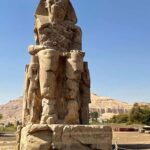
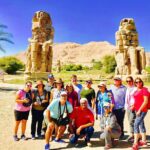
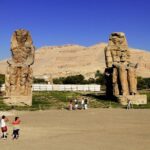
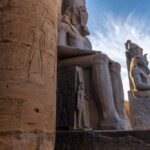
Then you’ll visit the Colossi of Memnon, two massive statues that mark the site of Amenhotep III’s funerary temple. This one is brief, but it works because the statues are visually strong even with minimal explanation.
It’s also a good breather between heavier temple time.
Karnak Temple and Luxor Temple: Thebes at two different volumes
Day 1 continues with Karnak first, then Luxor Temple. Together they show how the same civilization built monumental power both on an epic scale and with carefully designed sacred spaces.
Karnak: start on the Avenue of Sphinx and work through time
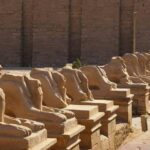
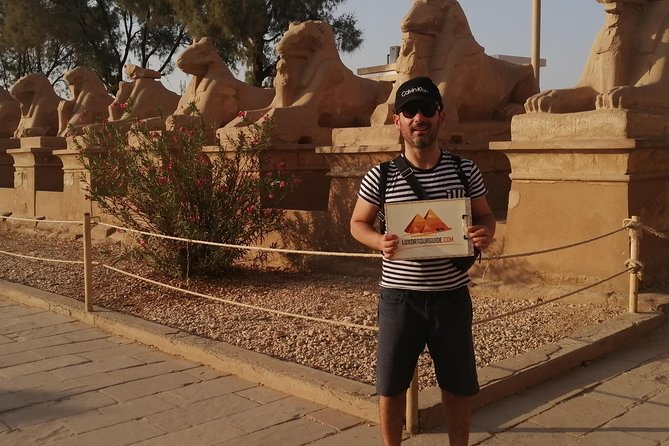
At Karnak, you’ll walk along the Avenue of Sphinx to enter the complex. Your guide explains how the massive facade was constructed and how different pharaohs added their own marks as the temple expanded over centuries.
Karnak rewards patience. As you move deeper, you really do feel like you’re traveling back through thousands of years, with the oldest ruins dating back more than 3,000 years.
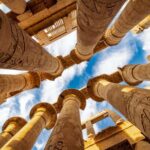
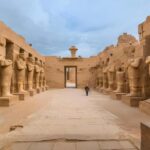
A highlight for many people is the transition into the Great Court and the Great Hypostyle Hall. You’ll see 134 columns rising like an ancient forest, which is the kind of sight where your brain stops trying to “read” it and starts just absorbing.
After your guided time, you’ll have additional free time to explore.
Luxor Temple: Ramses II, hieroglyphs, and an Alexander twist
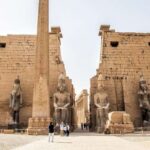
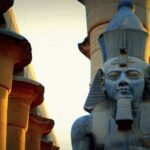
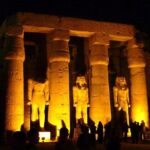
Luxor Temple is the East Bank counterpart, and it has a different mood. It’s dominated by statues associated with Ramses II, and it’s survived Nile floods, invasions, and centuries of weather.
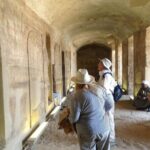
Your guide helps you understand the inner walls and columns decorated with hieroglyphics. There’s also an intriguing historical thread: you’ll hear how Alexander the Great wrote himself into Luxor Temple’s history.
Luxor Temple also includes the story of one of the original obelisk pair—one of which now stands in Paris at Place de la Concorde.
If Karnak is the big roar, Luxor Temple is the steady conversation.
Day 2 Aswan: Philae Temple on an island, moved for survival
Day 2 shifts from Luxor’s temple world to Aswan’s mix of ancient belief and modern engineering.
Philae Temple: a temple that had to travel
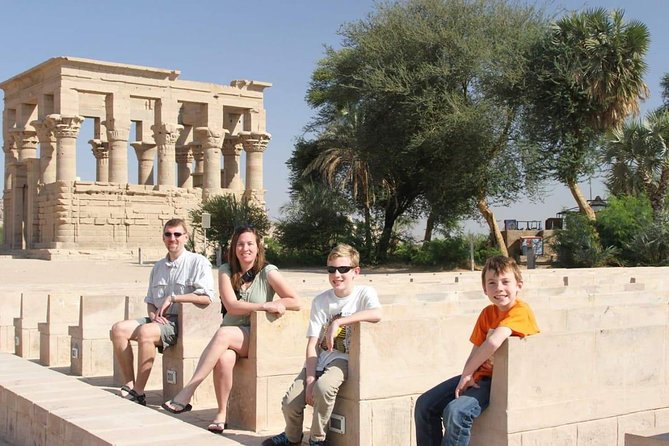
You’ll tour Philae Temple with a walking component on-site. The temple was carefully moved about 500 meters from its original location when the High Dam caused surrounding Nile waters to rise.
You’ll reach the island by a short motorboat ride, which is more than a fun transfer. It sets the experience up: you’re arriving at a sanctified place that’s been relocated, not “freshly found.” Your guide walks you through key areas dedicated to Isis, including shrines tied to the myth of Isis and Osiris.
After the guided segment, you’ll get free time to explore on your own. If you like quiet looking-time, Philae is a good place to slow down.
Unfinished Obelisk: the quarry lesson behind a cracked stone
After Philae, you head to the Unfinished Obelisk in Aswan’s granite quarries. This is one of those stops that feels practical—in a good way—because it shows how ancient Egyptians worked with stone and why some projects didn’t finish.
Your guide explains how a 1-tonne obelisk was carved from red granite, and why it was abandoned after a crack appeared during hewing.
It’s also a reminder that history isn’t only completed monuments. Sometimes it’s the evidence of the process—and the stoppage—right there in the rock.
Aswan High Dam: Egypt’s modern landmark in the middle of ancient country
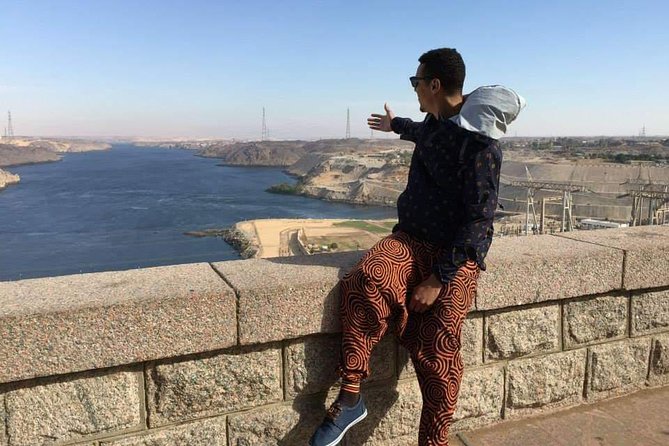
Then you visit the Aswan High Dam. Your guide frames it as a modern achievement that took 10 years to build (1960 to 1970), and you’ll see the scale of Lake Nasser (your tour describes it as the second largest artificial lake in the world).
You’ll also cross over the friendship emblem. Even if you’re more drawn to ancient Egypt, this stop adds a useful layer: it explains why so many temples and sites had to be reconsidered in the 20th century.
Day 3 Abu Simbel: UNESCO relocation and the temple rules you can plan around
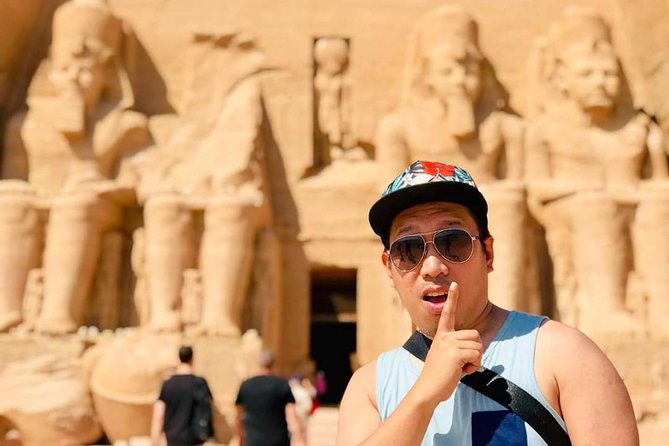
Abu Simbel is the reason many people say yes to this three-day run. You’ll travel by vehicle from Aswan, and the visit is guided by an Egyptologist.
The day is listed as long—about 8 hours—so you’ll want an early start vibe in your head, plus water and snacks if you can arrange them on your own (food is not included).
What makes Abu Simbel feel mythic
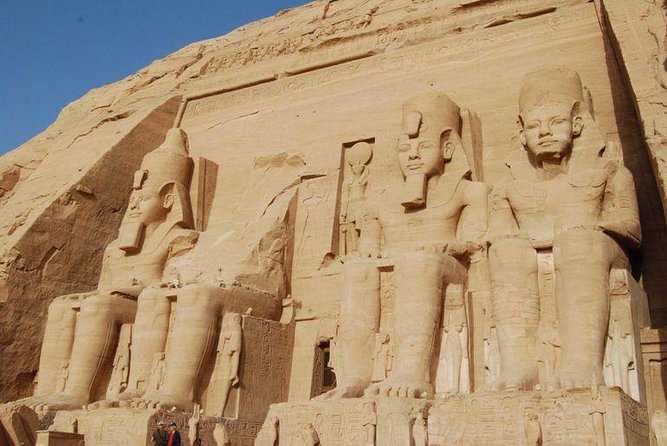
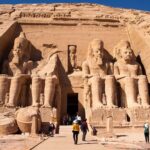
When you arrive, you’ll see the rock-hewn pharaoh figures—described as four rock-hewn pharaohs at the complex. The guide also covers the big story: UNESCO-led relocation of the entire cliff face to higher ground, and the fact that the temples were discovered by accident in 1813.
Why the guide can’t go inside (and how you still get value)
There’s a rule at Abu Simbel. Guides aren’t permitted inside the Great Temple of Ramses II or the smaller Temple of Hathor.
So, you don’t lose the learning part. Instead, your guide uses photos and illustrations to walk you through what you would see inside, so you can connect shapes, carvings, and layout even without stepping into the restricted areas.
It’s a practical approach, and it works if you’re the type who likes understanding what you’re looking at, not just taking quick photos.
The Egyptologist factor: where commentary actually helps
This tour isn’t just a vehicle-and-ticket plan. The guide is part of what makes the sites click.
You can feel that in places where access is limited:
- At the Valley of the Kings, the guide can’t enter tombs, but they still tell you what details to watch for in decorated rooms.
- At Abu Simbel, the guide can’t enter the temples, but uses images and explanations to help you understand what’s inside.
- At places like Karnak and Luxor Temple, the guide helps you connect hieroglyphic decoration to the people and ideas behind it.
Also, the service is run under Luxortourguide, and the names Mohamed (as coordinator/operator) and Khaled (as a guide) come up in the practical feedback shared for this experience. If you happen to have either of them, that’s usually a good sign for communication and on-the-spot clarity.
What to pack and how to not feel wrecked by day three
This is a temple-heavy, sun-heavy itinerary. That doesn’t mean you can’t enjoy it. It means you should prepare like you’re going to walk and stand in bright places for hours.
I’d plan for:
- Comfortable shoes for uneven stone and long temple walks
- Sun protection (hat, sunglasses, sunscreen)
- A small bag you don’t mind carrying through sites
- Money set aside for entrance tickets and the optional King Tutankhamun add-on if you choose it
- A calm mindset for the long drive day to Abu Simbel
Since food and drinks aren’t included, decide in advance how you want to handle lunch breaks—either using your own choices or following whatever meal timing your driver/guide works with.
Should you book this 3-day Luxor–Aswan–Abu Simbel private tour?
Book it if:
- You want to see Luxor, Aswan, and Abu Simbel in a tight window without sorting trains and transfers
- You value an Egyptologist guide who explains what you’re looking at, especially when access is restricted
- You prefer private pacing over crowded group chaos
You might think twice if:
- You’re on a shoestring and entrance fees are a deal-breaker
- You hate long travel days and you’d rather spend more time in fewer places
- You’d rather manage everything independently, including train timing and site entry logistics
If your priority is maximum value per day—and you want the key highlights handled for you—this is a strong pick. You’re not just collecting stamps. You’re getting the kind of guidance that helps these monuments make sense fast.
FAQ
What’s included in the tour price?
The tour includes a qualified Egyptologist guide, hotel pickup and drop-off, air-conditioned vehicle transport, first-class train tickets from Luxor to Aswan, and a boat journey to Philae Temple. Parking fees, fuel surcharge, driver/service charges, and taxes are also included.
Are entrance fees to temples and tombs included?
No. Entrance tickets for all sites are not included, and you’ll need to pay for them separately.
Is the Valley of the Kings included in full, including King Tut’s tomb?
Valley of the Kings is included, but your visit includes a brief stop at the visitor center and viewing with guidance where guides are not permitted inside tombs. Visiting the tomb of King Tutankhamun is an extra cost paid directly.
How do you visit Philae Temple?
You’ll take a short motorboat ride to the island where Philae Temple is located, then enjoy a walking tour with your guide and time to explore afterward.
How long is the Abu Simbel day?
Abu Simbel is a long day on the schedule, listed at about 8 hours.
Can I cancel for a full refund?
Yes. The tour offers free cancellation up to 24 hours in advance for a full refund. If you cancel less than 24 hours before the start time, the amount paid is not refunded.