REVIEW · LUXOR
Luxor Day Tour: Valley of the Kings, Queens, Habu and Hatshepsut
Book on Viator →Operated by Bastet Travel · Bookable on Viator
West Bank tombs, temple light, and real Egyptian stories. This one-day Luxor West Bank tour strings together the big sights you came for, with an Egyptologist guide and hotel pickup to keep the day moving. You’ll cover the Valley of the Kings and Valley of the Queens, plus key temples like Hatshepsut and Medinet Habu.
What I like most is the focused route. I really appreciate the chance to see several standout royal tombs in the Valley of the Kings, then connect the story to Hatshepsut and the quieter, more human scale of the Valley of the Queens. I also like that the day is built around an air-conditioned private vehicle and bottled water, so you’re not baking your way between sites.
The main drawback to plan around is time in each place. Tomb visits are fairly short (often around 20 minutes), and if you want Nefertari’s tomb in the Valley of the Queens, there’s an extra charge.
In This Review
- Key highlights at a glance
- Luxor West Bank in One Day: what you really get
- Pickup, comfort, and the 6–7 hour pacing that matters
- Valley of the Kings: tomb focus in the Valley of the Kings
- KV 11 Ramses III: painted ritual scenes and foreign tributes
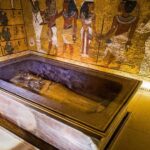
- KV 9 Ramses IX: ceiling symbolism and a large sarcophagus
- KV 8 Merneptah: Howard Carter’s discovery and the single-axis plan
- Valley of the Kings practical tip
- Hatshepsut at Deir el-Bahari: Queen, temple, and a lot of stairs
- Colossi of Memnon: two statues, one former funerary temple
- Valley of the Queens: fewer “wives of pharaohs” and more royal family variety
- Why this valley feels different than the Kings
- Medinet Habu: Ramesses III’s mortuary temple complex and the temple layers inside
- What you’ll notice inside Habu Temple
- Price and value: is $42.75 worth it for this packed West Bank route?
- What to bring (so the short tomb times feel worth it)
- Who this tour suits best
- Should you book this Luxor West Bank tour?
- FAQ
- How long is the Luxor West Bank tour?
- Is pickup from my Luxor hotel included?
- What sites are visited during the day?
- Are entry fees included?
- Is lunch included?
- Do I get time to explore at Hatshepsut?
- Is Nefertari’s tomb in the Valley of the Queens included?
- Is the tour private?
- Can I cancel for a refund?
Key highlights at a glance
- Hotel pickup and drop-off in Luxor, plus a private air-conditioned vehicle
- Valley of the Kings with specific tomb stops like Ramses III (KV 11) and Merneptah (KV 8)
- Hatshepsut at Deir el-Bahari with guided context and time to wander
- Valley of the Queens access to a limited number of open tombs, including Nefertari with an extra ticket
- Medinet Habu (Mortuary Temple complex) tied closely to Ramesses III, with other temple areas inside
Luxor West Bank in One Day: what you really get
This tour works because it’s not just a checklist. It’s a single route through the West Bank that helps you connect cause-and-effect in ancient Egyptian life: kings ruled, queens mattered, and temples were designed to keep the story going after death. With a professional Egyptologist leading the way, you’re less likely to walk past carvings and wonder what you’re looking at.
I also like how the day balances big monuments with human details. You get monumental places like Hatshepsut’s temple steps and the Colossi of Memnon, then you switch to tombs where painted scenes and ritual texts are the point. If you’re the type who enjoys understanding the “why,” this itinerary is built for you.
One more plus: past departures have highlighted guides like Amro and Mr. Haney, with lively explanations and enthusiasm that makes the sites feel less distant. You can’t control who you’ll get, but it’s a good sign when multiple guides are praised for turning stones into stories.
You can also read our reviews of more tours and experiences in Luxor.

Pickup, comfort, and the 6–7 hour pacing that matters
This is a roughly 6 to 7 hour day, and the comfort piece is real. The tour includes hotel pickup and drop-off in Luxor, and transport is in a private air-conditioned vehicle. For the West Bank, that’s a practical win: you spend less energy on logistics and more on looking.
It’s also a private tour, meaning it’s only your group. That usually makes it easier to ask questions when something catches your eye, like why one tomb’s layout differs from another.
One timing note: each stop doesn’t mean a long, slow museum-style visit. You’ll move. Think “smart sprint with stops,” not “all day in one valley.” If you want long hours in one tomb, you’ll likely feel the clock.
Valley of the Kings: tomb focus in the Valley of the Kings
The Valley of the Kings is where the New Kingdom pharaohs and privileged nobles were buried, carved deep into rock. This tour calls out that the valley contains 63 tombs and chambers, decorated with colorful scenes tied to myth, belief, and funerary ritual. The big idea here is simple: these tombs weren’t made for visitors. They were made for an afterlife journey, packed with spells, images, and directions.
Instead of trying to see everything, the tour selects several tombs for you to understand the range of royal art and tomb design. That’s why I think this plan works, especially if it’s your first West Bank day.
KV 11 Ramses III: painted ritual scenes and foreign tributes
Your day starts in the Valley of the Kings with time to settle in, then you move to the tomb of Ramses III, designated KV 11. This is a big draw because the decorations are described as colorful painted sunken reliefs. You’ll see traditional ritual texts such as the Litany of Ra and the Book of Gates, plus scenes of Ramses before the gods.
What makes KV 11 feel extra alive is the mix. Alongside the sacred material, there are more unusual secular scenes in side rooms. These include foreign tributes—like pottery imported from the Aegean—plus royal armor and boats. One of the most famous alternative themes is the blind harpists, tied to an alternate name for the tomb: Tomb of the Harpers.
Even with only about 20 minutes, this is the kind of tomb where you’ll learn what to look for. If you care about how art served belief, KV 11 is a strong starting point.
KV 9 Ramses IX: ceiling symbolism and a large sarcophagus
Next is the tomb of King Ramesses IX, with a visit around 20 minutes. The tomb is tied to the Twentieth Dynasty, and its background is the kind of detail your guide can turn into a clearer picture of the family and succession in royal Egypt.
In terms of what you’ll see, the ceiling above the sarcophagi includes the goddess Nut stretching across the space. The sarcophagus is noted as one of the largest in the valley, and while some paintings have deteriorated, the amount of detail still comes through.
This stop helps you notice the differences between royal tombs, not just the similarities. Some places emphasize specific ritual images. Others show the afterlife in visual “architecture.” It’s a good way to train your eye.
KV 8 Merneptah: Howard Carter’s discovery and the single-axis plan
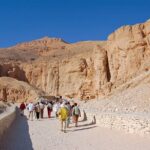
Then you visit Tomb of Merneptah, listed as KV 8. This tomb has a lot going for it right away: it was discovered by Howard Carter in 1903. The design details are also part of the story, because Merneptah’s tomb shifts how corridors and rooms are handled.
You’ll hear about a material decrease in lateral rooms and a dramatic increase in corridor and room heights. The entrance is also described as wider than earlier tombs, and the tomb is built on a single axis, avoiding the jogged axis used since the time of Horemheb.
If you like architecture, KV 8 is a rewarding stop. It gives you a tangible example of how tomb design evolved, not just how art looked.
Valley of the Kings practical tip
Plan for the fact that tomb interiors can be dim. If you struggle with “quick orientation,” ask your guide to point out the key scenes early in your visit. That makes the short time much more satisfying.
Hatshepsut at Deir el-Bahari: Queen, temple, and a lot of stairs
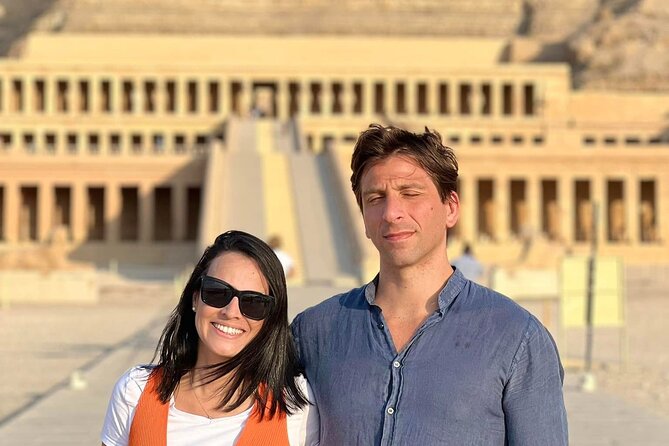
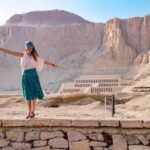
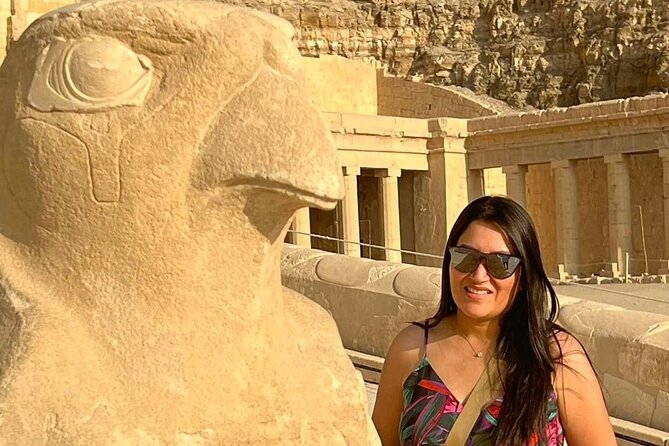
From the tomb darkness, you switch to daylight at the Temple of Hatshepsut at Deir el-Bahari. This is one of the West Bank’s most striking monuments, and it fits the theme of the day: power, legitimacy, and the long-term work of memory.
Your guide introduces the history and the story of Queen Hatshepsut, including the detail that she posed as a male to gain the throne. That’s the kind of “backstory” that changes how you look at the carvings and the layout.
You also get time to explore on your own. There’s a full 1 hour here, with free time to wander the large courtyards and admire the intricate hieroglyphic decorations. This is the moment in the tour where I recommend slowing down just a bit, because you’re stepping out of tomb symbolism and into temple design built for visibility.
Colossi of Memnon: two statues, one former funerary temple
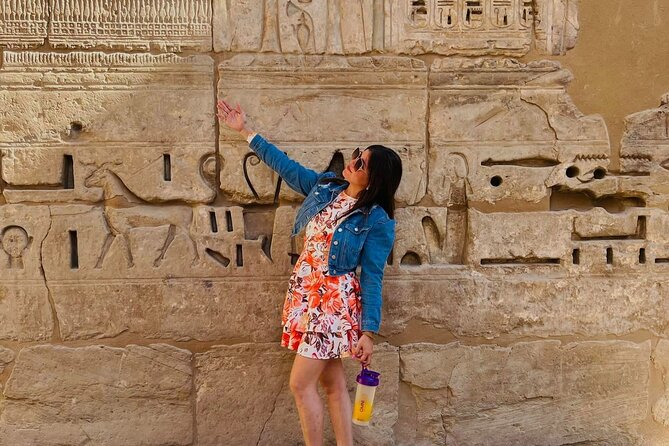
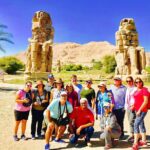
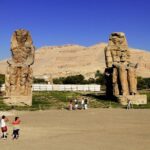
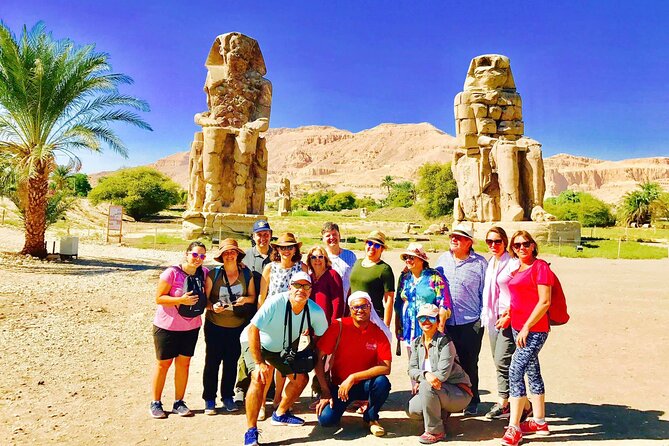
Next up are the Colossi of Memnon, which mark the site of the funerary temple of Amenhotep III. The tour keeps it quick (around 20 minutes), but the pay-off is clear: these are two giant statues, and they’re all that remain of the ancient complex.
I like this stop because it gives your brain a chance to reset. You go from walking and reading inside tombs to seeing monumental scale in open air. Even when it’s just a short stop, it helps you understand why the West Bank feels so dramatic in real life.
If you’re getting heat or tired legs, this is also a good place to pause, drink water, and check your pace before the next valley.
Valley of the Queens: fewer “wives of pharaohs” and more royal family variety
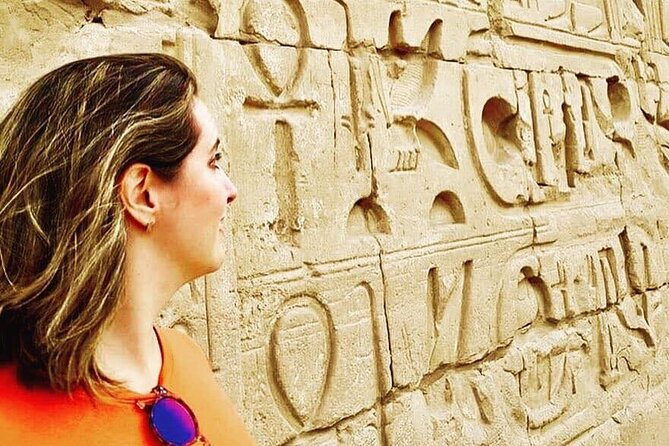
Then the tour heads to the Valley of the Queens, which contains 110 tombs and chambers. Despite the name, this valley isn’t only for queens’ burials. The rugged slopes also held the burials of children and some high officials.
This tour makes the reality manageable by explaining that only a handful of graves are open at a time. You’ll focus on four open tombs, named as:
- Nefertari
- Titi
- Khaemwaset
- Amenherkhepshef
The key caution is financial: Nefertari’s tomb has an extra charge. If Nefertari is a must for you, plan for that cost early so you don’t end up disappointed at the gate.
Why this valley feels different than the Kings
I find the Valley of the Kings tends to feel like a lineup of power. The Valley of the Queens feels like family and court life, more varied in who’s buried there. Even if your tomb time is short, you can still come away with a stronger sense of the broader royal world, not just the reign of one king.
Medinet Habu: Ramesses III’s mortuary temple complex and the temple layers inside

Your final major stop is Medinet Habu, also spelled Medinat Habu in the tour description. It’s an archaeological area near the foot of the Theban Hills on the west bank, opposite the modern city of Luxor.
This place is associated almost exclusively with the Mortuary Temple of Ramesses III. The temple is described as about 150 meters long, and it’s noted as having an orthodox design that resembles the mortuary temple of Ramesses II, often referred to as the Ramesseum.
What you’ll notice inside Habu Temple
The tour also mentions you can visit other temples inside the complex, including the Temple of Amun from the 18th Dynasty. That one is described as built by Queen Hatshepsut and Thutmose III, and it notes that it has undergone alterations and modifications over time.
That “layers over time” piece is a big part of why Medinet Habu is a smart ending. After spending your day moving through tomb design and queens’ burials, you finish by seeing how temple complexes expand and change across reigns.
Price and value: is $42.75 worth it for this packed West Bank route?
At $42.75 per person, this tour is positioned as budget-friendly for a whole West Bank circuit. The value isn’t just in the number of stops. It’s in what’s included alongside the sights: hotel pickup and drop-off, private air-conditioned transport, a professional Egyptologist, and bottled water.
Here’s the practical part to check before you book: entry fees and lunch are optional in the package setup. The stop list labels admission as ticket free at each point, but the tour details also say entry fees are included only if chosen while booking. So before you pay, confirm what’s covered in your selection. If entry fees aren’t included, you may spend extra at the sites anyway.
If you do include entry fees, then the day becomes a lot more predictable. That matters on the West Bank, where deciding at the last minute can slow you down and reduce the time you spend looking.
Lunch being optional is also worth thinking about. If you don’t add it, you’ll want to be comfortable purchasing something on your own or planning for a lighter day of snacks.
What to bring (so the short tomb times feel worth it)
This tour moves fast, and tombs are tight. You’ll feel the day more than you’d feel it on a single-site tour. I’d plan around a few simple things:
- Comfortable walking shoes for rocky paths and uneven ground
- A hat and sunscreen, since you’ll be out in the open between tombs
- A light layer for cooler tomb interiors
- Your patience for short visits, then use your guide to point you to the best scenes early
You don’t need to become an Egyptology student overnight. But you’ll enjoy the day more if you come prepared to ask questions like what each section of a tomb is trying to accomplish.
Who this tour suits best
This is a strong fit if:
- You want a first-timer-friendly West Bank day that covers the big names
- You like guided storytelling, not just photos and walking
- You prefer private comfort and hate spending time figuring out transport
It may not be ideal if:
- You want to linger for long periods in one tomb
- You’re extremely sensitive to stairs or uneven ground
- Nefertari’s tomb is your one must-see, and you’d rather not deal with the extra charge
Should you book this Luxor West Bank tour?
I’d book it if your goal is to see the Valley of the Kings, the Valley of the Queens, Hatshepsut, and Medinet Habu in one efficient day with an Egyptologist and air-conditioned pickup. The price is fair for a route like this, and the structure makes it easier to understand what you’re seeing instead of wandering in the dark.
Before you click confirm, do one smart check: verify whether entry fees are actually included in your booking choice and whether you want Nefertari’s tomb in the Valley of the Queens, since that’s the one extra-cost item called out in the itinerary. If those two points line up with your expectations, this is a very solid West Bank sampler with real meaning behind the stones.
FAQ
How long is the Luxor West Bank tour?
It runs about 6 to 7 hours.
Is pickup from my Luxor hotel included?
Yes. Hotel pickup and drop-off in Luxor are included.
What sites are visited during the day?
You’ll visit the Valley of the Kings, the Valley of the Queens, the Temple of Hatshepsut at Deir el-Bahari, the Colossi of Memnon, and Medinet Habu.
Are entry fees included?
Entry fees are listed as optional and included only if chosen while booking.
Is lunch included?
Lunch is optional. It’s included only if you select it while booking.
Do I get time to explore at Hatshepsut?
Yes. The Hatshepsut temple stop includes free time to wander the courtyards at your leisure (1 hour).
Is Nefertari’s tomb in the Valley of the Queens included?
The tour states that Nefertari’s tomb has an extra charge to visit. The itinerary also includes other open tombs in the Valley of the Queens.
Is the tour private?
Yes. Only your group participates.
Can I cancel for a refund?
Cancellation is free. You can cancel up to 24 hours in advance for a full refund. If you cancel less than 24 hours before the start time, the amount paid is not refunded.