REVIEW · LUXOR
Luxor: Valley of the Kings and Hatshepsut Temple Day Tour
Book on GetYourGuide →Operated by Nice Tours · Bookable on GetYourGuide
Nothing beats Luxor’s West Bank for wow-per-hour. This day tour strings together three of the region’s most famous stops, with a guided flow that helps you understand what you’re seeing before you see it. I like the tight, 5-hour format (so you don’t waste a day to cover the basics), and I really like how the best guides manage timing so you spend more time looking and less time waiting. One thing to consider: it’s a group tour, so your exact tomb choices and crowd level can shift based on the day and your guide’s plan.
If you care about context, this is a strong pick. I like that your guide explains the meaning behind carvings and locations as you move between sites, and the included lunch makes the half-day feel complete instead of piecemeal. The only real drawback is that inside the tombs, guides can’t always walk right in with you—so come ready to listen hard outdoors and use the guide’s explanations for what you’re about to see.
In This Review
- Key highlights you’ll actually feel
- West Bank in 5 hours: why this tour works
- Hotel pickup, group flow, and how timing affects everything
- Valley of the Kings: what you’ll see and how the tomb visit really feels
- If you want more tomb time, plan for upgrades
- What to aim for
- Deir el-Bahari and Hatshepsut: terraces that turn into a landscape
- A practical way to enjoy it
- Colossi of Memnon: finishing with scale and the Amenhotep III connection
- Lunch at a local restaurant: what’s included and what you’ll pay for
- Guides and language options: how to get the day you want
- Price and value: is $50 per person a smart deal?
- Who this tour suits (and who should consider a different plan)
- Should you book this West Bank day tour?
- FAQ
- What stops are included on this Luxor West Bank tour?
- How long is the tour?
- Is hotel pickup and drop-off included?
- Is lunch included?
- Are entrance fees included?
- What language guides are available?
- Does the tour skip the ticket line?
- Is free cancellation available?
- Can I reserve without paying immediately?
Key highlights you’ll actually feel
- West Bank route that hits the classics: Valley of the Kings, Hatshepsut at Deir el-Bahari, and the Colossi of Memnon
- Timing that can reduce crowd pressure—several guides are praised for scheduling around the busiest hours
- Clear guidance before tombs: you get explanations tied to the scenes you’ll find inside
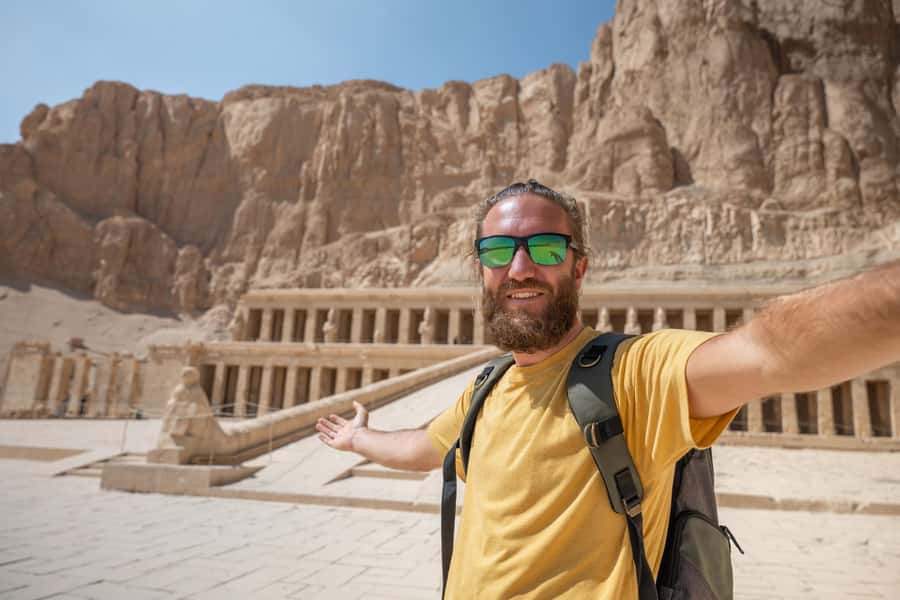
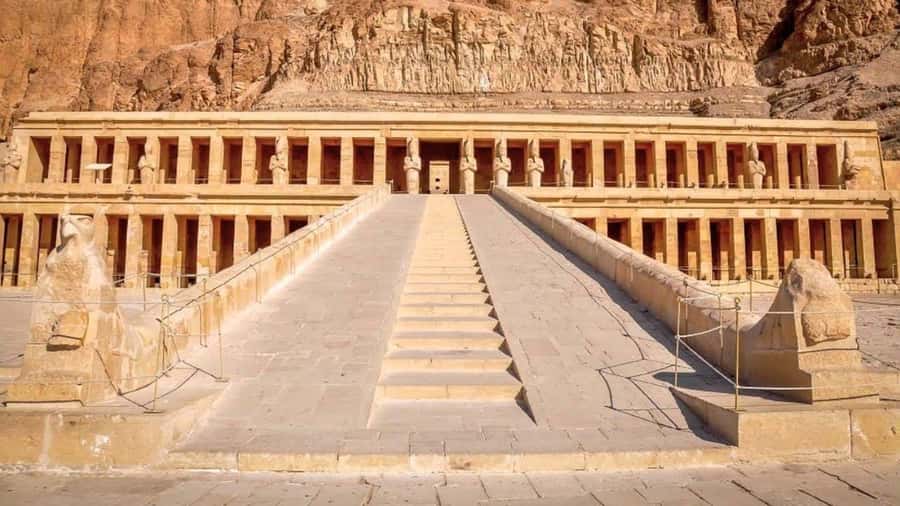
- Terraces at Deir el-Bahari: the architecture rises from desert floor to cliffs in a way photos never fully capture
- Lunch included in the tour price at a local restaurant (drinks may cost extra)
- Skip the ticket line so you lose less time to waiting
West Bank in 5 hours: why this tour works
Luxor’s West Bank can feel like a history overload—in a good way—because everything is layered: kings, queens, temples, and tombs built to last. The smartest way to do it is with a plan that gives you both the big picture and enough time on-site.
That’s what I like about this format. You’re not bouncing all day. You’re hitting the Valley of the Kings first, then moving to Deir el-Bahari for Hatshepsut, and finishing at the Colossi of Memnon with views tied to Amenhotep III’s mortuary complex. In about 5 hours, you get the main story arc of the West Bank: rule from life, then the “forever” part in stone.
For people who are short on time (or who don’t want to spend money on a full private day), it’s also easier to keep your energy up. Walking in Luxor is no joke under the sun, and a focused route helps you avoid the tired, late-day scramble.
You can also read our reviews of more tours and experiences in Luxor.
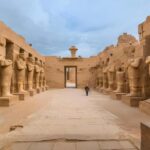

Hotel pickup, group flow, and how timing affects everything
The day starts with hotel pickup in Luxor and a group that moves together. You’ll be guided through the West Bank by an English-speaking host, and the tour includes transport between stops.
The real win is how many guides are praised for timing. On the best days, you feel like you’re stepping into the sites when they’re still calm enough to breathe—especially at Deir el-Bahari. Guides like Asma and Alaa Hassan are repeatedly noted for scheduling to reduce crowds and keeping the day running on time.
Group tours also mean you get a built-in pace. The guide keeps you from wandering too long into tangents and helps you hit the areas that matter most. And because the tour includes skip-the-ticket-line, you spend less time staring at a gate and more time in the monuments themselves.
What I’d watch for: wear sun protection and keep water handy. Even with a good schedule, it’s still Egypt heat, and the West Bank involves walking on uneven surfaces around the tomb and temple entrances.
Valley of the Kings: what you’ll see and how the tomb visit really feels
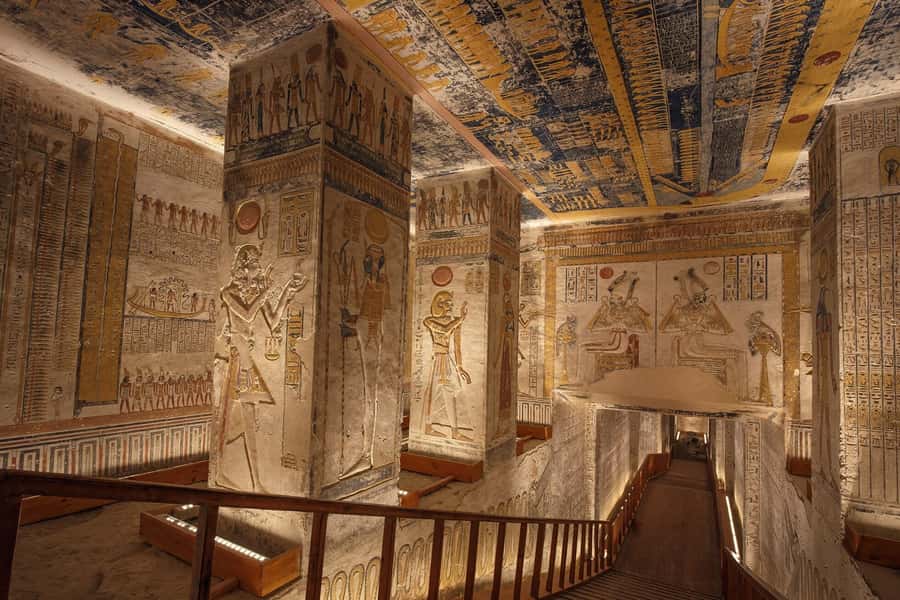
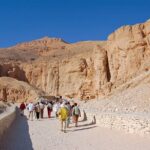
The Valley of the Kings—also called the Valley of the Gates of the Kings—is where Luxor turns from impressive into unforgettable. It’s not just about one tomb. It’s the whole idea: rulers built secret worlds underground, then filled the walls with scenes meant to guide, protect, and power the afterlife.
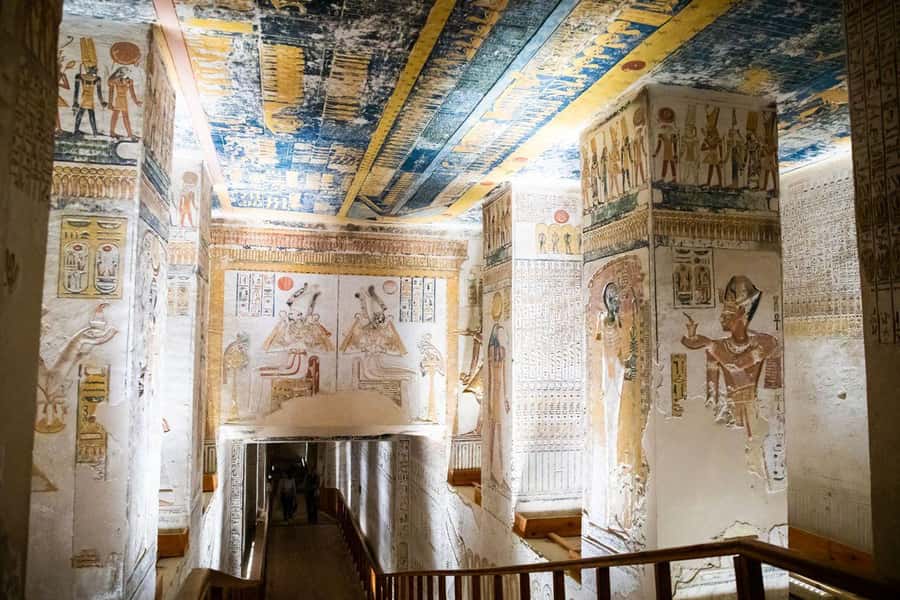
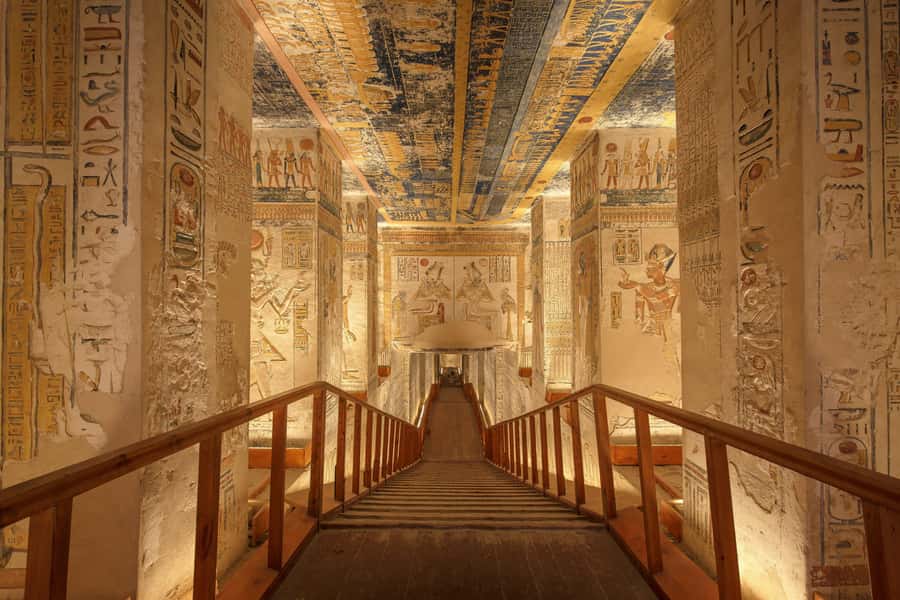
In this tour, you go directly to the Valley and explore the tomb area with your guide’s context. Here’s the practical thing to know: your guide typically can’t go into the tombs with you the way you might expect. So the best guides prepare you with explanations tied to what you’ll see—sometimes even showing photos or describing carvings so the interior doesn’t feel like random darkness.
When you’re inside, you’ll likely notice how the walls work as storytelling. Even if hieroglyphs are hard to read, the layout and repeated motifs make more sense when the guide has given you a roadmap beforehand.
If you want more tomb time, plan for upgrades
A big theme in real tours here is tomb selection. A standard ticket typically allows three tombs, and an option for more exists through add-on tombs (often including higher-interest choices like Seti I). Some guides are praised for handling this smoothly so you can maximize what you care about without turning the day into a stressful negotiation.
If tomb interiors are a priority for you, tell your guide early what you want. The difference between seeing three tombs quickly and seeing the right three for your interests can be huge.
What to aim for
- Spend your first tomb absorbing the general layout and style.
- Then use the next tombs to compare themes, scenes, and artistic choices.
- Keep expectations realistic: tomb interiors are cool and dim, but space can be tight and lighting can be uneven.
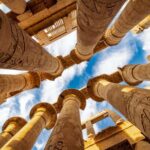

Deir el-Bahari and Hatshepsut: terraces that turn into a landscape
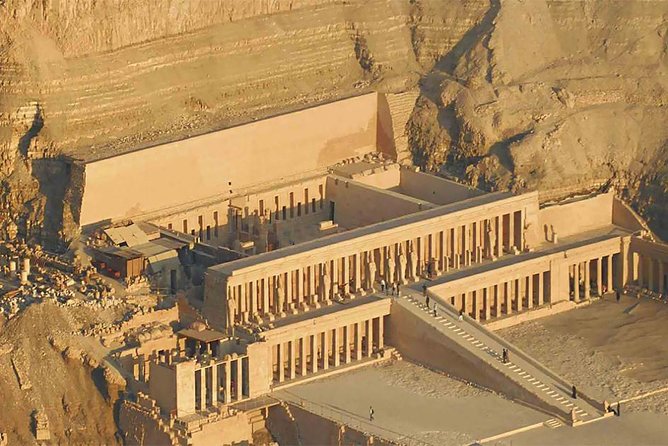
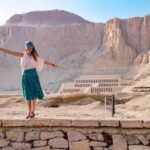
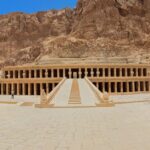
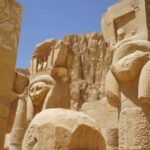
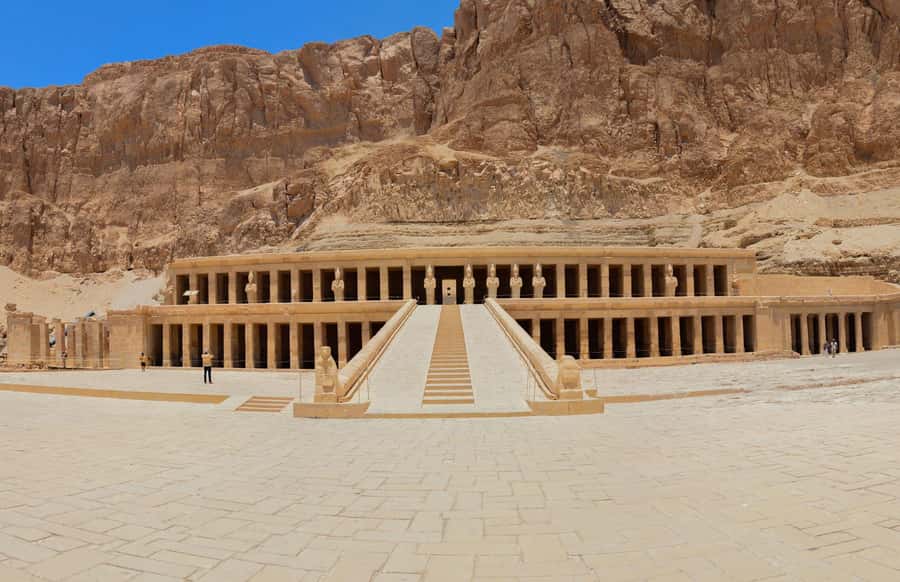
Hatshepsut’s mortuary temple at Deir el-Bahari is often the place people remember most. The famous part is the architecture: three massive terraces rising from the desert floor up into the cliffs. It feels staged, like the temple was designed to “work” from different angles and heights as the light changes.
Your guide brings you through the site and explains why it mattered—Hatshepsut’s role, the symbolism behind the design, and how the temple fits into the West Bank’s broader story of kingship and eternity. This is one of the stops where crowd management matters, because the best photos and the best feeling both come when you can look without constant jostling.
Guides like Kelly’s experience with Asma highlight what you hope for: a schedule that keeps the temple relatively comfortable. And several guides—Alaa Hassan in particular—are praised for balancing guided explanation with free time so you can take pictures and explore at your own pace.
A practical way to enjoy it
At Deir el-Bahari, don’t just look straight ahead. Turn slowly as you move upward. The terrace geometry creates multiple views of the cliffs and temple walls, and that layered perspective is what makes the place feel so deliberate.
Also, expect stairs and walkways. Comfortable shoes help more than you think, because the best vantage points come from moving around.
Colossi of Memnon: finishing with scale and the Amenhotep III connection
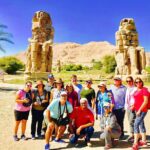
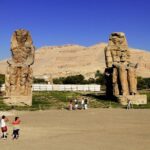
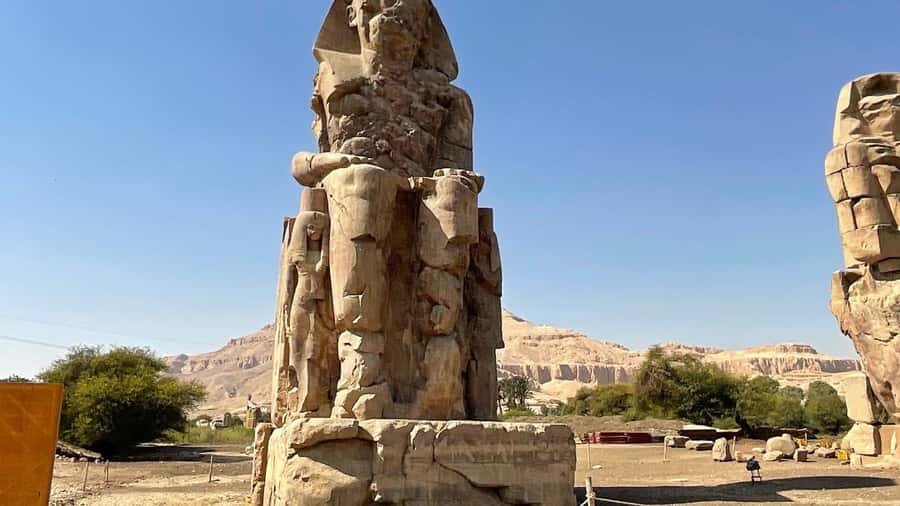
After Hatshepsut, you move to the Colossi of Memnon, where you’ll also connect the area to the mortuary temple of Amenhotep III. Even if you’ve seen pictures, standing near these giant statues changes the scale. They’re not just objects. They’re anchors—big enough to make the surrounding temple world feel like a whole system.
This stop is shorter than the Valley or Deir el-Bahari, but it plays a useful role: it broadens the story from Hatshepsut’s temple into the wider dynasty landscape. Your guide connects the dots so you’re not just collecting monuments. You’re building a mental map of how the West Bank’s rulers left their mark.
If you’re into photography, this is also a good place to slow down. The statues and the setting give you angles that feel dramatic even without perfect lighting.
Lunch at a local restaurant: what’s included and what you’ll pay for
Lunch is included, and it’s served at a local restaurant. Many experiences describe it as a buffet with a choice of dishes. This is usually one of the best parts of group days because you get a proper break instead of a grab-and-go situation.
One detail to plan for: drinks may cost extra. Some experiences explicitly call out paying for drinks at lunch, so don’t assume everything is covered beyond the meal itself.
The setting can be part of the value too. A few guides are praised for taking guests to restaurants with pleasant views, which helps the lunch feel like more than a pause button.
Guides and language options: how to get the day you want
This tour includes an English tour guide. If you want a French, German, or Spanish guide, that’s available as an add-on and costs extra.
What makes a big difference on the West Bank is how your guide explains what you’re about to see. In the feedback you provided, guides including Salah Hussain, Asma, Alaa Hassan, Ali Hassan, Bishoy, Fatma Anas, Mohammed Shahat, Omar, and Mohammed Refaaie show up repeatedly, and the common praise is clarity plus structure—especially around what to look for and how to keep the day running smoothly.
If you can request or choose based on guide name, you’ll likely be happiest with someone who:
- explains carvings and temple meaning in plain language,
- coordinates timing to reduce queues,
- and gives you enough breathing room for photos without losing the schedule.
Also, it helps to know that tomb rules and guide access can affect how the experience feels. A guide who’s prepared you before the tombs will make the difference between a confusing walk and a satisfying one.
Price and value: is $50 per person a smart deal?
At $50 per person for about 5 hours, the value depends on the option you select for entrance fees. The tour includes:
- hotel pickup and drop-off,
- an English guide,
- lunch,
- taxes and service charges,
- and entrance fees if you choose that option,
- plus skip-the-ticket-line.
If entrance fees are selected, this is a very straightforward package: you pay once and the main friction points (queues, coordinating transport, and finding the sites) are handled. If you’re planning to see Valley of the Kings plus Hatshepsut, you’ll also be glad you’re not trying to stitch the day together yourself from separate ticket lines and transport bookings.
Where this price feels best is for:
- travelers who want the West Bank highlights in one hit,
- people who don’t want to negotiate tomb add-ons on their own,
- and anyone who values a guide’s explanations more than doing everything solo.
Where it might feel less perfect is if you already have deep tomb knowledge and want maximal freedom to roam far beyond the classic route. In that case, a longer private day can make sense.
Who this tour suits (and who should consider a different plan)
This fits you well if:
- you’re on a tight Luxor schedule,
- you want the key West Bank monuments—Valley of the Kings, Hatshepsut, and Colossi of Memnon—without planning stress,
- and you like learning as you walk, not after the fact.
You might want a different approach if:
- you’re extremely photo-focused and want long, unhurried time to revisit the same angles multiple times,
- you want a very large number of tombs beyond the standard approach,
- or you’re the type who prefers to design your own day down to every minute.
For most people, though, this tour hits the sweet spot: a guided arc with enough time to actually experience the places, not just pass by them.
Should you book this West Bank day tour?
I think this is a good booking when your goal is straightforward: see Luxor’s West Bank icons with guidance and a realistic pace. The included lunch, hotel pickup, skip-the-ticket-line, and the classic trio of sights make it hard to beat for the price.
Before you lock it in, do two things:
- Decide if you want the entrance-fee option so you know what you’re paying for up front.
- Think about tomb goals. If you care about seeing additional tombs beyond the default set, talk to your guide early so you can time it right.
If you want a smooth, meaningful West Bank day without turning it into a logistics project, this tour is an easy yes.
FAQ
What stops are included on this Luxor West Bank tour?
You’ll visit the Valley of the Kings, the Hatshepsut Temple at Deir el-Bahari, and the Colossi of Memnon, with lunch at a local restaurant included before you’re transferred back to your hotel.
How long is the tour?
The duration is 5 hours.
Is hotel pickup and drop-off included?
Yes. The tour includes hotel pickup and drop-off in Luxor.
Is lunch included?
Yes. Lunch is included in the tour.
Are entrance fees included?
Entrance fees are included if the option is selected. If not selected, they would be an added cost.
What language guides are available?
An English tour guide is included. French, German, and Spanish guides are available as add-ons for an additional cost.
Does the tour skip the ticket line?
Yes. The tour notes skip-the-ticket-line service.
Is free cancellation available?
Yes. You can cancel up to 24 hours in advance for a full refund.
Can I reserve without paying immediately?
Yes. The listing offers reserve now & pay later, meaning you can book a spot and pay nothing today.