REVIEW · LUXOR
Full-Day Luxor Tour – Discover the East and West Banks of the Nile
Book on Viator →Operated by Roxana Travel · Bookable on Viator
Ancient tombs before lunch sounds perfect. This Luxor full-day tour strings together the East and West Banks of the Nile in one smooth plan, with private A/C transfers and a qualified Egyptologist guide. I love how it pairs big, famous sights like Karnak with the quieter power of the West Bank tombs. I also like the practical structure: a timed route, hotel or airport pickup, and stops that are long enough to actually look, not just pose for photos.
One thing to consider: this is a full day with a lot of walking and it does not include entry inside the Tomb of King Tutankhamoun. If you’re hoping for every single famous ticketed tomb, you’ll want to confirm options before you book.
In This Review
- Key highlights at a glance
- Why this Luxor East + West Banks plan makes sense
- Valley of the Kings: your morning entry into royal tomb country
- Deir el Bahari and Hatshepsut’s Temple: where power looks calm
- Colossi of Memnon: a short stop with a big idea
- Karnak Temple: where you feel the scale in your legs
- Luxor Temple: a tidy finish on the East Bank
- Transportation and pacing: what private A/C really buys you
- Price and value: what $69.99 actually covers
- What to pack and how to handle a hot, walking-heavy day
- Who this Luxor tour is best for (and who should think twice)
- Should you book this full-day Luxor East + West Banks tour?
- FAQ
- How long is the Luxor full-day East and West Banks tour?
- What time does the tour start?
- Is pickup included, and where can they pick you up?
- Is lunch included in the tour price?
- Are entry tickets included?
- Does the tour include entry inside King Tutankhamoun’s tomb?
- What’s the group size and cancellation terms?
Key highlights at a glance
- Private A/C vehicle transfers on a newest-model car, with hotel or airport pickup and drop-off
- Early West Bank start at 7:00 AM to hit the Valley of the Kings when the day feels calmer
- Two full temple blocks: Deir el Bahari (Hatshepsut) and Karnak on the East Bank
- Real lunch time at local restaurants with a full meal included (no beverages)
- Small group size with a maximum of 15 people for a less chaotic vibe
- Tutankhamoun tomb entry is excluded, so your exact tomb experience depends on what’s included on the day
Why this Luxor East + West Banks plan makes sense
Luxor is easiest when you plan like a local. The city is split in two by the Nile: the West Bank is where royal burials live, and the East Bank is where temples and daily religious life show up. This tour does the smart thing—see both sides in one day—so you’re not wasting time figuring out transport, pacing, or tickets across multiple outings.
I also like the way the route is ordered. You start on the West Bank in the morning, then move to the East Bank later. That sequencing helps you avoid feeling like you’ve flipped back and forth all day. It also gives you a natural storyline: death and afterlife concepts first, then living worship spaces.
There’s a practical side too. You get private transfers in a newest model A/C vehicle, and pickup can be from your hotel, your Nile cruise, or even Luxor airport. That kind of flexibility matters if your schedule is tied to flights or cruise docking.
A few more Luxor tours and experiences worth a look
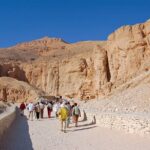
Valley of the Kings: your morning entry into royal tomb country
The day kicks off at 7:00 AM, with pickup from your hotel or Nile cruise in Luxor (or from Luxor airport, depending on what you selected). Then you head to the West Bank for the Valley of the Kings, one of Egypt’s most important burial areas.
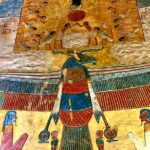
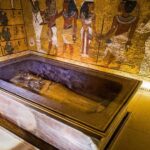
This stop is built around the idea of scale and variety. You’re not just seeing one tomb. The site contains many kings’ tombs, and the tour highlights some of the most well-known: Tutmosis I, Tutmosis III, Tut-Ankh-Amon, Ramssess VI, Mrenptah, and Amonhotep II. Even if you don’t go inside every tomb, walking the area gives you a real sense of why this place mattered.
The time allotment here is about 2 hours, which is just enough to take in the valley setting, pick your tombs (since the specific ones included can vary), and not feel rushed before you move on. You’ll likely notice that the tour pace stays focused on “see and understand,” not “see and sprint.”
A small consideration: the tour does not include entry inside the Tomb of King Tutankhamoun. That doesn’t make the Valley of the Kings any less impressive, but it does mean you should adjust expectations if Tut’s tomb is your main obsession. You can still appreciate the valley itself and other major tombs, but double-check the exact tomb access included in your package at booking time.
Deir el Bahari and Hatshepsut’s Temple: where power looks calm
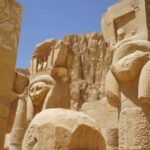
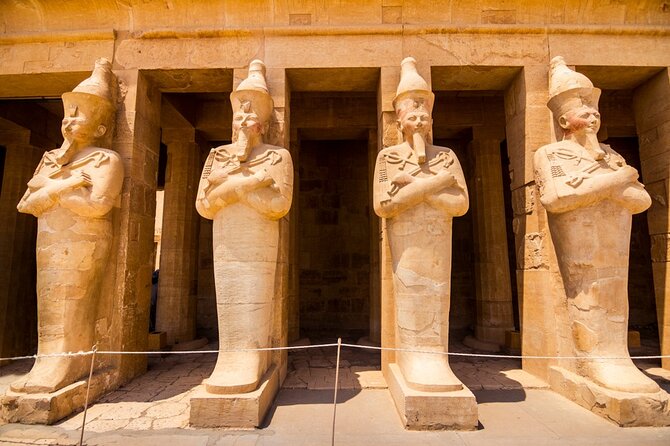
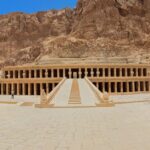
After the tomb valley, you go to Deir el Bahari, home to the Temple of Queen Hatshepsut, also known as El Dir El Bahari. This is one of Luxor’s most striking temple landscapes—not because it’s loud, but because it’s composed. The big architecture and terraced layout give the area a quiet drama.
You get about 2 hours for this stop, and the tour frames it with the story of Hatshepsut herself: she ruled Egypt for roughly 20 years during the 18th Dynasty, and she’s remembered as the only pharaonic woman who reigned ancient Egypt. That context makes the stonework feel less like a museum display and more like a political statement.
Here’s why this stop is valuable for your day: it’s a contrast to the Valley of the Kings. On the West Bank, burial culture tends to feel heavy and hidden. At Hatshepsut’s temple, you’re out in the open, looking at architecture designed to be seen and remembered. The result is a day that doesn’t just repeat “tomb, tomb, tomb.”
If you care about photo timing, this is also a good moment to slow down. Take the time to look at the temple from multiple angles instead of running straight to the center. The structure’s layout makes that kind of patient looking pay off.
Colossi of Memnon: a short stop with a big idea
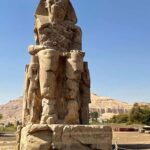
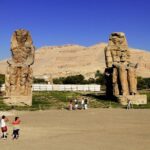
Next up are the Colossi of Memnon, the remaining statues from the mortuary temple of Amenhotep III. This is a shorter stop compared to the two big earlier blocks, but it’s still worth your attention.
You’ll spend about 1 hour here. Even with limited time, these giant figures act like anchors. They’re a reminder that Luxor’s temple world isn’t just intact buildings—you also see how time and damage reshape the story while leaving the main scale behind.
Then you get your lunch break at local restaurants, with a full meal for each person included. Beverages aren’t included, so if you like a drink with lunch, plan to pay extra. Since the lunch is tied to this stop, it also helps you reset your energy before the East Bank temples.
Practical note: one hour sounds short on paper, but the Colossi are big and straightforward to enjoy. The bigger “work” time is usually in places like Karnak, where you can easily lose an hour just walking and re-reading the details.
Karnak Temple: where you feel the scale in your legs
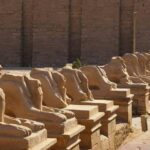
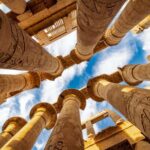
On the East Bank, the tour heads to Karnak Temple, described as the greatest example of worship in the history, dedicated to God Amon, with Mut as his wife and Khonsu as their son.
Karnak is the kind of site where scale does the talking. Even if your head is full of facts, your body still learns something: you walk longer than you expect, you look up more than you planned, and it becomes obvious why this place was central to religious life.
You get about 1 hour here. That’s enough to see key areas and get your bearings, but it’s not enough for an ultra-nerdy, foot-by-foot deep scan. If you want to focus on the main features and the overall story, this time works. If you’re the type who likes to linger in every chapel and corridor, you might wish you had more.
Still, this tour’s strength is balance. You’re not spending all day at only one massive complex. You get Karnak, then you finish at Luxor Temple, so your day has a beginning-middle-end shape instead of turning into one long marathon.


Luxor Temple: a tidy finish on the East Bank
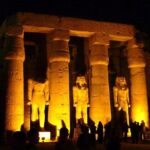
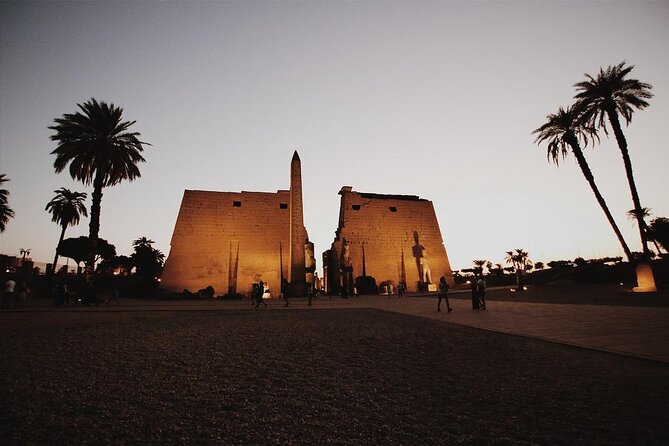
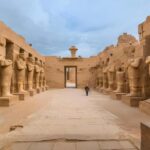
To wrap the day, you visit the Temple of Luxor. It was built by Amunhotep III in the 18th Dynasty and completed by Ramses II in the 19th Dynasty, which helps explain why the temple feels like it belongs to multiple eras of New Kingdom power.
This stop is also about 1 hour. The pacing here is ideal: Karnak sets your sense of grandeur, then Luxor Temple gives you a cleaner, more focused ending. It’s the kind of site where you can take in symmetry and layout without feeling like you’re always fighting crowds or endless corridors.
At the end, you’re driven back to your hotel in Luxor. The itinerary also notes that the tour can end at Luxor airport, which is handy if your departure is scheduled for later the same day.
Transportation and pacing: what private A/C really buys you
A big part of why this tour feels manageable is the transport. You’re not dealing with random shuttles or public bus schedules. You’re in a private A/C vehicle, and the tour includes transfers from hotel or Nile cruise, plus airport pickup/drop-off options.
That matters more than most people think. Luxor distances can add up, and temple timing is all about not arriving wiped out. With private driving, you spend your energy where it counts—at the sites.
The group size is also capped at 15 travelers. That’s small enough to keep the day organized, but large enough that you still get the shared feel of a group tour. In other words: less chaos than the big buses, more structure than hiring a car with no guide.
Pacing is built into the schedule too. The tour gives you clear blocks:
- Valley of the Kings: about 2 hours
- Hatshepsut at Deir el Bahari: about 2 hours
- Colossi of Memnon + lunch break: about 1 hour for the site, then lunch at local restaurants
- Karnak: about 1 hour
- Luxor Temple: about 1 hour
If you like moving through big sites with context instead of getting stuck in one place for hours, this works well.
Price and value: what $69.99 actually covers
At $69.99 per person, the value here is mostly in logistics and guidance. You’re getting:
- Private A/C transfers (hotel/cruise/airport options)
- A qualified Egyptologist guide
- Lunch at local restaurant (a full meal)
- Mobile ticket, plus the tour notes mention group discounts and free cancellation
What’s not included is equally important. The tour data lists that tickets are not included, and tipping is also not included. Even though the itinerary notes say “Admission Ticket Free” for some stops, the “Not Included” section says tickets aren’t part of the package. That mismatch is the one thing I’d treat carefully: ask the operator to confirm exactly which entries are included when you book.
Also, entry inside King Tutankhamoun’s tomb is specifically excluded. So if you’re budgeting your day around Tut’s tomb, this might not be the best match.
That said, for first-timers who want a full East + West Bank outline with a guide and transport handled, this price can feel fair. You’re essentially buying time savings and a smoother day.
What to pack and how to handle a hot, walking-heavy day
Even without extra details from the operator, you can expect a day focused on temples and tomb areas. That usually means walking on uneven ground and spending time outdoors.
My practical packing advice:
- Bring water (since beverages at lunch aren’t included)
- Wear comfortable walking shoes
- Use sun protection (hat, sunscreen), especially in open areas like the temple sites
- Plan for a light layer if you get air-conditioned vehicle time plus warm afternoons
If you’re sensitive to heat or you hate long indoor-outdoor transitions, choose a pace that lets you pause. The tour gives you 1–2 hour blocks, so you can rest without derailing the whole day.
Who this Luxor tour is best for (and who should think twice)
This tour is a great fit if you want:
- A one-day overview of both banks of the Nile
- A structured route with an Egyptologist guide
- Private A/C comfort and pickup/drop-off convenience
- A small group day (max 15 people)
It may be less ideal if:
- Tutankhamoun tomb entry is non-negotiable for you, because it’s excluded
- You want more time inside Karnak beyond the one-hour window
- You prefer to move at an ultra-slow pace with lots of extra breaks
Should you book this full-day Luxor East + West Banks tour?
If this is your first trip to Luxor, I’d lean toward booking. The itinerary covers the big “must-sees” in a logical order, and you get private transport plus a professional guide to connect the sites into one story. The lunch plan is also a real help—having food handled means you’re not hunting around between temples.
Just do two checks before you confirm: first, verify which site entries/tickets are actually included for your specific booking, since the package notes are a bit mixed. Second, confirm what tomb access you’ll have in the Valley of the Kings if Tut’s tomb is your top target.
If you’re aiming for a satisfying day that balances iconic monuments with context, this tour is the kind of sensible Luxor day that makes your trip feel complete.
FAQ
How long is the Luxor full-day East and West Banks tour?
It runs about 7 hours (approx.).
What time does the tour start?
The West Bank portion starts at 7:00 AM.
Is pickup included, and where can they pick you up?
Yes. Pickup is offered from your hotel or Nile cruise in Luxor, and it can also be arranged from Luxor airport. Drop-off is included back at your hotel, and it can also end at Luxor airport.
Is lunch included in the tour price?
Yes. Lunch is included at a local restaurant as a full meal per person. Beverages are not included.
Are entry tickets included?
The tour information says tickets are not included, even though the itinerary notes list “Admission Ticket Free” at each stop. Confirm what’s actually covered when you book.
Does the tour include entry inside King Tutankhamoun’s tomb?
No. Entry inside the Tomb of King Tutankhamoun is listed as not included.
What’s the group size and cancellation terms?
The tour has a maximum of 15 travelers. Cancellation is free up to 24 hours before the start time for a full refund, and the tour may be rescheduled or refunded if weather is poor or if the minimum number of travelers isn’t met.