REVIEW · LUXOR
Luxor Day Tour: Valley of Kings & Queens & Hatchepsut Temples
Book on Viator →Operated by Reflections Travel · Bookable on Viator
Egypt’s West Bank is a lot to take in, even before you step inside a tomb. This day tour strings together the key sites in Luxor’s dramatic desert landscape, with an Egyptologist guide and air-conditioned round-trip transfers from your hotel or Nile cruise.
I especially like the value: the admission fees for the main stops are included, and you get a licensed Egyptologist guiding the story. I also like the tight, practical routing across the Valley of the Kings, Hatshepsut’s temple, Medinet Habu, and Deir el-Medina, so you don’t waste a day bouncing between scattered ruins on your own.
One drawback to plan for: the day involves a lot of walking on uneven ground, and some visitors report pushy shopping add-ons. If you want the focus to stay on tombs and temples, I recommend setting expectations upfront and having firm no-ready boundaries.
In This Review
- Key points to know before you go
- What this Luxor West Bank day tour covers (and why it works)
- Price and what $89.24 really buys you
- Pickup, private tour flow, and how you’ll spend your day
- Valley of the Kings: the royal tomb valley, minus the guesswork
- Hatshepsut at Deir el-Bahari: why this temple feels staged on purpose
- Colossi of Memnon: huge statues, short stop, big impression
- Medinet Habu: Ramses III’s temple and the sense of legacy
- Deir el-Medina (Valley of the Artisans): the people behind the royal tombs
- Valley of the Queens: Nefertari and the power of elite women
- Tombs of the Nobles and the Book of the Dead details
- Egyptologist guide quality: why it can make or break the day
- Heat, walking, and practical comfort tips
- About shopping pressure and tipping expectations
- Who should book this Luxor West Bank day tour
- Should you book this Luxor day tour?
- FAQ
- What sites does this Luxor day tour include?
- Is admission included?
- How long is the tour?
- Do I get hotel pickup and drop-off?
- Is the transportation air-conditioned?
- Is lunch included?
- Is bottled water provided?
- Is tipping included?
- Can I cancel for a full refund?
Key points to know before you go
- Egyptologist-led explanations, with consistently praised English skills from guides like Abdo Esmael and Roshdy
- Admissions included for Valley of the Kings, Hatshepsut, Habu, Deir el-Medina, and the Valley of the Queens
- Air-conditioned hotel transfers plus a bottle of water
- Major West Bank sites in one day, including Nefertari’s Valley of the Queens and Deir el-Medina
- Watch for optional shopping pressure, especially around extra factory or perfume-style stops
- Start early for comfort because the West Bank can feel brutal later in the day
What this Luxor West Bank day tour covers (and why it works)
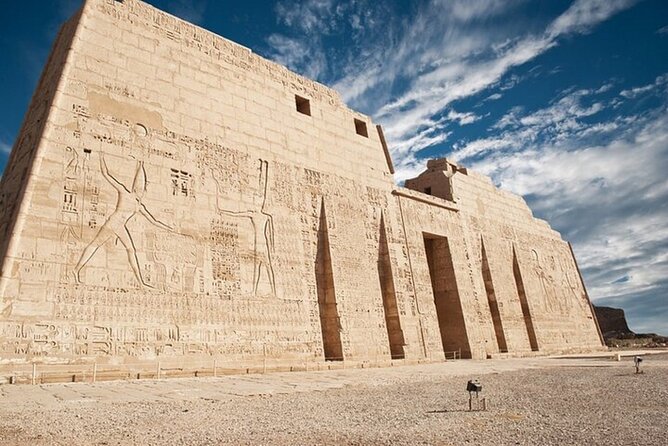
This is the kind of Luxor West Bank plan that makes sense when your time is limited. You get the big-name tomb valleys, plus the places that explain who built them and why they mattered. It’s not just scenery—it’s the full storyline of royal burial, temple power, and the workmen behind the walls.
The routing keeps you on the West Bank instead of splitting the day with long back-and-forth drives. That matters because you’re dealing with heat, desert roads, and the fact that tomb visits are time-sensitive once crowds build up.
The sites also “talk” to each other. The Valley of the Kings and the Valley of the Queens show elite burials and afterlife beliefs. Deir el-Medina adds the human layer: the artists, craftsmen, and workers who built and decorated the royal tombs. And temples like Hatshepsut and Medinet Habu explain how rulers projected power long before the tomb doors closed.
You can also read our reviews of more tours and experiences in Luxor.

Price and what $89.24 really buys you
At $89.24 per person, this is positioned as an all-day West Bank bundle rather than a cheap bus ride. What makes it feel like a better deal is that key admission fees are included, including the big stops in the royal tomb areas.
You’re also paying for more than “someone driving you around.” The tour includes a qualified, fully licensed Egyptologist guide, round-trip transfers in an air-conditioned vehicle, and even a bottle of water during the trip. If you’ve ever tried to cobble together tickets and guided interpretation in Luxor, you know the cost adds up fast.
My practical read: this price is most worth it when you care about context—hieroglyphs, burial beliefs, and why each valley and temple looks the way it does. If you only want selfies and don’t care about explanations, you might find cheaper independent options. But for first-timers, an Egyptologist day like this can save time and confusion.
Pickup, private tour flow, and how you’ll spend your day
This is a private tour for your group, not a shared cattle-car situation. Pickup is offered from your hotel or Nile cruise in Luxor, and transfers are done in a modern air-conditioned vehicle. A mobile ticket is included, which helps smooth check-in.
Because it’s private, your guide can keep the day moving at a pace that fits your group—within the realities of tomb time and opening hours. Still, the schedule is packed, so you should expect a “see, learn, move” rhythm.
A detail I like: the tour isn’t trying to hide the fact that it’s active. You’ll have multiple stops, several short to medium visits, and walking across archaeological sites where the ground can be dusty and uneven. Comfortable shoes aren’t optional here—they’re the difference between enjoying the day and rushing through it like you’re late for a train.
Valley of the Kings: the royal tomb valley, minus the guesswork
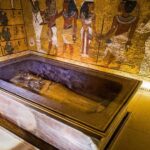
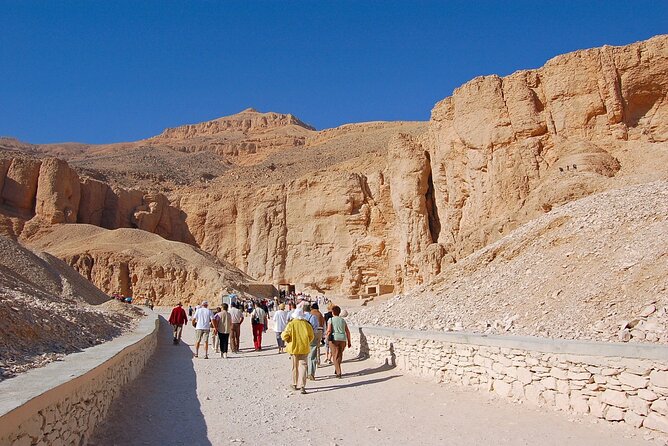
The Valley of the Kings is where Luxor’s reputation starts. There are 63 tombs in the valley, and the royal tombs are decorated with Egyptian mythology tied to afterlife beliefs. The famous names you hear about—like Tutankhamun—are part of the draw, but the bigger win is understanding the design logic behind the decorations.
On this tour, you get about 3 hours at the Valley of the Kings with admission included. That’s enough time to see more than one tomb without feeling totally hunted by the clock.
Here’s the practical tip: tombs can be dark and visually busy. If your guide points out recurring symbols and how the mythology works as a map for the afterlife, you’ll get much more out of the visit. Many visitors specifically praised guides—people like Mohsen, Abdo, and Mohamed Awad—for explaining meanings in hieroglyphs and pointing out details you’d skip on your own.
Hatshepsut at Deir el-Bahari: why this temple feels staged on purpose
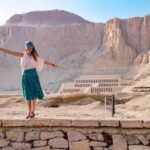
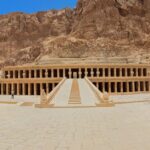
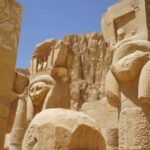
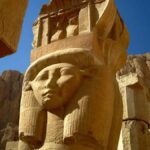
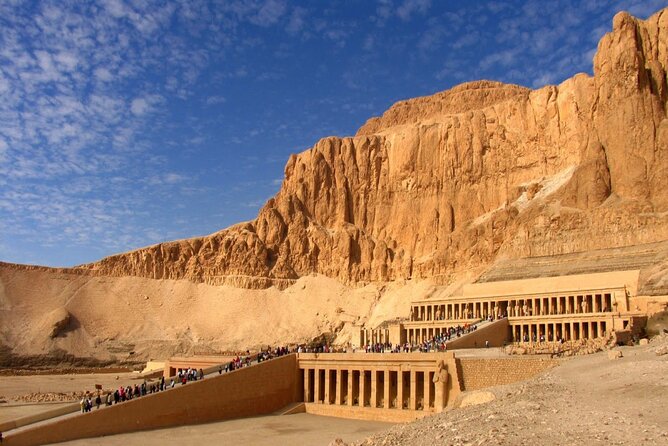
Next comes the Temple of Hatshepsut at Deir el Bahari, known as a landmark of royal temple architecture. Hatshepsut’s name is tied to meaning like foremost of noble ladies, and the tour frames her as a ruler linked to early trading routes.
You’ll spend about 1 hour here with admission included. It’s a great stop if you want more than tomb walls. Temples show the public side of power—what a ruler wanted people to see, remember, and repeat.
The layout is also visually dramatic. Even when you’re not a history nerd, you can feel the intention: terraces, strong lines, and a setting that makes the temple look like it belongs on the cliff edge—because it does. If you’ve ever wondered why Egypt doesn’t feel like a random collection of ruins, this is one of the clearest answers.
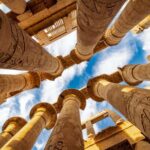

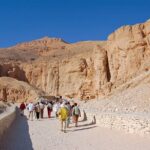
Colossi of Memnon: huge statues, short stop, big impression
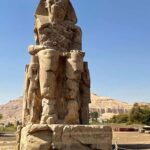
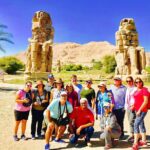
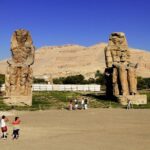
Then you’ll hit the Colossi of Memnon. These are massive twin statues made from blocks of quartzite sandstone. The stop is quick—about 20 minutes—but it works because it gives your legs a brief break while still delivering an iconic sight.
This is the kind of stop where pictures don’t fully explain the scale. They’re huge, and the sheer weight of stone gives you a sense of the effort behind everything else you’ll see today.
Keep expectations realistic: this isn’t a long museum-style visit. It’s a “stand here, look up, and let the scale do its job” moment.
Medinet Habu: Ramses III’s temple and the sense of legacy
After lunch time comes Medinet Habu. The temple was constructed to commemorate King Ramses III, following orders from the king himself. You’ll spend around 1 hour here with admission included.
This is a strong contrast stop after the tomb valleys. Instead of focusing on burial design, you’re in a temple space tied to kingship, commemoration, and long-term reputation. It’s also a helpful reminder that ancient Egypt didn’t just “build for death.” It built to define rule while life carried on.
If you pay attention to the way a temple’s purpose shapes what you see, Medinet Habu becomes more than a pretty structure. It starts to feel like a message carved into stone.
Deir el-Medina (Valley of the Artisans): the people behind the royal tombs
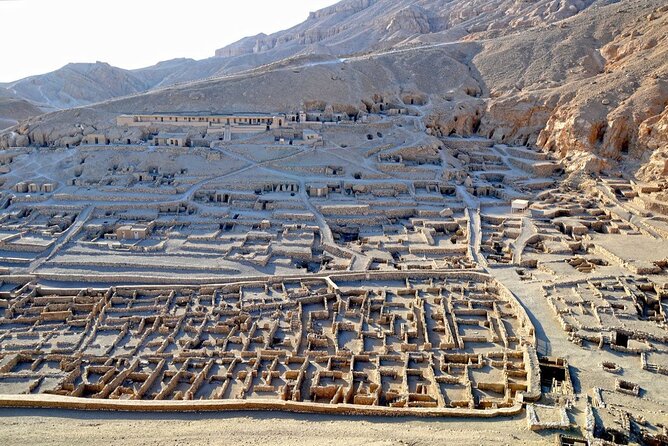
This part is one of the best “human-scale” additions on the West Bank. Deir el-Medina, sometimes called the Valley of the Artisans, was a workmen’s village where artists, craftsmen, and workers lived while building and ornamenting the royal tombs.
You’ll get about 1 hour at Deir el-Medina with admission included. What makes it valuable is perspective. Royal tombs can feel untouchably grand. Deir el-Medina brings you closer to the workers who actually did the labor—plus the creative teams who shaped the art and spells.
Many visitors praised guides for making the connections clear: how a village relates to a tomb valley, and how afterlife ideas show up in real decoration choices. If you like that kind of “story stitching,” this stop is a highlight.
Valley of the Queens: Nefertari and the power of elite women
Next is the Valley of the Queens. Here, admission is included and your time is about 1 hour. The valley is best known for the tomb of the Great Queen Nefertari, and the tour frames the women of the court as serious players in the afterlife drama.
This valley often feels more personal than the Valley of the Kings, because Queens’ tombs connect power, status, and belief in a different way. You’ll see why Egypt made room for royal women in the afterlife imagination—not as footnotes.
If you want a balanced West Bank day, this stop is essential. It prevents the day from feeling like it’s only about kings.
Tombs of the Nobles and the Book of the Dead details
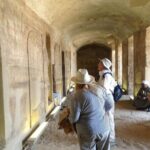
The day wraps with tombs of the nobles, with more than 400 tombs belonging to nobles. Royal tombs and elite burials often include texts and beliefs designed to guide souls through the afterlife, and this part of the tour highlights how the decoration connects to passages from the Book of the Dead.
This segment can feel like it’s “less famous” on paper, but it’s often the most meaningful visually if your guide is good at pointing out symbols and themes. You’re seeing the afterlife belief system expand outward beyond just royal names.
It’s also a reminder that Egypt’s tomb culture wasn’t just a one-off show for kings. People at many ranks believed in the same cosmic rules—just expressed with different levels of power and access.
Egyptologist guide quality: why it can make or break the day
The tour’s promise is an Egyptologist guide, and the names that come up in visitor feedback give you a sense of what matters in practice: clear explanations, good English, and the ability to point out what your eyes would otherwise skip.
Guides like Abdo Esmael, Roshdy, Mohamed Awad, Barry, and Mohsen are repeatedly described as attentive and strong at interpreting sites. That matters because tombs and temples aren’t obvious at first glance. With the right guide, you start seeing patterns: recurring symbols, design choices, and how mythology ties to the layout.
So here’s my advice before you go: when you meet your guide, ask for one clear focus question. Something like, Which tomb paintings matter most, and why? A good Egyptologist will turn that into a road map for the day.
Heat, walking, and practical comfort tips
This is an active day. Even if each stop isn’t super long, the combined walking is real. One recurring tip from visitors: start early if you can, because afternoons on the West Bank can get hot even in winter.
Plan for:
- Solid shoes with grip for dusty, uneven surfaces
- Sun protection (hat, sunglasses, sunscreen)
- Pace control: if you need short breaks, ask your guide early so you don’t feel rushed later
Good news: you do get a bottle of water, and the vehicle is air-conditioned, so you’ll have places to reset between sites.
About shopping pressure and tipping expectations
Here’s where you should be sharp-eyed. Several negative accounts mention unwanted stops at places like alabaster-style shops or perfume/vendor stops, plus pressure to buy. The tone described in those accounts ranges from pushy persuasion to outright insistence, which can make the day feel less about temples and more about sales.
Your best defense is simple:
- Tell your guide early that you want to skip extra shopping stops and keep time for tombs/temples.
- Stay firm and polite. If you’re not buying, don’t get dragged into a negotiation loop.
Tipping isn’t included in the tour, so you should budget for it if your service deserves it. At the same time, the tour includes water and transfers, so you’re not arriving “bare”—you’re just deciding what extra gesture fits your experience.
Also note: some visitors complained about fee disagreements for extra tombs or add-ons. If you want to see an extra tomb inside the Valley of the Kings beyond what’s covered, ask clearly what’s optional, what costs extra, and what your money buys before you say yes.
Who should book this Luxor West Bank day tour
This tour is a great fit if:
- You want a first-time, high-impact Luxor West Bank overview
- You care about context, not just sightseeing
- You like the combination of tomb valleys and temples, plus Deir el-Medina’s workmen context
- You’re traveling as a group and value a private flow with an Egyptologist guide
It may be less ideal if:
- You hate walking and prefer short, low-effort stops
- You’re very sensitive to shopping pressure and want a strict no-traps itinerary
- You want fully flexible tomb selection without a set schedule
Should you book this Luxor day tour?
If your goal is to see Luxor’s West Bank highlights in one efficient day—with admissions included and an Egyptologist guide explaining the why behind the sights—this is a strong option to consider. The biggest upside is the way it connects royal tombs, queens’ burials, workmen’s history, and major temples into one coherent route.
My call: book it if you’re comfortable being proactive. Ask your guide up front to keep the day focused on temples and tombs, and be ready to decline extra shop stops without debate. If you’d rather not manage that at all, you might compare with a plan that guarantees no vendor stops.
FAQ
What sites does this Luxor day tour include?
It includes the Valley of the Kings, the Temple of Hatshepsut at Deir el Bahari, the Colossi of Memnon, Medinet Habu, Deir el-Medina, the Valley of the Queens, and the Tombs of the Nobels.
Is admission included?
Yes. Admission fees are included for the Valley of the Kings, Hatshepsut Temple, Habu Temple, Deir el-Medina, and the Valley of the Queens.
How long is the tour?
The tour is listed as about 8 hours.
Do I get hotel pickup and drop-off?
Yes. Pickup and return transfers from your Luxor hotel or Nile cruise are included.
Is the transportation air-conditioned?
Yes. Transfers are by a modern air-conditioned vehicle.
Is lunch included?
Lunch is not listed as included. The schedule includes time for lunch during the day.
Is bottled water provided?
Yes. A bottle of water is included during the trip.
Is tipping included?
No. Tipping is not included.
Can I cancel for a full refund?
Free cancellation is available. You can cancel up to 24 hours in advance for a full refund. If you cancel less than 24 hours before the start time, the amount paid is not refunded.