REVIEW · LUXOR
Luxor Day Tour: Kings Valley & Karnak & Luxor & Hatshepsut Temple
Book on Viator →Operated by Bastet Travel · Bookable on Viator
West and east Luxor in one day. I like the private A/C pickup that runs from your hotel or Nile cruise, and I especially like how the route packs the big-name sights—Valley of the Kings, Hatshepsut at Deir el-Bahari, Karnak, and Luxor Temple—without wasting time, with guides such as Abdullah or Waleed keeping the day organized and clear. I also like that bottled water is included.
One thing to think about: this is a 7–9 hour circuit, and the most famous tomb in the Valley (Tutankhamun’s KV62) is an optional add-on that needs its own extra ticket.
In This Review
- Key points to know before you go
- Pickup and transfer: the east–west route in plain terms
- Valley of the Kings: royal tombs plus the KV62 decision
- A practical way to think about this stop
- Hatshepsut at Deir el-Bahari: terraces, cliffs, and Senenmut’s plan
- Why this stop is worth the time
- Optional KV62: should you add Tutankhamun’s tomb?
- My rule of thumb
- Colossi of Memnon: the 18-meter statues that face the Nile
- Why this works in a tight schedule
- Luxor Temple: Amunhotep III’s core and Ramses II’s completion
- Karnak Temple: the Amun complex that explains the scale of Thebes
- The one “how to see it” issue
- Time on a 7–9 hour day: what fits, what doesn’t
- Price and value: what $35 gets you (and what to verify)
- What you’re likely getting a lot of for the money
- Extras that can make the day nicer
- Who this Luxor day tour suits best
- Should you book this tour?
- FAQ
- What’s included in the tour price?
- Where does the pickup happen?
- How long is the tour?
- Which sites are included in the day?
- Is the Tomb of Tutankhamun included?
- Are entry fees included?
- Is transportation air-conditioned?
- Can the tour end at Luxor airport?
- Is there bottled water during the trip?
- Can I cancel and get a full refund?
Key points to know before you go
- East and west Luxor, same day: West Bank royal tombs, then the East Bank temples.
- Hatshepsut at Deir el-Bahari: real standout architecture on a cliffside setting.
- Optional KV62 (Tutankhamun): add it only if you want to pay for the extra ticket.
- Karnak + Luxor Temple pairing: you get the Amun story from the huge complex down to the main temple.
- Hotel or Nile cruise pickup: and the tour can even start from Luxor airport.
- Transport and water included: private A/C vehicle plus bottled water to keep the day practical.
Pickup and transfer: the east–west route in plain terms
This is built as a full-day loop, starting with pickup from your hotel or Nile cruise in Luxor. If you’re arriving by plane, the schedule also allows pickup from Luxor airport. A Bastet Travel licensed tour guide then transfers you by private A/C vehicle to the West Bank first, before switching over to the East Bank for Karnak and Luxor Temple.
What I like about this structure is that it matches how Luxor is laid out: temples and tombs are split by the Nile. You don’t have to piece the day together yourself, and you don’t have to bounce around between agencies or stations. It’s also listed as a private tour/activity, meaning it’s designed for just your group.
You can also read our reviews of more tours and experiences in Luxor.

Valley of the Kings: royal tombs plus the KV62 decision
The day starts on the West Bank at the Valley of the Kings, the royal burial ground where pharaohs were entombed in a tight cluster of carved sites. The Valley has over 60 tombs in the area, but only a handful are open to the public—so even if you’ve heard the name before, you won’t see every tomb in one visit.
You’ll get time here (about 2 hours) focused on major figures. The schedule specifically calls out famous names such as Tutmosis I, Tutmosis III, Tutankhamun (Tut), Ramssess VI, Mrenptah, and Amonhotep II. If you want the most famous target, the tour includes the option to add the Tomb of King Tutankhamun (KV62) later in the plan.
A practical way to think about this stop
The Valley can feel like a lot of “closed doors” if you expect to see everything. The value is in seeing a high-impact selection, with context from your guide so the tombs don’t turn into random rooms. If you’re short on time, you’re also spared from trying to cram too many sites.
Hatshepsut at Deir el-Bahari: terraces, cliffs, and Senenmut’s plan
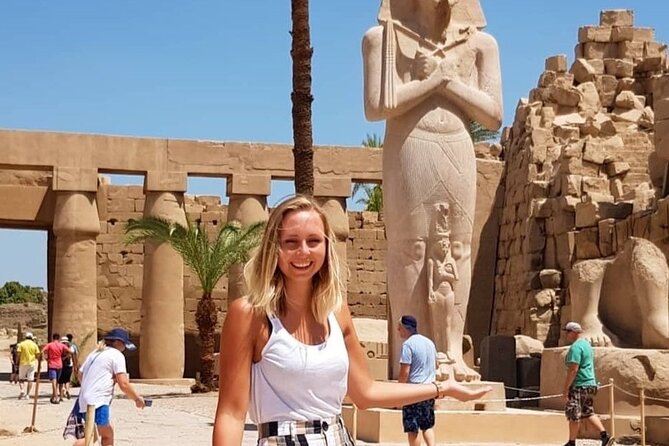
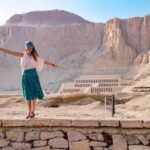
Next up is the Temple of Queen Hatshepsut at Deir el Bahari (El Dir El Bahari). This memorial temple honors Hatshepsut, who ruled during the 18th Dynasty—around 1490 to 1469 BC—and is noted here as the only pharaonic woman who reigned ancient Egypt.
This is also one of those places where the setting matters. The temple is built on a half-circle of cliffs on the West Bank, part of the Theban Necropolis. The description highlights Senenmut as the architect (Hatshepsut’s steward and architect) and notes the temple’s resemblance to classical Greek architecture, even though it predates that by about a thousand years.
Why this stop is worth the time
The Valley of the Kings is about tombs cut into rock. Deir el-Bahari is about a ruler’s monumental message built into the landscape—again, not a small detail. You’ll get about 2 hours here, which is enough time to slow down and notice the structure and the terraces rather than just snapping photos and moving on.
Optional KV62: should you add Tutankhamun’s tomb?
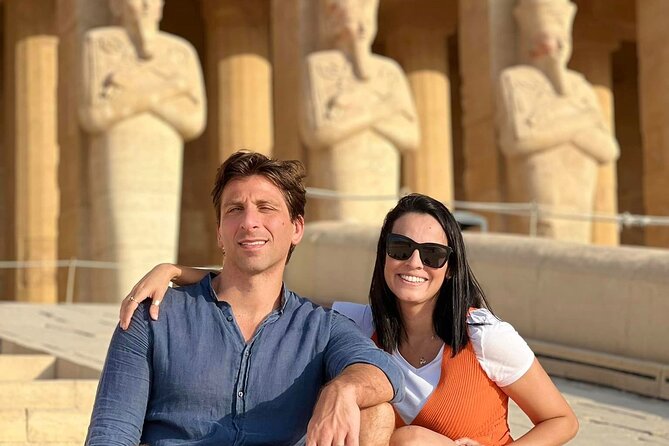
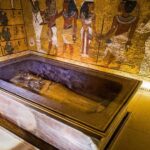
The schedule includes the Tomb of King Tutankhamun (KV62) as an optional stop. It’s positioned as a short add-on—around 20 minutes—so it doesn’t hijack the whole day. The text also explains what makes KV62 feel different: it’s smaller and less extensively decorated than many other royal tombs, and it probably began as a tomb for a non-royal individual before being adapted for Tutankhamun after his early death.
Importantly, this stop requires an additional ticket. So if you’re budget-conscious, you can still have an excellent West Bank experience without paying for KV62.
My rule of thumb
If you’d regret skipping the one tomb you’ve heard about since childhood, pay for the optional KV62 ticket. If you’d rather keep the day focused on the bigger architectural and temple context, you can treat KV62 as a choice, not a requirement.
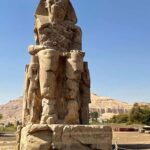
Colossi of Memnon: the 18-meter statues that face the Nile
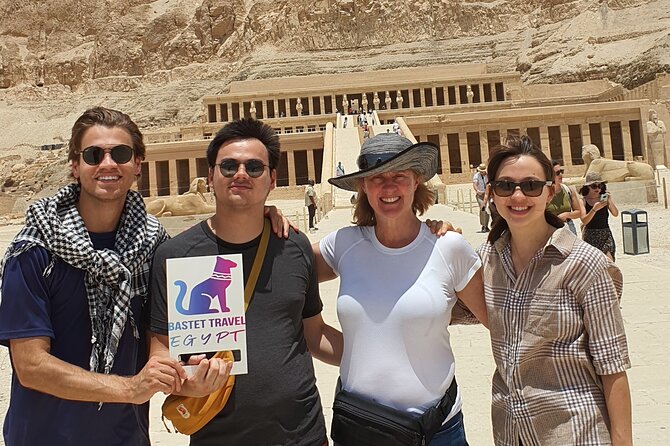
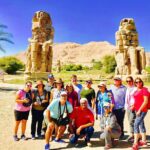
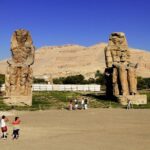
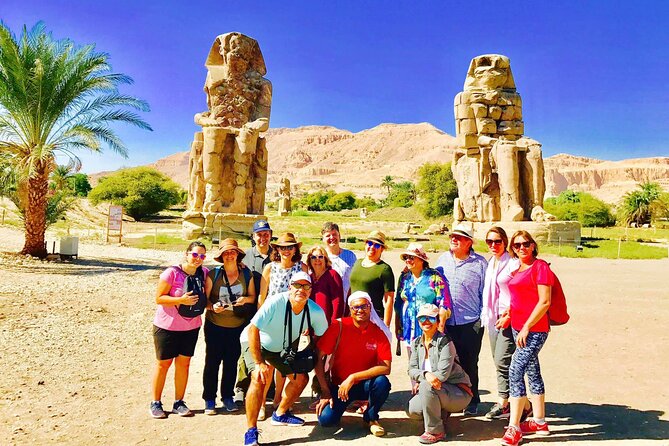
Then you’ll move to the Colossi of Memnon, two monumental seated statues representing Amenhotep III. They’re west of modern Luxor and face east, toward the Nile.
This stop is brief (about 30 minutes), but it’s unforgettable once you’re there. Each statue is described as rising about 60 feet (around 18 meters) and weighing roughly 720 tons, carved from single blocks of sandstone. The statues also have symbolic engravings and imagery linked to Amenhotep III’s family and the god Hapy.
Why this works in a tight schedule
Not every stop in a day tour can be a long, slow museum-style visit. Colossi of Memnon is short but high-impact, like a strong punctuation mark between West Bank tombs and East Bank temples.
Luxor Temple: Amunhotep III’s core and Ramses II’s completion
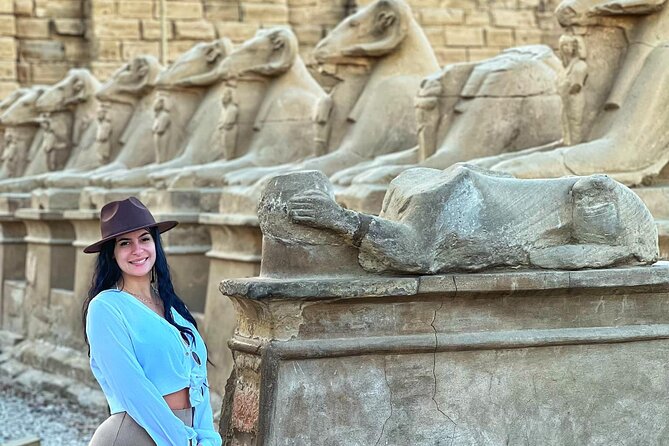
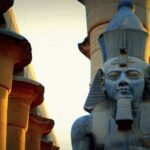
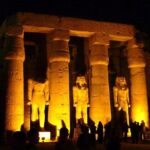
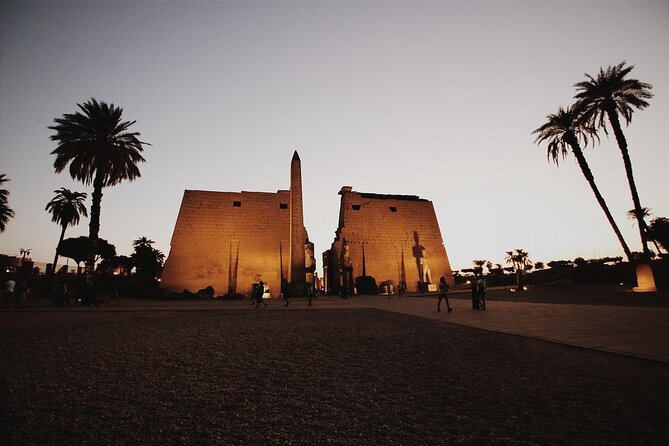
After returning toward the East Bank, the tour includes Luxor Temple. This is described as a large temple complex built by Amunhotep III in the 18th Dynasty, then completed by Ramses II in the 19th Dynasty. It’s also tied to an older foundation—its founding is given as around 1400 BCE.
Here’s a detail that makes it more than just another “big ancient site.” The temple’s name in Egyptian is noted as ipet resyt, meaning the southern sanctuary. The schedule also mentions that the temple was not built by one single ruler: the oldest existing structure is a shrine associated with Hatshepsut’s reign, while the core was built by Amenhotep III. One inner room includes scenes called the Divine Birth, describing how Amun-Ra is the true father of the king, disguised as Thutmose IV.
You’ll have about 2 hours at Luxor Temple. That time is useful because you can move at a reasonable pace and still pick up the main story beats instead of just walking past columns.
Karnak Temple: the Amun complex that explains the scale of Thebes
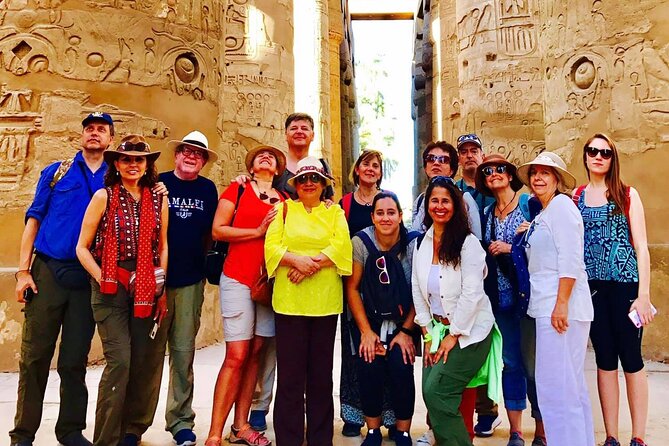
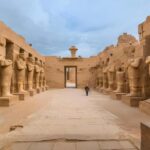
The final major temple stop is Karnak Temple, focused on worship of Amon (also spelled Amun), along with Mut and their son Khonsu. The Karnak Temple Complex is described as a huge mix of temples, pylons, chapels, and other buildings near Luxor, with construction beginning in the reign of Senusret I in the Middle Kingdom. Work continued into later periods, including the Ptolemaic Kingdom, though many of the surviving buildings are from the New Kingdom.
The schedule also notes Karnak’s UNESCO status (added in 1979) as part of the broader ancient city of Thebes. It even gives the naming clue: the name Karnak comes from the nearby modern village of El-Karnak, about 2.5 kilometers north of Luxor.
The one “how to see it” issue
Karnak’s main challenge is scale. Even with a guide, it can feel like you’re walking through layers of time and building projects. That’s where having a guide matters—so you know what to look for first and what details to ignore today. With about 2 hours here, you’ll still get a lot, especially if you’re not trying to cover every corner.
Time on a 7–9 hour day: what fits, what doesn’t
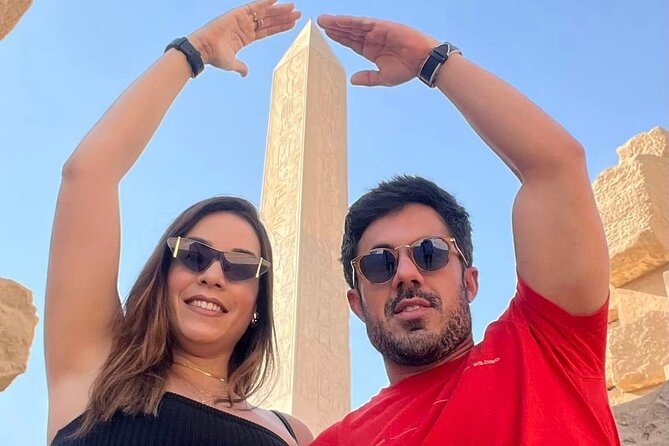
This tour is scheduled for 7 to 9 hours. That length is a key part of the value: it covers major West Bank stops (Valley of the Kings, Deir el-Bahari, Colossi of Memnon) and major East Bank stops (Luxor Temple, Karnak) in one continuous day.
It also explains why some items are short or optional:
- Valley of the Kings is about 2 hours, with a choice to add KV62 separately.
- Deir el-Bahari is about 2 hours.
- Colossi of Memnon is about 30 minutes.
- Luxor Temple and Karnak are each about 2 hours.
So if you’re hoping for a slow, unhurried temple-and-tomb day, this may feel structured. If you’re hoping to see the essentials across the Nile in one go, it’s built for you.
Price and value: what $35 gets you (and what to verify)
The price listed is $35.00 per person. At this level, you’re clearly paying for the “day logistics” package: pickup and drop-off, private A/C vehicle transport, bottled water, and a professional Egyptologist guide listed as optional.
Entry fees are listed as optional in the included details. At the same time, the itinerary notes admission ticket free for the standard stops (with KV62 as the optional extra). Because those details can vary by how your specific booking is configured, I’d treat this as something to confirm before you go—especially if you care about paying for specific tomb access.
What you’re likely getting a lot of for the money
Even if you add or don’t add KV62, you’re still getting:
- a complete West Bank + East Bank loop,
- guided context (Egyptologist guide optional, but a licensed tour guide is part of the plan),
- and private transport that saves you time.
In Luxor, time is expensive. This tour is designed to spend most of the day at the sites, not in transit wrangling.
Extras that can make the day nicer
The included list calls out bottled water, and the tour review feedback also mentions complimentary soft drinks and water during the journey. Lunch is listed as optional, so you can decide whether you want to stay light or build in a pause.
Since Luxor days can be long, those small choices matter. Having water handled means you spend less time thinking about logistics and more time watching what’s in front of you.
Who this Luxor day tour suits best
This tour is a strong fit if:
- you want both west and east Luxor in one day,
- you like a guided explanation rather than wandering with no plan,
- and you’re okay making a decision about KV62 as an optional add-on.
It may not be your best match if you want deep, museum-style time in just one area. The schedule is designed to cover multiple sites, which means you’ll be moving through several major locations.
If you’re the kind of person who wants structure—pickup, transport, and a clear route—this will feel easy. If you want maximum flexibility to linger, you may feel the pressure of a packed day.
Should you book this tour?
I’d book it if your priority is seeing the headline Luxor sites across both banks without turning the day into a DIY project. The West Bank lineup is strong, Deir el-Bahari gets the time it deserves, and the East Bank finish at Luxor Temple and Karnak ties the story together.
I’d think twice (or at least plan) if you’re sensitive to a long 7–9 hour itinerary or if you don’t want to deal with optional ticket decisions. The KV62 choice is the big fork in the road, and you’ll want to be clear on whether you’ll add it.
If you book with a plan—especially around KV62 and whether you want lunch—this is a practical, high-value way to hit Luxor’s major ancient highlights in one day.
FAQ
What’s included in the tour price?
Hotel or Nile cruise pickup and drop-off, private transportation, bottled water, and an Egyptologist guide listed as optional. Entry fees and lunch are also listed as optional.
Where does the pickup happen?
Pickup can be from your hotel or Nile cruise in Luxor, and the tour can also pick you up from Luxor airport.
How long is the tour?
It runs about 7 to 9 hours.
Which sites are included in the day?
You’ll visit the Valley of the Kings, the Temple of Queen Hatshepsut at Deir el Bahari, the Colossi of Memnon, Luxor Temple, and Temple of Karnak. The Tomb of King Tutankhamun (KV62) is optional.
Is the Tomb of Tutankhamun included?
No. KV62 is optional and requires an additional ticket you can buy on the spot.
Are entry fees included?
Entry fees are listed as optional. The itinerary also notes admission ticket free for several stops, but you should confirm what’s included for your exact booking.
Is transportation air-conditioned?
Yes. The transfer is described as a private A/C vehicle.
Can the tour end at Luxor airport?
Yes, it can be ended in Luxor airport.
Is there bottled water during the trip?
Yes, bottled water is included.
Can I cancel and get a full refund?
Yes. Free cancellation is available if you cancel at least 24 hours before the experience start time for a full refund.