REVIEW · GIZA
Cairo Two Full Day Tours (Jewels Of Cairo)
Book on Viator →Operated by Wonders of Egypt Tours · Bookable on Viator
Cairo can feel like sensory overload. This two-day plan turns the biggest sights into a readable story, with hotel pickup and a guided route that keeps you moving without feeling rushed. I especially like the mix of Giza to the Egyptian Museum on day one, then a different side of Cairo—Mosque of Muhammad Ali, Coptic Cairo, Khan Al-Khalili, and the Citadel—on day two. One drawback to consider: a past booking complaint mentioned being asked for extra cash in addition to what was already paid, so it’s smart to confirm what is fully covered before you go.
What makes this experience work is the structure. You get air-conditioned transport, a private Egyptologist for your group, bottled water, and admissions built into the day. That matters in Cairo, where it’s easy to spend your energy on logistics instead of the sights.
Still, the value hinges on how you handle the day. With long visiting blocks, you’ll want to pace yourself, use breaks when they happen, and plan to buy only what you truly need during personal time.
In This Review
- Key highlights at a glance
- Two Full Days in Cairo: how the route helps you make sense of the city
- Day 1: Giza Pyramids, Great Sphinx, and Egyptian Museum context you can actually use
- A quick reality check
- Day 1 at golden hour: Nile River felucca and Cairo’s evening rhythm
- Day 2: Muhammad Ali’s Mosque and the Citadel’s big-picture Cairo
- Day 2: Coptic Cairo’s layered faiths and Khan Al-Khalili’s old-street shopping
- Practical note for Khan Al-Khalili
- Price and logistics: is $150 per person a smart value?
- Who this fits best (and who should choose something else)
- Getting the most from your Egyptologist (plus tips to stay comfortable)
- Should you book Two Full Day Tours of Cairo (Jewels of Cairo)?
- FAQ
- How many days is the Cairo Jewels of Cairo tour?
- What’s included in the price?
- Is this tour private or shared?
- What sites are included across the two days?
- Is admission to attractions included?
- Is pickup available?
- How far in advance do people usually book?
- Can I cancel and get a full refund?
Key highlights at a glance

- Private Egyptologist for your group: you’ll get guided context at each stop, not just a bus tour.
- Admissions included for major sites across both days, so fewer surprises at the entrance.
- A sunset felucca on the Nile: a calm break after big monuments and museum time.
- Two included lunches: you’re not stuck hunting food between sites.
- A Cairo mix of eras: Ancient Egypt, Ottoman-era architecture, and Coptic and Islamic Cairo all in one sweep.
- Driver + timing help: traffic is real here; safe, efficient transport can make or break the day.
Two Full Days in Cairo: how the route helps you make sense of the city
Cairo is not one story. It’s layered time. What I like about this two-day setup is that it groups eras in a way your brain can hold onto—Ancient Egypt first, then Islamic and Coptic Cairo, then back again to the “why this place matters” theme.
Day one focuses on the monumental stuff outside the city and then brings you indoors at the Museum of Egyptian Antiquities. Day two shifts toward architecture and neighborhood texture, moving from the Citadel area to Coptic Cairo, and then into the souk chaos of Khan Al-Khalili. When the order makes sense, you don’t just “see stuff.” You start connecting symbols, rulers, and beliefs.
It’s also practical. You’re not handling entry logistics or guessing where to stand. Pickup and drop-off, plus an air-conditioned vehicle, means you can stay in the flow—even when Cairo’s streets are doing what they do.
A few more Giza tours and experiences worth a look



Day 1: Giza Pyramids, Great Sphinx, and Egyptian Museum context you can actually use
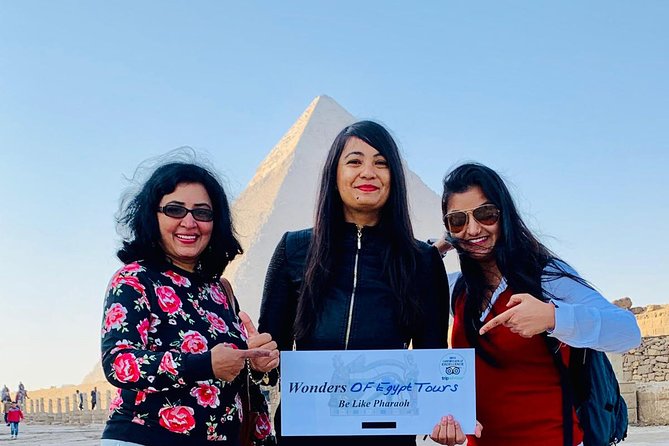
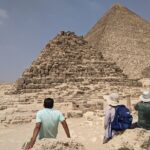
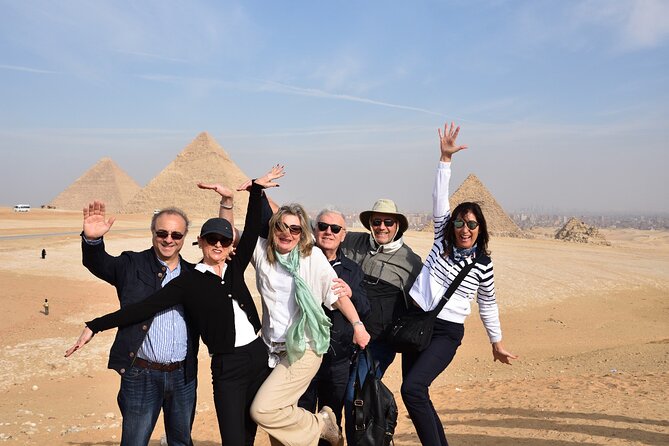
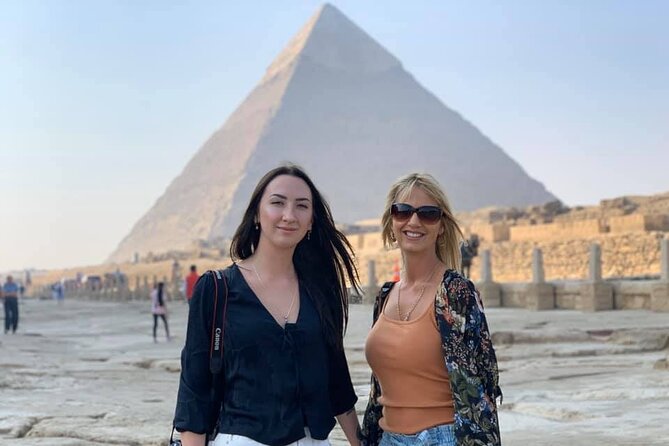
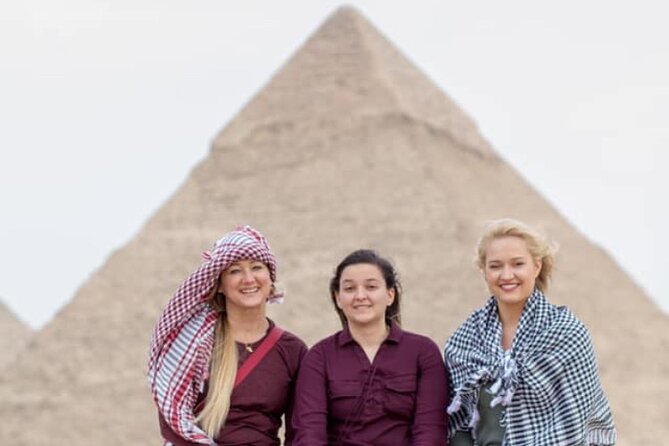
Your first big hit is the Pyramids of Giza—one of the last surviving wonders of the ancient world. You’ll spend about two hours there, which is a fair chunk of time if you’re willing to slow down and look. The pyramids aren’t just “big.” The whole point is their geometry, their sheer scale, and the fact that they were built as massive tomb projects under pharaonic orders. You’ll also get a sense of the organization involved—teams measured in the tens of thousands.
Next comes the Great Sphinx, described here as Abu Al Hol in Arabic. The fun part is the name history: the Greeks linked it to their mythical creature, but a geological survey suggests carving from the bedrock was tied to Khafre’s reign. That combination—myth versus evidence—helps the Sphinx feel real instead of like a postcard.
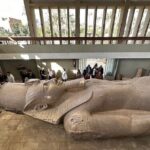
Then you head to the Museum of Egyptian Antiquities in downtown Cairo. It’s a major stop because it puts artifacts in your hands that you can’t fully understand from the outside of monuments. You’ll have about two hours and will see famous items like Tutankhamen’s treasures, plus mummies, jewelry, and everyday objects tied to Egyptians whose names don’t survive. This is one of those museums where you’re constantly thinking, Wait, people actually lived like this.
A quick reality check
The pacing is strong, but day one is still a marathon of icons plus museum time. Wear comfortable shoes, and don’t treat the pyramids as just one photo angle. The best payoff comes from taking a breath and reading details.
Day 1 at golden hour: Nile River felucca and Cairo’s evening rhythm
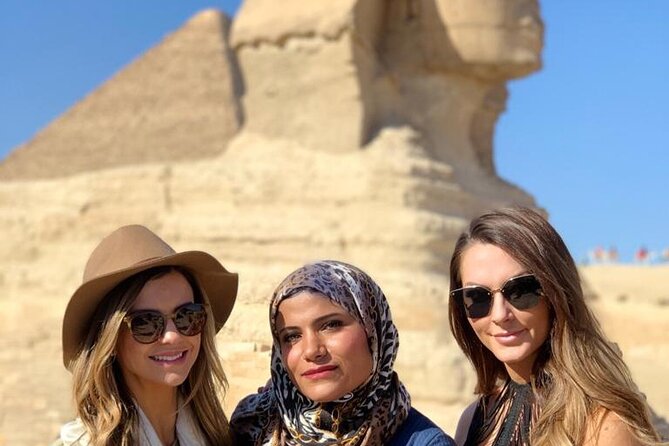
After monuments and museum time, you get a change of pace: the Nile River with a sunset felucca ride. This is scheduled for about an hour, and that timing is smart. By then, you’re primed for a calmer experience, and the light over the water makes the whole river feel different than daytime.
The ride is also a chance to watch daily life shift toward evening. You’ll see how locals start hanging out as the day cools down, which turns the Nile from “a map label” into a place with an actual routine.
This stop is included with admissions listed for that segment, so you’re not hunting down separate tickets. It also feels like a reset button before the next day’s more city-based sights.
Day 2: Muhammad Ali’s Mosque and the Citadel’s big-picture Cairo
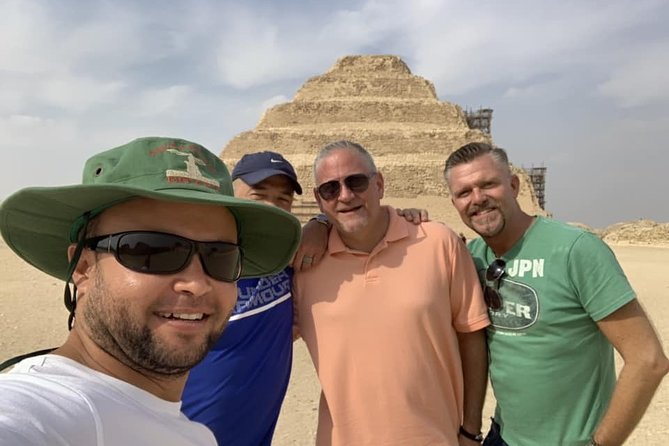
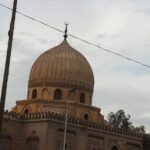
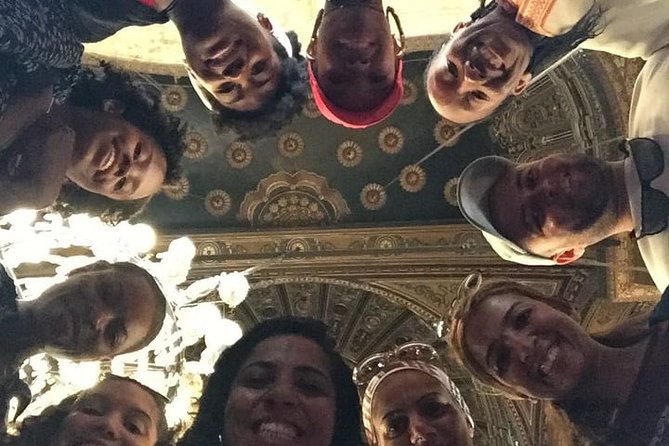
Day two begins with the Mosque of Muhammad Ali inside the Citadel complex. You get around two hours here, and it’s visually intense in the best way: domes on domes, chandeliers, striped stone, and a main dome described as emerald green. Construction is given as 1830–48, which helps you place it chronologically against the much older Egypt you saw the day before.
The mosque’s tomb space is also part of the visit, and Muhammad Ali is noted as being buried in the tomb to the right as you enter. Even if you’re not the type to linger on tomb history, this is one of those interiors that makes you slow down. Cairo’s scale can trick you into thinking everything is outdoors and dusty; this interior proves otherwise.
From there, you’ll also visit the Cairo Citadel (Citadel of Saladin) for about an hour. The key idea here is politics and power. Built by Salah ad-Din and later developed by other rulers, it served as the seat of government and the residence of rulers for roughly 700 years, from the 13th to the 19th centuries. In plain terms: this is where leaders ran the show.



Day 2: Coptic Cairo’s layered faiths and Khan Al-Khalili’s old-street shopping
Next up is Coptic Cairo, placed within the fortress area of Babylon, originally founded in the 6th century BC and later expanded under the Roman Emperor Trajan in AD 98. That setup matters because it explains why this part of Cairo feels like a timeline. You’re looking at a fortress frame holding layers of religious sites.
Coptic Cairo also includes the Coptic Museum, plus the chance to visit sites described as containing the oldest church, oldest mosque, and oldest synagogue in Cairo. Even if you’re not chasing superlatives, it’s a useful reminder that this city has room for different traditions side by side, especially when you’re shown what to look for.
Then you shift to the street-level texture of Khan Al-Khalili. This is described as a medieval-style market area with skinny lanes, small courtyards, and shops ranging from practical goods to semiprecious stones. You’ll spend about an hour here, which is enough time to wander without feeling trapped.
You’ll also get historical framing about the bazaar’s origins being traced back to a very early period and later connections with the Fatimids. The takeaway is that Khan Al-Khalili isn’t only shopping. It’s old Islamic architecture in active use—mosques, houses, inns, and cafes all mixed into the same human-scale maze.
Practical note for Khan Al-Khalili
This is a place where you’ll want to move with intention. If you just let yourself get dragged by the lanes, you can lose time fast. If you have a short shopping goal—one or two items—you’ll enjoy it more.
Price and logistics: is $150 per person a smart value?
At $150 per person for two full days, the value mostly comes from what’s included and what’s saved.
You get:
- air-conditioned vehicle
- pickup and drop-off
- private Egyptologist
- bottled water
- admissions for the listed sights
- lunch (2)
That matters because Cairo can be expensive in small ways—separate tickets, separate transportation, and eating on the run. When admissions and lunches are already built in, your budget stays calmer.
You’ll also see that this is described as private, limited to your group, with group discounts available. If you’re traveling as a small unit—like a couple or a family—that privacy can feel worth it. You’re not constantly adjusting to strangers’ pace.
There’s one caution I’d add based on a reported problem from a previous booking: one complaint said an extra $30 per person was requested in cash on top of what was already paid through the booking platform. That doesn’t mean it will happen to you, but it does mean you should confirm, in writing or clearly with the provider, what is fully covered before you arrive. If something feels unclear, ask early.
Who this fits best (and who should choose something else)
This is a great match if you want:
- a structured route across Ancient Egypt plus Islamic and Coptic Cairo
- a guided explanation at each stop, not just time at photo spots
- included admissions and lunches to reduce decision fatigue
It’s especially good for first-time Cairo visitors who feel overwhelmed by traffic and ticketing. The pickup and driver help you avoid wasting your limited daylight.
If you’re the type who likes to wander independently all day, you might find this less flexible than you want. But if you want Cairo’s big highlights with meaning and a plan you can trust, this does that.
Getting the most from your Egyptologist (plus tips to stay comfortable)
The best part of any guided Egypt visit is what you do after the “wow.” You’ll get more out of the day if you listen for connections—how rulers and religions leave physical marks, and how myths and evidence shape what you see.
One name you may hear mentioned in standout accounts is Ali, noted for being an excellent guide. The practical value there is simple: a strong guide can translate confusing timelines into clear, memorable points—and it helps you move through crowds with purpose.
A few comfort tips that matter here:
- Expect long walking stretches at the pyramids and in museum halls.
- Use the felucca hour as your recharge time.
- Bring water if you run thirsty, even though bottled water is included.
Should you book Two Full Day Tours of Cairo (Jewels of Cairo)?
I’d book it if you want a smooth, guided, two-day Cairo plan that covers the essential sights with admissions and lunches handled. The route is built for meaning: pyramids and Sphinx, then museum artifacts, then Nile at sunset, and finally Cairo’s power centers and neighborhood layers.
I would not book it blindly if you don’t want any possibility of extra fees. Based on a reported issue, it’s worth confirming what’s included before you pay the day-of balance, and getting clarity on anything that could be treated as an optional add-on.
If you do that, this tour can be a very efficient way to turn Cairo from a blur into a story you’ll remember.
FAQ
How many days is the Cairo Jewels of Cairo tour?
It runs for 2 days (approximately).
What’s included in the price?
The tour includes air-conditioned vehicle, hotel pickup and drop-off, a private Egyptologist, bottled water, sightseeing admissions, and lunch (2).
Is this tour private or shared?
This is private, and only your group will participate.
What sites are included across the two days?
The tour includes Pyramids of Giza, the Great Sphinx, the Museum of Egyptian Antiquities, a sunset felucca ride on the Nile, the Mosque of Muhammad Ali, Coptic Cairo (including the Coptic Museum), Khan Al-Khalili, and the Cairo Citadel.
Is admission to attractions included?
Yes. Sightseeing admissions are included.
Is pickup available?
Yes. Hotel pickup and drop-off are included.
How far in advance do people usually book?
On average, it’s booked about 6 days in advance.
Can I cancel and get a full refund?
Yes. You can cancel up to 24 hours in advance for a full refund.