REVIEW · GIZA
Giza Pyramids and The Sphinx Walking Tour
Book on Viator →Operated by Sherif Abd Elhameed · Bookable on Viator
A giant pyramid is hard to ignore. This Giza Pyramids and Sphinx walking tour brings a real Egyptologist to your pace, plus a photographer guide who helps you line up shots as you walk. I also like that the group stays small (up to 20) and the route keeps key sights close together, so you don’t spend your short time in Cairo wandering. The main catch: pyramid entrance fees and snacks aren’t included, so you’ll need a little extra budget and a water plan.
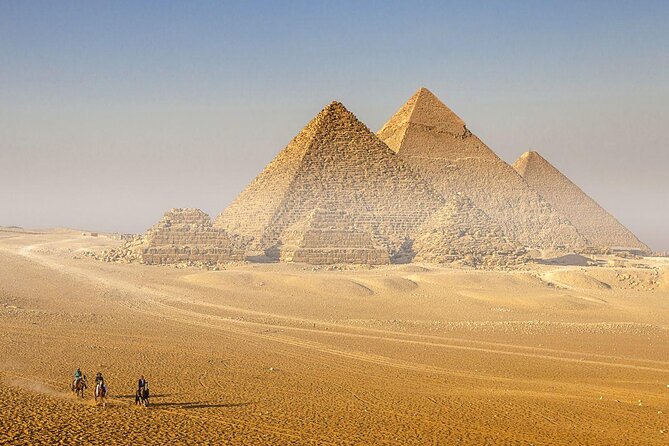
Expect a straightforward morning walk starting at 8:00 am from the Giza Pyramids Ticket office (Al Haram, Giza). You’ll spend time at the Great Pyramids of Cheops, Chephren, and Mykerinos, then head to the Valley Temple, and finish at the Sphinx for close-up viewing. One thing to consider is stamina: it’s a walking tour for 3 hours, so comfortable shoes matter more than you think.
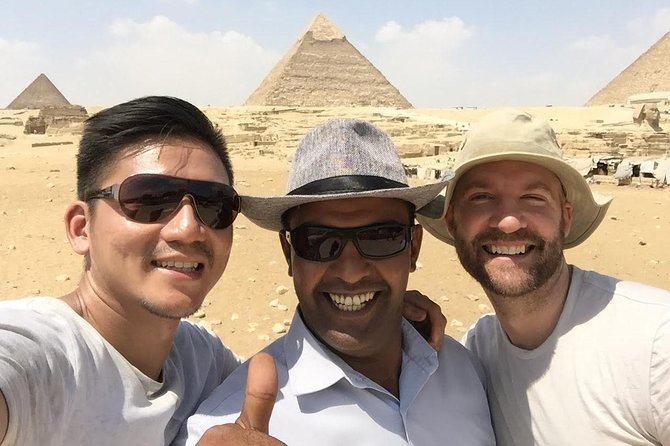
The guide behind this tour is Sherif Abd Elhameed, and the standout theme in the feedback is his energy and clarity. People also highlight his strong photo skills and the way he ties what you see to how the site connects to ancient rulers like King Chephren. If you want the fastest route to good photos and better context, this is a very practical choice.
In This Review
- Key Things to Know Before You Go
- Why This Giza Tour Makes Sense: Egyptologist Meets Photo Planning
- Price and Value: Why $28 Can Be a Deal (With One Important Caveat)
- Meeting at the Giza Pyramids Ticket Office (8:00 am) and What That Changes
- Stop 1: Great Pyramids of Giza (Cheops, Chephren, Mykerinos) at Walking Speed
- Valley Temple: Where the Story Gets Personal (and More Specific)
- The Sphinx: Close-Up Viewing With Better Framing
- Photography Tips You’ll Actually Use (Not Just Camera Talk)
- How the Walking Route Feels in Real Time
- Who Should Book This Tour (and Who Might Skip It)
- Should You Book the Giza Pyramids and Sphinx Walking Tour?
- FAQ
- What sites are included on the Giza Pyramids and The Sphinx Walking Tour?
- How long is the tour?
- What is the meeting point and start time?
- Is the entrance ticket included in the price?
- What is included in the tour price?
- What is not included?
- How big is the group?
- Is this tour walking-heavy?
- Can I cancel and get a full refund?
Key Things to Know Before You Go
- Up to 20 people max for a calmer pace around the monuments
- Egyptologist + professional photographer guidance for clearer stories and better angles
- All major stops are walkable, keeping your time focused on the pyramids area
- Great Pyramids plus Valley Temple plus Sphinx in one route
- You get photo tips built into the walk, not as an afterthought
Why This Giza Tour Makes Sense: Egyptologist Meets Photo Planning
The best part of this tour isn’t just that you get to see the pyramids. It’s how the day is structured so you don’t just look at big stone shapes and move on. With a guide like Sherif Abd Elhameed—an Egyptologist by description and a professional photographer by the tour design—you’ll get context while you’re standing in the right place to see it.
You’ll also get hands-on photography help. The tour doesn’t treat photos like luck. Instead, it focuses on where to stand and how to frame the shot among the iconic angles at Giza. That matters because the pyramids can look different depending on your position and time of day, and a good guide helps you avoid wasting your limited window.
The small-group size (maximum 20) is another quiet advantage. Around famous sites, the difference between a crowded scrum and a controlled group is the difference between rushed viewing and actually noticing details.
You can also read our reviews of more tours and experiences in Giza.


Price and Value: Why $28 Can Be a Deal (With One Important Caveat)
At $28 per person for a 3-hour walking tour, the price is low compared to what many Cairo-area tour add-ons charge for guided time. The value comes from two things you actually use: a qualified Egyptologist guide and a professional photographer guide.
But the tour price is not the full cost of visiting Giza. Admission fees for the Giza pyramids area are not included, and that’s the one bill you shouldn’t forget. The tour also notes that snacks are not included, which means you may want to bring water and a small snack if you’re the type to get hungry during a walk.
So yes, it can be a good value—but only if you plan for the entrance ticket separately. If you’re budget-conscious, this tour is a smart way to pay for the guidance while you handle the site entry costs on your own.
Meeting at the Giza Pyramids Ticket Office (8:00 am) and What That Changes

Starting at 8:00 am helps in a practical way: you’ll get into the Giza area early enough to make the most of your 3-hour window. Early timing also usually gives you better light for photos, and it’s easier to move around without feeling like you’re fighting the clock.
You meet at the Giza Pyramids Ticket office, listed at X4GR+589, Al Haram, Giza Governorate 3512201, Egypt. The tour returns you back to the same meeting point at the end, which is helpful if you’re keeping your day organized or planning your next stop in Cairo.
Also, it’s described as near public transportation, which can make day planning easier if you’re not using a private car for everything. For your own sanity, do plan to arrive a few minutes early so you can settle before the walk begins.
Stop 1: Great Pyramids of Giza (Cheops, Chephren, Mykerinos) at Walking Speed
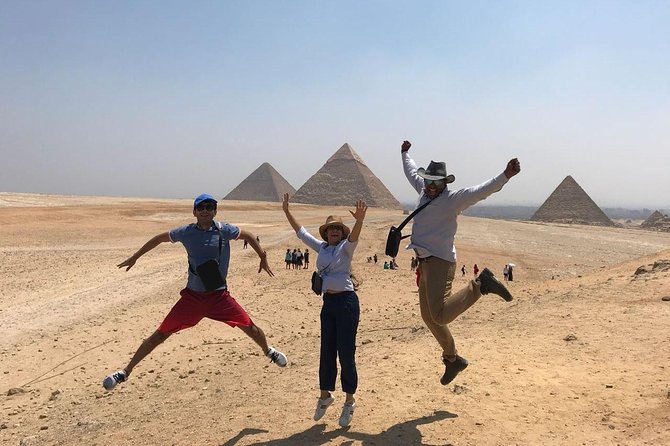
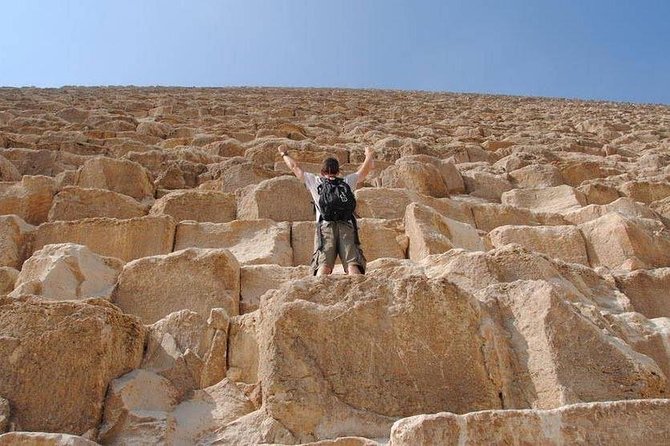
The first major phase is a close look at the Great Pyramids of Giza—Cheops, Chephren, and Mykerinos. Even though they’re part of the broader Giza plateau, they’re still the headline in Cairo, and this is where the tour spends most of its time (the first stop is listed at about 2 hours).
What makes this more than a basic photo stop is the guide’s job: you’re not just looking at the pyramids; you’re learning what you’re seeing while you’re standing in position. That can change how you interpret the shapes. For example, getting the names right matters, because each pyramid ties back to a different king and a different slice of what made the Giza site so important.
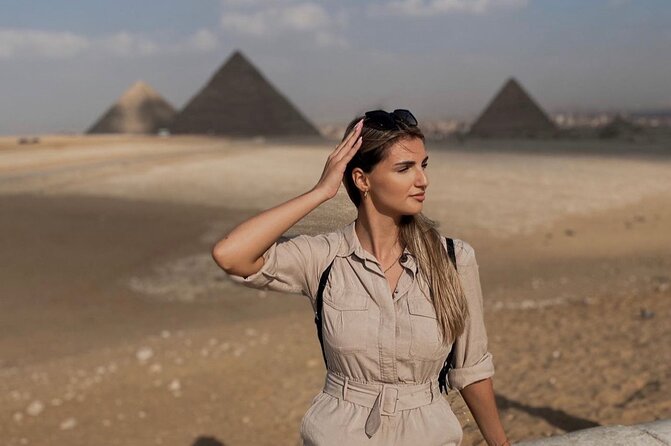
A practical tip: at the pyramids, your best photos often depend on where you stand, not just your camera. This is exactly where a photographer guide earns the ticket. You’ll get direction on angles so you’re not constantly circling, guessing, or taking shots that cut off the monument.
Valley Temple: Where the Story Gets Personal (and More Specific)
After the pyramids, the tour moves to the Valley Temple. This stop is described as the place where priests mummified the dead body of King Chephren, owner of the second pyramid at Giza.
This matters because temples like this help you see that Giza wasn’t only about building. It was about ceremonies and processes—rituals tied to the ruler’s afterlife and the site’s layout. In other words, the Valley Temple makes the stones feel less abstract. You start understanding the site as a functional complex, not just a scenic landmark.
Potential drawback here: if you’re expecting a super long museum-style explanation, you may want to keep your expectations aligned with a walking tour. The focus is on being there, seeing the right features, and using the time efficiently so the final stop at the Sphinx lands well.

The Sphinx: Close-Up Viewing With Better Framing
Then you’ll get to the Sphinx, the legendary guardian with a lion body and the head of King Chephren. This is the kind of sight where people often get one quick glance, snap a photo, and move on. The value of this tour is that you don’t have to do it that way.
Because the guide is helping with photography, you’ll spend more time positioning yourself for the classic views. That usually means you’re not only capturing the Sphinx from one angle. You’re learning how to work around the viewpoint constraints so the scale reads correctly in photos.
Also, the Sphinx isn’t just a selfie spot. Its connection to Chephren is part of what gives it meaning in the overall Giza story. The guide can tie that in while you’re still there looking at it, instead of leaving you to piece it together later.
Photography Tips You’ll Actually Use (Not Just Camera Talk)
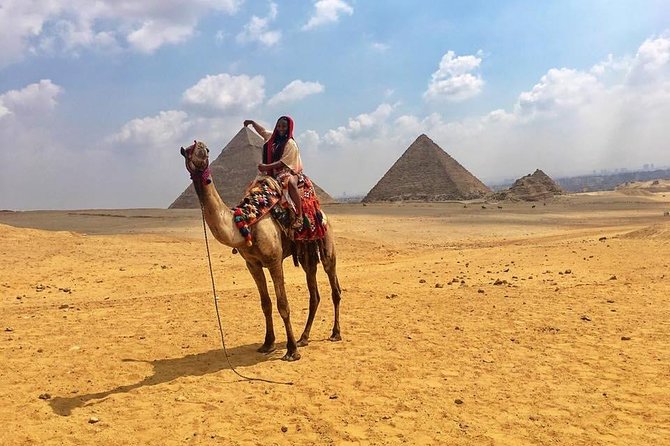
One reason this tour earns such strong feedback is how it treats photography as something you can improve on-site. The tour explicitly mentions the guide will help you take the best photos during the walk, and the reviews reinforce that the guide has serious photo skills.
Here’s how that translates for you in real life:
- You’ll get suggestions on where to stand rather than just being told take a picture.
- You’ll likely get quick visual checks so you can adjust before you waste time.
- You’ll learn practical framing tricks that work at Giza’s monument-heavy layout.
If you’ve ever visited a landmark and felt like your photos don’t match what you saw, this is the antidote. Good guidance means you spend your time on images you’ll actually be happy to keep.
And a small bonus: when you’re guided for photos, you’re also guided for viewing. You end up noticing details you’d miss if you were racing to capture everything.
How the Walking Route Feels in Real Time
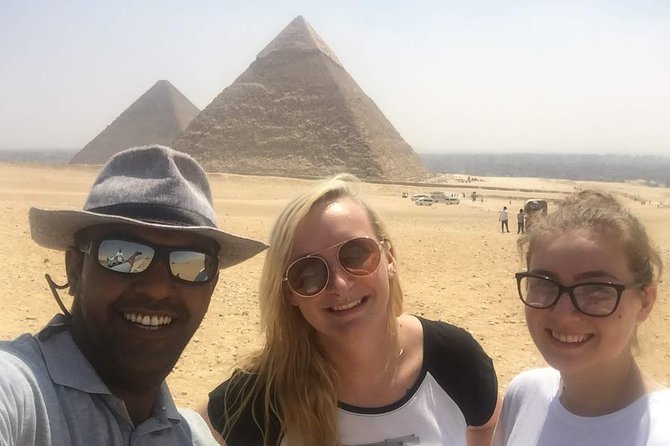
This is a walking tour, with all sites described as within walking distance. The total duration is listed as about 3 hours, so you’re looking at a focused morning rather than a half-day production.
That structure is great if you want a clean, efficient Giza visit. It’s less ideal if you dislike walking between monuments, or if you need a lot of breaks for mobility reasons. The tour states that most travelers can participate, which suggests it’s not built as an extreme endurance day, but comfort still matters.
Wear shoes you can stand in. Bring a hat if you’re sensitive to sun. And given that snacks aren’t included, plan for basic comfort so you don’t lose your attention halfway through the pyramids portion.
Who Should Book This Tour (and Who Might Skip It)
This tour is a strong fit if you:
- want context from an Egyptologist while you’re at the monuments
- care about photos and want practical help with angles
- prefer a small group (up to 20) and an efficient route
- want to cover the pyramids, Valley Temple, and Sphinx in a single morning
You might consider a different option if you:
- need a very long stay at each site (this is a 3-hour walk)
- want snacks and don’t plan to bring any
- are expecting the ticket price to include all Giza entrance costs
Should You Book the Giza Pyramids and Sphinx Walking Tour?
I think this is a smart booking when your priority is quality guidance. Sherif Abd Elhameed is repeatedly praised for energy and clarity, and the tour is designed around what most people struggle with at Giza: getting good viewpoints fast and understanding what you’re seeing.
Book it if you want to make the most of limited time and come away with both better photos and a clearer story of Cheops, Chephren, Mykerinos, the Valley Temple link to Chephren, and the Sphinx’s classic form. Skip it only if you’re trying to minimize walking or you’re hoping the advertised price covers every on-site fee.
FAQ
What sites are included on the Giza Pyramids and The Sphinx Walking Tour?
You visit the Great Pyramids of Giza (Cheops, Chephren, and Mykerinos), the Valley Temple, and you also get close to the Sphinx.
How long is the tour?
The tour duration is about 3 hours.
What is the meeting point and start time?
The meeting point is the Giza Pyramids Ticket office (X4GR+589, Al Haram, Giza Governorate 3512201, Egypt). The tour starts at 8:00 am.
Is the entrance ticket included in the price?
No. Admission fees for the Giza pyramids area are not included, and the tour notes that the admission ticket is not included.
What is included in the tour price?
Included are a professional photographer guide, a qualified Egyptologist guide, and a walking tour.
What is not included?
Entrance fees and snacks are not included.
How big is the group?
The tour has a maximum of 20 travelers.
Is this tour walking-heavy?
Yes. It is a walking tour and describes the sites as within walking distance.
Can I cancel and get a full refund?
Yes. There is free cancellation, with a full refund if you cancel at least 24 hours before the experience’s start time.
If you want, tell me your travel dates and whether you already plan to buy Giza entrance tickets. I can help you estimate how to fit this tour into a half-day Cairo plan without rushing.