REVIEW · GIZA
Private Tour to explore Giza Pyramids – Saqqara -Memphis
Book on Viator →Operated by Egypt Tailor Made Day Tours · Bookable on Viator
Watching pyramids from close range is unreal.
This private day is built to solve the biggest problem in Cairo: Giza, Saqqara, and Memphis are far apart, so the only way to do all three without rushing is by car with an Egyptologist explaining what you’re actually seeing. I also like the human pace here—stops are spaced out (about 2 hours for Giza, then shorter museum and monument blocks) so you can take photos, walk, and ask questions. One thing to plan around: pyramid entry details can be a little tricky, so I’d confirm exactly which tickets are included before you arrive.
You’ll likely get a standout guide in the mix—names like Tawfik, Sabry, Heba, and Reda show up again and again in the experience feedback. Expect a smooth day with hotel pickup, bottled water, and that rare bonus in Egypt: time that feels organized, not chaotic. My only caution is the camel ride and lunch are offered as an upgrade option, so check pricing options so you don’t end up surprised at payment time.
In This Review
- Key highlights (the parts you’ll feel right away)
- Why this Giza–Saqqara–Memphis day tour is a smart move
- Pickup, private comfort, and the logistics that actually matter
- Giza Plateau: the 3 pyramids, Great Pyramid context, and how to enjoy your time
- Great Sphinx: half-lion, half-human, and what to look for
- Saqqara Step Pyramid of King Zoser: seeing the turning point in pyramid building
- Memphis and Mit Rahina Museum: Ptah, an older capital, and what survives
- Camel ride and lunch upgrade: what changes in your day
- Value and price: is $42 per person a good deal?
- Who should book this private tour
- Should you book? My call for most first-time visitors
- FAQ
- How long is the Giza–Saqqara–Memphis private tour?
- What does the tour cost?
- Is hotel pickup and drop-off included?
- Are entrance fees included?
- Is the camel ride included?
- Is there free cancellation?
Key highlights (the parts you’ll feel right away)
- A single full day across three major sites instead of hopping between tours
- Egyptologist live commentary to turn stones into a real timeline
- Hotel pickup and drop-off by air-conditioned vehicle from Cairo and Giza areas
- Optional 20-minute camel ride plus an Egyptian lunch like koshary or falafel
- Main entrance fees and bottled water included in the standard package (with one confirm-ahead note)
Why this Giza–Saqqara–Memphis day tour is a smart move
If you only have one day, you’ll quickly feel the geography problem. Giza is west of Cairo, Saqqara sits farther south, and Memphis is on the outskirts. Doing this yourself means multiple transport changes, waiting around, and trying to understand sites with limited context.
This tour’s real value is that it keeps you focused on the places you came for. You’re in an air-conditioned private vehicle, you get a single guide doing the talking for the day, and you don’t lose the momentum that makes the pyramids feel special.
I also like that it’s structured like a circuit. You start at the big-ticket monument in Giza, then you move into the Sphinx area, and finally you work your way toward Saqqara and the Memphis area. That sequencing helps your brain connect the story: old royal power at Giza, early monumental experimentation at Saqqara, and then the later capital culture centered around Ptah.
You can also read our reviews of more private tours in Giza

Pickup, private comfort, and the logistics that actually matter
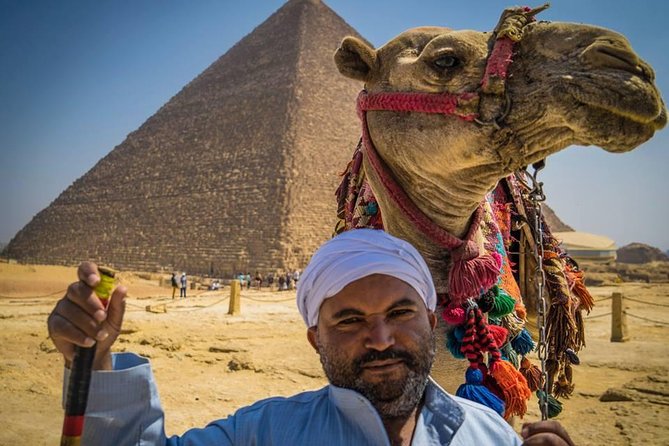
Hotel pickup and drop-off are offered from key areas in Cairo and Giza, and that matters more than you might think. The typical Cairo day can be swallowed by “getting to the starting line.” Here, you’re picked up and dropped back so you can spend your energy walking, looking, and learning.
Because it’s private, you set the pace with your guide. You’re not stuck matching your group’s speed, and you can slow down if you want to linger at a specific angle—especially at Giza where the best views are all about positioning.
Another practical plus: bottled drinking water is included. In Egypt, small things like hydration and shade breaks can make a day feel comfortable instead of exhausting.
Giza Plateau: the 3 pyramids, Great Pyramid context, and how to enjoy your time
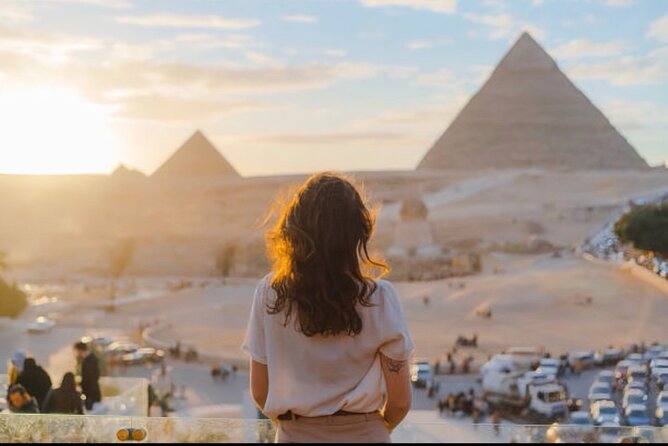
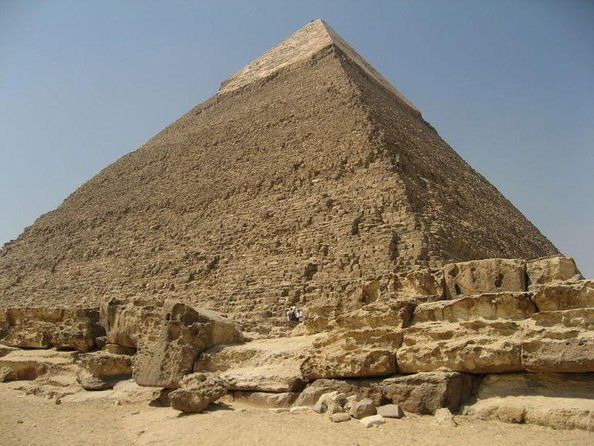
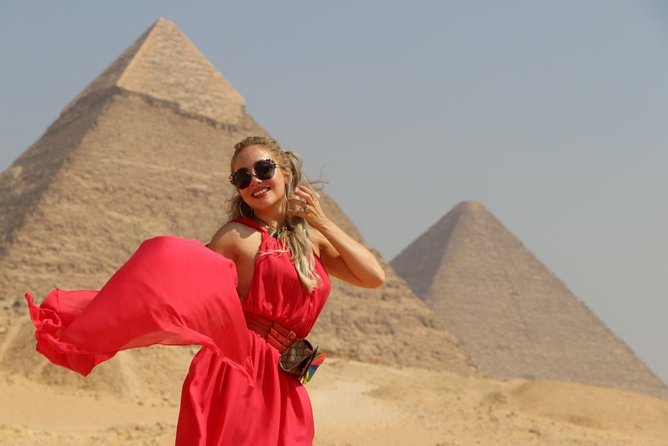
The day starts on the Giza Plateau, where you’ll see the three pyramid kings: Cheops (Khufu), Chephren (Khafre), and Menkaure (Mykerinos). Your guide points out how this complex feels less like one monument and more like a whole royal setting built to impress for thousands of years.
A key detail the guide experience emphasizes is that the Great Pyramid of Cheops is the only one of the ancient seven wonders still standing. The difference in age—around 2,000 years older than the other wonders—helps you understand why people describe it as a miracle of engineering. It’s not just a big pyramid. It’s the earliest giant statement that set the tone for what came later.
How you should use your ~2 hours here:
- Arrive mentally ready for walking. The plateau is a spread-out zone, and you’ll want comfortable shoes.
- Ask your guide to explain the contrasts between the three pyramids as you walk. Even if you’ve seen photos, on the ground the size relationships are easier to feel.
- If you care about photos, mention what you want at the start: wide skyline shots, close pyramid angles, or Sphinx-in-frame compositions. Your guide can help you plan where to stop.
One note worth flagging: a common friction point in pyramid days is ticket coverage for specific areas. The tour description says main entrance fees and complimentary entrance are included, but some people find that part of the pyramid entry is treated separately. I’d confirm this before you go so you’re not deciding on the spot.
Great Sphinx: half-lion, half-human, and what to look for
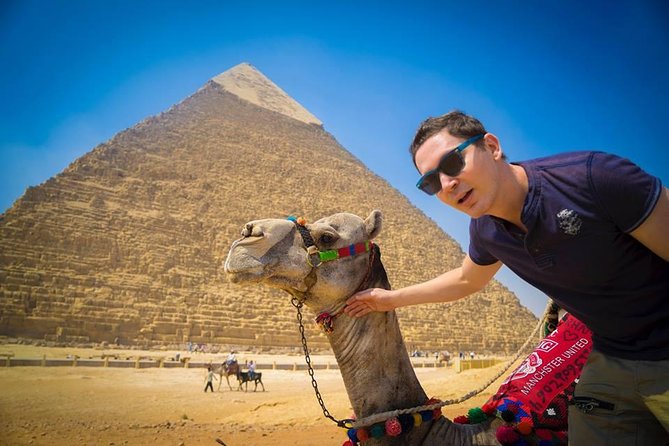
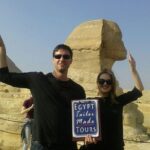
Right after the plateau, you’ll experience the Great Sphinx. This is the statue that makes Egypt feel like a dream: a half-lion body with a human-like face, carved as if it’s guarding the plateau forever.
Your guide uses Egyptology-style storytelling to explain what it meant in ancient Egyptian mythology. The practical value here is that you’ll stop seeing the Sphinx as just another photo stop. Instead, you’ll understand why it’s paired with the pyramids and why it became a lasting symbol of royal power and divine association.
In terms of your time, you’re allotted about an hour. That’s enough for:
- a calm walk around nearby viewpoints
- a couple of photo angles
- time to listen and ask questions without feeling rushed
If you’re sensitive to heat, this is also a good hour to pace yourself. Take shade breaks when you can, and don’t feel like you need to sprint between spots.
Saqqara Step Pyramid of King Zoser: seeing the turning point in pyramid building
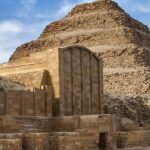
Saqqara is where the story shifts from “the biggest pyramids” to “the invention phase.” You’ll visit the Saqqara Complex connected with King Zoser, with a focus on the step pyramid—an architectural milestone considered Egypt’s first pyramid-style monument and an early example of rock-cut construction on a monumental scale.
The step pyramid is fascinating because it’s not trying to be perfect right away. It looks like a stepwise solution—proof that monumental architecture evolved through experimentation and ambition.
Your stop here is about an hour, which is enough to:
- understand why step pyramids were a breakthrough
- grasp how Saqqara differs from Giza in purpose and style
- get a feel for the layout without turning it into a marathon
If you only know the Great Pyramid story from books, this is the moment that makes Egypt’s pyramid era feel bigger. You start to see it as a long development, not a single instant.
Memphis and Mit Rahina Museum: Ptah, an older capital, and what survives
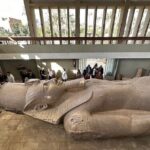
After Saqqara, you head toward the Memphis area. Memphis was a major capital until around 2,200 BC, and it was connected with Ptah—the deity of creation and artistry.
Here’s what makes the Memphis stop genuinely useful: it expands your day beyond “royal tombs and monuments.” You get a sense of where people lived, worked, and practiced religion around a powerful cultural center.
You’ll explore the Mit Rahina Museum area connected with Memphis. Your time is about an hour, and that pacing works well because you’re already museum-weary from pyramids and outdoor walking. This segment gives you a different type of understanding: more interpretive, more about meaning and context.
The best way to enjoy this hour is to treat it like a bridge. Your guide can connect what you just saw (architecture and royal symbolism) to why Egyptian religious life and state power mattered day-to-day. When it clicks, Memphis stops feeling like an extra.
Camel ride and lunch upgrade: what changes in your day
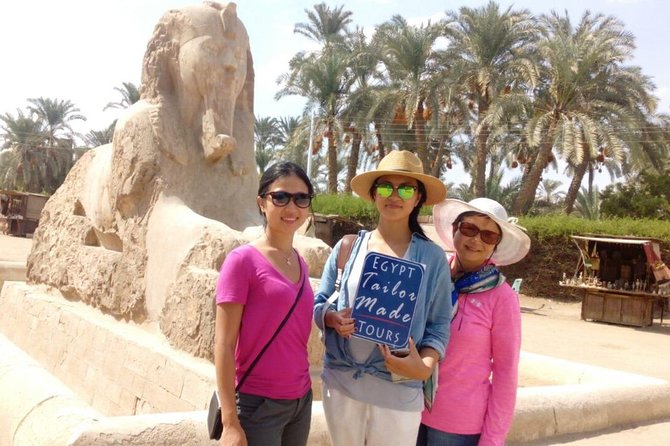
This tour offers an upgrade option that includes both a camel ride and a traditional Egyptian lunch—like koshary or falafel. The camel ride is described as about 20 minutes.
For some people, the camel ride is the highlight. For others, it’s more of a box-check. Either way, think about what you want from your time at Giza:
- If you’re doing the ride, you’ll want to factor it into your attention span at Giza. You might not want to spend the entire plateau time chasing photos.
- If you skip the ride, you’ll have more flexibility for walking and viewpoint hunting with your guide.
The lunch part is also a quality-of-day factor. Eating local food during a long day usually beats scrambling for something quick on your own, and the fact that the menu is set toward koshary or falafel makes it more straightforward.
One practical tip: if you’re picky about meal timing, mention it to your guide at pickup. Your guide can usually help you avoid the kind of schedule stress that steals the joy from a day like this.
Value and price: is $42 per person a good deal?
At $42 per person, this is priced like a true day tour bargain—especially because it includes Egyptologist guiding, air-conditioned private transport, and main entrance fees per the tour description. Bottled water is also included, which you’d otherwise pay for during a long day.
That said, here’s the one place where value can wobble: ticket specifics for pyramid areas. The tour description says entrance fees are included and entrance is complimentary, but one common concern is that some pyramid entry tickets may not be treated the same way as other entries. If you’re trying to keep costs controlled, confirm which entrances are covered for your exact dates and package.
If you want a clean way to judge value, use this checklist:
- You’re saving the cost and hassle of multiple independent transports across three distant sites.
- You’re paying for a guide who can give meaning, not just movement between stops.
- You have optional upgrades (camel ride + lunch) without having to hunt for those separately.
If you value convenience, context, and avoiding Cairo time-waste, this price is easy to justify.
Who should book this private tour
I’d book this for you if:
- you want one organized day to cover Giza, Saqqara, and Memphis
- you prefer a guide who explains what you’re seeing while you walk
- you’re traveling with people who would rather learn than just collect photos
- you want an option for a camel ride and a sit-down Egyptian lunch
It’s also a good fit if you’re nervous about navigating independently. A private guide reduces decision-fatigue: where to go, when to go, and what to focus on once you’re there.
If you’re the type who loves doing everything on your own, you might already know how to manage transport between sites. But even then, the time saved and the interpretive guidance can make it feel like the day is “working for you,” not against you.
Should you book? My call for most first-time visitors
Yes, I think you should book this tour if you want a one-day hit list that still feels meaningful. The combination of Giza + Saqqara + Memphis is hard to pull off well on your own, and the private setup keeps the day from turning into a stress test.
Your best move before you go is simple: confirm the exact entrance coverage for the pyramid areas you care about. If everything is clearly included for your chosen package, you get an excellent value day—air-conditioned comfort, Egyptologist commentary, and three of Egypt’s biggest cultural landmarks in one run.
FAQ
How long is the Giza–Saqqara–Memphis private tour?
The duration is listed as about 6 to 8 hours.
What does the tour cost?
The price is $42.00 per person.
Is hotel pickup and drop-off included?
Yes. Pickup and drop-off are offered from the Cairo and Giza areas mentioned in the tour details.
Are entrance fees included?
The tour includes main entrance fees, and the highlights mention complimentary entrance. Still, it’s smart to confirm the specific pyramid entry coverage for your package.
Is the camel ride included?
The 20-minute camel ride is included only if you select the all-inclusive price option.
Is there free cancellation?
Yes. You can cancel up to 24 hours in advance for a full refund.