One day in Luxor feels like two lifetimes. This private VIP tour stacks the West Bank highlights like the Valley of the Kings and then carries you across to the East Bank temples with your own Egyptologist.
I love the focus on real tomb time: you visit four royal tombs, including King Tut’s, with guide context that makes the carvings feel less like random walls and more like a story. I also like that you get a strong East Bank backbone at Karnak Temple, plus the nearby Luxor Temple to close the day.
One consideration: it’s an 8 to 10 hour day, so you’ll want to come ready for a lot of sites and walking through tomb corridors and temple spaces. Also, double-check whether your selected option includes entrance fees, since the inclusions mention entrance fees if options are chosen.
In This Review
- Key highlights worth planning around
- Why this east-and-west Luxor day tour actually makes sense
- Hotel pickup, private transport, and how the day stays smooth
- Valley of the Kings: Tutankhamen plus three royal tombs
- Tomb-by-tomb tour notes: Ramses VI, Merenptah, and Ramses III
- Tomb of Ramses VI
- Tomb of Merenptah
- Tomb of Ramses III (KV 11)
- Hatshepsut at Deir el Bahari, then Colossi of Memnon
- East Bank payoff: Karnak Temple and Luxor Temple
- Karnak Temple’s key sights (and what to look for)
- Luxor Temple: the closing chapter
- Optional hot-air balloon over the Nile: how it fits this day
- Price and value: what $37.98 really covers
- Should you book this private VIP Luxor day tour?
- FAQ
- How long is the private VIP Luxor east and west bank tour?
- Does the tour include hotel pickup and drop-off?
- Is this tour private or shared with other groups?
- Are entrance fees and admission tickets included?
- Is lunch included?
- Can I cancel for free?
Key highlights worth planning around
- Hotel pickup and drop-off make the day easier, especially when you’re doing both banks in one go.
- Egyptologist-led tomb visits for four royal tombs, with stop-by-stop explanations instead of a quick circuit.
- Deir el Bahari (Temple of Hatshepsut) pairs well with the Valley of the Kings, since you’ll see how power and ideology were carved into stone.
- Karnak Temple’s big visual hits like the Hypostyle Hall’s 134 columns and major obelisks, followed by Luxor Temple.
- Optional hot-air balloon over the Nile is the classic add-on if you want a break from archaeology-heavy time.
Why this east-and-west Luxor day tour actually makes sense
Luxor is famous for doing it big: tombs on one side of the Nile, temples on the other. The catch is that many one-day plans only scratch one bank, so you lose the chance to compare how burial culture and living-worship culture feel when you see them back to back.
This itinerary is built to keep momentum. You start on the West Bank with royal tombs in the Valley of the Kings, then shift gears to Deir el Bahari and the Colossi of Memnon. After lunch (if you choose the lunch option), you head to the East Bank for Karnak and Luxor Temple—basically the two anchors most people come for.
The private setup matters here. You’re not sharing your day with strangers who are always ready to move on. Your Egyptologist can tailor pacing to your group’s questions, and the driver keeps the transfers efficient in an air-conditioned vehicle.
You can also read our reviews of more private tours in Luxor
Hotel pickup, private transport, and how the day stays smooth
The day starts with pickup from your hotel in Luxor and ends with drop-off back at your hotel. That sounds basic, but it’s a big deal in Luxor when you’re trying to fit major sites into one day. Less time negotiating local transport means more time inside tombs and temples.
You travel in a private, air-conditioned vehicle, with an English-speaking guide. The itinerary also uses a mobile ticket approach, which typically makes check-in simpler than chasing paper tickets later.
A practical note: most stops include admission, but the inclusions say entrance fees if options choose. So before you go, confirm what’s covered in the option you selected. It’s not a flaw in the tour plan, it’s just the kind of detail that affects total value.
Valley of the Kings: Tutankhamen plus three royal tombs
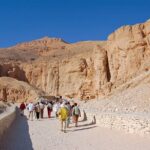
The Valley of the Kings is the West Bank’s headline act for a reason. These are not just rooms with hieroglyphs—they’re mountain-cut tomb architecture designed for a specific afterlife plan. Your Egyptologist’s job is to translate that plan into something you can picture, not just read.
This day tour includes a total of about 2 hours at the Valley of the Kings area for the main tomb visits, with time set aside for four royal tombs. The list includes tombs for Ramses, Horemheb, Merenptah, and King Tut. The standout story here is Tutankhamen.
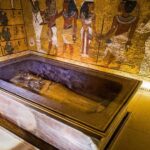
You’ll get context that his tomb was discovered nearly intact in 1922 by Howard Carter. The tour also points out that Tut’s famous golden mask is displayed at the Egyptian Museum in Cairo, which helps you connect what you may have seen on posters with the actual burial site experience on the ground. In the Valley of the Kings, the focus isn’t the mask—it’s the burial setting and the mummy display you can experience as part of the tomb complex.
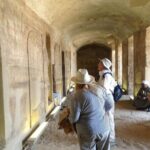
What to expect inside: tombs vary in design, and that variety is part of the thrill. Some have ceilings and sarcophagi with detailed painted work; others emphasize corridor layout and religious text placement. Your guide’s explanations make those differences easier to spot in the dim light.
A mild caution: tomb time is scheduled. Even with a guide, you won’t have hours to wander slowly. If you’re the type who hates time limits, you may feel the schedule like a gentle sprint.
Tomb-by-tomb tour notes: Ramses VI, Merenptah, and Ramses III
After your initial Valley of the Kings introduction, the plan breaks down into specific tombs. This is where the tour earns its “VIP” label—because it doesn’t just name-drop kings. It tells you what to look for.
Tomb of Ramses VI
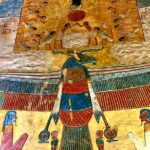
This stop lasts about 30 minutes, and it’s a strong choice if you love color and detail. The tomb is described as having rich decoration, including the ceiling above the sarcophagi with the goddess Nut stretching across the space. The sarcophagus is noted as one of the largest in the valley, even if some painted areas have deteriorated over time.
If you’ve ever felt that Egypt tombs blur together, this is the kind of stop that resets your attention. It gives you a concrete visual target (Nut on the ceiling, the scale of the sarcophagus) so your photos and memories have something to hold onto.
A few more Luxor tours and experiences worth a look





Tomb of Merenptah
Also about 30 minutes. This one is especially interesting for how the tour frames mythology and design. You’ll hear about Ptah as a demiurge of Memphis, and the religious role of deities protecting the dead.
The tomb layout is described as showing a change in architecture: fewer lateral rooms, but taller corridors and rooms. You’ll also get the note that the tomb does away with the jogged axis used earlier (dating back to Horemheb) and instead builds the entire tomb on a single axis. There’s also a wider entrance than in earlier tombs.
That kind of detail matters because it lets you see tombs as engineered choices—not just decoration. You start to notice how later rulers and builders adjusted the “path” into the burial space.
Tomb of Ramses III (KV 11)
About 30 minutes again. This tomb is framed as a complex system, with decorations that include colourful painted sunken reliefs featuring traditional ritual texts such as the Litany of Ra and the Book of Gates—plus scenes of Ramses before the gods.
This tomb also includes secular scenes in smaller side rooms, including foreign tributes and detailed pottery imported from the Aegean. There are also royal armoury scenes and blind harpists, which gives the tomb one of its alternative names: Tomb of the Harpers.
If you want one tomb that feels less purely religious and more like a snapshot of what the kingdom looked like, Ramses III is a great bet. The foreign-tribute detail is the kind of fact your brain grabs and keeps.
Hatshepsut at Deir el Bahari, then Colossi of Memnon
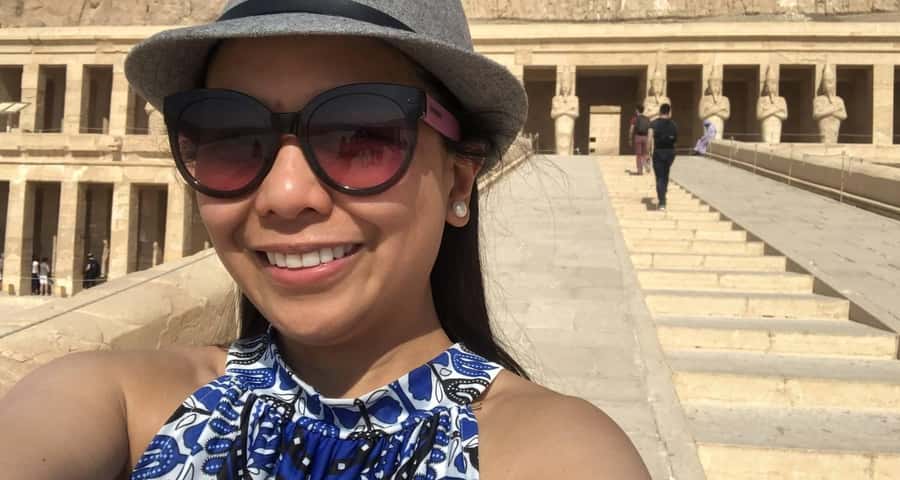
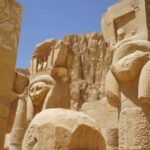
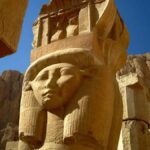
After the tomb sequence, you move to Deir el Bahari for the Temple of Queen Hatshepsut, with about 1 hour 30 minutes at the site. This stop is more than a breather from dark corridors. It’s a different kind of statement.
Hatshepsut is presented as the only woman to reign over Egypt as Pharaoh, and the tour connects her to the same dynasty as King Tutankhamen. Seeing her temple after the Valley of the Kings helps you understand that power wasn’t only about burial—it was built into public stone, visible during life.
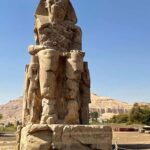
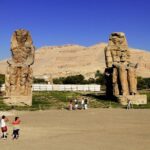
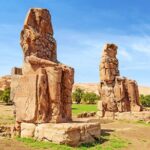
Next comes the Colossi of Memnon for about 15 minutes. These are the two largest ancient statues in Egypt, dating to the era of King Amenhotep III. For a short stop, they’re worth it because they provide scale. You look at the sheer size and suddenly the rest of the day feels less abstract.
Practical note: 15 minutes can be perfect here if you’re mostly there to take in the size and hear the guide’s framing. If you want to linger, you’ll have to do that with your own timing, since the day is structured for multiple anchors.
East Bank payoff: Karnak Temple and Luxor Temple
Once you cross back to the East Bank, the tour turns big, bright, and wide. The headline is Karnak Temple, followed by Luxor Temple to tie everything together.
Karnak Temple’s key sights (and what to look for)
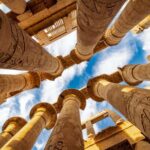
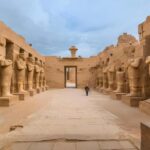
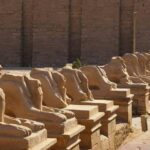
You get about 2 hours for Karnak. The plan calls out the Avenue of Sphinxes, the Hypostyle Hall with 134 gigantic columns, the obelisks of Queen Hatshepsut and Tutomosis I, and the Temple of Amon with lotus and papyrus designs.
You’ll also hear about the Granite Scarbeus of Amenophis III and the Sacred Lake. That list matters because Karnak is layered. Different reigns added different pieces, so it can feel like a scatter of monuments if you don’t have interpretation.
This is where your Egyptologist earns their keep. With guided explanation, you start linking the dots: who built what, what symbols show up, and how religious space evolved through time.
The itinerary includes quick obelisk-focused stops (ten minutes each) and then a further temple focus at the end of the Karnak block. If you’re the kind of person who loves photos, the short stops for the obelisks can be useful. If you prefer deeper time, ask your guide to spend less on photo moments and more on the Hypostyle Hall and Temple of Amon.
Luxor Temple: the closing chapter
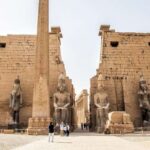
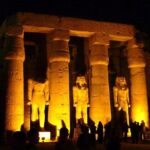
Finally, you go to Luxor Temple for about 1 hour 30 minutes. It’s tied to ancient Thebes and described as Ipet-resyt, the Southern Sanctuary. The tour also notes that it sits roughly three kilometers south of Karnak, once linked by a processional way bordered with sphinxes.
The tour says the oldest evidence dates to the Eighteenth Dynasty (c. 1550–1295 BC). That gives you a nice frame: after touring tombs and Karnak’s layered additions, Luxor Temple feels like a human-scale ritual space that belongs to the same broader story.
Optional hot-air balloon over the Nile: how it fits this day
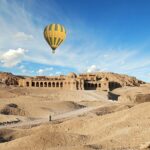
The experience mentions an optional hot-air balloon ride for a different kind of view. From the data, balloon costs are treated as an optional activity cost, so it’s not part of the base price.
Why add it? Because it breaks the “stone and symbols” routine and gives you a wide-angle perspective of how Luxor sits along the Nile. If you’re someone who likes a visual reset after intense site visits, this is a good match. If you’re already committed to the day’s tight schedule, treat it as a choose-your-moment decision rather than an automatic add-on.
Price and value: what $37.98 really covers
At $37.98 per person, this tour is priced like a practical budget VIP day rather than a premium splurge. The biggest value driver isn’t just the list of attractions—it’s the pairing of private transport, pickup/drop-off, and English-speaking Egyptologist guidance across both banks in one day.
Here’s what you should connect to value:
- More sites than a single-bank plan. Most “one day Luxor” ideas only hit one side. This one covers the West Bank tomb complex plus Karnak and Luxor Temple on the East Bank.
- Entrance fees can be included, depending on your option. The inclusions say entrance fees if options choose, and the stops list indicates admission ticket included at each stop. Before you book, confirm your selected option includes the entries you care about.
- Air-conditioned private vehicle. That matters in a long day. Even if you love being outside, you’ll appreciate having a comfortable transfer between sites.
- Lunch and coffee/tea options. Lunch is listed as “if option choose,” while coffee and/or tea are included. That’s a nice support if you’re trying to keep energy stable for the full 8 to 10 hours.
What’s not included: tips and personal expenses, plus optional activity costs (including the hot-air balloon).
If you’re traveling in a small group, the “private” aspect often makes the day feel better than a standard group tour. And if you’re booking a month ahead (it’s commonly booked about 30 days in advance), you’ll usually have more options for your preferred pickup timing.
Should you book this private VIP Luxor day tour?
Book it if you want a full Luxor snapshot with real Egyptology support and you’re comfortable committing to a longer day. The main strength is that you’re not only seeing monuments—you’re getting tomb context for multiple royal burials and then walking that understanding into Karnak and Luxor Temple.
Skip or rethink it if you dislike tight scheduling, because tomb visits are time-boxed and you’ll be moving through many major stops in one day. Also, make sure you’ve confirmed what entrance fees and lunch option are included in your exact package so you’re not surprised later.
For most first-timers, this is a smart way to cover both banks without losing the meaning of what you’re seeing.
FAQ
How long is the private VIP Luxor east and west bank tour?
The tour runs about 8 to 10 hours.
Does the tour include hotel pickup and drop-off?
Yes. Pickup and drop-off from hotels in Luxor are included.
Is this tour private or shared with other groups?
It’s private, meaning only your group participates.
Are entrance fees and admission tickets included?
Admission ticket times are marked as included for the stops, and the inclusions say entrance fees are included if your option includes them. Check the exact option you book to confirm.
Is lunch included?
Lunch is included only if you choose the lunch option. Coffee and/or tea are included.
Can I cancel for free?
Yes. Free cancellation is available if you cancel at least 24 hours in advance for a full refund.