REVIEW · LUXOR
Private Guided Tour to Valley of the Kings
Book on Viator →Operated by Bastet Travel · Bookable on Viator
Tombs can feel overwhelming. This one stays organized, with a private Egyptologist guide and air-conditioned pickup so you spend more time looking closely and less time figuring things out. The morning format also helps because you’re moving early, while the West Bank is still calm.
I especially like the way your guide turns the Valley of the Kings from a name on a map into a place with purpose—pharaoh by pharaoh, corridor by corridor. I also like the structure: multiple royal tomb stops in a tight 4-hour window, with real details about wall scenes, rituals, and why each burial space was built differently.
One thing to plan for: the entrance fee (listed at $13) is not included in the $50 tour price, so you’ll want to budget a little extra.
In This Review
- Key Highlights
- A 4-Hour Private Valley of the Kings Morning That Actually Feels Manageable
- Getting There: Hotel Pickup, A/C Comfort, and a Clear West Bank Start
- Your Tomb Strategy: Why the Guide’s Wall Notes Matter
- Stop 1 at the Valley of the Kings: Where Your Guide Sets the Scene
- What you should do at this stage
- KV 11 Ramses III: Painted Rituals, Foreign Tributes, and the Harpers Name
- How this tomb should feel in your head
- Practical consideration
- Tomb of Merenptah (Tomb 8): The Architecture Changes, and So Does the Mood
- What to look for here
- Tutankhamun: The Face-to-Face Moment That Makes the Site Personal
- Why this stop works on a private tour
- KV 2 Ramses IV: Blue-and-White Wall Texts and the Nut Ceiling Scene
- What makes KV 2 worth the stop
- The Ramesseum and Other West Bank Context Stops (What They Add)
- Ramesseum: Ramses II’s funerary temple
- Valley of the Nobles
- Carter House: Howard Carter’s museum stop
- Colossi of Memnon: Free, monumental, and an easy win
- Price and Entrance Fees: Is $50 Worth It?
- Comfort, Timing, and What to Expect Underground
- Who This Private Tour Fits Best
- Should You Book This Private Valley of the Kings Tour?
- FAQ
- How long is the private tour?
- Is hotel pickup and drop-off included?
- Are entrance fees included in the $50 price?
- Which tombs are included?
- Is this a private tour?
- What transportation is provided?
- Can I cancel for a full refund?
Key Highlights
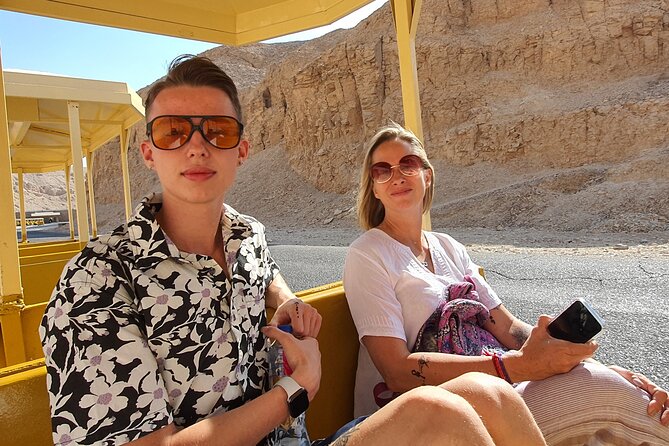
- Private, Egyptologist-led tomb visits with room to ask questions at your own pace
- The Ramses III walkthrough (KV 11), including the painted ritual scenes and the famous Tomb of the Harpers detail
- Merenptah (Tomb 8) architecture notes, like how corridors and side rooms change with time
- Tutankhamun’s tomb stop, with a chance to see the royal mummy in its tomb
- Ramses IV (KV 2) visual impact, especially the blue-and-white decoration and the rose-colored granite sarcophagus detail
- Short, smart extras like the Colossi of Memnon (free), plus context stops tied to the wider West Bank story
A 4-Hour Private Valley of the Kings Morning That Actually Feels Manageable
A lot of Valley of the Kings tours try to cram in everything, then rush you through the best parts. This one is built around a clear rhythm: get you from central Luxor (or the harbor) to the West Bank by air-conditioned vehicle, then guide you through the key tombs without the chaos of a big group.
The big win for you is the private format. Your guide isn’t splitting attention across strangers, so you can slow down when you see something specific—like a ceiling design, a side-room scene, or a text that the guide points out. That’s where the Valley of the Kings stops being just dark tunnels and starts becoming an illustrated story about kings, gods, and the afterlife.
It’s also short enough to fit a morning plan. The tour runs about 4 hours, and the tomb segments are scheduled as quick but meaningful stops. If you’re the type who likes context before you start walking (instead of reading signs later), you’ll appreciate that.
You can also read our reviews of more guided tours in Luxor
Getting There: Hotel Pickup, A/C Comfort, and a Clear West Bank Start
Pickup and drop-off are included, which matters more than it sounds. Luxor traffic and the West Bank road can add stress if you’re trying to self-navigate. Here, the plan is simple: you’re collected in the morning, transported in a private air-conditioned vehicle, then returned after the tour.
Because it’s morning, you’ll usually get a calmer feel at the site entrances. In practical terms, that often means less jostling at tomb openings and quicker transitions between stops. You’ll still be walking on uneven ground and moving between entrances, but you’re not starting your day frazzled.
There’s also a small planning detail you’ll thank yourself for later: the tour uses a mobile ticket. That tends to reduce back-and-forth the day of, and it’s one less thing to misplace when you’re juggling sun, photos, and tomb queues.
Your Tomb Strategy: Why the Guide’s Wall Notes Matter
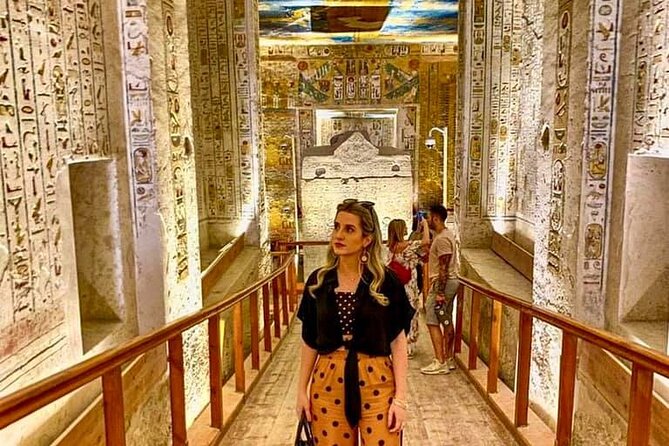
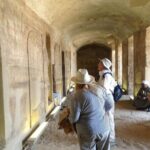
The Valley of the Kings can overwhelm you because it looks similar at first glance: rock corridors, doorways, and dim chambers. What makes these tours worth it is the guide’s ability to point out the differences—text types, ceiling themes, architectural choices, and the kinds of scenes that appear in particular tombs.
This tour is designed to do that. The guide’s storytelling centers on what you’ll see in the tombs: names of pharaohs, burial purpose, and the famous religious texts that show up on walls (like the Litany of Ra and the Book of Gates). When you know what a scene is meant to represent, the tombs become easier to follow in your head.
One review theme that matches the tour’s goal: the guides described for this experience (including names like Emad and Mohammed) show up with a strong account of each mausoleum. That’s exactly what you want in a place where you can’t read much without help.
Stop 1 at the Valley of the Kings: Where Your Guide Sets the Scene
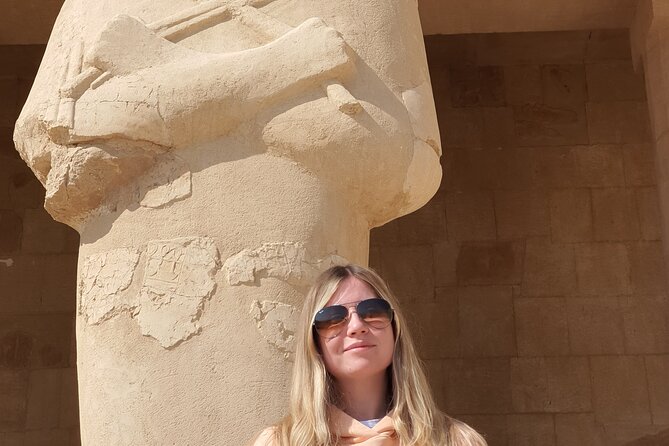
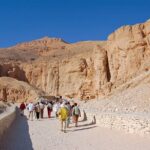
You start at the Necropolis of Thebes, the Valley of the Kings on the West Bank. The tour time budget gives this stop about 2 hours, and it’s the period where the guide gives the big-picture orientation before you go deeper into specific tombs.
From the tour description, you’re looking at multiple royal tombs within the Valley of the Kings area, including pharaoh-related stops such as Ramses, Horemheb, and Merenptah. Even when you don’t go inside every one for long, this initial stage is valuable because your guide frames how the Valley was organized as an imperial burial landscape.
What you should do at this stage
Keep your eyes up as much as your feet. Many of the details that make the tombs fascinating aren’t just at eye level. If your guide points out a motif or text, follow their direction. Your time is short enough that guessing leads to missed connections.
You can also read our reviews of more private tours in Luxor
KV 11 Ramses III: Painted Rituals, Foreign Tributes, and the Harpers Name
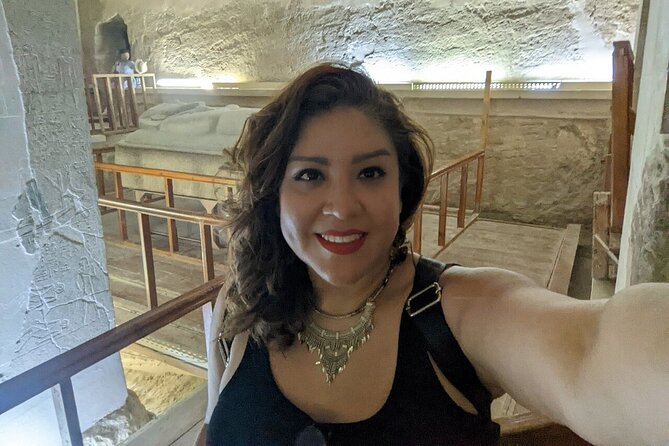
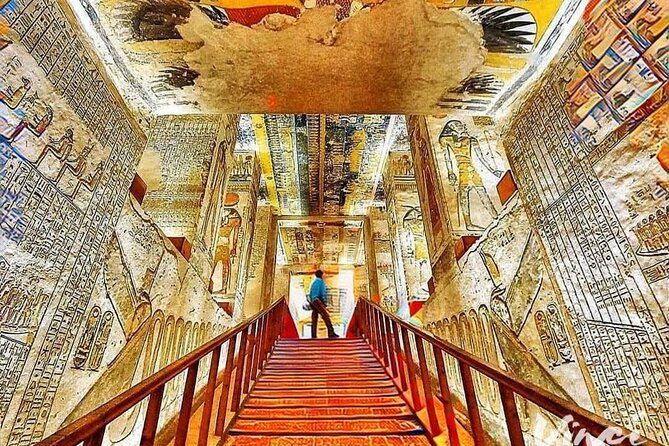
One of the tour’s standout tomb choices is KV 11, the tomb of Ramses III. The description makes this tomb sound like a layered maze: a complex system with decorated corridors and chambers, not just a single burial space.
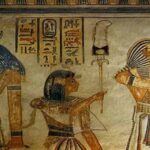
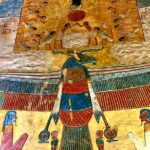
What you’re coming for is the wall imagery. Your guide highlights colorful painted sunken reliefs tied to traditional ritual texts. The tour notes specifically mention the Litany of Ra and the Book of Gates, along with scenes showing Ramses before the gods.
Then comes the part that makes KV 11 feel unusual compared to more purely religious tombs: the presence of secular scenes in side spaces. These include foreign tributes—like highly detailed pottery said to be imported from the Aegean—along with a royal armoury and boats. The tour also describes the blind harpists, which gave this tomb one of its alternative names: Tomb of the Harpers.
How this tomb should feel in your head
If you’re the kind of visitor who wants a tomb to have a personality, KV 11 is it. You see the religious program, but you also see hints of real-world trade, objects, and culture. That mix is a big reason it’s often a highlight stop.
Practical consideration
Some tombs can be tight and dark, so you’ll benefit from taking photos only when you’re sure your shot is stable. Focus first on the guided cues, then capture what’s worth remembering.
Tomb of Merenptah (Tomb 8): The Architecture Changes, and So Does the Mood
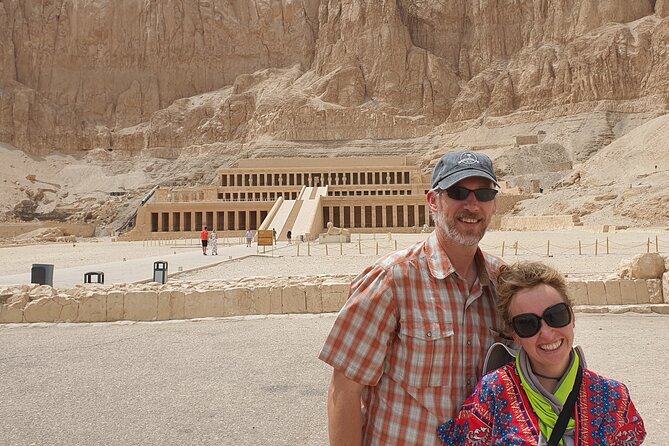
Next is Merenptah, described as Tomb 8 in the Valley of the Kings. This stop leans less on a single wow moment and more on noticing structure and design choices that reflect the time period.
Your guide’s notes include the idea that Ptah (or a related protective deity concept) was placed to accompany and protect the dead on their journey. The tour description also frames Merenptah as a son of Ramses II and Queen Isis-Nofret, and it notes that the tomb was discovered by Howard Carter in 1903.
The tour also calls out an architectural shift: there’s said to be a decrease in lateral rooms, while corridors and chambers become dramatically taller. That’s important because it changes how the tomb feels as you walk—less “side-space” and more vertical scale.
What to look for here
When you enter, pay attention to how the pathway directs your movement. When you notice changes in the layout—where side rooms appear or don’t—you’re seeing how funerary design choices evolve.
Tutankhamun: The Face-to-Face Moment That Makes the Site Personal
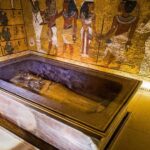
Tutankhamun is the pharaoh you’re probably coming to see, even if you don’t say it out loud. The tour stop is clearly aimed at that moment: King Tutankhamun’s tomb, with a chance to be face to face with the royal mummy in his tomb.
The tour description includes the basics that make the story click: he ascended the throne at around age 10 and died at about 19. That age range turns the tomb from a royal relic into a human timeline—short rule, early death, and a burial that became globally famous.
Why this stop works on a private tour
With a private guide, you’re not just staring at the space and trying to read signs that may not explain the details you care about. You can ask questions and get the meaning behind the scenes, instead of just checking off the famous name.
KV 2 Ramses IV: Blue-and-White Wall Texts and the Nut Ceiling Scene
The tour also includes Ramses IV (KV 2), and it’s described as different from many other tombs you’ll see. The key detail: the wall texts are listed as a set of major religious compositions, including the Litany of Ra, the Book of the Dead, Book of Caverns, Book of the Heavens, Book of Amduat, and Book of the Night.
Visually, the description emphasizes vibrant blue and white colors inside the burial chamber. It also notes a rose-colored granite sarcophagus and a ceiling scene of goddess Nut swallowing the sun and giving birth to it.
What makes KV 2 worth the stop
You don’t just get decoration—you get a recognizable afterlife theme. If your brain likes patterns, this tomb’s religious set pieces help you connect what you’re seeing to a larger belief system.
The Ramesseum and Other West Bank Context Stops (What They Add)
Even with a tomb-heavy plan, you’re not only inside underground chambers. The tour description also includes several above-ground (or easier-to-scan) stops that connect the tombs to the living empire.
Ramesseum: Ramses II’s funerary temple
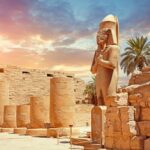
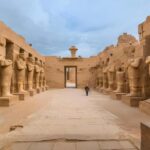
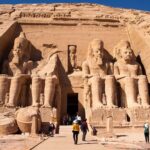
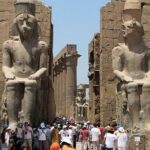
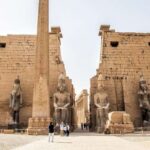
The Ramesseum is described as the funerary temple of Ramses II, with a famous 57-foot seated statue (not fully preserved today). The temple was dedicated to the god Amon, and the description highlights relief subjects like the Battle of Kadesh, Syrian wars, and the Festival of Min. It also notes its association with the Greek historian Diodorus Siculus’s description of the Tomb of Osymandias, plus a link to Percy Bysshe Shelley’s poem Ozymandias.
If you’re wondering why you should care about a half-ruined temple while staring at tomb paintings, this is your answer. It shows how the king’s story played out in public stone, not only in private burial chambers.
Valley of the Nobles
The Valley of the Nobles is described as a site where powerful nobles and rulers of ancient Egyptian society were buried. It’s positioned on the West Bank and is said to have been chosen for flood protection and access to the Nile.
This helps you understand the Valley of the Kings as part of a broader necropolis system, not a stand-alone attraction.
Carter House: Howard Carter’s museum stop
Carter House is a museum dedicated to Howard Carter, placed overlooking the road to the Valley of the Kings. The tour description notes that Carter lived there during his five-year search for Tutankhamun’s tomb and the subsequent excavation.
Even if you’ve already read a bit about the discovery, a stop like this adds a real-world timeline: the Valley’s modern fame comes from 20th-century archaeology as much as ancient royal planning.
Colossi of Memnon: Free, monumental, and an easy win
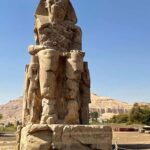
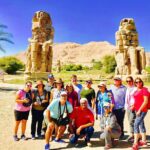
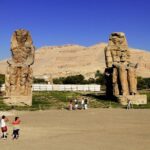
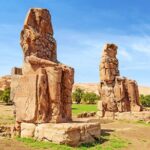
The Colossi of Memnon are included as a stop, and the tour data notes admission is free. These are two monumental statues representing Amenhotep III, and they face east toward the Nile River.
If you’re tired of underground dimness, these statues give you a big, open-air reset. They also help you place Luxor’s West Bank story in a longer arc than just Tutankhamun-era fame.
Price and Entrance Fees: Is $50 Worth It?
The tour price is $50 per person, and the entrance fee is listed separately at $13. That’s the main cost math you should do before booking.
So what are you really paying for? You’re paying for three things that usually cost extra when booked separately:
- an Egyptologist guide
- hotel pickup/drop-off
- air-conditioned transport on the West Bank road
On a private tour, “value” also includes your time. You’re not wasting the morning trying to coordinate rides, figure out the site flow, or negotiate what you’ll see. The 4-hour format is tight, so a guide helps you get more meaning per minute.
One more reality check: some tomb interiors can have access limitations depending on how the site is operating. One review detail in the broader tour conversation pointed out that guides could not enter certain graves. I’d treat that as a reminder to ask what access looks like for each tomb stop, so there are no surprises.
Comfort, Timing, and What to Expect Underground
The tour is about 4 hours total, with quick guided segments noted around 10 minutes for multiple tomb stops. That doesn’t mean the tombs are shallow; it means you’re moving with purpose through several must-sees.
You should expect:
- an organized walk between tomb entrances
- brief but guided time in each space
- more time on explanation at the moments where the art and texts matter
Because you’ll be underground, lighting is naturally limited. If you care about photos, plan to use your eyes first. A guide’s pointing matters more than a camera when you’re trying to understand what you’re looking at.
Who This Private Tour Fits Best
This is a smart pick if you want:
- private, undivided attention from an Egyptologist during key tomb stops
- a structured morning that doesn’t drag
- comfort on the West Bank drive with air-conditioned transport
- a plan that hits famous names like Ramses III, Merenptah, and Tutankhamun, plus additional tomb context like Ramses IV and temple/statue stops
It may not be ideal if you want long, slow hangs in a single tomb without moving on. The schedule is designed for several stops within a half-day, so your best strategy is to focus on quality over “staying the longest.”
Should You Book This Private Valley of the Kings Tour?
If your goal is to see major tombs in a tight morning while getting real context, I think this one is worth your attention. The private format plus hotel pickup and A/C transport solve the two biggest friction points for most Luxor visitors: time and logistics. And the tomb choices are the kind that reward a guide’s explanation, from KV 11’s ritual and secular mix to KV 2’s colorful wall program and Tutankhamun’s face-to-face draw.
Book it if you:
- want an organized, Egyptologist-led plan in about 4 hours
- appreciate comfort and private attention more than “do-it-yourself wandering”
- are willing to add the separate $13 entrance fee to your budget
Skip it or ask extra questions if you:
- expect the guide to be able to enter every underground space (access can vary)
- want extended time inside a single tomb rather than several highlights
FAQ
How long is the private tour?
It’s listed as approximately 4 hours.
Is hotel pickup and drop-off included?
Yes. The tour includes hotel pick-up and drop-off, with pickup in central Luxor or at the harbor.
Are entrance fees included in the $50 price?
No. The entrance fee is listed separately as $13 and is not included.
Which tombs are included?
The tour description highlights tomb visits including Ramses III (KV 11), Merenptah (Tomb 8), Tutankhamun, and Ramses IV (KV 2). The Valley of the Kings stop also references additional royal tombs in the area.
Is this a private tour?
Yes. It’s a private tour/activity with only your group participating.
What transportation is provided?
You get transport by an air-conditioned vehicle.
Can I cancel for a full refund?
Yes. Free cancellation is offered, and you can cancel up to 24 hours in advance for a full refund.