REVIEW · LUXOR
5 Days Private Guided Nile River Cruise Tour from Luxor to Aswan
Book on Viator →Operated by Luxor and Aswan Travel · Bookable on Viator
A Nile cruise is the easiest way to see Egypt’s biggest temple stops. This private Luxor-to-Aswan run strings together Luxor’s temples, West Bank tomb sites, plus Edfu, Kom Ombo, and Aswan with an English-speaking Egyptology guide. One name that comes up in praised guidance is Omar, known for making the stories click.
What I like most is that you get built-in structure. You start with airport transfers and you’re met on arrival in Luxor, then sent off from Aswan for your Cairo flight—so you spend less time figuring things out and more time looking up at the carvings. The second big win is the private Egyptology guide, which matters when the history can feel like a lot on your own.
One consideration: this is temple touring with walking, steps, and time in the sun. The tour notes a moderate fitness level, and with multiple 4-hour guided blocks across 5 days, you’ll want good shoes and a heat-smart plan.
In This Review
- Key things that make this Nile cruise a strong pick
- Luxor to Aswan: how the 5-day route keeps your time efficient
- Day 1 in Luxor: Karnak Temples Complex and Luxor Temple on the East Bank
- Day 2 in Luxor’s West Bank: Valley of the Kings, Hatshepsut, and Colossi of Memnon
- Day 3 on the Nile: Edfu’s Temple of Horus, then Kom Ombo’s double shrine
- Day 4 in Aswan: High Dam, Philae by motor boat, and the Unfinished Obelisk
- Day 5: breakfast, check-out, and onward to Cairo
- Price and value: is $881.95 per person worth it?
- What you should pack and plan for (so the temples don’t beat you)
- Who this Nile cruise is best for
- Should you book this Luxor-to-Aswan private guided Nile cruise?
- FAQ
- How long is the tour and how many nights are included?
- Where does the tour start and how do transfers work?
- What are the main stops on the Luxor to Aswan route?
- Is the tour guide English-speaking?
- Are meals and bottled water included?
- Are admission tickets included for the listed sights?
- Is there an option for vegetarian food?
- Is the cruise group private?
- What’s the cancellation window for a full refund?
- Do I need a passport?
Key things that make this Nile cruise a strong pick
- Private, Egyptology-led touring at every major stop, not just a quick drive-by
- Luxor airport pickup and Aswan airport drop-off included, which keeps logistics simple
- Temples in a smart route: East Bank Luxor → West Bank Thebes → Edfu → Kom Ombo → Aswan
- Meals and water included on board (breakfast, lunch, dinner on the days you’re touring)
- Valley of the Kings, Hatshepsut, Philae, and more with admissions listed as free for the included visits
- Optional Abu Simbel adds flexibility if you want the big bonus site
Luxor to Aswan: how the 5-day route keeps your time efficient
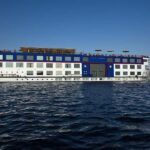
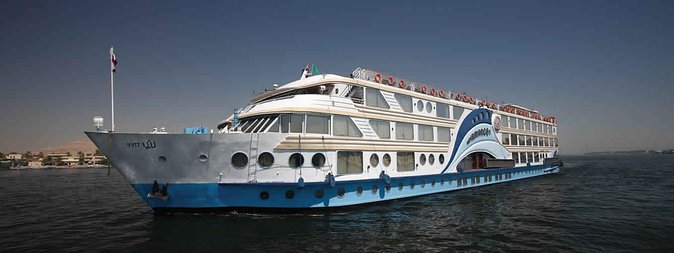
This trip is built around one core idea: avoid wasting half-days on transit or ticket chaos. You base yourself on a 5-star standard Nile cruise for 4 nights, then hop off at the right times to see temple and tomb highlights along the river.
The itinerary is split into clear days. In Luxor, you get both the East Bank and the West Bank. Then you move through classic cruise stops—Edfu and Kom Ombo—before finishing in Aswan, with a mix of modern history (the High Dam) and older monuments (Philae and the Unfinished Obelisk).
A private tour also changes the feel. It’s not about keeping pace with a large group; it’s about getting your questions answered in English and adjusting to your group’s rhythm.
You can also read our reviews of more boat tours in Luxor
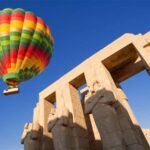
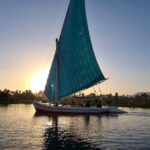
Day 1 in Luxor: Karnak Temples Complex and Luxor Temple on the East Bank
After you land at Luxor Airport, you’re met by English-speaking representatives and transferred to the cruise. If you’ve ever arrived in a new country with jet lag, you’ll appreciate that the hard part—finding transport—is handled for you.
In the afternoon, you tour the East Bank of Luxor:
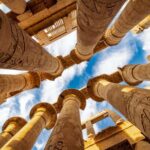
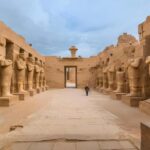
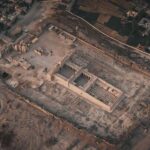
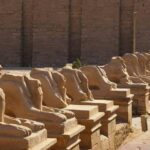
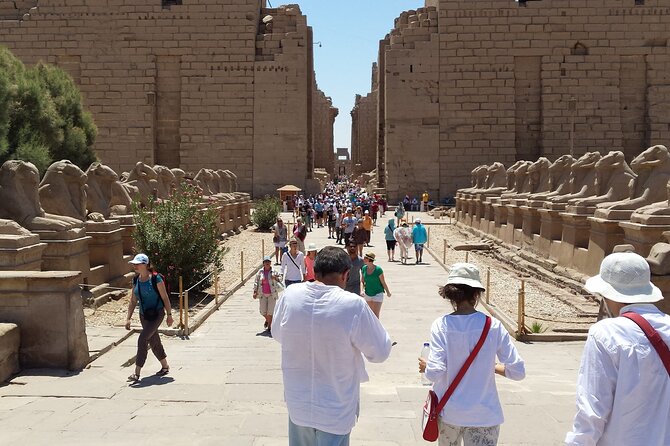
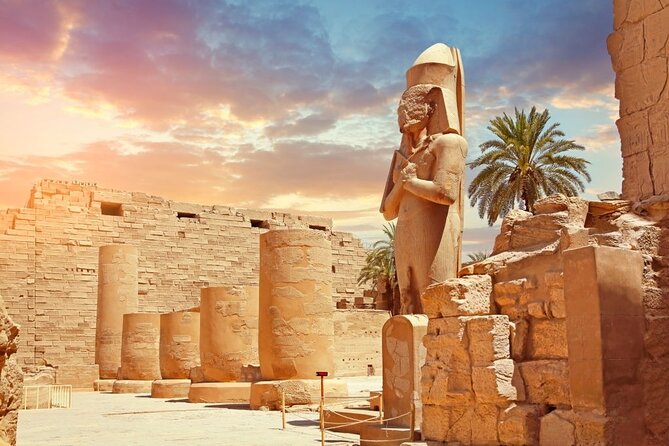
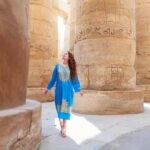
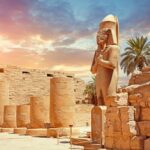
- Karnak Temples Complex comes first. This is described as the largest temple structures built in human history, with Amun Ra as the principal deity. The scale is the point here: even without a deep background, you can see why Karnak has stayed important for thousands of years.
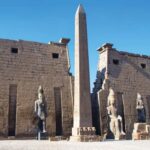
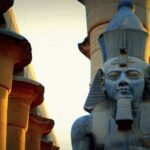
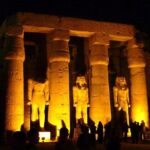
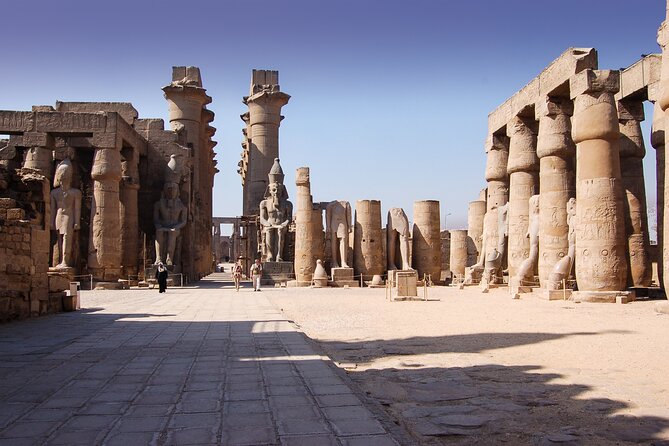
- Next is the Temple of Luxor, built during the 12th dynasty and completed by Ramses II. It was dedicated to Amun Re and sits right in the heart of ancient Thebes.
This day’s best value is the pairing. Karnak teaches you how Egyptian power presented itself in stone. Luxor Temple then gives you a cleaner, more focused emotional hit—especially for first-time visitors who want to connect the big story to a specific place.
Day 2 in Luxor’s West Bank: Valley of the Kings, Hatshepsut, and Colossi of Memnon
You start with breakfast on board, then head to Thebes (West Bank). This is where Egypt shifts from monumental temples to royal burial history.
The day’s stops are tightly chosen:
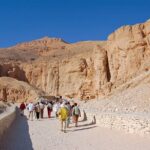
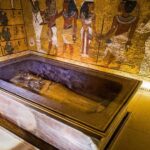
- Valley of the Kings: the royal cemetery where pharaohs were buried. If you want the feeling of being inside an ancient power system, this is the stop that delivers.
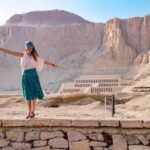
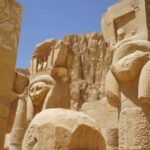
- Temple of Queen Hatshepsut at Deir El Bahari: one of the most admired examples of Egyptian architecture, carved into the mountain. It’s a strong choice because it’s dramatic without needing museum context.
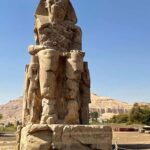
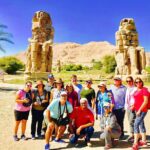
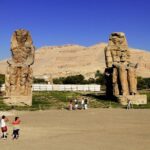
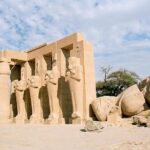
- Colossi of Memnon: the towering statues linked to Amenhotep III. These help you visualize what the temple complex must have looked like in its original setting.
One practical tip: West Bank tours can be physically demanding. Expect uneven ground and stairs depending on which parts you visit. The tour calls for moderate fitness, so plan for it.
This is also the day where an Egyptology guide pays off most. Without help, it’s easy to admire stone and miss meaning. With a good guide—again, Omar is one name that’s been praised—you’re more likely to understand why each site mattered.
Day 3 on the Nile: Edfu’s Temple of Horus, then Kom Ombo’s double shrine
After breakfast, you move to what cruise travelers often treat as a “key stop,” but here it’s delivered as guided time with context.
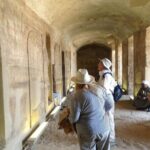
First up is Temple of Horus in Edfu, described as one of Egypt’s best-preserved temples. This matters because preservation changes what you can actually read—symbol placement, carvings, and layout feel clearer when the temple has survived in better shape.
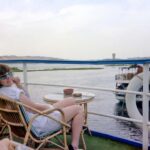
Then you sail toward Kom Ombo. Lunch is served on board while the cruise moves. After sailing, you visit Temple of Kom Ombo, linked to Sobek and Haroeris (the temple’s dual focus is the big story). You’ll come back to the ship afterward and have time on the sun deck to watch the Nile pass by.
I like this day because it mixes “guided history” with “unstructured river time.” You get the temple work while the day is still fresh, then you get a calmer window to enjoy the boat itself.
Day 4 in Aswan: High Dam, Philae by motor boat, and the Unfinished Obelisk
Aswan is a good finish because it combines modern Egypt with ancient sacred sites. You start with breakfast on board, then meet your Egyptology guide.
The day includes:
- The High Dam, built in 1960 AD under President Gamal Abdel Nasser, described here as protection from Nile flooding.
- A motor boat ride to Agilika Island, followed by Temple of Philae, dedicated to Isis and associated with the Graeco-Roman period.
- A visit to The Unfinished Obelisk, made from red granite and dedicated to Amun Ra.
This combination is one of the tour’s smartest elements. The High Dam gives you a modern reason the Nile matters. Philae shows the spiritual layer that kept pulling people back to this river region. The Unfinished Obelisk then adds the “process” angle: you can literally see that stonework didn’t always reach completion.
If you’re sensitive to heat or sun exposure, Aswan days can feel intense. Bring what you need for outdoor time, and pace yourself once you’re back onboard.
You can also read our reviews of more guided tours in Luxor
Day 5: breakfast, check-out, and onward to Cairo
You check out after breakfast. Then a representative escorts you to Aswan Airport for your flight to Cairo.
One practical thing to remember: the tour handles the transfer to the airport, but it can’t control your flight schedule. If you’re booking flights, I’d aim for a buffer so you’re not rushing right after the cruise day.
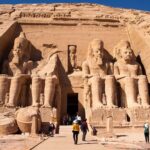
There’s also mention of an optional excursion to Abu Simbel. If that’s on your wish list, confirm details early since it’s not presented as automatic in the core itinerary.
Price and value: is $881.95 per person worth it?
At $881.95 per person, this isn’t a bargain-basement cruise. But it also isn’t only a ship ticket. The value comes from the combination of what’s included:
- 4 nights onboard (5-star standard)
- Meals on board on the days you’re touring (breakfast, lunch, dinner are listed)
- Bottled water plus one bottle per day per person
- Private Egyptology guide in English
- All transfers by car with qualified drivers, including Luxor airport meet/assist and Aswan airport drop-off
- Local taxes and services
- Admissions are listed as free for the included sights in the itinerary
Here’s how I’d think about it: if you tried to build this alone, you’d pay for guides, transport, admissions, and coordination between cities. This package bundles those costs into one plan and keeps the schedule moving.
You still need to budget for the things explicitly not included, especially personal expenses and tipping for guide/driver/cruise staff, which the tour lists as your responsibility.
What you should pack and plan for (so the temples don’t beat you)
This tour is built for daytime sightseeing. You’ll be outside at multiple major sites, and some days include stairs or uneven ground.
Here’s what I’d prioritize:
- Comfortable walking shoes with good grip
- Light layers for morning and cooler evenings
- Sun protection: hat, sunglasses, sunscreen
- Water discipline: you’ll have bottled water included, but don’t rely on it alone in hot weather
- Your passport: a current valid passport is required on the day of travel
- If you’re vegetarian, request the option at booking (it’s available)
Also note: the tour confirms mobile ticket use, and it states you’re near public transportation. That’s helpful if you need to adjust something locally, though this itinerary is already set up for easy private touring.
Who this Nile cruise is best for
This works especially well if:
- You want a private experience with an English-speaking Egyptology guide
- You’d rather see multiple major sites without worrying about logistics
- You like structure: airport transfer in, clear temple days, airport transfer out
It may not be ideal if you’re chasing a slow vacation with lots of downtime. This itinerary is active: East Bank, West Bank, then Edfu and Kom Ombo, then Aswan all with guided blocks.
It’s also a good match for history-first travelers. The trip is not just “look at temples.” It’s aimed at helping you understand what you’re seeing, day after day.
Should you book this Luxor-to-Aswan private guided Nile cruise?
If you want the most efficient version of a classic Nile route—Luxor + Edfu + Kom Ombo + Aswan—this is a strong choice. The included guide time, meals, water, and airport transfers make it feel thoughtfully packaged, not cobbled together.
I’d book it if you value:
- guided context at top sites like Karnak, Valley of the Kings, Hatshepsut, Philae
- a simpler arrival and departure flow
- a plan where you won’t constantly ask what’s included
I’d think twice if:
- you don’t like walking and outdoor time across multiple temple days
- you’re hoping the trip includes everything with no extra payments at all (tipping and personal expenses are not included, and Abu Simbel is optional)
FAQ
How long is the tour and how many nights are included?
It’s an approx. 5-day experience with 4 nights on board the Nile cruise.
Where does the tour start and how do transfers work?
The start point is Luxor Airport. You’ll be met by representatives and transferred to the cruise. At the end, a representative accompanies you to Aswan Airport for your flight to Cairo.
What are the main stops on the Luxor to Aswan route?
The itinerary includes Luxor (East Bank and West Bank), Edfu, Kom Ombo, and Aswan, with sightseeing at Karnak, Valley of the Kings, Hatshepsut, Temple of Horus in Edfu, Temple of Kom Ombo, High Dam, Philae, and the Unfinished Obelisk.
Is the tour guide English-speaking?
Yes. It’s a private Egyptology English-speaking tour guide.
Are meals and bottled water included?
Yes. The cruise is based on FB basis (breakfast, lunch, dinner) and you get bottled water, including one bottle per day per person.
Are admission tickets included for the listed sights?
The itinerary lists admissions as free for the included sights shown in the schedule.
Is there an option for vegetarian food?
Yes. A vegetarian option is available if you advise at the time of booking.
Is the cruise group private?
Yes. It’s a private tour/activity, and only your group participates.
What’s the cancellation window for a full refund?
You can cancel up to 6 days in advance of the experience for a full refund.
Do I need a passport?
Yes. You need a current valid passport on the day of travel.