Flying over Luxor at sunrise is the shortcut to understanding it. This full-day tour strings together a 45–60 minute balloon ride, a light breakfast, then the big hitters of both the West Bank (funerary sites) and the East Bank (temples and monuments). I like that it’s timed for the best light and includes real guided context, not just a checklist.
What I particularly like is the hotel pickup/drop-off in an air-conditioned car and the way the morning flight sets the mood before you hit the ruins. I also appreciate the practical extras in the plan: soft drinks on the transfer, a flight certificate, and a professional photographer noted as part of the experience.
One consideration: the balloon part depends on weather, and that means the day can shift or cancel. It’s rare, but it’s real—so you’ll want to stay reachable and ready early.
Key takeaways before you go
- Sunrise balloon timing gives you a clear view of both sides of Luxor in one morning
- Expert guide + photographer helps translate what you’re seeing as you walk
- West Bank stops focus on major royal burial sites and Hatshepsut’s mortuary temple
- Karnak + Luxor Temple make the East Bank feel like an epic “living” complex rather than a single site
- Entrance fees aren’t fully included, so plan extra for the temple/tomb tickets
In This Review
- The Big Idea: Why This Luxor Full-Day Tour Works
- Sunrise Hot Air Balloon: The View You Can’t Fake
- West Bank Warm-Up: Nile Transfer and the Colossi of Memnon
- Valley of the Kings: Where the Tombs Tell the Scale of Power
- Deir el-Bahari and the Temple of Hatshepsut: A Queen’s Vision in Limestone
- Karnak Temple: Turning One Complex Into a Whole World
- Between the Temples: Obelisks and the Avenue of Sphinxes
- Luxor Temple: The East Bank Finale
- Transportation, Timing, and What to Expect from a 7-Hour Day
- Price and Value: Is $190 a Fair Deal?
- One Caution: Weather, Communication, and Staying Ready
- Who This Tour Suits Best (and Who Might Want Something Else)
- Should You Book It?
- FAQ
- How long is the Luxor Full Day Tour?
- Is hotel pickup and drop-off included?
- Does the tour include a sunrise hot air balloon ride?
- Is breakfast included?
- Are entrance fees included for all sites?
- Is the tour affected by weather?
- Who operates the tour?
The Big Idea: Why This Luxor Full-Day Tour Works
This tour hits Luxor the way it’s meant to be experienced: starting above the Nile early, then moving through history in a logical flow from West Bank funerary monuments to East Bank temple power.
For many visitors, Luxor can feel like scattered archaeology. The value here is that you’re not just hopping between famous places—you’re moving through the story. You’ll see royal tombs, mortuary architecture, and the grand temple complexes that defined religious life for centuries.
And yes, the sunrise balloon ride is the headline. But what makes it worth the price is that it’s not a standalone “ride and leave” setup. It feeds directly into the rest of the day—so when you later stand on the ground at the Valley of the Kings or Karnak, you have a mental map already.
Sunrise Hot Air Balloon: The View You Can’t Fake
The morning starts early, with pickup and a transfer toward the take-off area. You’ll also do a Nile transfer by motorboat to reach the West Bank side for the day’s routing. That early rhythm matters because balloons are weather- and timing-dependent, and Luxor’s schedule is built around getting you into the air at dawn.
The balloon flight runs about 45 minutes (45–60 minutes noted). That’s long enough to get past the nerves and settle into wonder, but short enough that you’re not drained for the rest of the tour. You’ll also receive a flight certificate, which is a nice touch if you like keeping souvenirs that feel tied to the experience.
A key detail I’d take seriously: your flight experience depends on good conditions. In the only major negative note shared, the balloon was cancelled and there were communication problems for at least one booking. That’s not proof it will happen to you—but it is a reminder to stay reachable and alert the night before and early the morning of pickup.
A few more Luxor tours and experiences worth a look
West Bank Warm-Up: Nile Transfer and the Colossi of Memnon
After the balloon pickup sequence and the Nile crossing, you land back on solid ground with the sense that Luxor has two faces. The West Bank feels built for eternity—wide, quiet spaces where monuments sit like anchors.
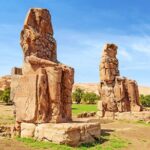
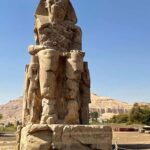
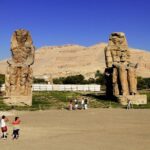
Then you hit the Colossi of Memnon. These are two massive seated statues from the era of Amenhotep III, built around 1350 BC. They’re the surviving remnants of a larger temple complex that once supported the Pharaoh’s mortuary cult. Each statue shows Amenhotep III seated with hands spread on his knees, facing east toward the river.
Why these statues work in the itinerary: they’re not just impressive—they’re also a quick orientation stop. You’ll get the scale of royal architecture on the ground before you tackle the far more complex tomb landscape of the Valley of the Kings.
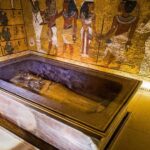
Valley of the Kings: Where the Tombs Tell the Scale of Power
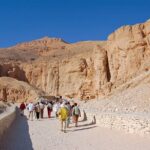
The Valley of the Kings is the West Bank stop that most people dream about—and the timing here gives you breathing room. You’ll spend about 2 hours at the site.
A few details that help you understand what you’re looking at once you arrive:
- The Valley of the Kings was used for tomb construction for roughly 500 years, spanning the 18th through 20th dynasties.
- It’s divided into two valleys: an Eastern Valley where many royal tombs are located, and a Western Valley.
- The most recent discoveries add an extra layer of meaning. The description notes the discovery of the last burial chamber in 2006 (Cemetery 63) and additional entrances in 2008.
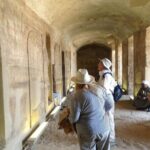
You may notice this is also where you start to feel the practical side of Egypt touring: entrances are often ticketed separately, and tombs can have uneven lighting and stairs depending on what’s open. Since admission fees aren’t included here, budget extra and keep expectations flexible.
The best way to enjoy this stop is to let your guide connect what the ruins represent—royal strategy, religion, and the idea of a planned afterlife—rather than treating it as a photo set.
Deir el-Bahari and the Temple of Hatshepsut: A Queen’s Vision in Limestone
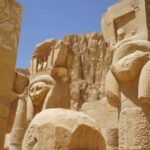
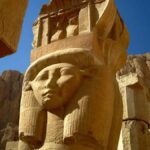
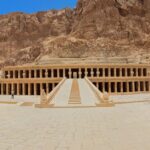
Next up is the Temple of Hatshepsut at Deir el-Bahari. You’ll spend about 1 hour here, and it’s a powerful contrast to the tomb vibe of the Valley of the Kings.
The big hook: this is the mortuary temple built for Queen Hatshepsut, one of the most significant pharaonic women in ancient Egyptian history. The temple is noted as one of the best remaining from the period, built about 3,500 years ago.
What makes it visually distinctive is the architecture:
- It has three successive floors with open terraces
- It’s built of limestone
- The design reads differently from temples you’ll see on the East Bank, which often follow other layouts and focal points
If you like architecture, this is the stop where you’ll likely slow down. Even if you don’t understand every carved detail, you can feel the intentional geometry: terraces, processional space, and the sense that the view itself was part of the design.
This stop also has its own “ticket reality.” Admission fees are noted as not included. Factor that into your total spending so you don’t get surprised later in the day.
Karnak Temple: Turning One Complex Into a Whole World
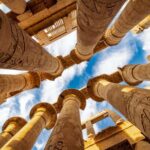
Then comes Karnak, and this is where Luxor’s scale starts to hit you. You’ll have about 2 hours at the Karnak Temple Complex.
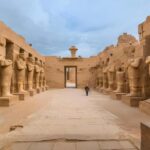
Karnak isn’t a single temple. It’s a group of temples, buildings, and columned spaces, with construction that spans a huge range of time. The description highlights that expansion and building continued from the pharaonic era through later periods, reaching as far as the Roman era.
Karnak was built for a divine “triad”:
- Amun (Amun Ra)
- Mut
- Khonsu
Why I think this stop is valuable in a guided format: without explanation, it’s easy to see Karnak as “big walls and columns.” With a good guide, it becomes a system—dedicated spaces and layers of political and religious change.
Also, note the practical piece: admission fees aren’t included. Plan for separate entry, and don’t underestimate the walking once you’re inside.



Between the Temples: Obelisks and the Avenue of Sphinxes
After Karnak proper, the tour includes short stops that function like a “connect-the-dots” tour through Luxor’s temple geography.
You’ll see:
- Obelisk(s) associated with Queen Hatshepsut and Tutomosis I, with lotus and papyrus design notes
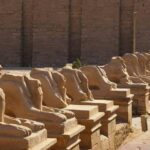
- The Avenue of Sphinxes, stretched historically between Luxor Temple and Karnak
Even though today it’s only a few hundred meters long, the description says the avenue used to be much longer—around 3 km. It’s worth walking a bit because it gives you a sense of processional movement. Ancient temples weren’t meant to be static. They were meant to be approached, aligned, and experienced in sequence.
These stops are brief (about 10 minutes each). They won’t replace time in the main temples, but they help you “read” Luxor instead of just viewing it.
Luxor Temple: The East Bank Finale
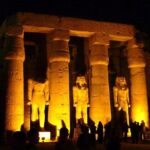
To close the day, you’ll visit Luxor Temple on the East Bank. This takes about 1 hour 30 minutes.
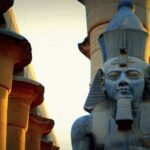
Luxor Temple is described as a large complex founded around 1400 BC. It was dedicated to the Theban Triad: Amun-Ra, Mut, and Khonsu.
Two things make this finale satisfying:
- The site ties together multiple reigns, with key building work connected to Amenhotep III and Ramses II, plus shrines set up by Thutmose III.
- After the Valley and Hatshepsut, Luxor Temple feels like the “public” expression of power—temple life meant for ritual and ceremony, not only the quiet drama of burial.
Like the other non-balloon sites, admission fees here are not included, so plan ahead.
Transportation, Timing, and What to Expect from a 7-Hour Day
This is listed at about 7 hours total, and the day’s structure matters. You’re up early enough for pickup, you fly at sunrise, then you work through major sites with a guide.
A big plus is the first-class air-conditioned car with hotel pickup and drop-off. That reduces the most annoying parts of touring Luxor—finding meeting points, wrestling with heat, and losing time to logistics.
Also included is a transfer by motorboat to the West Bank and soft drinks during that movement. It’s small, but it helps on a morning that starts before the day feels real.
The biggest reason some tours feel exhausting in Luxor is pressure: rushing from one “must-see” to another without breathing space. Here, the time blocks are built to feel realistic: 45 minutes in the sky, then 1–2 hour chunks at major sites. You may still feel you’ve been on your feet for a lot of the day, but it doesn’t feel like a sprint.
Price and Value: Is $190 a Fair Deal?
At $190 per person, this tour is priced like a premium mix: sunrise balloon ride, guide time through multiple major landmarks, and included transfer elements.
Here’s how I’d judge value based on what’s included:
- Included: sunrise hot air balloon entrance, flight certificate, hotel pickup/drop-off, motorboat transfer, guide + photographer, and the featured temple/city routing.
- Not included: admission fees for several key stops (Valley of the Kings, Hatshepsut, Karnak, Luxor Temple are listed as not included).
So the honest math is this: the headline price is attractive if you already planned to do a balloon and you’re budgeting for separate temple/tomb tickets anyway. If you’re trying to keep costs ultra-tight, the non-included admissions could make the total climb.
Still, the balloon is the real differentiator. Many “day tours” in Luxor are just driving and entry fees. Here, your money buys a unique morning view plus a structured guided route across both banks.
One Caution: Weather, Communication, and Staying Ready
The tour is clear that the balloon requires good weather. That’s normal for hot air balloons anywhere.
What’s not normal is how a cancellation is handled. One negative note described a situation where the balloon didn’t happen and there was no call in advance for at least one booking, leading to an early wait in the hotel lobby. The provider’s reply says customers were informed by WhatsApp and that there may have been a reservation mismatch.
You can’t control weather. But you can control your end of the relationship:
- Keep your phone active for early-morning updates.
- Make sure the contact number used for booking works.
- Be ready for an early pickup window, because the day is built around dawn.
Who This Tour Suits Best (and Who Might Want Something Else)
This is a great match if you want:
- One morning experience that genuinely changes how Luxor looks
- A guided explanation across both East and West Bank sites
- A day that feels organized, not chaotic
It may be less ideal if you:
- Hate early mornings and long walking days
- Don’t want to pay additional entrance fees on top of the package price
- Prefer highly flexible pacing without fixed time blocks (this tour has defined stops and durations)
Should You Book It?
I’d book this tour if you want the Luxor “big combo”: sunrise balloon + top West and East Bank sites with pickup and a guide who can connect the dots for you.
I’d think twice if you’re the type who can’t handle schedule changes due to weather, or if you’re very strict about prepaid cost totals since several key entrances are listed as not included.
If you do book, do it with a simple mindset: treat the balloon as the centerpiece, plan your stamina for a full day, and keep your contact info handy so updates can reach you fast.
FAQ
How long is the Luxor Full Day Tour?
The tour is listed at about 7 hours (approx.).
Is hotel pickup and drop-off included?
Yes. Hotel pickup and drop-off are provided.
Does the tour include a sunrise hot air balloon ride?
Yes. You get a sunrise hot air balloon ride of about 45–60 minutes.
Is breakfast included?
A light breakfast with tea is included.
Are entrance fees included for all sites?
No. Entrance fees are listed as not included for several stops like the Valley of the Kings, the Temple of Hatshepsut, Karnak Temple, and Luxor Temple. The hot air balloon entrance is included.
Is the tour affected by weather?
Yes. The experience requires good weather because the balloon ride can be canceled due to poor conditions.
Who operates the tour?
The experience provider listed is Nile Prince Travel.