REVIEW · LUXOR
Luxor Day Tour: Valley of Kings & Queens & Hatchepsut Temples
Book on Viator →Operated by Etro tours · Bookable on Viator
Luxor’s West Bank moves fast, in a good way. This private tour pairs a licensed Egyptologist guide with a smooth pickup-and-ride plan, so you’re not just taking photos—you’re getting the story behind what you see. I also like the practical A/C vehicle setup, which matters in Luxor’s heat when you’re trying to stay comfortable.
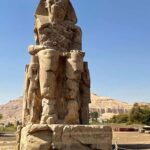
You’ll cover the biggest West Bank highlights in one outing: the Valley of the Kings, the Valley of the Queens, Temple of Hatshepsut at Deir el Bahari, and a quick stop for the Colossi of Memnon. It’s a smart match for first-time visitors because it gives you a clear sequence of royal tombs and major temple design in a single day.
One consideration: entrance fees are not included, so your final spend will depend on what you pay at each site, plus tipping (also not included). Also, the total time is about 4 to 6 hours, so you’ll want to accept a brisk pace rather than a long, slow wander.
In This Review
- Key things I’d plan around
- Private West Bank sightseeing in 4–6 hours
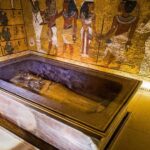
- Valley of the Kings: Amenhotep III’s world underground and up close
- Valley of the Queens: the same royal theme, different perspective
- Deir el Bahari’s Temple of Hatshepsut: A major design you can actually read
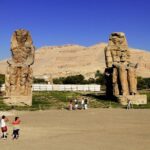
- Colossi of Memnon: a fast, free 60-foot photo moment
- Price and logistics: where the $39 really lands
- Make the most of the day: pacing, questions, and what to watch for
- Should you book this Luxor West Bank tour?
- FAQ
- How long is the Luxor Day Tour Valley of Kings, Queens, and Hatshepsut?
- Is the tour private?
- Does the tour include pickup in Luxor?
- What about pickup from Luxor Airport?
- Are entrance fees included in the $39 price?
- Is Colossi of Memnon included, and is entry free?
- Does the tour use a mobile ticket?
- Are service charges and taxes included?
- What is the cancellation policy?
Key things I’d plan around
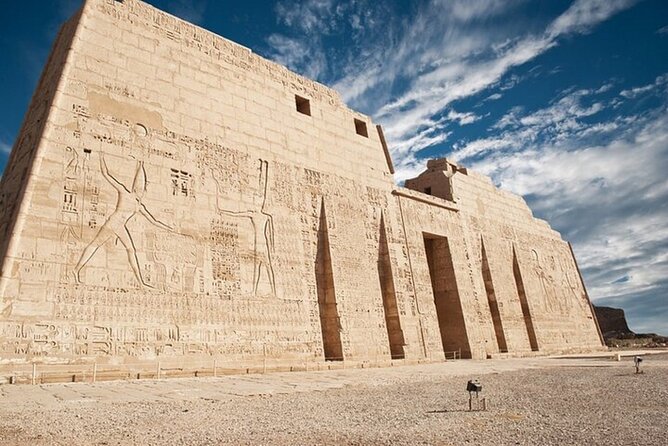
- Private group, private pace so your guide can slow down or speed up based on your group
- Licensed Egyptologist guidance focused on what matters at each monument
- Valley of the Kings focus with key names like Amenhotep III and Queen Tiye in the mix
- Hatshepsut at Deir el Bahari with temple sections like the pillared hall and hypostyle hall called out
- Colossi of Memnon is free to enter, with a quick, memorable photo stop
Private West Bank sightseeing in 4–6 hours
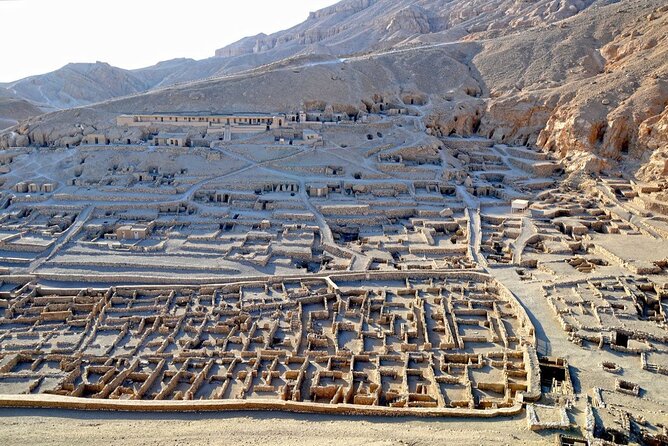
This is built for people who don’t want to overthink logistics. You get pickup from your Luxor hotel or Nile cruise, travel by modern A/C vehicle, and move between sites with less hassle than you’d have on your own. It’s also a private tour, meaning it’s only your group—no joining strangers mid-day.
At the same time, it’s not a full-day marathon. Expect roughly 4 to 6 hours total, which is a good window for seeing the major hits on Luxor’s West Bank without burning your whole day. If your goal is: first day in Luxor, understand what everything is, then enjoy the rest of your trip—this fits nicely.
You’ll also get a mobile ticket, which is the kind of small convenience that saves time when you’re already paying attention to guards, lines, and entry rules. Just remember: the paid entry stuff for the tombs and temples is not part of the tour price.
You can also read our reviews of more tours and experiences in Luxor.

Valley of the Kings: Amenhotep III’s world underground and up close
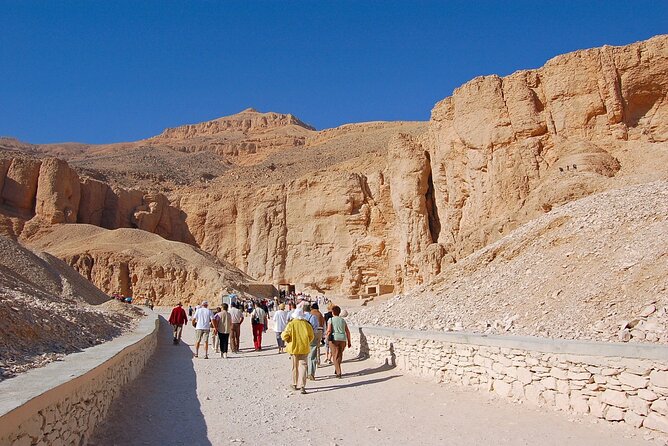
The Valley of the Kings is the headline stop for a reason. You’ll spend about 3 hours here, and the focus is on how this place works as a royal tomb landscape—courtyards, statues, columns, and the artifacts that connect the site to specific rulers and eras.
The guide’s angle matters: this valley’s story is tied to the reign of Amenhotep III in the 18th dynasty of Egypt’s New Kingdom. I like that you’re not only looking at tomb entrances. You’re also meant to notice the architectural and symbolic details—so your photos come with context, not just distance and scale.
A couple of specific things worth keeping in mind while you’re there:
- A seated granite statue of Amenhotep III and a sphinx are part of what you’ll encounter
- The tombs include royal family members, not just pharaohs
One name that really helps you connect dots is Queen Tiye, wife of Amenhotep III and mother of Akhenaten. Even if you only catch that detail once, it makes the valley feel less like random holes in a hillside and more like a focused royal story.
Practical drawback: the admission ticket is not included, so you’ll need to budget for entry before you arrive. Also, expect walking and some time outdoors. If you’re heat-sensitive, the A/C rides help a lot, but you’ll still want to pace yourself during the valley portion.
Valley of the Queens: the same royal theme, different perspective
This tour also includes the Valley of the Queens, which is a smart pairing with the Valley of the Kings. Even without a long, separate deep-lecture, visiting both helps you understand that the West Bank wasn’t just one tomb site—it was a structured royal landscape for different branches of the family story.
Where the value really shows up is in comparison. You’ll see how the West Bank’s royal “world” repeats the same big themes—power, eternity, and religious meaning—but presented through different tomb contexts. For first-timers, it’s an efficient way to build mental organization fast.
Because the tour data you have here doesn’t spell out which specific features you’ll highlight in the Valley of the Queens, I suggest using the time to ask your guide one simple question: how does this place differ from the Valley of the Kings in what it represents? That way, you don’t just “check it off”—you leave with a takeaway you’ll remember later.
Like the other main stops, entrance fees apply. If you want your day to feel smooth, plan to handle ticket costs on-site and keep your payment ready.
Deir el Bahari’s Temple of Hatshepsut: A major design you can actually read
Temple of Hatshepsut at Deir el Bahari is the stop where the day can shift from tomb “courtyard-to-courtyard” pacing into something more monumental and visually organized. You’ll spend about 2 hours here, and the temple is presented as a complete complex—not a single building, but a set of spaces with distinct functions.
The key fact to keep front-and-center is that it was built in the 15th century BC and dedicated to Amun, with Hatshepsut (Egypt’s first female pharaoh) as the ruler associated with its construction. I like that your guide’s framing includes the religious and political purpose together, because the temple design makes a lot more sense when you know who it was meant for.
The complex is also described through parts, which is how you should experience it:
- a pillared hall
- a hypostyle hall
- a chapel dedicated to Hathor
- a sanctuary at the rear of the complex
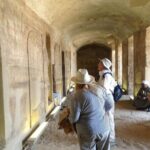
As you move through, look for statues and carvings of deities throughout the temple. That detail is what turns the temple from “big stone” into something you can interpret. Even if you don’t catch every inscription, noticing repeated religious imagery helps you understand the temple’s logic.
Possible drawback: entrance fees are not included, so this stop can add cost. Also, like all big temple visits, you’ll be doing a mix of outdoor sun exposure and walking between halls. If you’re sensitive to heat, it helps to drink water before you arrive and take short pauses when you can.
Colossi of Memnon: a fast, free 60-foot photo moment
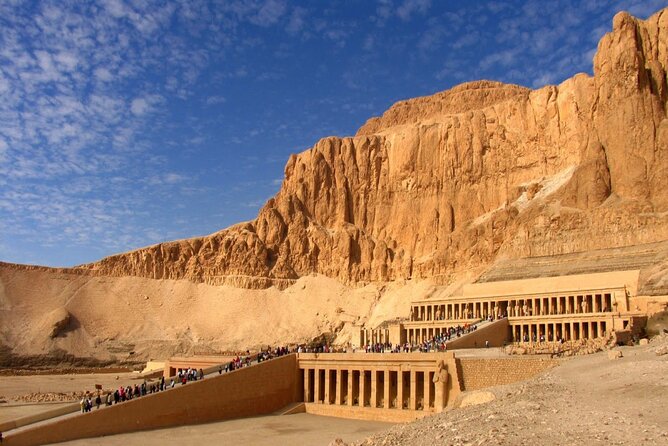
The Colossi of Memnon stop is short—about 20 minutes—and it’s pleasantly low-stress, especially because admission is free. This is one of those places where you can feel the scale instantly, even if you don’t know the story yet.
You’ll see two colossal statues of Pharaoh Amenhotep III dating back to about 1350 BC. Each statue is about 60 feet high, carved from sandstone quarried near Cairo. Originally, the colossi were meant to guard the entrance to Amenhotep III’s mortuary temple.
Then there’s the story that gives the colossi their modern fame: the hero Memnon, king of Ethiopia, tied to the Trojan War. After an earthquake in 27 BC destroyed the original temple, the statues remained—and today they’re a popular landmark on the West Bank.
Because this stop is quick and free, it works well as a breather between longer visits. If you time it right, you can get your photos, read the basics your guide points out, and still have energy for the next drive or final walk.


Price and logistics: where the $39 really lands
The headline price is $39.00 per person, and that can be good value for a Luxor West Bank day if you care about having a real Egyptologist guide and avoiding the hassle of transport and ticket coordination.
Here’s what you do get in the price:
- A private Egyptologist guide who is qualified and fully licensed
- All transfers by a modern A/C vehicle
- Entry to Colossi of Memnon (free)
- Service charges and taxes
- Pickup and return from your starting point (with pickup from hotels or Nile cruises)
Here’s what you should budget separately:
- Entrance fees for the other sites (Valley of the Kings and Temple of Hatshepsut are explicitly not included)
- Tipping
- An extra $10 if you need pickup from Luxor Airport, plus drop-off in any hotel in Luxor
To me, the best way to judge value is this: you’re paying for guided interpretation plus vehicle comfort. If you tried to DIY the West Bank without a guide, you’d spend a lot more time on planning, arranging transport, and piecing together context. The main “cost risk” isn’t the tour price—it’s entrance fees you’ll handle on the ground.
Also note the ride plan: the air-conditioned transfer is included, and one review specifically praised how the guide supported mobility issues while keeping things comfortable in the A/C car. So if your priorities include pace and comfort, this setup is aligned with that goal.
Make the most of the day: pacing, questions, and what to watch for
This kind of tour goes best when you treat it like a guided lesson with stops, not like a long sightseeing hike. Your guide’s job is to give you meaning fast, so you can spend your energy on noticing rather than searching.
A few practical moves:
- Ask your guide to connect the names. If you remember Amenhotep III and Queen Tiye, the Valley of the Kings stops feeling like a checklist.
- At Hatshepsut, keep an eye on the temple sections your guide highlights (pillared hall, hypostyle hall, Hathor chapel). Even without reading every carving, the structure helps you follow the flow.
- For Colossi of Memnon, treat it as a quick scale test. Don’t over-plan it—just use the free 60-foot moment to reset your focus.
If you’re sensitive to walking or stairs, plan for uneven ground typical of West Bank sites and bring whatever makes movement easier for you. The tour has an A/C vehicle, and the guide has been described as supportive with mobility issues, which is reassuring if you want someone who can keep the day workable.
Finally, bring a realistic attitude about timing. With 4 to 6 hours, you’ll get strong coverage, but you won’t have unlimited time in each corridor of stone. If you want a photo and a story, this is the sweet spot.
Should you book this Luxor West Bank tour?
I’d book it if you:
- are in Luxor for a short time and want the major West Bank sites in one guided hit
- want a licensed Egyptologist guide who can explain what you’re looking at, not just where things are
- prefer the ease of pickup and A/C transport over coordinating on your own
- like the idea of a private group pace
I’d think twice if:
- you’re trying to minimize total costs, because entrance fees and tipping are separate
- you want a very slow, lingering day where you can spend extra hours in one site without moving on
If your goal is a clear first-day understanding of Luxor’s West Bank, this tour makes that job easier. The combination of royal tombs, Hatshepsut’s major temple complex, and a quick free Colossi stop is a strong way to get oriented and leave with real names tied to real places.
FAQ
How long is the Luxor Day Tour Valley of Kings, Queens, and Hatshepsut?
It runs about 4 to 6 hours total, with individual stops that include roughly 3 hours at the Valley of the Kings, about 2 hours at the Temple of Hatshepsut, and about 20 minutes at the Colossi of Memnon.
Is the tour private?
Yes. It’s private, meaning only your group participates.
Does the tour include pickup in Luxor?
Yes. Pickup is offered from your Luxor hotel or Nile cruise, and the tour includes pickup and return transfers.
What about pickup from Luxor Airport?
Pickup from Luxor Airport costs an extra $10, and the service includes drop-off in any hotel in Luxor.
Are entrance fees included in the $39 price?
No. Entrance fees are not included. Colossi of Memnon entry is free, but the other sites require separate admission.
Is Colossi of Memnon included, and is entry free?
Yes. The Colossi of Memnon stop is included, and admission is free.
Does the tour use a mobile ticket?
Yes. A mobile ticket is included.
Are service charges and taxes included?
Yes. All service charges and taxes are included.
What is the cancellation policy?
You can cancel for a full refund up to 24 hours in advance. If you cancel less than 24 hours before the experience’s start time, the amount paid is not refunded.