REVIEW · LUXOR
Package deal Hot Air Balloon Ride & Full Day Luxor Tour w/Guide Lunch
Book on Viator →Operated by Luxor Travels · Bookable on Viator
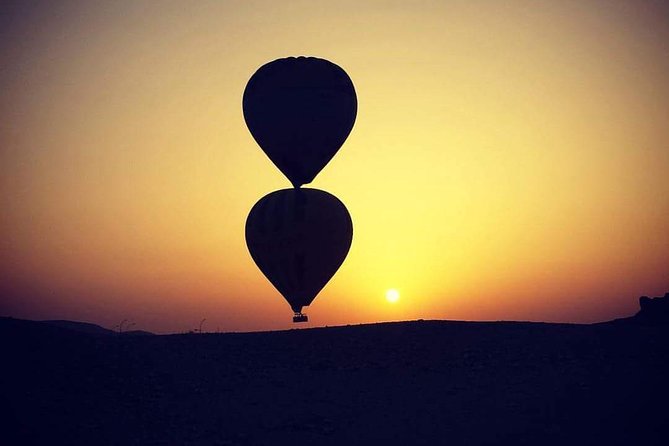
One sunrise view beats any photo. This package pairs a hot-air balloon launch over the Valley of the Kings with a full-day Luxor tour led by an Egyptologist, plus lunch and hotel pickup. You’ll cover major East Bank and West Bank landmarks in one long, well-timed day.
I especially like two things: the chance to get a bird’s-eye look during the sunrise balloon ride, and the depth you get from visiting the Luxor Temple area with a dedicated guide. The day also includes a thoughtful rhythm of major sites—tombs in the Valley of the Kings, Deir el Bahari, Karnak, and Luxor Temple—without feeling like you’re just “passing through.”
One thing to consider: this is a very early start and a long day in Luxor’s heat, so you’ll want to plan your energy carefully for a 10+ hour itinerary.
In This Review
- Key highlights to notice before you go
- Why this Luxor balloon-and-full-day tour is such a smart combo
- The 5:30am start: what your balloon morning really feels like
- Valley of the Kings tombs: how the guide helps you pick the right three
- Tomb of Ramses III (KV 11)
- Tomb of Ramses IX
- Tomb of Merenptah
- Optional add-on: Tomb of King Tutankhamun
- Deir el Bahari and Hatshepsut: a quieter kind of grandeur
- Colossi of Memnon: the “big statues” stop that still feels real
- Karnak and Luxor Temple: where Amun’s story comes from multiple angles
- Obelisk of Queen Hatshepsut
- Avenue of Sphinxes: the “festival road” idea
- Obelisk of Thutmose I
- Luxor Temple: granite Ramses, and the Theban triad
- Price, what’s included, and where extra costs pop up
- Who should book this tour, and who might want a different plan
- Should you book this Luxor hot air balloon and full-day tour?
- FAQ
- What time does this tour start in Luxor?
- Is hotel pickup and drop-off included?
- Is lunch included?
- What does the hot air balloon ride include?
- Are entrance fees included in the price?
- What happens if the balloon can’t fly due to weather?
Key highlights to notice before you go
- Sunrise balloon over the Valley of the Kings with a smooth-feeling takeoff and landing timing built around daylight
- A licensed Egyptologist guide who helps you choose which Valley of the Kings tombs fit your group
- A full West Bank to East Bank sweep: Deir el Bahari, Colossi of Memnon, Karnak, and Luxor Temple
- Small group size (max 15), which usually makes it easier to ask questions and move at a human pace
- Lunch included, so you’re not scrambling for food during the busiest hours
Why this Luxor balloon-and-full-day tour is such a smart combo
Luxor is a place where “seeing it all” can easily turn into rushing. This deal tries to solve that problem by stacking two high-value experiences into one day: a sunrise balloon over the Valley of the Kings and then a guided monument circuit that hits the big names on both banks.
The balloon part is the headline, but the guide-led portion is the reason you’ll remember the day. When someone with an Egyptology background walks you through what you’re looking at—who built it, why it matters, and how the symbols connect—you get more than photos. You also get practical guidance on tomb selection once you’re in the Valley.
The other quiet win is the pacing. You’re not asked to do everything alone. You get hotel pickup and drop-off, air-conditioned vehicle transport between sites, and a lunch stop. That reduces the “logistics tax” that can drain your day in Luxor.
You can also read our reviews of more guided tours in Luxor
The 5:30am start: what your balloon morning really feels like
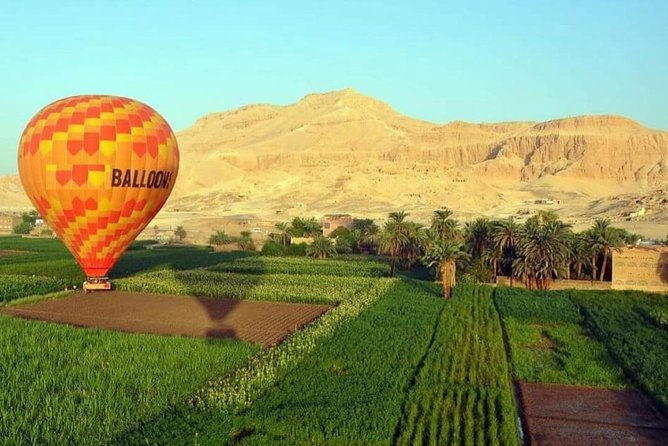
Your day begins early. The meeting time is listed as 5:30am, with the ticket redemption point at the Valley of the Kings area in Luxor. From there, the day is structured around the balloon window and then transitions into the West Bank touring.
Why so early? Because the balloon ride is a sunrise flight over the Valley of the Kings. Sunrise isn’t just pretty—it’s cooler, and it’s the lighting that makes the desert ridges and tomb valley shape pop from above. Expect the day to build quickly from that calm morning into a full-on sightseeing schedule.
It’s also worth knowing that this experience depends on good weather. If conditions aren’t right, the operator may offer a different date or a full refund. That flexibility matters because balloon rides can’t be forced when the air is wrong.
If you’re sensitive to heat, it helps that the day is so structured. You’re doing major outdoor stops, but the tour includes air-conditioned transport and built-in time at each site so you’re not always exposed between locations. One review even flagged very hot conditions around 43°C, which lines up with what Luxor can do—so bring a plan for sun and hydration.
Valley of the Kings tombs: how the guide helps you pick the right three
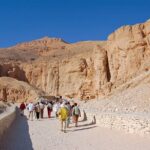
After the sunrise balloon, you’ll check out around 7:00am and start the West Bank touring. The main goal here is the Necropolis of Thebes, specifically the Valley of the Kings, where tombs are carved into the mountain.
You’ll visit three tombs, and the Egyptologist guide is there to recommend which ones to see. That recommendation piece is practical. Some tombs have more color and detail; others focus on specific scenes or architecture. With a guide, you’re not choosing blindly while time is ticking.
Here’s what you can expect from the specific tomb options on the schedule:
Tomb of Ramses III (KV 11)
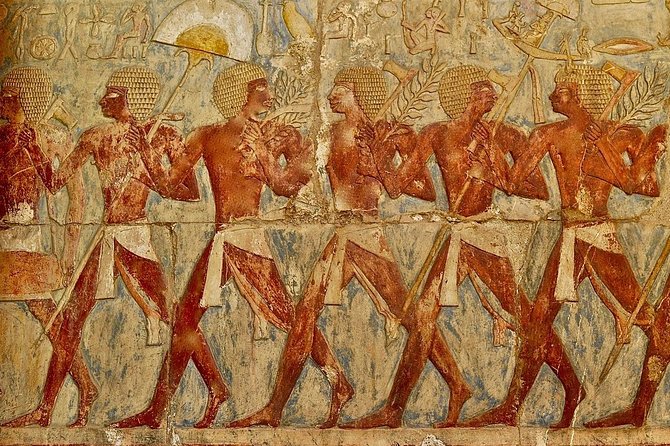
This is one of the most detailed tomb experiences in the Valley of the Kings, and it’s included as one of the likely stops. The description highlights colorful painted sunken reliefs with traditional ritual texts such as the Litany of Ra and Book of Gates, plus scenes showing Ramses before the gods.
What makes this stop feel different from a generic tomb visit is the mixture of ritual and “worldly” details. You’ll also see secular scenes in side rooms, including foreign tributes—pottery noted as imported from the Aegean, royal armor, boats, and harpists that helped earn the tomb its alternative name, Tomb of the Harpers.
Note on admission: Ramses III is listed as free if you have Valley of the Kings tektites. Because that phrase is specific, I’d treat it as a “check your ticket coverage” item rather than something to assume. Ask the staff what your current ticket includes.
Tomb of Ramses IX
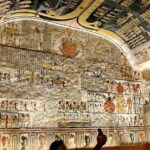
This stop is also listed with the same “free with Valley of the Kings tektites” note. Ramses IX is described as the fifth son of Ramses III, later appointed crown prince, and his tomb is presented as a feast for color and detail.
A standout detail in the description is the ceiling painting above the sarcophagi, featuring the goddess Nut stretching across the space. Even where paintings have deteriorated, the tomb is framed as one of the most decorated—so it’s a good pick if you love visual storytelling.
A few more Luxor tours and experiences worth a look


Tomb of Merenptah
Tomb 8 is the burial place of Pharaoh Merneptah, described as a royal tomb model. The text notes that it was discovered by Howard Carter in 1903, which is a name you’ll hear often in Egyptology circles, so seeing the tomb tied to that discovery adds context.
The description also mentions structural emphasis, including a shift toward more height in the corridors and fewer lateral rooms. In practice, that kind of architectural choice often affects how the tomb feels when you walk through—so it’s not just “another painted room,” it’s a different spatial experience.
Optional add-on: Tomb of King Tutankhamun
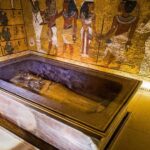
One of the Valley of the Kings stops is Tutankhamun (Tut), but it’s framed as optional. The entrance fee is listed as 300.00 EGP (optional), so you’ll want to decide before you arrive inside the Valley.
The description is clear about why this option is tempting: Tut is the famous young king, with the chance to be face to face with his royal mummy in the tomb. The description also gives quick biography context: he ascended around age 10 and died around 19. If Tut is your main reason for being in Luxor, this is the stop that most directly connects to that goal.
Deir el Bahari and Hatshepsut: a quieter kind of grandeur
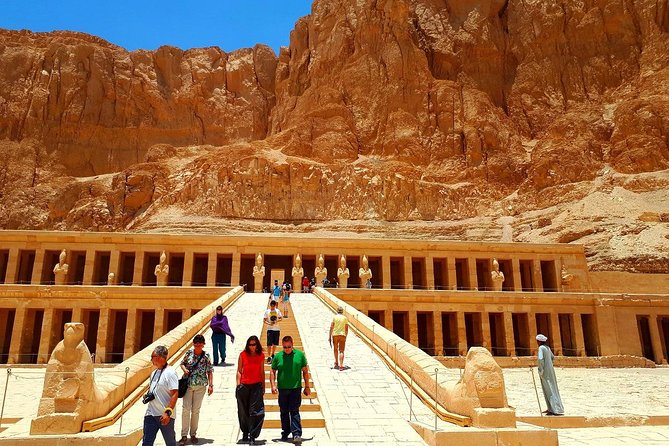
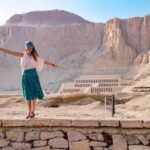
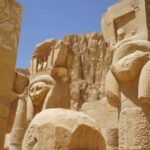
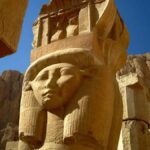
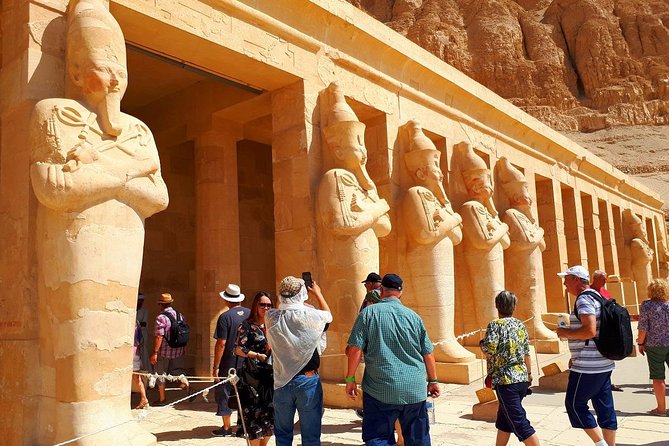
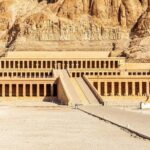
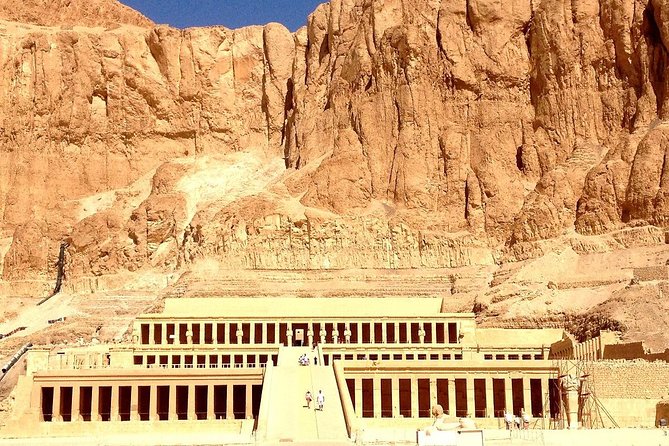
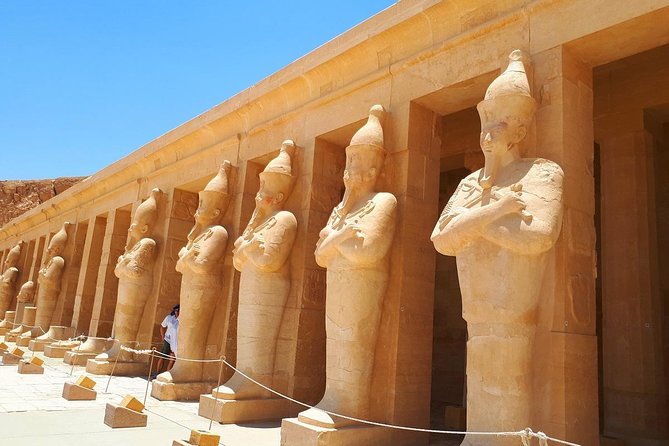
After the tombs, the next major contrast is Deir el Bahari, home to the Temple of Queen Hatshepsut. This is where the day shifts from rock-cut darkness to open monumental terraces.
The tour places emphasis on Hatshepsut as the only woman ever to reign over Egypt as Pharaoh. It also notes her as an ancestor of Tutankhamun and that she belonged to the same dynasty—so if you’re doing Tut as an optional tomb, this temple stop is the perfect follow-up.
The listed visit time is about 1 hour, and the entrance fee is given as 140.00 EGP for the Temple of Queen Hatshepsut. You’ll want cash or whatever payment method the operator expects for add-ons like this.
What I like about this stop in a day like this is the pacing relief. After the Valley of the Kings, you need a change of scale and lighting. Deir el Bahari gives you that, and the guide’s Egyptology commentary helps connect the temple with the political legitimacy and divine messaging Hatshepsut built into her reign.
Colossi of Memnon: the “big statues” stop that still feels real
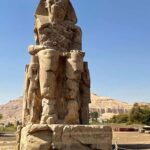
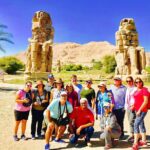
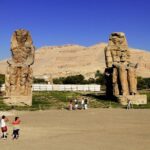
Next on the schedule: the Colossi of Memnon. You’ll see the two largest ancient statues in Egypt, attributed to the era of King Amenhotep III.
The time here is short—about 25 minutes—and it works well as a breather. You get that huge, grounded visual in the middle of a long day of sites, and then you’re back on the move toward Karnak and Luxor Temple.
If you like dramatic scale, this is one you don’t want to skip. Even in photos, it’s obvious these statues were meant to impress. On-site, the size hits differently, especially when you’re tired and still have more ground to cover.
Karnak and Luxor Temple: where Amun’s story comes from multiple angles
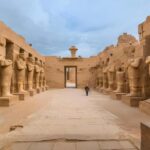
Karnak and Luxor Temple are the heart of Luxor’s East Bank mythology and power. The tour includes Karnak Temple and then continues into Temple of Amun areas within the Karnak complex. The schedule also calls out several features: courts, obelisks, and processional landmarks.
The entrance fee for Karnak is listed as 200.00 EGP. The text describes the courtyard of Amun-Ra as one of the four aisles that make up the Temple of Karnak, with an area of about 250,000 square meters. Some parts are described as in front of the public for restorations, which is a helpful expectation: this place isn’t frozen in time. It’s actively managed and repaired.
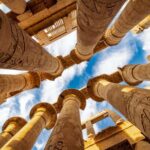
One review specifically called out the pillars at Karnak as amazing. That tracks with what people usually remember here: massive columns and hypostyle scale that make you feel small in the best way.
Obelisk of Queen Hatshepsut
The itinerary includes the Obelisk of Queen Hatshepsut (about 10 minutes). Even short stops like this can be useful if you’re into epigraphy or royal monument style. Obelisks are a quick way to connect a reign to public space and religious authority.
Avenue of Sphinxes: the “festival road” idea
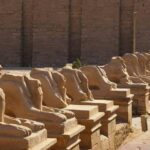
Then you’ll walk the Avenue of Sphinxes, described as human-headed sphinxes stretching about 1.5 miles (3 km) once connecting Karnak and Luxor. The tour’s explanation ties it to the Opet festival, when Egyptians paraded with statues of Amun and Mut in a symbolic reenactment of their marriage.
The description gets specific: it suggests about 1,350 sphinx statues lined the road, and it mentions barque chapels stocked with offerings. It also notes that Hatshepsut built six chapels, each with a precise function. Even if you only see part of the avenue in your visit window, the guide’s context turns it from “some statues” into “a moving ritual space.”
Obelisk of Thutmose I
The route also includes the Obelisk of Thutmoses I (about 10 minutes). It’s described as the smaller of the two remaining obelisks, with three lines of inscriptions on each face. Thutmoses I is framed as a warrior-king whose domains reached into Nubia and north into Syria, and the description notes he contributed monuments in Thebes.
This is a good stop for anyone who enjoys how power shows up in stone. You get a short hit of political geography and religious gratitude, all in one monument.
Luxor Temple: granite Ramses, and the Theban triad
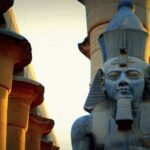
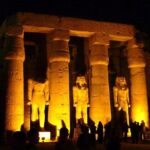
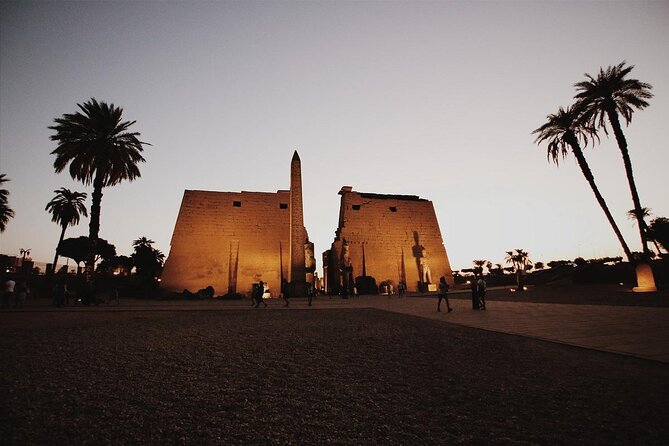
Finally comes Luxor Temple, about 1 hour. It’s dedicated to the Theben Triad: Amun-Ra, Mut, and Khonsu. The tour notes you’ll see the granite statues of Ramses the Great here.
This is an important ending point. If Karnak feels like the grand religious machine, Luxor Temple feels like a home base that ties the cult back to daily ritual and the lived experience of kingship. And because you’re not rushing through it—you have time with a guide—this stop usually becomes one of the more satisfying ones of the day.
Price, what’s included, and where extra costs pop up
At $140.00 per person, this package is positioned as a “get your money’s worth” day: balloon ride, a licensed guide, transportation, lunch, and a full-day monument program.
What’s included:
- Qualified Egyptologist guide
- Hotel pickup and drop-off
- Transport by air-conditioned vehicle
- Lunch
- Hot Air Balloon Ride
- Full day tour visiting major Luxor monuments
What’s not included:
- Entrance fees to the sites
That last part is where you’ll want to plan. The schedule lists entrance fees for some key sites:
- Temple of Queen Hatshepsut: 140.00 EGP
- Karnak Temple: 200.00 EGP
- Tutankhamun tomb: 300.00 EGP (optional)
Other stops are noted as free (like several Valley of the Kings tombs depending on the specific tektites note, plus Colossi of Memnon, obelisks, the Avenue of Sphinxes, etc.). Since entrance pricing and ticket rules can be confusing, I’d treat this day as: you’ll pay add-ons for the big-ticket interior entrances, and you should bring cash or be ready to settle those charges as instructed by the operator.
Value-wise, the balloon ride is usually the most “separate cost” experience in Luxor. Bundling it with a guided East/West Bank day is where you get the appeal. If you were to book the balloon and then independently hire a guide or pay for taxis between sites, your spending would likely climb quickly.
Who should book this tour, and who might want a different plan
This one fits best if you want Luxor in one push: sunrise balloon plus East Bank and West Bank highlights with an Egyptologist guiding the story.
You’ll probably love it if:
- You’re short on time and want the big Luxor hits in one day
- You care about context, not just checking boxes
- You like small-group touring (max 15) with pickup and transport
You might want a different option if:
- You’re sensitive to very early starts or long days
- You hate heat-based outdoor walking (Luxor can get brutally hot)
- You prefer a slower pace with more free time, because this schedule is packed with set stops
Should you book this Luxor hot air balloon and full-day tour?
I’d book it if you want a high-impact Luxor day with the right balance of must-sees and real guidance. The sunrise balloon over the Valley of the Kings is the kind of thing that changes how you feel about the site when you later walk among the tombs. And the rest of the day is built to connect monuments into a story, not just separate photo opportunities.
Before you say yes, do two quick checks: confirm what your ticket covers for Valley of the Kings tomb admissions (especially the “tektites” note), and budget for the listed add-on entrance fees like Hatshepsut, Karnak, and the optional Tut tomb. If you do that, the $140 price stops feeling like a gamble and starts feeling like a plan.
FAQ
What time does this tour start in Luxor?
The start time is listed as 5:30am, with the ticket redemption point at the Valley of the Kings in Luxor.
Is hotel pickup and drop-off included?
Yes. The package includes hotel pickup and drop-off, plus transport by air-conditioned vehicle.
Is lunch included?
Yes. Lunch is included as part of the package.
What does the hot air balloon ride include?
You get a sunrise hot-air balloon ride over the Valley of the Kings, followed by the full-day guided Luxor tour.
Are entrance fees included in the price?
Entrance fees are not included. The tour notes that entrance fees for the mentioned sites are extra, with specific fees listed for some locations.
What happens if the balloon can’t fly due to weather?
This experience requires good weather. If it’s canceled due to poor weather, you’ll be offered a different date or a full refund.