REVIEW · LUXOR
Private West Bank Luxor Tour with Local Food Tasting
Book on Viator →Operated by Egypt Trusted Tours · Bookable on Viator
Five hours, and Egypt feels close. This private West Bank tour in Luxor strings together the Valley of the Kings, Hatshepsut’s temple, and Habu Temple, with an English-speaking guide who makes the stories easy to follow and fun to listen to. I love the comfortable air-conditioned pickup and I also like that your day has a clear, time-based rhythm so you’re not stuck wandering.
What really wins me over is the mix of famous sites and the less-visited one: Habu Temple. The carvings, plus the fact you can see the remaining palace of King Ramesses III, give you something more specific than the usual checklist. I also enjoy the local food tasting at the Luxor Market, where you can try choices like falafel, tahini, and koshari, with vegetarian options.
One consideration: entrance fees aren’t consistently stated in one place, so you should plan for the chance that entrance tickets may cost extra beyond the tour price. That’s an easy fix, just confirm what you’ll pay on the day so you don’t get surprised at the gates.
In This Review
- Key Highlights You’ll Actually Feel During This Day
- Private Pickup in Luxor: Easy Start, No Stress Navigation
- Valley of the Kings Tombs: Colors, Stone, and Quiet Scale
- Temple of Hatshepsut: Understanding Power Through Architecture
- Habu Temple in Medinat Habu: The Most Underrated Reason to Come
- Colossi of Memnon: A Quick, Free Win for Your Photos
- Luxor Market Food Tasting: Falafel, Tahini, and Koshari in Local Hands
- Why the English Guide Matters (Including Abu’s Storytelling Style)
- Price and Entrance Fees: What $80 Really Covers
- When This West Bank Day Makes Sense for You
- Should You Book This Luxor West Bank + Food Tasting Tour?
- FAQ
- How long is the West Bank Luxor tour?
- Is pickup included, and where can you be picked up?
- What’s included in the tour price?
- Are entrance fees included?
- Is this tour private?
- What’s the cancellation policy?
Key Highlights You’ll Actually Feel During This Day
- Private, air-conditioned pickup anywhere in Luxor so you can start smoothly at 8:00 am
- Valley of the Kings tomb visits with attention to colors inside and different stone types
- Temple of Hatshepsut focused on how she became a strong ruler of Ancient Egypt
- Habu Temple’s special draw: remaining palace of King Ramesses III and very colorful, deep carvings
- Luxor Market food tasting with falafel, tahini, and koshari plus vegetarian options
Private Pickup in Luxor: Easy Start, No Stress Navigation
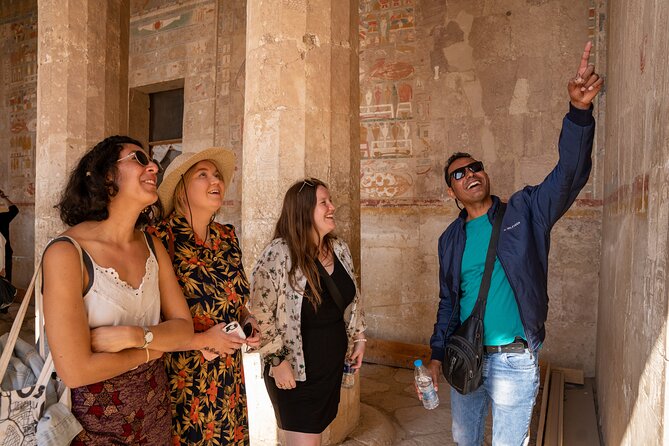
The day begins at 8:00 am with pickup offered from your hotel, Airbnb, airport, or any other location within Luxor. That matters more than it sounds. West Bank touring involves getting from one site cluster to another, and using a vehicle with you already set means you’re not spending time negotiating, waiting, or losing energy before you even reach the temples.
This is also a true private setup, meaning only your group participates. For a family, a couple, or friends traveling together, that usually equals more flexibility: you can ask questions, slow down at a tomb entrance, or ask your guide to emphasize certain topics. You’ll also get bottled water, snacks, and the comfort of an air-conditioned vehicle, which helps a lot on a hot day when you’re walking between stops.
The whole tour runs about 5 hours (approx.), and the schedule is broken into clear segments: two hours for the Valley of the Kings, then shorter temple stops, then a quick statue stop, and finally the market tasting. That timing is practical. It lets you see a lot without turning the day into an all-day sprint.
You can also read our reviews of more tours and experiences in Luxor.

Valley of the Kings Tombs: Colors, Stone, and Quiet Scale
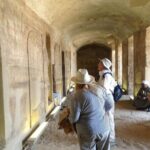
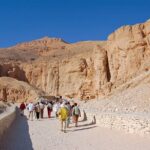
Your first major stop is the Valley of the Kings, reached by traveling into the West Bank and exploring tombs where generations of pharaohs were buried. This is the part of the day where your guide’s role really pays off. Without context, it can feel like you’re just looking at entrances. With an English-speaking guide, you get story cues that help you understand what you’re seeing and why it mattered.
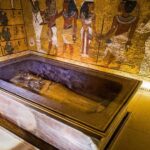
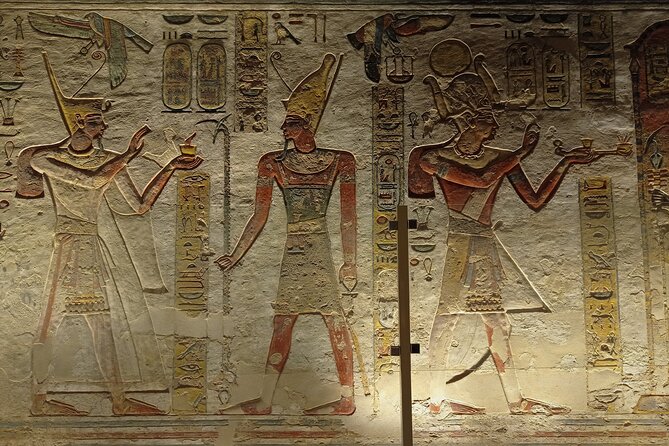
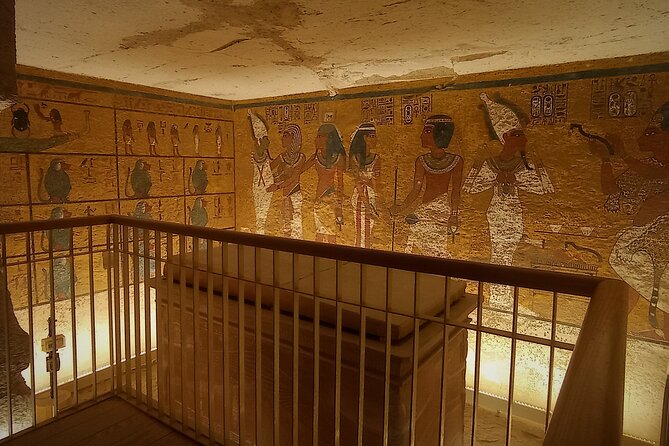
One detail I like here is the focus on what’s visible inside: the tombs have beautiful colors and you’ll notice different types of stones used in construction and decoration. That’s the kind of observation you can actually remember later, because it’s specific. Instead of only hearing general facts, you’re paying attention to the physical look and texture of the tombs.
You’ll spend about 2 hours at this stop. That’s a solid amount of time because it gives room for slower pacing, a few questions, and time to look at details without rushing. The only caution: tomb spaces can feel tight, so if you get claustrophobic or move slowly, talk to your guide early. The private format makes that kind of adjustment easier.
Entrance tickets for this segment are listed as not included, so budget time in your planning to cover those costs. If you’re trying to keep travel-day expenses predictable, confirm what you’ll pay for site entries when you book.
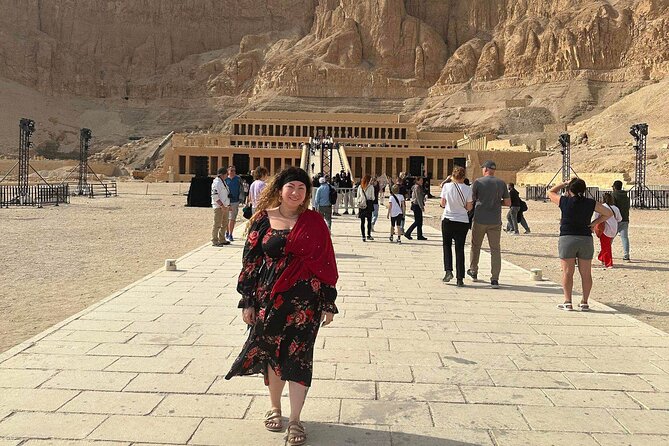
Temple of Hatshepsut: Understanding Power Through Architecture
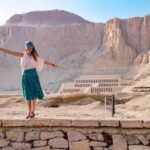
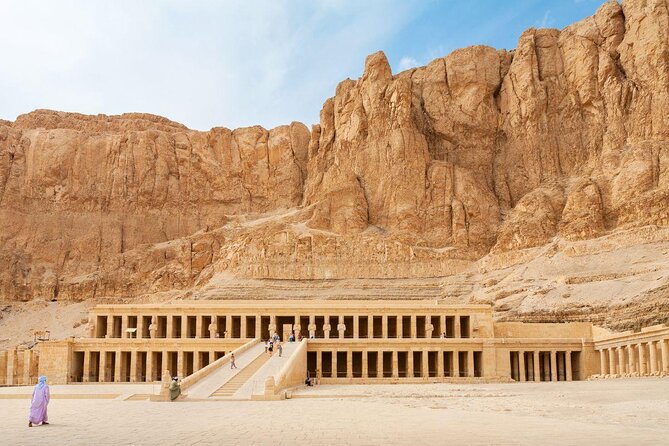
Next up is the Temple of Queen Hatshepsut, about 1 hour of visiting time. What I like about this stop is that your guide won’t treat it like a photo-only checkpoint. The focus is on how Hatshepsut became a strong ruler of Ancient Egypt, which gives the temple meaning beyond its location.
This is where temples shift from being “ancient ruins” into being a message. A guide who tells the story in a clear, lively way helps you read the building like a statement: who was in charge, what they wanted remembered, and how the place was used to project authority.
Your tour time here is short enough to keep the day moving, but long enough to step back and really look. If you’re the type who likes to connect facts to what you see in front of you, this stop tends to land well.
Like the Valley of the Kings, admission for this temple is listed as not included, so again, check entry fees during planning.
Habu Temple in Medinat Habu: The Most Underrated Reason to Come
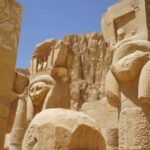
If you want one stop that feels like the tour earns its name, make it Temple of Medinat Habu. This is the underrated and unique site on the schedule, and it shows in the way it’s described: colorful and deep carvings and a standout historical feature.
Here’s the big reason people get excited: it’s the only place you can see the remaining palace of King Ramesses III. That’s not a vague “there’s a lot to see” claim. It’s a specific draw, and it helps you understand why this temple is different from the more commonly visited big names.
You’ll spend about 1 hour at Habu Temple. One hour is enough if your guide is focused and you’re paying attention to carvings instead of just walking through quickly. The carvings are described as colorful and deep, which suggests you’ll want to slow down for viewing angles and close inspection. In a group tour, that can be hard. In a private tour, you get more control over pacing.
Practical note: this stop is still a temple visit, so you’ll likely be doing outdoor walking and standing while looking. Wear shoes that won’t make you regret the day.
Entrance tickets for this segment are also listed as not included.
Colossi of Memnon: A Quick, Free Win for Your Photos
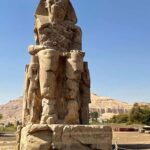
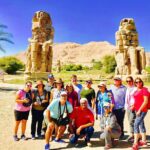
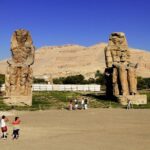
After the temples, you get a short breather at the Colossi of Memnon. You’ll see two massive stone statues of Pharaoh Amenhotep III, and the visit is only about 15 minutes. That’s perfect if you want a famous visual moment without losing momentum.
The good news is that this stop is listed with admission free. That means you get value without adding another ticket expense. It also helps the overall math of the day, especially if other entrance fees add up.
Because your time is short, treat this like a photo and orientation stop. Ask your guide where the best angles are, and then take your time getting at least a couple shots you actually like.

Luxor Market Food Tasting: Falafel, Tahini, and Koshari in Local Hands
You’ll end with Luxor Market and about 30 minutes of sampling local Egyptian food. This is the part of the day I think most people underestimate, because food tasting is often treated as a quick extra. Here it’s a real closing act, with tasting focused on identifiable items.
Expect options like falafel, tahini, and koshari, and vegetarian options are available. Even if you already know what koshari is, trying it in a local stall setting is different from ordering it somewhere else. You get a sense of how food fits into daily life, not just tourism.
Also, keep in mind you’ll have snacks earlier in the day, so this market portion is best thought of as tasting, not a full meal. Pace yourself: sample a bit of what sounds most interesting, and don’t feel pressured to try everything if you’re already full.
This segment is listed as free admission, so it doesn’t add costs on top of the transport and sites.
Why the English Guide Matters (Including Abu’s Storytelling Style)
A private tour lives or dies by the guide’s tone and clarity. The strongest praise tied to this experience is about a guide named Abu and his ability to tell the stories with passion and humor, almost as if you’re seeing the time period play out. That kind of storytelling is more than entertainment. It changes how you look at each site.
When your guide explains why Hatshepsut mattered, or why Ramesses III’s connection is so specific at Habu Temple, you’re not just memorizing names. You’re linking names to visible features—colors in tombs, deep carvings in temples, and distinct statues at Colossi of Memnon.
I also like that this type of guide tends to be approachable. In feedback tied to this experience, Abu is described as friendly, with real conversation—not a distant script. That’s especially useful if you have special requests, since this tour is built to be adaptable.
If you want to customize, you can ask your guide to shape the day around your interests, within the time available. For example, if you’d rather spend a few extra minutes focusing on a specific theme inside the temples, a good guide will help you adjust on the fly.
Price and Entrance Fees: What $80 Really Covers
At $80 per person, you’re paying for a private guided day with pickup, air-conditioned transport, bottled water, snacks, and a structured route across the West Bank. That’s already a lot of practical value because Luxor touring is all about saving time and avoiding friction.
What’s not included is admission for the sites and temples, which is stated as not included. That means the total cost you pay can be higher than $80 once you add entrance tickets. The tour information also notes that some parts are free (like Colossi of Memnon and the Luxor Market tasting), which helps. Still, confirm entry fees for the paid sites in advance so you can budget accurately.
If you’re comparing costs, think in terms of what you avoid:
- You avoid figuring out transport on your own across multiple sites
- You avoid losing time at the start while waiting for the right tickets and routes
- You avoid reading the sites with no guidance (and missing the details you’d enjoy)
If you’re the type who likes a guide to explain what you’re seeing, this price can feel fair fast. If you’re comfortable self-guiding and already know exactly what you want to photograph, you might find cheaper options—but you’ll likely trade away some clarity and convenience.
When This West Bank Day Makes Sense for You
This tour fits best if you want a focused West Bank experience without committing to a full day of hopping around. The pace is built around a short time at Valley of the Kings, a quick stop at Hatshepsut, a special and visually strong hour at Habu Temple, a brief Colossi of Memnon visit, then a market tasting.
It also suits you if you want a food component that’s not generic. Trying falafel, tahini, and koshari at Luxor Market—along with vegetarian-friendly options—gives your day a real local flavor.
You might consider another option if:
- You hate paying separate entry fees and want a fully all-in price (since entrance tickets for sites and temples are listed as not included)
- You need longer time at tombs or carvings to fully absorb them, because the schedule is tight by design
- You’re traveling with limited mobility and need slower, more flexible walking time; you can ask for pacing help, but the stops are still structured
Should You Book This Luxor West Bank + Food Tasting Tour?
If you want an efficient day on the West Bank with a guide who tells stories in an engaging way—plus a real food tasting at the end—this is a strong booking. I like that it combines the Valley of the Kings with Habu Temple, giving you both well-known burial ground and a less overused site tied to Ramesses III.
Book it if:
- You want private comfort with air-conditioned pickup in Luxor
- You care about understanding what you see, not just collecting photos
- You’d like to end the day with local food like koshari, falafel, and tahini
Before you pay, do one smart thing: confirm the entrance fee situation for the sites and temples you’ll visit. Once you’ve got that clarity, you can enjoy the day for what it’s meant to be—an organized, human-sized West Bank tour that ends with actual local bites, not just sightseeing fatigue.
FAQ
How long is the West Bank Luxor tour?
It runs about 5 hours (approx.), starting at 8:00 am.
Is pickup included, and where can you be picked up?
Yes. Pickup is offered from your hotel, Airbnb, airport, or any other location within Luxor.
What’s included in the tour price?
Included are bottled water, snacks, and an air-conditioned vehicle.
Are entrance fees included?
Entrance fees to sites and temples are listed as not included, and you may also find some stops are free (for example, Colossi of Memnon and the Luxor Market tasting).
Is this tour private?
Yes, it’s a private tour/activity, so only your group participates.
What’s the cancellation policy?
You can cancel for free up to 24 hours in advance for a full refund. If you cancel less than 24 hours before the start time, the amount paid isn’t refunded.