REVIEW · LUXOR
Half day trip to East bank of Luxor ( Karnak and Luxor temples)
Book on Viator →Operated by Luxortourguide · Bookable on Viator
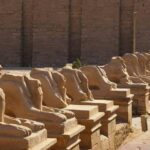
Stone forests and royal statues in one short outing. This East Bank Luxor half-day tour takes you to Karnak and Luxor Temple with an Egyptologist guide, so the carvings stop being random and start making sense—especially once you’re inside the Hypostyle Hall. I love how the guide helps you spot the big-ticket features like sphinxes, obelisks, and columns without speeding you through them.
My other favorite part is how easy the logistics feel. You get hotel pickup and drop-off, and you ride in an air-conditioned vehicle so the journey stays comfortable, even when Luxor’s schedule is tight. It’s also private, so you can ask unselfconsciously and move at your own pace instead of being marched along.
One consideration: entrance fees are not included. You’ll need local cash (the tour suggests about 300 Egyptian pounds per person) for Karnak and Luxor Temple, and you’ll also want a little extra budget for gratuities.
In This Review
- Key Points Worth Filing Away
- East Bank Luxor, Done Right in 3 to 4 Hours
- Karnak Temple: Hypostyle Hall and the Details Your Eye Misses Alone
- Practical tip inside Karnak
- Luxor Temple: Ramesses II Statues, Amunhotep III Origins, and the Obelisk Front View
- The drawback to know
- Price and Logistics: What $40 Covers (and What You’ll Still Pay)
- Your Guide Makes the Difference (And You’ll Feel It at Both Temples)
- A Realistic Sense of Timing: How to Enjoy Both Sites Without Feeling Trapped
- Who This Tour Is Best For (and Who Should Look Elsewhere)
- Should You Book This East Bank Half-Day Tour?
- FAQ
- Are the entrance fees included for Karnak and Luxor Temple?
- How long is the tour from pickup to drop-off?
- Do you get hotel pickup and drop-off?
- Is this a private tour?
- What kind of guide will I have?
- Is the transport air-conditioned?
- Is there free cancellation?
Key Points Worth Filing Away
- A private Egyptologist guide keeps Karnak and Luxor Temple understandable, not overwhelming
- Karnak’s Hypostyle Hall gets the kind of time you usually don’t have on rushed tours
- Luxor Temple’s royal backstory includes Amunhotep III origins and completion by Ramesses II
- Hotel pickup and air-conditioned transport make this a true half-day plan
- Entrance tickets are extra and you’ll want Egyptian pounds ready
- A papyrus shop stop may appear in some guides’ routing, based on past experiences
East Bank Luxor, Done Right in 3 to 4 Hours
If you only have half a day in Luxor, the trick is choosing monuments that reward attention fast. This plan does that by stacking two major temple sites on the East Bank: Karnak first, then Luxor Temple. It’s short enough to avoid a museum fatigue hangover, but long enough to actually take in the scale and symbolism.
The value here is less about ticking boxes and more about how the timing works. You’re not trapped in a long day with too many handoffs. Instead, you get a focused window at Karnak (about 2 hours) and a second, slightly lighter visit to Luxor Temple (about 1.5 hours), with a guide who can answer the questions that pop up when you’re looking at the art up close.
And because it’s private, you’re not stuck with someone else’s pace. If you want to spend extra minutes lingering at a doorway scene or lining up photos, you can. If you want to move on quickly, you can do that too. In other words, you’re driving the experience more than the schedule is.
A few more Luxor tours and experiences worth a look

Karnak Temple: Hypostyle Hall and the Details Your Eye Misses Alone
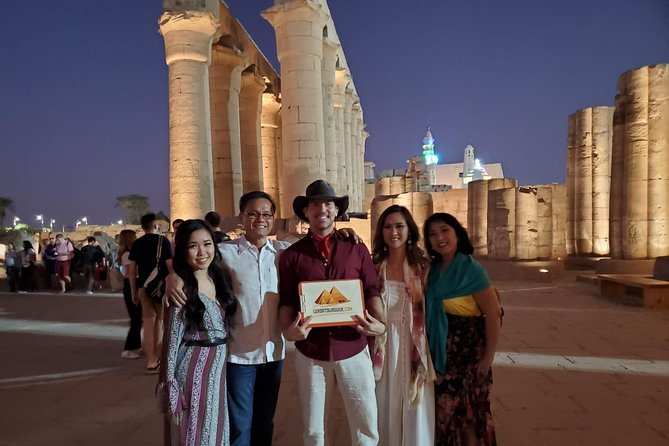
Karnak is the kind of place that makes you stop saying I saw a temple and start saying I walked through a whole civilization. It’s described as the largest place of worship built within two thousand years, and that scale is the whole point. Even if you know the basics, walking the paths makes it feel real.
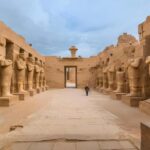
You’ll spend about 2 hours here, which is a smart match to what Karnak offers. You don’t get to cover every corner of this enormous complex, but you do get enough time for the big highlights to land. The centerpiece is the Hypostyle Hall, essentially a forest of giant stone pillars that turns your brain into an architectural sketchbook. In past tours, guides also point out famous elements people look for—like the sacred lake area and standout figures such as a basilisk—plus key “holy of holies” zones if you’re walking the proper route.
What I really like about having a guide at Karnak is that it changes what you notice. Without help, you can end up treating hieroglyphs like wallpaper. With help, you start reading patterns: where royal power shows up, how deities are emphasized, and what the space is designed to make you feel as you move deeper.
Practical tip inside Karnak
Try to plan your expectations around time and space. This tour gives you a focused Karnak hit, not an all-day marathon. If you love architecture and want to linger on every inscription, you may still feel the urge to return later. If you want a strong understanding without burning your whole day, 2 hours is a reasonable target.
Luxor Temple: Ramesses II Statues, Amunhotep III Origins, and the Obelisk Front View

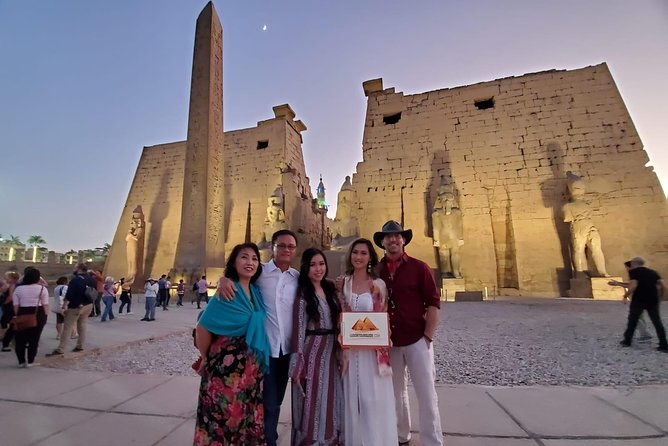
After Karnak, Luxor Temple feels like the more human-scale cousin—still impressive, but easier to navigate. It was started by Amunhotep III in the 18th Dynasty and completed during the 19th Dynasty by Ramesses II, and you can feel that layering when you look at the royal focus and the way statues and monuments take center stage.
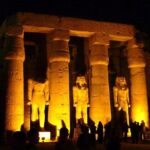
This stop runs about 1 hour 30 minutes. You’ll see the Obelisk of Ramses II in front of the first pylon area, plus the hulking presence of Ramesses II statues and the temple’s dedication to Amun-Ra, Mut, and Khonsu as the Theban triad. The guide’s job here is to translate that into plain language: who built what, who ruled when, and why those gods mattered to the power structure of the time.
One subtle benefit of doing Luxor Temple after Karnak: your eyes reset. Karnak can overload you with scale. Luxor Temple comes in with a clearer storyline, so your brain gets a chance to connect the dots instead of just absorbing visuals.
The drawback to know
Luxor Temple is not “short” because it’s simple. It’s short because you’re fitting it into a half-day itinerary. If you want to go slow, bring your questions and let the guide steer you toward what you care about most.




Price and Logistics: What $40 Covers (and What You’ll Still Pay)
At $40 per person, the headline price sounds simple—but the real value is in what’s included. You’re paying for the parts that usually add up fast in Egypt: a qualified Egyptologist guide, hotel pickup and drop-off, air-conditioned transport, and the operational costs like parking, fuel surcharge, driver, service charges, and taxes.
What isn’t included is the temple admission itself. You’ll need local cash for entrance fees, and the tour suggests having around 300 Egyptian pounds per person available for the sites visited. Also plan for gratuities, since they’re recommended but not included.
So is it worth it? Usually, yes—if you’re the type of traveler who wants a guide to make the monuments click. If you’re happy wandering alone with a basic guidebook, Karnak is still spectacular, but you’ll get less value from paying for a professional translator of symbols.
For best value, this is also a good option if you’re staying in Luxor and want East Bank focus without extra transit costs. The pickup-and-drop structure matters more than it sounds, because it protects your time and keeps the outing feeling like a single coherent plan.
Your Guide Makes the Difference (And You’ll Feel It at Both Temples)

The biggest theme in feedback for this kind of East Bank tour isn’t just seeing Karnak and Luxor Temple. It’s the way guides shape the visit. Names that show up repeatedly include Khaled/Khalid, Walid, Tallat, Abdool, Remon, and Mohammed—and the common thread is pacing and clarity.
Some guides are praised for letting you explore at your own speed instead of rushing you. Others are praised for detailed explanations at key points and for taking initiative on practical moments like timing—such as getting to the site before the busiest rush periods. One guide even offered restaurant recommendations after the tour ended, which tells you the support can go beyond the monuments themselves.
English guidance also appears in reviews. For example, Khalid is described as speaking fluent English, and that matters because it makes the carvings and myths easier to hold in your head while you’re standing in front of them.
And yes, there are also practical photo helps: guides assisting with pictures and pointing out the angles that tend to work best in temple settings. If you care about getting images you’ll actually want to keep (not just random shots), that kind of help is worth its weight in gold—stone gold, of course.
A Realistic Sense of Timing: How to Enjoy Both Sites Without Feeling Trapped
This is a short outing by design, and the smartest way to enjoy it is to accept that you’re selecting highlights. Karnak gets about 2 hours. Luxor Temple gets about 1 hour 30 minutes. Between those two stops, you’ll likely spend most of your time walking, stopping for explanations, and moving into the areas the guide considers most important for understanding.
Here’s the balanced way to think about it:
- If you want context, you’ll feel satisfied because you’re not just looking—you’re interpreting.
- If you want every corridor and every inscription, you’ll probably want a longer stay later because Karnak is huge.
Also, since entrance fees aren’t included, your day goes smoother if you’re ready with local cash for entry. A last-minute scramble at the ticket spot can eat into the time you hoped to spend reading details.
One more timing note: a few guides are described as ensuring you arrive on time before busy moments. That’s a big deal at Karnak, where crowd flow can change how easy it is to stop, look up, and take in the work.
Who This Tour Is Best For (and Who Should Look Elsewhere)

I think this tour fits best when you want an East Bank sampler that still feels serious. It’s a strong pick for first-time Luxor visitors who want both Karnak and Luxor Temple without adding West Bank monuments on the same day. It’s also a good match if you prefer private pacing and asking questions freely.
It can also work well for families or travelers who want to avoid the friction of group meetups, because it’s private and scheduled tightly around a half-day format.
You might look elsewhere if you already know you want a slow, ultra-deep Karnak experience. Even with a guide, this plan is intentionally limited by time. Think of it as a guided “greatest hits with context,” not as an everything-possible tour.
Should You Book This East Bank Half-Day Tour?
I’d book it if you want the most understandable, time-efficient Luxor hit on the East Bank. The mix of Karnak Hypostyle Hall plus Luxor Temple’s Ramesses II focus is a smart pairing, and the inclusion of an Egyptologist guide plus hotel pickup and air-conditioned transport makes it feel like you’re buying convenience and clarity together.
Book it also if you care about how you experience temples, not just where you stand. The guide-led explanations and patient pacing show up again and again in feedback, and that’s what turns stone walls into a story you can follow.
The main reason not to book is simple: you’ll pay extra for entrance tickets, and you need local cash ready. If you hate add-on costs, that might annoy you. If you’re fine with that, this tour is a solid way to spend a half day in Luxor with less stress and more meaning.
FAQ
Are the entrance fees included for Karnak and Luxor Temple?
No. Entrance fees are extra, and you’ll need local cash for them. The tour lists about 300 Egyptian pounds per person as the amount needed.
How long is the tour from pickup to drop-off?
It runs about 3 to 4 hours total. Karnak is about 2 hours, and Luxor Temple is about 1 hour 30 minutes.
Do you get hotel pickup and drop-off?
Yes. You’ll be picked up directly from your Luxor hotel and returned after the tour.
Is this a private tour?
Yes. It’s private, meaning only your group will participate.
What kind of guide will I have?
You’ll have a qualified Egyptologist guide.
Is the transport air-conditioned?
Yes. Transport is by air-conditioned vehicle.
Is there free cancellation?
Yes. Free cancellation is available, and you can cancel up to 24 hours in advance for a full refund.