REVIEW · LUXOR
One Day Sunrise Balloon, Sunset Felucca ride, Luxor full-day tour
Book on Viator →Operated by DrMo Tours Egypt · Bookable on Viator
That sunrise balloon is the kind of Luxor moment you remember. This one-day combo stacks a sunrise hot air balloon, a fast-but-flexible East/West Bank highlight circuit with a private Egyptologist, and a calm sunset felucca on the Nile. It’s built for people who want big sights, not slow sightseeing.
I like two things a lot: you get a private Egyptologist guide (plus a photographer) and a luxury A/C vehicle with pickup and return. I also like that the core experiences are grouped together and included at one price: the balloon ride (with a flight certificate) and the hour-long felucca cruise, without you having to stitch together separate tours.
One thing to watch: entrance fees and lunch are not included, and the day starts early enough that timing matters. If you’re late to pickup or your morning start is chaotic, the sunrise balloon can be the first thing to feel the impact.
In This Review
- Key things to know before you book
- What you’re really buying for $119 in Luxor
- Door-to-door pickup and the early rhythm that makes the balloon work
- Sunrise balloon over Luxor: the views, the pacing, and the flight certificate
- Colossi of Memnon: the quick stop that anchors the West Bank
- Valley of the Kings: tomb visits that trade time for variety
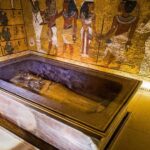
- Tutankhamun’s tomb: optional, extra ticket, plan ahead
- Deir el-Bahari: Hatshepsut’s temple after the tombs
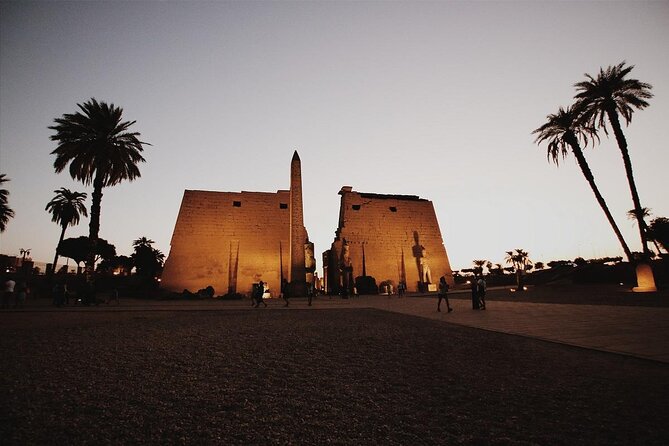
- Karnak Temple: the full-scale wow factor on the East Bank
- Luxor Temple and the Avenue of Sphinxes: finishing with symmetry
- Sunset felucca on the Nile: one hour that does what temples can’t
- Price and logistics: what’s included, what isn’t, and what to budget
- Guide quality: the name that keeps showing up is Capo Hassan
- Who should book this Luxor balloon + felucca combo
- Should you book this tour?
- FAQ
- FAQ
- How long is this Luxor tour?
- What parts of the day are included?
- How long is the balloon ride?
- How long is the felucca cruise?
- Are entrance fees included?
- Is lunch included?
- Can I visit Tutankhamun’s tomb?
- Is there hotel pickup and return?
- Is this a private tour?
Key things to know before you book
- Sunrise balloon ride: about 45 minutes in the air (priced as a 35–60 minute ride), plus the experience of inflation and deflation on-site
- Private East + West Bank day: multiple major stops in Luxor with a qualified Egyptologist and a pace that works for your group
- Valley of the Kings options: you’ll see several tombs, while Tutankhamun’s tomb requires extra tickets
- Felucca cruise at sunset: about one hour of slow Nile time after the temple circuit
- Entrance fees are pay-as-you-go: the tour covers the guiding and transfers, but not ticket costs for sites
What you’re really buying for $119 in Luxor
At $119 per person, you’re mostly paying for logistics and expertise: door-to-door transfers, a private guide/photographer, plus two signature experiences that are usually sold separately in Luxor—a hot air balloon and a sunset felucca. That combo is the big value play here, because it saves you time and avoids the usual headache of coordinating two different operators.
The tour is also designed around structure. You’ll move between East Bank and West Bank in a full day, but you’re not stuck in a rigid “look, then move on” cadence. Your guide supports you with context as you go, and you can spend your time inside tombs and temples according to what you want to focus on.
The trade-off is the usual one for packed Luxor days: the included price doesn’t cover entrance fees or lunch. Also, you’ll be out for roughly 7 to 9 hours, starting early enough that you should plan your sleep and your expectations.
You can also read our reviews of more evening experiences in Luxor



Door-to-door pickup and the early rhythm that makes the balloon work

This day starts with pickup from your hotel and return at the end. It’s set up as private, meaning it’s only your group (no mixing with strangers), and you’ll ride in a first-class A/C luxury car.
Then comes the pre-balloon shuffle that you’ll want to treat like part of the adventure, not just “waiting.” After pickup, you’ll head toward the balloon side with soft drinks mentioned as part of the morning flow. From there, the plan includes a motorboat transfer connected to the west-bank area before you get to the balloon takeoff area.
Why this matters: sunrise balloon operations are time-sensitive. The morning isn’t just romantic; it’s organized around flight schedules, winds, and safety timing. One review flagged pickup running late as a problem point, so I’d take that as a quiet hint: confirm the pickup location and be ready earlier than you think you need to be.
Sunrise balloon over Luxor: the views, the pacing, and the flight certificate
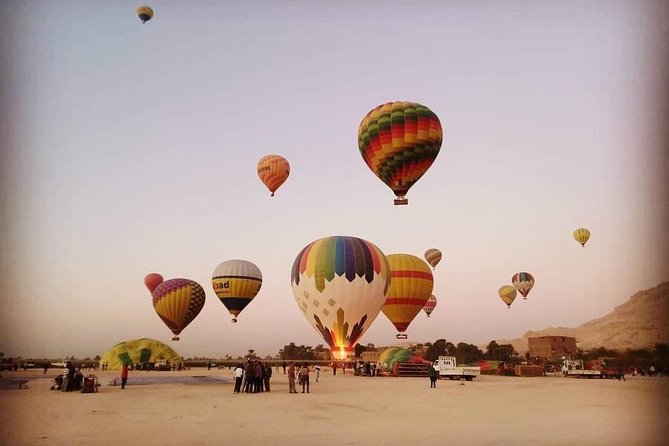
The balloon ride is the headline—about 35–60 minutes in the air with about 45 minutes as the typical duration. You’ll watch the sun rise over temples, the river, and the desert from up high. On the ground, you’ll also see the balloon inflating and later the deflation and disembarking process, so it’s not just a “board and go” moment.
What you’re getting here isn’t only the view. You’re also getting the change in perspective that makes Luxor click. From above, temple complexes and the Nile corridor start to look like a designed map, not a pile of separate monuments. Even if you’ve read about Karnak or the Valley of the Kings, the balloon makes the geography feel real.
Practical tips that follow directly from how these rides are run:
- Dress in layers. Early morning can feel colder than you expect at the start of the day.
- Bring a camera you can operate one-handed. You’ll want to frame shots while still handling temperature and wind changes.
- Keep your phone secured. The experience involves transfers and open-air moments around loading and disembarking.
You’ll also receive a flight certificate, which is a nice keepsake and helps make the day feel official.
Colossi of Memnon: the quick stop that anchors the West Bank
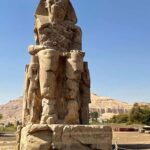
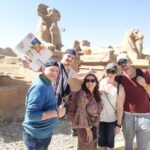
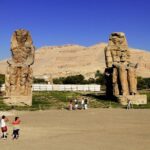
After the balloon, your day shifts to a classic West Bank sequence. The first historical anchor is the Colossi of Memnon, the two large statues associated with King Amenhotep III.
This stop is short (about 10 minutes). That’s exactly why it works early in the West Bank circuit: it gives you a clear sense of place—these statues are big, iconic, and visually different from tomb entrances and temple walls. You get your bearings fast before the deeper tomb visits.
A drawback to accept: with only 10 minutes, you won’t have time for a long sit-down. If you like lingering, treat this like orientation, then plan your slower time for inside tombs and Karnak later.
Valley of the Kings: tomb visits that trade time for variety
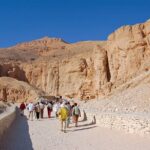
The Valley of the Kings visit is where your day gets its “real Luxor” intensity. You’ll spend about 2 hours at the necropolis area, visiting several royal tombs.
Your package includes tomb visits such as:
- Ramses IX
- Merenptah
- Ramses III
- Plus additional tomb coverage including the Tomb of Ramses and Tomb of Horemheb as part of the four tomb concept described for the day
A couple tomb details matter because they help you know what to look for once you’re standing in front of the entrances:
- In the tomb connected to Ramses IX, you’ll be looking at colorful painted decoration, including mention of a ceiling where Nut stretches across space above the sarcophagi.
- In Ramses III’s tomb (KV 11), the description highlights painted sunken reliefs and ritual texts, including references like the Litany of Ra and the Book of Gates. It also notes unusual secular scenes in side rooms, including foreign tributes (like Aegean pottery) and the famous idea of blind harpists, tied to the tomb’s alternative nickname.
For you, this is the value of having an Egyptologist: you don’t just see “painted walls,” you see how themes and symbols connect across tombs.
One key consideration: tomb time is competitive. The day is scheduled around multiple stops, so you should go into each tomb with one or two “focus points” (paint color, ceiling scenes, or wall texts). Otherwise you can end up speed-reading everything.
A few more Luxor tours and experiences worth a look


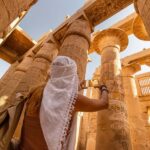

Tutankhamun’s tomb: optional, extra ticket, plan ahead
There’s time for King Tutankhamun (Tut) only if you buy extra tickets. The day includes mention of a dedicated slot and states that it’s not included without an add-on.
If Tut is your top priority, factor that extra cost into your budget and keep your energy for it. If it’s not, you can still get plenty of wow from the included tomb choices.
Deir el-Bahari: Hatshepsut’s temple after the tombs

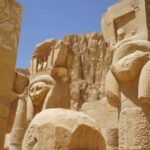
After the Valley of the Kings, the route continues to the Temple of Hatshepsut at Deir el Bahari. You get about 1.5 hours here, and it’s a different kind of experience from the tombs: open-air architecture and a Pharaoh who’s a big deal.
Hatshepsut is described as the only woman ever to reign over Egypt as Pharaoh, and she’s positioned as an ancestor of Tutankhamun’s dynasty. That family link makes this stop more than just a photogenic set of terraces; it gives you a sense of dynastic continuity.
It’s also a good mental break. After dim tomb corridors, stepping into daylight helps you reset and notice details again.
Karnak Temple: the full-scale wow factor on the East Bank
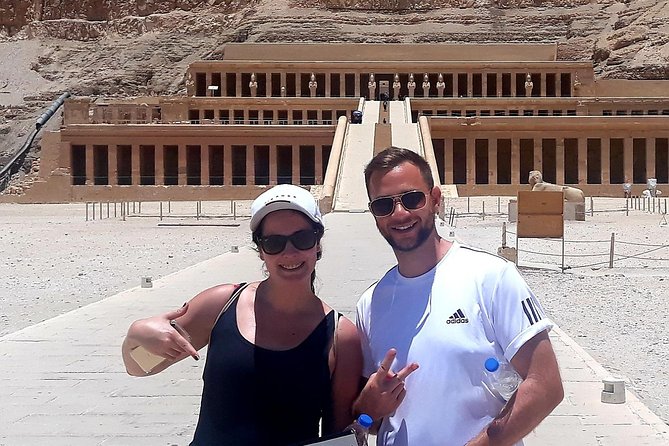
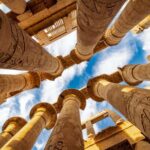
Next comes Karnak Temple, with about 2 hours allocated. Karnak is one of those places where the scale hits first and the meaning follows. Your guide helps you connect the parts: the avenue of sphinxes, the Hypostyle Hall with 134 gigantic columns, the obelisks (including references to Queen Hatshepsut and Thutmose I), and the Temple of Amon with lotus and papyrus motifs.
The description also calls out elements that you might not recognize just by walking past them:
- The Sacred Lake
- The Granite Scarab associated with Amenophis III
- The way Karnak temples were built across different reigns, layered like a timeline
A practical note: Karnak includes multiple components and short add-on viewpoints (the day mentions obelisk stops and nearby highlights). If you’re the type who likes to read and interpret, you’ll love having a guide. If you prefer photos and pacing, still plan to ask one question when you enter a main hall—you’ll get more out of the same walls.
Luxor Temple and the Avenue of Sphinxes: finishing with symmetry
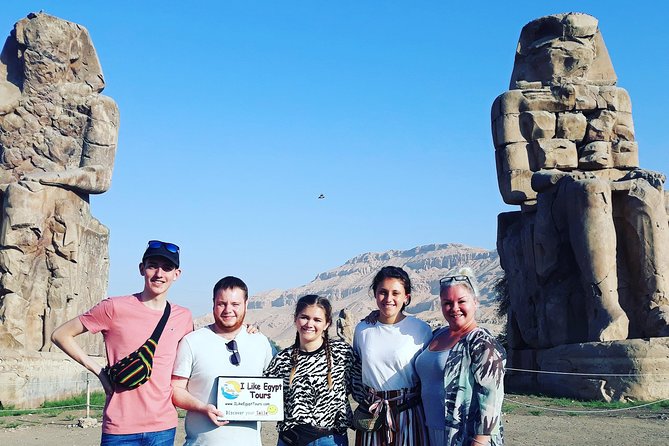
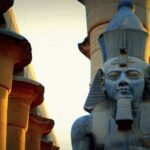
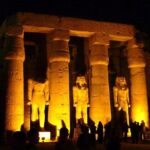
After Karnak, you continue to Luxor Temple for about 1.5 hours. This temple is dedicated to the Theban Triad: Amun-Ra, Mut, and Khonsu, and the day’s description includes granite statues of Ramses the Great.
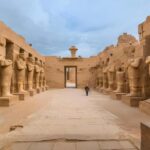
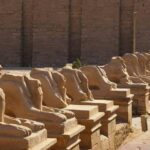
Then comes a look at the Avenue of Sphinxes, which originally stretched between Luxor and Karnak (about 3 km in its full form). Today, you’ll see only a few hundred meters, but it’s still impressive because you can feel the original processional concept: a designed corridor connecting the two major temple worlds.
If you like visual “line-of-sight” monuments, this is one of your better photo chances because you get long angles and a sense of direction.
Sunset felucca on the Nile: one hour that does what temples can’t
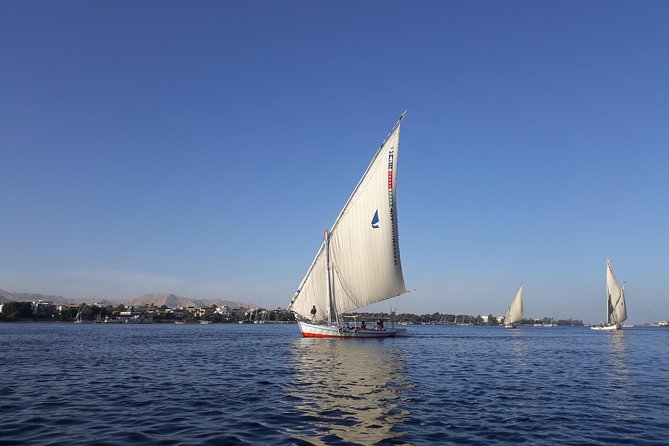
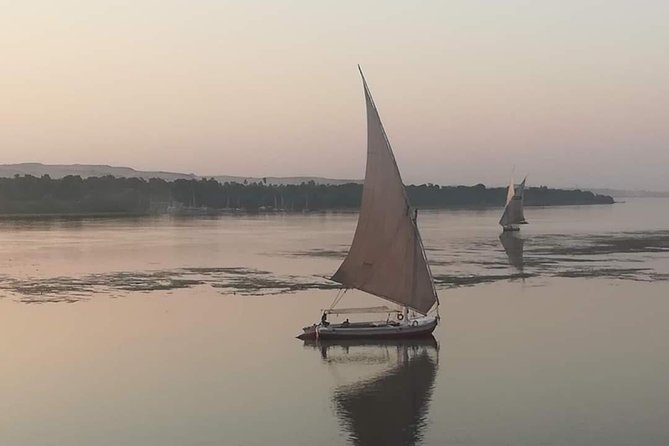
The day ends with a sunset felucca ride of about one hour. After the full-day Luxor circuit, you’ll be transferred to the Nile side where your traditional sailboat is waiting.
This part is included, and it’s a real change of pace. Instead of stones and inscriptions, you get soft cushions, slow movement, and the feeling that the river is the main character. The description mentions watching real daily life pass by: children playing in the water, camels and donkeys, farmers at work, and water buffalo.
Why I think this is smart scheduling: after hours in heat, crowds, and enclosed tomb spaces, your brain needs something easy. The felucca is gentle. You’re not rushing from stop to stop, so you can just look.
What to do during the hour:
- Let your eyes drift. Don’t fixate on one thing.
- Take a few photos, but leave time to actually watch. The best moment is often the one you stop photographing.
Price and logistics: what’s included, what isn’t, and what to budget
Here’s the clean breakdown:
- Included: pickup/return transfers, the balloon ride (35–60 minutes; 45 minutes listed), flight certificate, full-day Luxor East/West Bank guided tour, qualified Egyptologist guide and photographer, bottled water, luxury A/C car, and the hour-long sunset felucca.
- Not included: entrance fees and lunch.
- Extra: Tutankhamun’s tomb requires extra tickets.
For your budget, entrance fees are the wildcard. The temples and tombs you visit are exactly the kind of places where ticket costs add up. Since the tour is pay-as-you-go for entrances, you’ll pay as you go rather than swallowing it all at checkout.
Also remember: the day is long. Even with bottled water included, bring a plan for hydration and energy. Lunch is not included, so either pack snacks (if allowed by your guide) or be ready to buy lunch near your scheduled breaks.
Guide quality: the name that keeps showing up is Capo Hassan
The biggest “make or break” factor on a day like this is not the temples. It’s the guide’s ability to explain what you’re seeing fast enough to keep the day fun.
One review praises Capo Hassan as the best, calling out his knowledge and patience. That kind of guide makes a difference because you’re moving through tombs and halls where you otherwise might miss what matters.
This tour also includes a photographer, and that’s practical. You won’t have to fight other tourists for camera angles, especially around the balloon loading and the major temple photo points.
My advice: if your guide asks what you want to focus on, pick one or two things and commit. In Luxor, focus turns a “busy day” into a meaningful day.
Who should book this Luxor balloon + felucca combo
Book it if you:
- Want a big Luxor day that hits both East and West Bank highlights without wasting time
- Like guided context, especially in the Valley of the Kings where the details matter
- Want at least one experience that isn’t made of stone, meaning the Nile felucca is a strong counterbalance
- Are okay with paying entrance fees and lunch separately
You might skip it if you:
- Hate early starts and don’t want your morning schedule to depend on pickup timing
- Prefer slower travel with lots of free time at fewer sites
Also, because it’s a private group, it’s ideal for couples and small groups who want the flexibility of a custom pace.
Should you book this tour?
Yes, if your main goal is to see the core Luxor highlights in one efficient day and you value having a guide explain the “why” as you walk. The included combo of sunrise balloon + sunset felucca is the big reason to choose this, because that pairing is harder to line up on your own.
Before you book, do two things:
- Budget for entrance fees and lunch, and decide early whether you want the extra-ticket Tutankhamun option.
- Plan for an early morning pickup and be ready a bit ahead of time, since timing is what keeps sunrise balloon days from turning into “almost sunrise” days.
If you’re the kind of traveler who likes an action-filled day that still feels thoughtfully guided, this is a strong fit.
FAQ
FAQ
How long is this Luxor tour?
It runs about 7 to 9 hours.
What parts of the day are included?
You get sunrise hot air balloon time, a full-day Luxor tour with an Egyptologist guide, and a sunset Nile felucca ride.
How long is the balloon ride?
The balloon flight is listed as about 35 to 60 minutes, with about 45 minutes stated.
How long is the felucca cruise?
The sunset felucca sail is about one hour.
Are entrance fees included?
No. Entrance fees are not included, and you pay as you go.
Is lunch included?
No. Lunch is not included.
Can I visit Tutankhamun’s tomb?
You can visit Tutankhamun’s tomb only if you buy extra tickets, since it is not included.
Is there hotel pickup and return?
Yes. Pickup service from your hotel and return are included.
Is this a private tour?
Yes. It’s listed as private, with only your group participating.