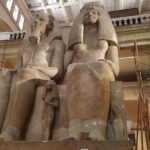
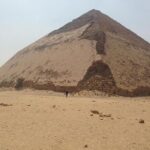
One sentence can change your whole trip, and this one starts with VIP. You get door-to-door private transfers and a 5-star base plus a deluxe Nile cruise, so you spend more energy looking at monuments and less time chasing logistics. It is a strong, first-timer friendly way to cover Cairo, Luxor, Aswan, and Abu Simbel without turning every day into a DIY puzzle.
I also like the “real-world” pacing choices: you hit the headline sites with admission included, then you follow that with the smaller but meaningful stops like Saqqara’s Step Pyramid complex and Memphis ruins at Mit Rahina. One drawback to consider: this is a fast, packed plan, and Abu Simbel alone takes a long stretch of time by private vehicle, so you need to be okay with lots of moving from place to place.
In This Review
- Key highlights at a glance
- Price and value: what your $2,380 covers
- Logistics that matter: the 8:00 am start, mobile tickets, and private vehicles
- Day 1 visa assistance and Day 2 Giza and Saqqara: the “you came to see this” start
- Mit Rahina and Memphis: a quieter way to understand what you are seeing
- Egypt Museum, Coptic Cairo, and Khan el-Khalili: Cairo gets layered fast
- Philae Temple near Aswan: UNESCO rescue makes the stones feel real
- Abu Simbel by private vehicle: the long day you plan for
- Kom Ombo and Horus Temple: two temples, two moods
- Luxor Temple, Karnak, Valley of the Kings: the best-of hits in one sweep
- Nile cruise comfort: why the cruise days feel like a reset
- Flights and pacing on Day 7 and airport day on Day 8
- Food, admissions, and what you may still pay for
- Guides and VIP touches: Mustafa, Mina, and Mohamed keep the trip smooth
- Who should book this Egypt best-of plan
- Should you book this tour or choose differently?
- FAQ
- What time does the tour start each day?
- Does the tour include pickup and drop-off?
- Are flights included?
- What hotels are included?
- Is the Nile cruise included?
- Which admission tickets are included?
- What meals are included?
- Do you provide visa help?
- How does cancellation work for a full refund?
Key highlights at a glance
- VIP transfers in private vehicles, so you are not waiting around between stops
- 5-star hotels (Ramses Hilton or similar) plus a luxury Nile cruise style stay
- Big ticket sights are covered with admission tickets included for many stops
- Cairo + Old Cairo + Khan el-Khalili gives you variety in one day
- Aswan and Abu Simbel are handled with private-vehicle convenience
- High satisfaction (95% recommended, 4.8 rating from 19 reviews)
Price and value: what your $2,380 covers
At $2,380 per person for about 8 days, you are paying for two things: comfort and coordination. This tour is not trying to be a cheap museum pass. It is built around 5-star accommodation, a deluxe Nile river cruise, and a guide who stays with you through the main sights.
You also get a lot of the friction removed: pickup/drop-off, domestic flights, and timed site visits. That is where the value shows up. If you have ever spent a day in Egypt trying to line up tickets, drivers, and meeting times yourself, you know how quickly “saved money” can turn into lost hours and added stress.
One practical note: the included meals and admission tickets cover many days, but you may still budget for personal extras and expected tips at services.
You can also read our reviews of more boat tours in Cairo



Logistics that matter: the 8:00 am start, mobile tickets, and private vehicles
The tour starts at 8:00 am, and the whole thing runs on prepared schedules. That matters because daylight at the major sites can move fast, and Cairo traffic can be… a character in your story.
You will get hotel/port pickup and drop-off, plus VIP perks like door-to-door transfers in private vehicles. Tickets are handled with a mobile ticket, which makes it easier at entry points. You also travel with a group that stays within your own party (it is listed as private, with only your group participating), which usually means fewer awkward “who is with who” moments.
If you like clear structure and you do not want to bargain your way through every step, this setup fits well.
Day 1 visa assistance and Day 2 Giza and Saqqara: the “you came to see this” start
Day 1 is about getting you moving smoothly. You get meet and assist, including visa assistance, and that can take the edge off your first contact with the country.
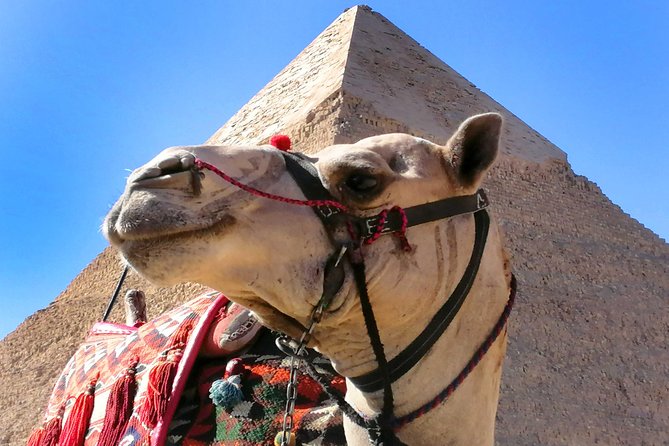
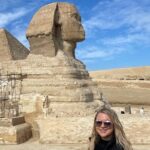
Day 2 is where Egypt turns real. You start with the Pyramids of Giza and the Sphinx—the instantly recognizable Egypt postcard scene. This is also one of the only surviving monuments from the Ancient Seven Wonders, so even if you have seen photos your whole life, being there is a different scale of wow.
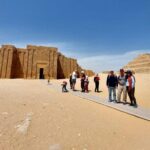
A few hours later, you shift gears to Saqqara (Sakkara) for the Step Pyramid, Djoser’s tomb, designed as an early major stone structure. The Step Pyramid’s stepped design comes from an evolution of earlier mastaba tombs, so it is not only about seeing a pyramid. It is about seeing an architectural idea take shape over time.
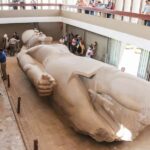
Then comes Mit Rahina Museum, near Memphis—an important reminder that the pyramids were not a single event. They were part of a bigger system of capitals, cults, and building ambition.
Possible drawback: Day 2 is big on ancient “must-sees,” which means lots of walking and sun exposure. If you are sensitive to heat or stamina, pack for shade breaks and hydrate like it is your job.
Mit Rahina and Memphis: a quieter way to understand what you are seeing
Mit Rahina is not as famous as Giza, but it helps your brain connect the dots. The site ties to Memphis, the ancient capital of Aneb-Hetch, and it sits near the ruins tied to the first nome of Lower Egypt.
You get about an hour here, which is enough to orient yourself. It also gives you a break from the heaviest crowds and lets you spend your attention on context rather than pure spectacle.
If you like Egypt as more than a photo wall, this stop is a smart one.
Egypt Museum, Coptic Cairo, and Khan el-Khalili: Cairo gets layered fast
On Day 3, you hit Cairo in three different “time zones.”
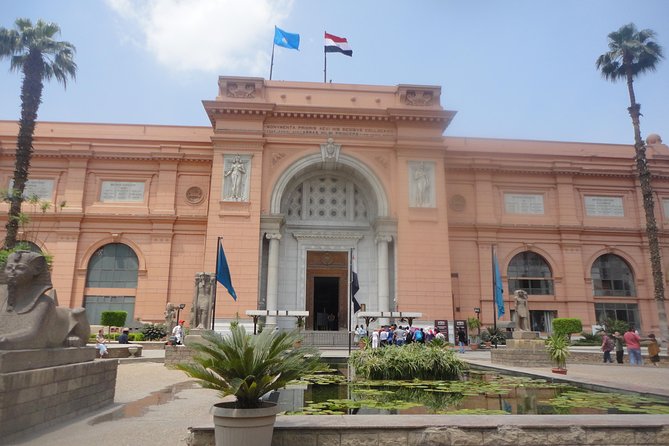
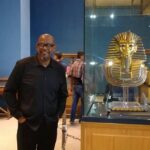
First is the Museum of Egyptian Antiquities, also called the Egyptian Museum. It is listed as having 120,000 items, with only a representative set on display and the rest in storerooms. That matters because it sets your expectations: you are seeing a curated slice, not everything.
Next, you go to Coptic Cairo, which covers Old Cairo sites like the Babylon Fortress, the Coptic Museum, the Hanging Church, the Greek Church of St. George, and other churches. This is a totally different Egypt story—religion and layers of communities living alongside older monuments.
Finally, you end with Khan el-Khalili, a major souk in Islamic Cairo. You can treat this as a short walk-and-snack block, since it is free on the tour schedule.
Small consideration: Cairo days can be visually intense. Khan el-Khalili can feel like sensory overload if you rush it. Take it slow, and do one or two things: a quick wander, then stop to rest.



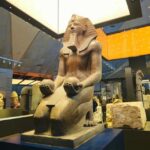
Philae Temple near Aswan: UNESCO rescue makes the stones feel real
Day 4 is the Aswan highlight stack, and it starts with Temple of Philae, about 12 kilometers south of Aswan. This temple complex was an ancient pilgrimage center for the cult of Isis, and it carried significance through multiple eras—from Pharaonic time to Greek, Roman, and Byzantine periods.
What makes Philae special on this itinerary is the explicit detail about it being saved by UNESCO. The monuments were transferred block by block from Philae Island to Agilika Island, which means you are not just looking at old stones—you are looking at an example of modern preservation work.
You get around 3 hours here, which is enough to understand why it has that lingering, sacred atmosphere people chase in Egypt.
Abu Simbel by private vehicle: the long day you plan for
Also on Day 4 you go to the Abu Simbel Temple Complex. You visit the great temples of Ramses the Great and his wife, and you travel there by private vehicle.
The schedule lists this as a 7-hour stop. That is not a quick detour. This is the day you prepare for: wear comfortable shoes, plan for long stretches of sitting, and treat it as a “big payoff” commitment.
The upside: Abu Simbel is one of those sites that feels like it exists on a different level than typical ruins. Even if you only have one chance on your trip, having it placed carefully in a managed day is worth the effort.
Kom Ombo and Horus Temple: two temples, two moods
Day 5 keeps the momentum, but the picks are smart.
You start with the Temple of Kom Ombo, described as an unusual double temple built in the Ptolemaic dynasty (180–47 BC). The southern half is dedicated to the crocodile god Sobek, tied to fertility and creation with Hathor and Khonsu. That gives the temple a specific identity beyond generic “ancient Egyptian stuff.”
Then you go to the Temple of Horus. This one is described as among the best-preserved ancient monuments in Egypt. It is preserved by desert sand filling the place after the pagan cult was banned, and the roof is intact, which can make the space feel more enclosed than you expect.
Both stops are guided and timed (about 2 to 3 hours each), which helps you get the key points without turning it into a hurried checklist.
Luxor Temple, Karnak, Valley of the Kings: the best-of hits in one sweep
Day 6 is Luxor in high definition.
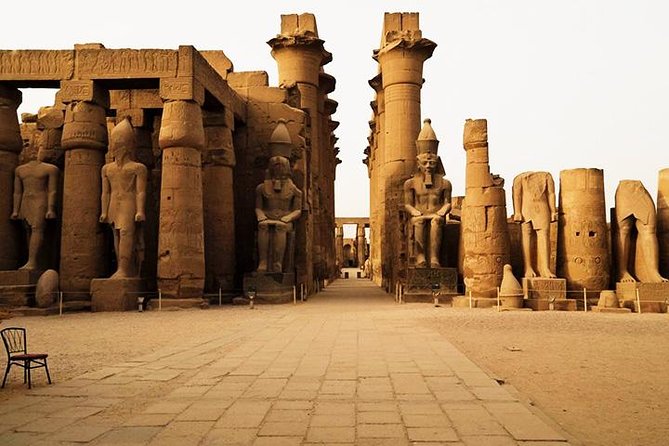
You begin with Karnak Temple, a vast complex dedicated primarily to Amun, dating as early as 2000 BC. It is described as second only to the Great Pyramids in popularity, so expect it to feel like the main event.
Next is Luxor Temple on the east bank. It is listed as constructed around 1400 BCE, and its Egyptian name is given as ipet resyt, meaning southern sanctuary.
Then you visit the Valley of the Kings on the west bank opposite Thebes. It is described as part of the Theban Necropolis, and the wadi consists of East Valley and West Valley.
You finish with Colossi of Memnon—two massive stone statues of Amenhotep III. The schedule notes 3,400 years of standing and that they are located west of the Nile from modern Luxor. This stop is free on the plan, which is always a nice bonus day-ending perk.
The trade-off: this is a full day of major sites. If you love Egypt, it is great. If you are the type who needs long, empty hours of decompression, you will want to be disciplined about pacing during the day.
Nile cruise comfort: why the cruise days feel like a reset
The tour overview emphasizes a deluxe Nile river cruise. Even though the exact cruise timing is not spelled out here, the idea is clear: you get a break from constant hotel check-ins and road transfers while still seeing the river corridor that ties Egypt together.
On a trip like this, the cruise matters because it gives you time to recover between intense days. You get meals planned and you have staff handling the key flow. That means you can focus on watching the scenery and thinking about what you just saw on land.
If you are the sort of traveler who likes “moving through Egypt” but also wants a comfortable place to land each evening, the cruise component is one of the biggest reasons this package works.
Flights and pacing on Day 7 and airport day on Day 8
On Day 7, you fly from Luxor to Cairo by air included. This is a smart move. It saves you from losing a whole day to road travel and helps keep your energy intact for your final city stretch.
Day 8 is the wrap-up. You have your last day, then staff escorts you to the airport for final departure based on your flight details.
This ending structure is practical. You are not guessing how to get to the airport. You are not reorganizing your trip on the fly.
Food, admissions, and what you may still pay for
Meal coverage is built in, with breakfast (6), lunch (5), dinner (3) included. In real terms, this matters because it protects your schedule. You do not have to hunt for food near each site. You also avoid the common trap of paying for convenience on repeat days, since meals are planned into the itinerary.
Admission tickets are also included for many major stops. Examples include Giza pyramids and Sphinx, Saqqara Step Pyramid, Mit Rahina Museum, the Egyptian Museum, Coptic Cairo sites, Temple of Philae, Abu Simbel Temple Complex, Kom Ombo, Horus, Karnak, Luxor Temple, and the Valley of the Kings. Some are noted as free on the tour schedule, like Khan el-Khalili and Colossi of Memnon.
What is not included is anything extra not mentioned, so I would budget for drinks, souvenirs, and any personal add-ons. Also, tips are expected for services provided, and one review notes US dollars work and you should prepare plenty of small bills.
Guides and VIP touches: Mustafa, Mina, and Mohamed keep the trip smooth
One of the highest praise themes is the human side: guides who make Egypt feel organized and understandable.
In Cairo, guide Mustafa is singled out as friendly and knowledgeable. Another review credits Cairo guide Mina as well, and in Aswan/Luxor, Mohamed is praised as knowledgeable and personable. The takeaway for you is not name-dropping. It is that the guides are not treated like an afterthought. They are part of the value.
On top of the guide, the operational coordination is built around transfers and visits lining up—especially important for a trip that moves between Cairo, Aswan, Luxor, and Abu Simbel.
If you want your Egypt trip to feel like someone is handling the seams, this package aims right at that.
Who should book this Egypt best-of plan
This tour fits best if:
- You are a first-timer who wants the core sights without guessing logistics.
- You are okay with a packed schedule and long travel segments.
- You like paying for comfort so you can spend your attention on the sites.
- You want five-star accommodation and the added relief of planned meals and transfers.
You might want to think twice if you are chasing a slow travel pace, or if long days like the 7-hour Abu Simbel segment will drain you. This plan is designed for people who enjoy seeing a lot and keeping momentum.
Should you book this tour or choose differently?
I would book it if your priority is a smooth, high-comfort introduction to Egypt’s headline monuments—Cairo’s Giza/Saqqara combo, Cairo’s Egyptian Museum and Old Cairo layer, Aswan’s Philae, and Luxor’s Karnak/Valley of the Kings sweep—while also getting the comfort of 5-star hotels, a luxury Nile cruise, and included domestic flights.
I would hesitate if you are on a tight budget or you prefer to build your own schedule from day to day. The premium is real, and the itinerary is ambitious. Also plan for tips and bring enough small bills since US dollars are accepted for those expected gratuities.
If you want a done-for-you best-of Egypt experience, this tour has the structure to deliver it—and the comfort to keep you going.
FAQ
What time does the tour start each day?
The experience start time is listed as 8:00 am. Plan to be ready a little early for pickup timing.
Does the tour include pickup and drop-off?
Yes. The tour includes hotel/port pickup and drop-off, along with transfers in private vehicles.
Are flights included?
Yes. Domestic flights are included from Cairo to Aswan and from Luxor to Cairo.
What hotels are included?
You get 4 nights at 5 stars hotels, listed as Ramses Hilton or similar.
Is the Nile cruise included?
The tour overview highlights a deluxe Nile river cruise as part of the experience, alongside your hotel stays.
Which admission tickets are included?
Many major site entrances are included, including Pyramids of Giza and Sphinx, Saqqara (Step Pyramid), Mit Rahina Museum, Museum of Egyptian Antiquities, Temple of Philae, Abu Simbel Temple Complex, Kom Ombo, Temple of Horus, Karnak, Luxor Temple, and Valley of the Kings. Some places are listed as free on the schedule, such as Khan el-Khalili and Colossi of Memnon.
What meals are included?
Meals are included as breakfast (6), lunch (5), and dinner (3).
Do you provide visa help?
Yes. Day 1 includes meet and assist with visa assistance.
How does cancellation work for a full refund?
You can cancel up to 6 days in advance for a full refund. If you cancel less than 2 days before the start time, the amount paid is not refunded, based on the policy dates listed.