REVIEW · LUXOR
Full Day Tour to Luxor (East & West Bank)
Book on Viator →Operated by Luxor Private Trips · Bookable on Viator
That morning start is the key to beating the crowds. In one long stretch, you’ll hit Luxor’s East and West Bank heavy hitters, with Valley of the Kings tombs and Karnak Temple worship halls built to outlast empires. It’s a tight route, but that’s also why it works.
Two things I really like: you get a qualified Egyptologist guide who helps you connect the sites instead of treating them like a checklist, and most admission costs are bundled in. One thing to think about: it’s a 10 to 12 hour day with an early pickup, so you’ll want comfy shoes and a good breakfast.
In This Review
- Key highlights before you go
- The value of doing Luxor’s two-bank circuit in one long day
- Pickup, timing, and how the day actually feels
- Stop 1: Valley of the Kings—more than tombs, a whole worldview
- Stop 2: Deir el-Bahari and Hatshepsut’s temple—power made visible
- A quick pass by the Colossi of Memnon—worth noticing, not rushing
- Stop 3: Karnak Temple—where Luxor’s religious math starts adding up
- Stop 4: Luxor Temple—finishing with a New Kingdom to Ramesside timeline
- Guides can make or break the day—how to get the most from your Egyptologist
- What’s included (and why that matters for your budget)
- Who this tour is best for
- Small logistics that will help you enjoy every stop
- Should you book this Luxor East & West Bank day tour?
- FAQ
- FAQ
- How long is the full day Luxor East and West Bank tour?
- What sites will I visit during the day?
- Are admission tickets included?
- Is lunch included?
- Is hotel pickup included?
- Is bottled water provided?
- What is not included in the tour price?
Key highlights before you go
- East + West Bank in one day: You’ll cover Karnak and Luxor Temple plus the Valley of the Kings and Hatshepsut.
- Egyptologist guidance with built-in context: You’ll understand who built what and why it mattered.
- Admission tickets included at the main stops: Valley of the Kings, Hatshepsut Temple, Karnak, and Luxor Temple.
- Lunch plus bottled water included: Fewer decisions, less hassle mid-day.
- Private for your group: It’s set up as only your group doing the tour, not a mix-and-match crowd.
The value of doing Luxor’s two-bank circuit in one long day
Luxor is one of those places where time feels like a currency. If you’re only here for a day (or you don’t want to split your vacation into multiple temple days), this format is a smart move: you get the East Bank power center first (Karnak and Luxor Temple) and the West Bank royal afterlife zones next (Valley of the Kings and Hatshepsut).
The price—$103 per person—is easier to judge when you look at what you’re actually buying. You’re not just paying for a driver. You’re paying for:
- an air-conditioned vehicle and transportation all day,
- a qualified Egyptologist guide,
- bottled water and lunch,
- and admission coverage for several major monuments.
That combo often beats the “pay separately everywhere” approach, especially when you’d rather spend your energy looking at stone carvings than figuring out tickets and timed entry plans.
A few more Luxor tours and experiences worth a look
Pickup, timing, and how the day actually feels
The day starts at 7:00 am. That early departure matters because Luxor’s big sites get busier as the morning turns into late morning. Also, you’ll be moving between the West Bank and East Bank, and Luxor’s traffic and waiting times can add up if you start late.
Expect a full stretch of 10 to 12 hours with a “drive, stop, see, learn, move again” rhythm. You’re not getting museum-bench pacing here. You’re getting a classic Luxor overview tour: lots of significant monuments, each with enough time to see the main ideas without turning it into a slow crawl.
If you’re sensitive to heat or fatigue, plan for it. Sun coverage is mostly on you (the tour includes bottled water, but not shade). Wear breathable clothes and shoes that won’t punish you on temple steps and uneven surfaces.
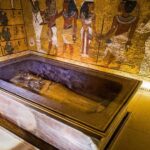
Stop 1: Valley of the Kings—more than tombs, a whole worldview
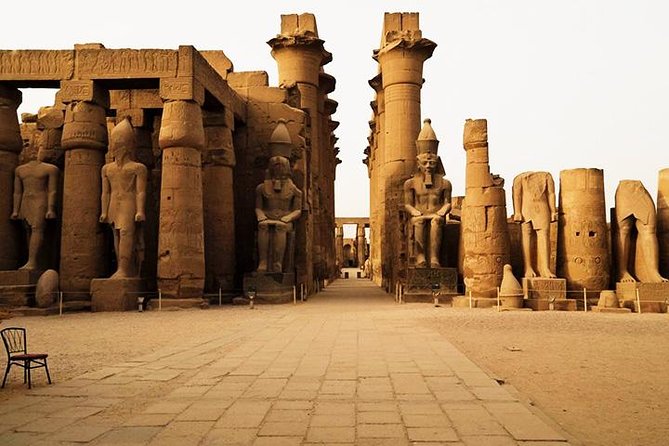
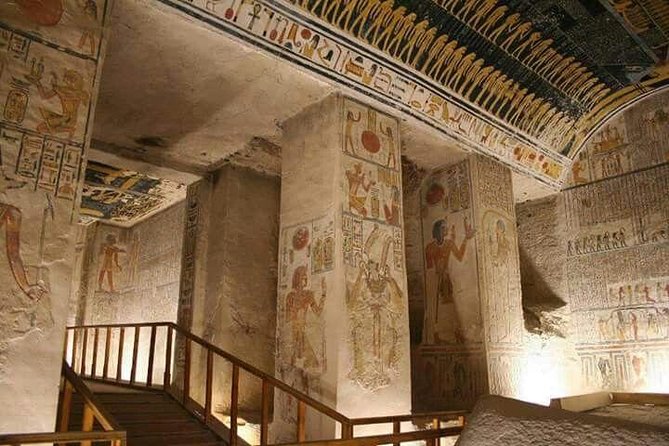
Your West Bank morning begins with the Valley of the Kings. This is where Luxor’s royal afterlife story comes into focus—tombs carved into rock, meant to protect the person and preserve identity for eternity.
The tour highlights several famous names you’ll hear repeatedly while you’re there: Tutmosis I, Tutmosis III, Tut-Ankh-Amon, Ramssess VI, Mrenptah, and Amonhotep II. That’s a good sign if you care about understanding dynasties and succession, not just taking photos of impressive openings.
You’ll have about 2 hours at the Valley, and admission is included. Two hours is enough to:
- take in the “scale and layout” feeling of the valley,
- spot major tomb entrances,
- and follow along with your guide’s story about why these tombs look the way they do.
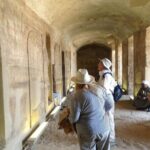
A practical consideration: the Valley is famously atmospheric, but it’s still a real site—stone steps, walking paths, and enclosed spaces inside certain tombs (if you enter them). Go in with the mindset of walking and looking, not standing still for long stretches.
Stop 2: Deir el-Bahari and Hatshepsut’s temple—power made visible
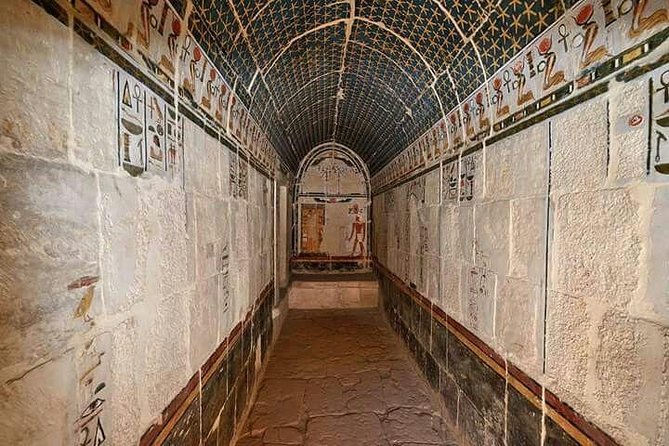
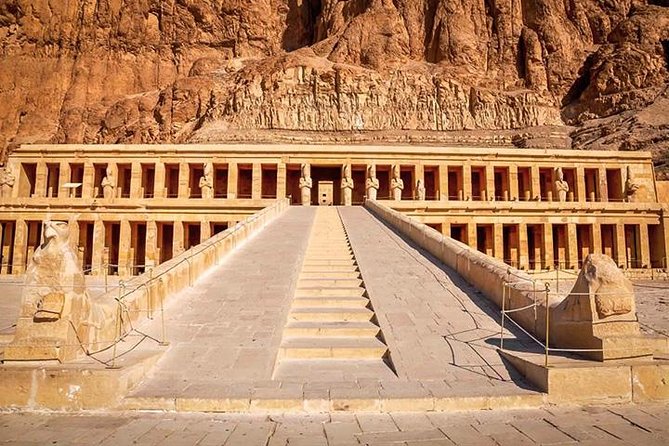
Next comes the Temple of Hatshepsut at Deir el Bahari. This stop hits you emotionally in a different way than the Valley does. Instead of hiding the royal story inside rock, Hatshepsut’s temple project was built to be seen—architecturally dramatic, designed to communicate authority.
The tour frames Hatshepsut clearly: she was the daughter of Thutmosis I and ruled about 20 years in the 18th Dynasty (roughly 1490–1469 B.C.). You also get the key point that she’s the rare case of a pharaonic woman who reigned ancient Egypt.
You’ll get about 1 hour here, with admission included. That timing is intentional. It gives you time to:
- understand the temple’s grand plan,
- appreciate the way the structure stages your movement,
- and grasp why Hatshepsut wanted her legacy anchored in stone.
Between the Valley and Hatshepsut, you’ll feel the contrast. The Valley is about the afterlife journey. Hatshepsut’s temple is about the living world recognizing reign, legitimacy, and ambition.
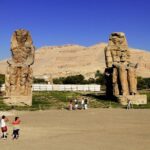
A quick pass by the Colossi of Memnon—worth noticing, not rushing
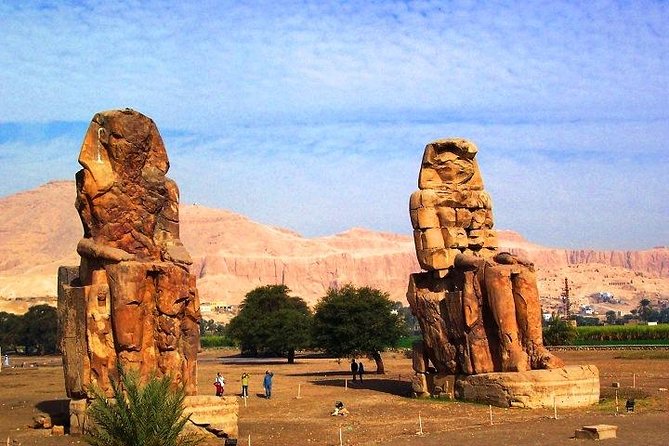
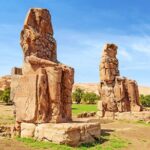
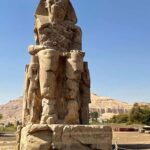
On the route, you’ll pass by the Colossi of Memnon, the remains of the mortuary temple of Amenhotep III. Even though this is not a dedicated stop with a long visit window, it’s still a worthwhile moment.
This is one of those “blink and you’ll miss the story” landmarks. When you spot them, you’re looking at the scale of a king’s funerary plans—what happens when you build for eternity and your monument becomes a destination even thousands of years later.


Stop 3: Karnak Temple—where Luxor’s religious math starts adding up
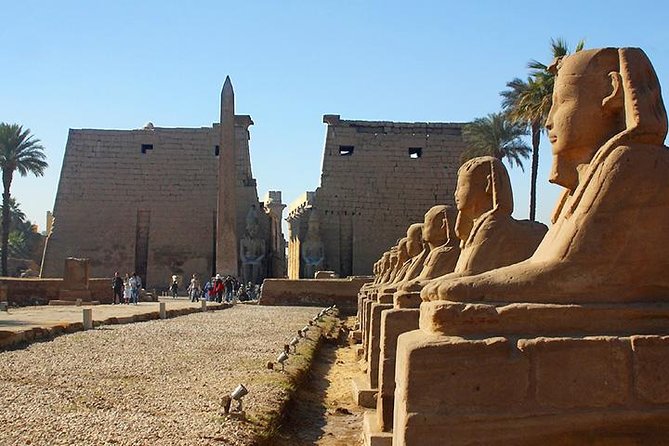
After Hatshepsut, you head to the East Bank and enjoy lunch at a local restaurant before moving to Karnak Temple. The lunch break is practical. It keeps the day from turning into pure survival mode, especially after the West Bank morning sun and walking.
Then comes Karnak, and this is where the “why so many buildings?” question gets answered. Karnak is presented as the greatest example of worship dedicated to Amon, along with Mut and Khonsu. That triad helps you follow the religious thread across the site instead of getting lost in sheer size.
You’ll have about 1 hour with admission included. One hour at Karnak won’t let you see everything, but it will let you see the big idea:
- monumental scale meant to impress gods and people,
- repeated additions and evolving functions over time,
- and the sense of a sacred “system,” not just one temple.
If you’re the kind of traveler who likes to leave each stop with at least one clear takeaway, Karnak is usually where that happens. The guide can point out what mattered most to the worshippers and how the spaces worked together.
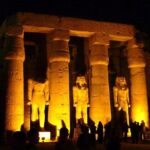
Stop 4: Luxor Temple—finishing with a New Kingdom to Ramesside timeline
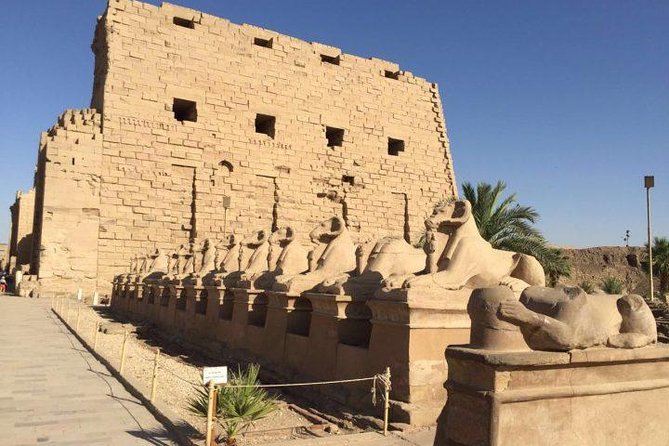
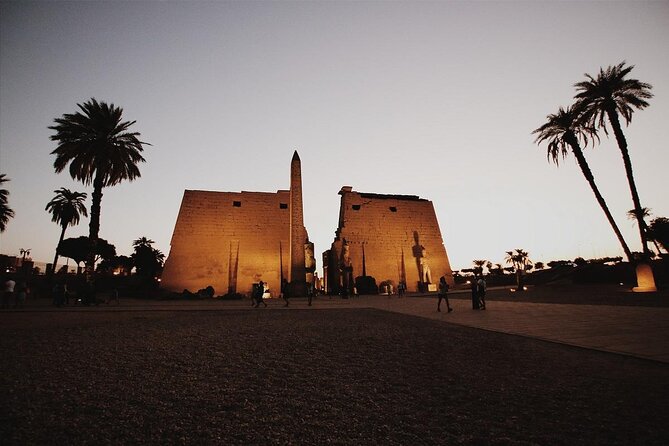
The last major site is Luxor Temple. This one is a great closer because it connects different reigns. The tour notes it was built by Amenhotep III in the 18th Dynasty and later completed by Ramesses II in the 19th Dynasty. In other words, you’re seeing a temple that spans generations of royal investment.
Your time here is about 1 hour, admission included, and then you’ll be driven back to your hotel in Luxor.
Luxor Temple tends to land well because you can feel the transition from the overwhelming scale of Karnak into something more “human-sized,” at least in comparison. It’s still huge, still ceremonial, still meant for ritual, but the pacing is cleaner for the end of a long day.
Practical note: since this is the finish, you’ll likely be a little tired by then. That’s exactly when a guide’s clear explanations help. Even if your feet are talking back, your brain can still get the story.
Guides can make or break the day—how to get the most from your Egyptologist
This tour is built around a qualified Egyptologist guide, and the difference shows fast: the best guiding turns stone into meaning. In the experiences I’ve seen described for this exact route, guides such as Marwa, Maria, Amr, Rabab, Nana, Ruby, Mahmoud, and Ahmed come up again and again—often praised for answering questions well and explaining Egypt’s links between sites and daily life.
You can’t control which guide you get, but you can control how you interact:
- Ask one “why” question early, then ride that momentum.
- If you have a specific interest (royal tombs, temple religion, dynasties), say it at the start.
- If your language level is a factor, pay attention to the guide’s English communication early—one commenter even flagged times when they wanted more understandable English, so it’s fair to check the fit early.
Even on a fast-paced itinerary, strong guiding can make the day feel like more than the sum of stops.
What’s included (and why that matters for your budget)
Here’s what’s covered in the tour price:
- Qualified professional Egyptologist guide
- Air-conditioned vehicle
- All fees and taxes
- Bottled water
- Lunch
- Private transportation
That “all fees and taxes” plus “admission included” structure is a big deal in Egypt, where costs can otherwise pop up at each stop. It lets you plan with fewer surprises and spend more time thinking about where you want to focus your attention.
What’s not included:
- entry visa to Egypt
- tipping
- extras not mentioned in the itinerary
The tipping point is the one to remember. The tour covers a lot, but tipping is typically part of how you reward excellent guiding and driving. Plan for it so it doesn’t feel awkward at the end.
Who this tour is best for
This is a great fit if you:
- only have one day in Luxor and want the East and West Bank highlights,
- like guided context (who built what and why),
- value a plan that reduces ticket-and-transport headaches,
- and don’t mind a longer day as long as it’s efficient.
You might want to reconsider if you:
- dislike early starts and long travel time,
- need lots of free time to wander without a schedule,
- or prefer a slower pace where you go deeper at one site instead of sampling the “main monuments” across both banks.
Small logistics that will help you enjoy every stop
A few practical tips make this day smoother:
- Wear comfortable walking shoes. You’ll be on steps and uneven areas.
- Bring sun protection even if you’re not a sunbody fan. The day starts early and continues through peak daylight.
- Eat breakfast. Lunch is included, but you still want energy for the Valley of the Kings.
- Keep your expectations realistic: each stop is meaningful, but time windows are fixed—so focus on the highlights your guide points out.
Also, because it’s a private setup for your group, you’re less likely to get separated or juggled with strangers. That helps you move through sites with less stress.
Should you book this Luxor East & West Bank day tour?
If your goal is to see the big Luxor hits without splitting your trip into multiple days, I’d lean yes. This tour is built around the classic pairing: Valley of the Kings + Hatshepsut on the West Bank, then Karnak + Luxor Temple on the East Bank. You get a guided through-line from tombs to temples, and most of the major costs are handled in advance.
Book it if you’re okay with a long day and early pickup. Skip it (or look for a slower option) if you want deep time at only one side of the river.
FAQ
FAQ
How long is the full day Luxor East and West Bank tour?
The tour runs about 10 to 12 hours.
What sites will I visit during the day?
You’ll visit the Valley of the Kings, the Temple of Hatshepsut at Deir el Bahari, Karnak Temple, and Luxor Temple, with a pass by the Colossi of Memnon.
Are admission tickets included?
Yes. Admission tickets are included for the Valley of the Kings, Hatshepsut Temple, Karnak Temple, and Luxor Temple.
Is lunch included?
Yes. Lunch at a local restaurant is included before you visit Karnak Temple.
Is hotel pickup included?
Pickup is offered, and you’ll be driven back to your hotel in Luxor at the end.
Is bottled water provided?
Yes. Bottled water is included.
What is not included in the tour price?
The Egypt visa, tipping, and any extras not mentioned in the itinerary are not included.