REVIEW · CAIRO
Marvelous 4 Days Nile Cruise Luxor, Aswan ,Abu Simbel & Train Tickets from Cairo
Book on Viator →Operated by Hola Egipto · Bookable on Viator
A Nile cruise with train legs cuts travel stress fast. This package strings together first-class overnight trains and a 5-star cruise while a guide handles the heavy lifting at the key monuments. You’ll get a full-board boat stay, plus guided stops like the Valley of the Kings and Luxor’s temples.
I especially like the way the day-to-day feels organized: door-to-door transfers connect train stations to your boat with minimal hassle. I also like that you’re not just seeing one side of the river. You get Aswan’s deep history, then sail through Kom Ombo and Edfu before finishing in Luxor with a full West Bank and East Bank day.
One thing to plan for: entrance fees aren’t included, and tipping is expected on the boat staff. If you hate add-ons, you’ll want to budget ahead so it doesn’t feel like a surprise.
In This Review
- Key things that make this cruise work
- Night Trains That Actually Simplify Your Egypt Plan
- Aswan High Dam, Unfinished Obelisk, and Philae Temple by Motorboat
- Sailing Days: Kom Ombo and Edfu Built Into the Cruise Rhythm
- Optional Abu Simbel: Worth It If You Want the Big, One-Time Moment
- Valley of the Kings and Deir el-Bahari: Luxor West Bank in One Focused Day
- Luxor Temple, Then Overnight Back to Cairo
- Price and Value: What the $1,100 Covers (and What It Doesn’t)
- The Guide Factor: Why Names Like Tallat Abdo and Khaled Elsaady Matter
- Who Should Book This Nile Cruise Package
- Should you book it?
- FAQ
- What does the cruise include each day?
- Are entrance fees included for the monuments?
- Is there an option to visit Abu Simbel?
- What train travel is included?
- Are transfers included between stations and hotels or the cruise?
- How many people are in the group?
- What’s the total trip length?
- Where does the tour start and end?
- Is free cancellation available?
Key things that make this cruise work
- A small group (max 15) keeps the pace human and the guide easier to ask questions.
- Two overnight train segments save daylight hours and help you keep the trip efficient.
- Full-board 5-star cruise means breakfast, lunch, and dinner are handled while you sail.
- Guides who explain clearly (names include Tallat Abdo, Khaled Elsaady, and Michael) help the sites click.
- Kom Ombo and Edfu are built into the sailing days, so you don’t waste time on logistics.
- Optional Abu Simbel is there if you want the extra big-hitter monument.
Night Trains That Actually Simplify Your Egypt Plan
This trip is built around a simple idea: let trains do the long stretches while you sleep. You start with an overnight first-class seated train from Cairo to Aswan. It’s a classic Egypt move, but here it’s packaged with pickup and transfers, so you’re not wrestling buses at midnight.
When you reach Aswan, you’re met and taken to a 5-star Nile cruise to refresh and reset. Later, after Luxor, you take an overnight first-class seated train back to Cairo. That structure matters because you spend fewer waking hours in transit and more time at monuments.
If you want more comfort on the night train, there’s an optional sleeper upgrade listed as $160 per person (twin round trip). It’s worth considering if you’re sensitive to sleeping in a seated setup, but it’s not required to make the trip work.
A few more Cairo tours and experiences worth a look

Aswan High Dam, Unfinished Obelisk, and Philae Temple by Motorboat
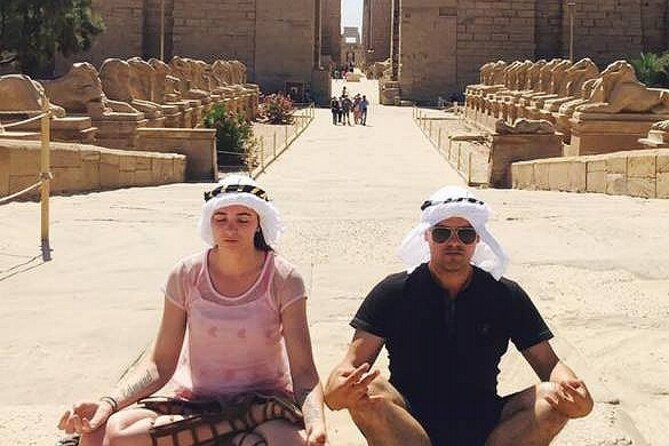
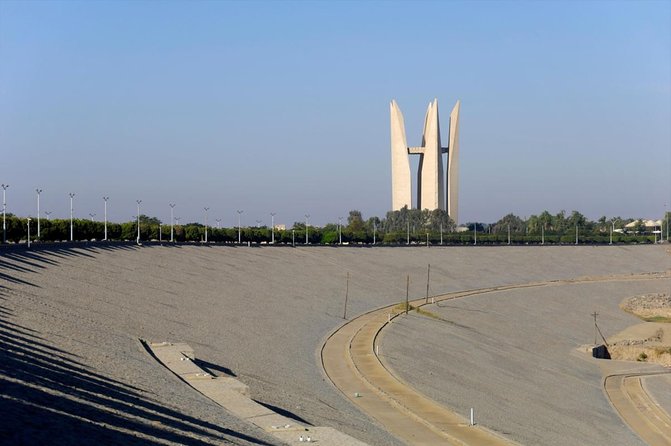
Aswan is where the river story gets real. On day two, you’ll start with the Aswan High Dam visit. Even if you know the big facts already, it helps to see the scale in person—this is the kind of engineering that shapes everything downstream, from farming to navigation.
Next is the Unfinished Obelisk. This is a great stop when you want a more behind-the-scenes feeling. You’re not looking at a polished artifact ready for the crowd—you’re looking at the process and the ambition. It’s also the kind of site where a good guide can point out small details that change how you read the stone.
Then comes Temple of Philae, reached by motorboat. The boat angle matters here. It helps you experience the temple approach as a water-bound arrival instead of just another road trip. The temple visit is guided, and you also get the built-in pacing advantage: you’re done and settled back onto the cruise for the overnight stay.
Practical consideration: all sightseeing entrance fees are marked as not included. So as you map out your budget, treat the Aswan stops as paid add-ons rather than included items.
Sailing Days: Kom Ombo and Edfu Built Into the Cruise Rhythm
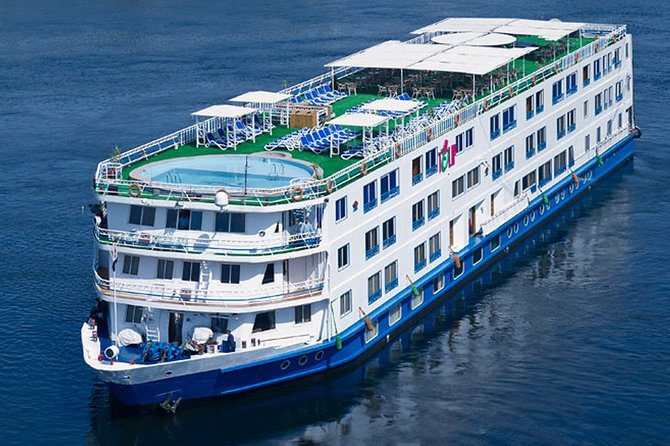
One of the best things about a Nile cruise is that it spaces your sightseeing across time. You don’t cram everything into back-to-back bus hours. Instead, you wake up on the water, have guided stops, and let the ship move you as the day unfolds.
On the Kom Ombo and Edfu side, the cruise includes a guided visit to Temple of Kom Ombo. This temple is especially interesting because it’s not one-note. You’ll get your guide’s story to connect what you’re seeing with why it was placed here along the river.
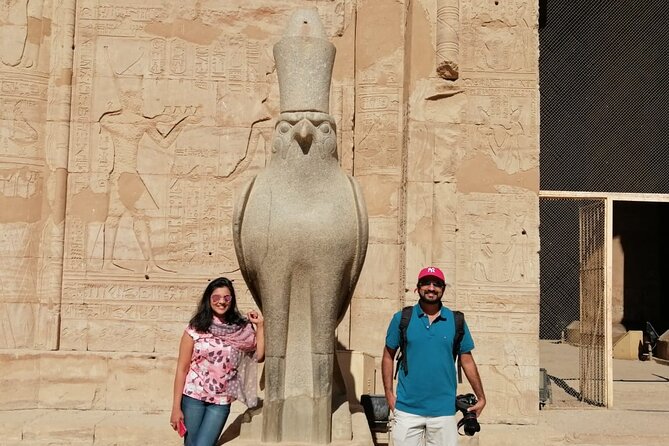
After Kom Ombo, the ship heads toward Edfu. Then you’ll visit Temple of Horus (Edfu Temple) with your guide. Edfu is one of those places where everything feels built for scale, and the guide’s explanations make the carvings feel less like decoration and more like a language. You also get that practical advantage: your cruise continues sailing after the stop, so you avoid the “visit, rush, transfer, repeat” problem.
Between these temple days, you have time onboard to relax. The boat comes with a pool and gym, plus a full-board setup (breakfast, lunch, dinner). That combination is useful because you’ll likely do a lot of walking around monuments. Having a place to reset without finding lunch spots on your own is a real value.
Optional Abu Simbel: Worth It If You Want the Big, One-Time Moment
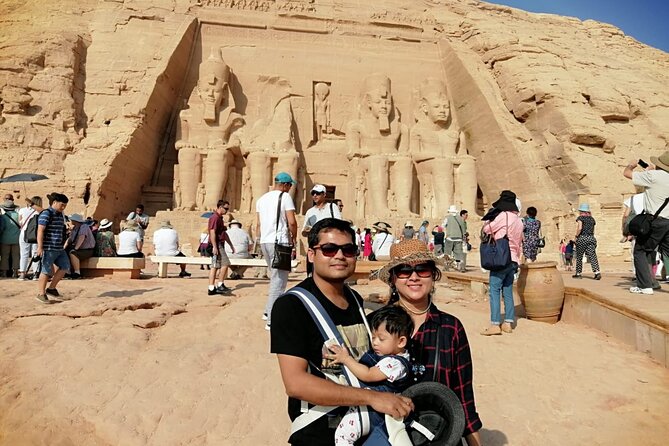
The package includes an optional Abu Simbel opportunity tied to the early part of one sailing day. The schedule notes it as optional, so your exact plan will depend on your group’s selection.
Why would you add it? Abu Simbel is the kind of Egypt sight that tends to feel like a major event. Even within this trip’s already-packed structure, it’s the extra “wow” that pushes you beyond the core Nile corridor.
The key point to keep realistic: the listing clearly states sightseeing admission tickets are not included. Abu Simbel entrance (and any extra associated costs) should be treated as an extra line item.
If you’re the type who loves one iconic monument more than a second temple visit, Abu Simbel can be a good match. If you’re trying to keep costs tight and prefer the calmer river pace, skipping it keeps your day less likely to feel rushed.
Valley of the Kings and Deir el-Bahari: Luxor West Bank in One Focused Day
Luxor’s West Bank day is the heart of the trip. You’ll start with breakfast, check out, then head across to the West Bank for a structured monument sequence.
First up is the Valley of the Kings. This is where your guide’s role gets especially important. The Valley can look like a collection of tomb entrances unless someone helps you connect the dynasties, the purposes, and the logic of where rulers wanted to rest. When guides do this well, you don’t just see carvings—you understand what decisions were being made.
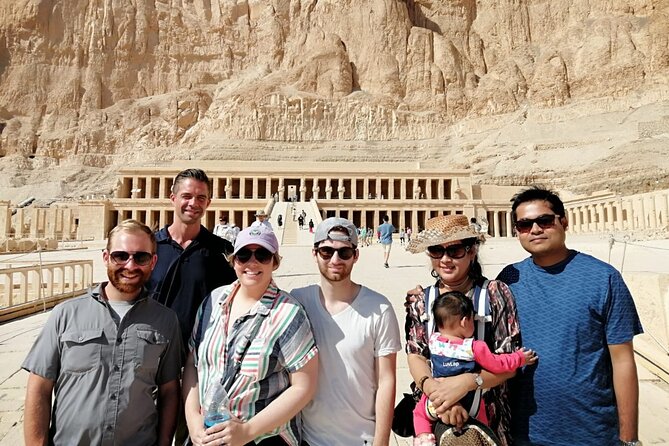
Next you’ll visit Temple of Hatshepsut at Deir el-Bahari. This is a different kind of feeling than the Valley: it’s monumental, ceremonial, and visually staged. Hatshepsut’s temple sits in a way that helps you read it as a statement—about power, legitimacy, and how a ruler wanted to be remembered.
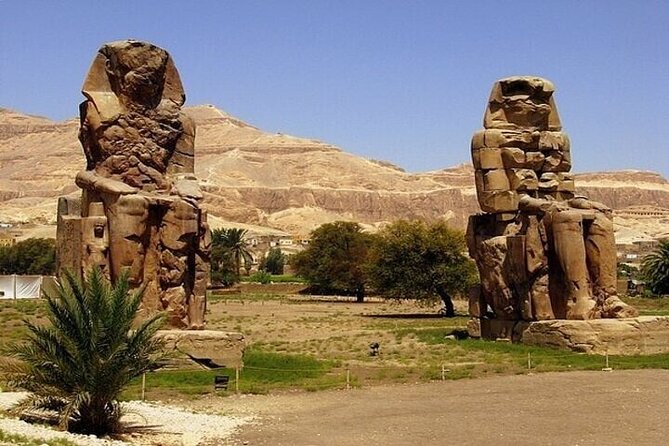
Then comes a quick but classic stop: the Colossi of Memnon. It’s short, but it works as a palate cleanser. You go from complex tomb context to a dramatic exterior reminder of the scale of ancient building projects.
Finally, you’ll head to the Temple of Karnak on the East Bank. Karnak changes the mood again. Instead of one main focus, you get an entire zone of sacred space. A guide can help you see what to prioritize so it doesn’t become “big wall, lots of stuff.” You’ll also later visit Luxor Temple to close the day.
One consideration: with so many stops in one day, you’ll want to keep your stamina realistic. This is a full day of sights, and even with guides and transfers handled, you’ll still be walking through active archaeological areas. Comfortable shoes matter more than you think.
You can also read our reviews of more boat tours in Cairo






Luxor Temple, Then Overnight Back to Cairo
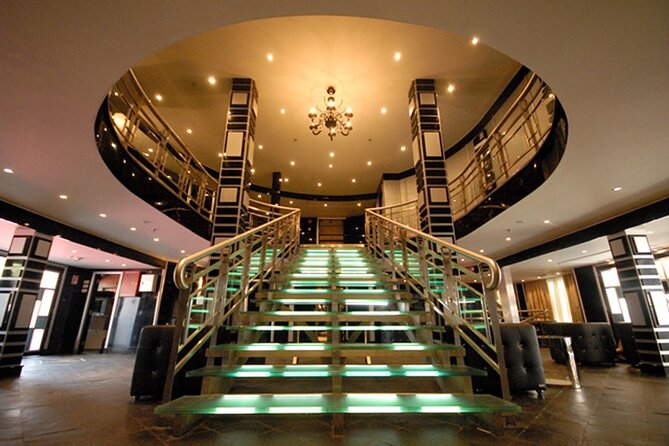
After Karnak, you’ll have Luxor Temple to round out the East Bank story. Luxor Temple has a more intimate feel than Karnak in the sense that it reads well as a coherent space. It’s a good final anchor before the trip flips back into travel mode.
When the sightseeing ends, you’ll transfer to Luxor train station for the overnight first-class seated train back to Cairo. This matters because you don’t have to add a hotel night just to catch a daytime flight or waste time in another transfer cycle. You sleep, wake, and arrive into the final handoff.
In the morning, you reach Giza (with pickup and transfer onward to your Cairo or Giza hotel). The listing also notes transfers can go directly to Cairo airport if that’s your preference.
Price and Value: What the $1,100 Covers (and What It Doesn’t)
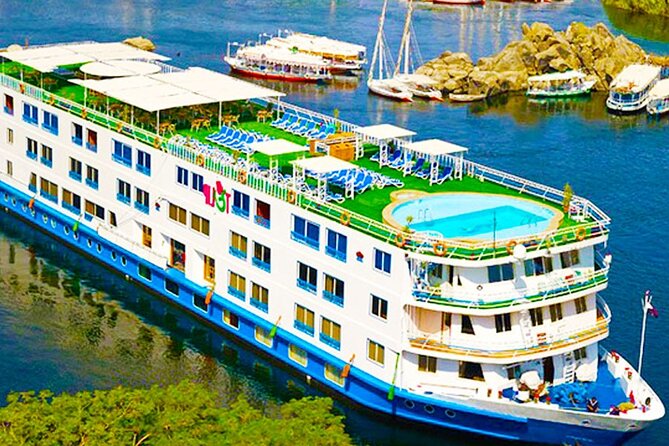
At $1,100 per person, this is not a budget-only way to do Egypt. But it also isn’t just a “boat ticket.” You’re paying for a combined set of services that usually cost more when purchased separately: station transfers in multiple cities, guided visits across multiple monuments, and overnight train travel that saves you daytime logistics.
The core inclusions are meaningful:
- 3 nights / 4 days in a 5-star Nile cruise with breakfast, lunch, and dinner
- Guided tours in Aswan, Kom Ombo, Edfu, and Luxor
- Overnight first-class seated train tickets for the Cairo–Aswan and Luxor–Cairo legs
- Transfers in Cairo, Aswan, and Luxor train stations
What’s not included is also clearly stated:
- Entrance fees for sightseeing
- Drinks on the cruise
- Tipping for the boat staff
So the real budgeting question isn’t whether you’ll pay extra—it’s how you’ll plan for it. If you like tight control and want a clean fixed price, this format may feel less satisfying. If you’re okay treating the entrance fees as part of the normal Egypt cost, the overall package starts to look like strong value because so much logistics is handled for you.
Also, the group size limit of 15 travelers can improve how the guide experience feels. With a smaller group, explanations can land better, and questions don’t get lost.
The Guide Factor: Why Names Like Tallat Abdo and Khaled Elsaady Matter
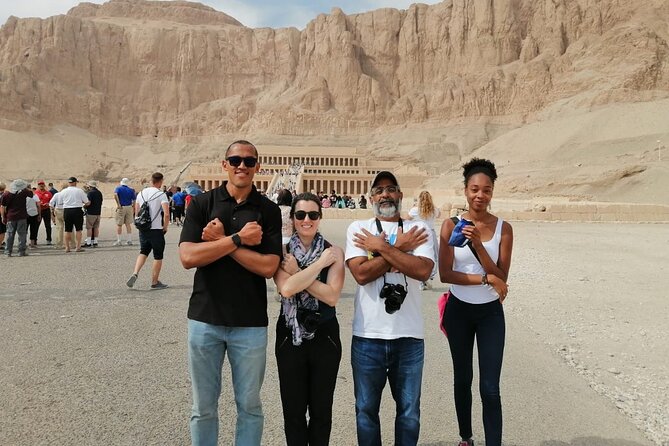
I can’t stress this enough: in Egypt, the monuments are the headline, but the guide is how the story becomes understandable. The experience here leans hard on guided time, and the reviews associated with this route repeatedly highlight the guides’ clarity and follow-through.
You may see guides such as Tallat Abdo, Khaled, Khaled Elsaady, or Michael listed as examples of the kind of support people have received. The consistent praise pattern is simple: you get detailed explanations, and the guide checks that you feel comfortable and not overwhelmed.
Look for what that means for you on the ground:
- Your time inside major sites is more than “see the walls.” You learn how rulers, temples, and river life connect.
- The pace feels more manageable because someone is actively translating what matters and what’s worth your attention.
- You spend less energy figuring out logistics and more energy noticing what you came for.
Who Should Book This Nile Cruise Package
This works best for you if:
- You want to see Aswan and Luxor without stacking extra hotel nights just to handle transport.
- You prefer a guided structure while still having some free time onboard.
- You like the idea of moving by water and treating temple stops as planned moments, not last-minute detours.
It may be less ideal if:
- You hate any additional costs beyond the base price, since entrance fees and tipping are not included.
- You’re expecting totally downtime-heavy travel; this is a “do the sights” trip with a full West Bank day.
Overall, it’s a strong choice for first-time Egypt visitors who want the big monuments handled in a smart sequence—and for anyone who wants a comfortable mix of travel and sightseeing.
Should you book it?
I’d book this when you want a smooth, guided Nile circuit that handles the big transitions for you—Cairo to Aswan by train, sailing with temple stops, then Luxor to Cairo by train—without making you piece together transportation and timing yourself.
Skip it if you’re chasing the lowest price possible or you strongly prefer fully inclusive pricing. With this style, you’ll pay some extras on-site, but you also get the value of guided time, transfers, and cruise meals already built in.
If you do book, budget for entrance fees early, and consider the optional sleeper upgrade if you know seated overnight sleep won’t work for you.
FAQ
What does the cruise include each day?
The package includes breakfast, lunch, and dinner during your 3 nights / 4 days on the 5-star Nile cruise. You also get guided tours at the listed monuments, plus the onboard facilities like a pool and gym.
Are entrance fees included for the monuments?
No. Entrance fees for sightseeing are listed as not included. You’ll pay them separately at the sites.
Is there an option to visit Abu Simbel?
Yes, Abu Simbel is listed as optional during the early part of one day. The admission fees for sightseeing are not included, so you should expect extra on-site costs if you choose it.
What train travel is included?
Overnight first-class seated train tickets are included for Cairo to Aswan and Luxor to Cairo. An optional sleeper upgrade is available for an additional $160 per person (twin round trip).
Are transfers included between stations and hotels or the cruise?
Yes. The package includes pickups and transfers in Cairo, Aswan, and Luxor train stations, with the itinerary structured for door-to-door movement between the train and cruise.
How many people are in the group?
The tour lists a maximum of 15 travelers.
What’s the total trip length?
The duration is listed as 6 days (approx.).
Where does the tour start and end?
You start with pickup in Cairo or Giza and the trip ends with pickup in Giza. The transfer can also go directly to Cairo airport.
Is free cancellation available?
Yes. You can cancel for a full refund up to 24 hours in advance of the experience start time.