REVIEW · LUXOR
Private Valley of the Kings &Queen King Tut’s,Hatshepsut &more
Book on Viator →Operated by Luxor Travels · Bookable on Viator
Luxor’s tombs, timed like a best-of list. This private full-day tour gives you Egyptologist context as you move between the Valley of the Kings and the biggest temple complex in Egypt, Karnak. What makes it extra interesting is the chance to see the Tomb of Queen Nefertari, which is currently open in limited conditions.
I love how the guide keeps the stories straight: not just who ruled, but why their tombs looked the way they did and what the scenes meant. And I really like the practical flow—your stops are packed into one long day, with lunch and round-trip air-conditioned transport so you’re not juggling logistics while the hours tick by.
One drawback to plan for: the day is intense, with short time slots inside tombs, and entrance fees aren’t included in the $65 base price (so budget extra once you’re there).
In This Review
- Key highlights worth knowing before you go
- The big idea: a focused Luxor day across both banks
- Getting set up: hotel pickup and an air-conditioned start
- Queen Nefertari’s Tomb: limited access, major payoff
- How to enjoy it (and what to watch for)
- The Valley of the Kings: Tutankhamun first, then the royal deep cut
- What you should do before you walk in
- Tutankhamun’s tomb: admission fees and time pressure
- Royal tomb circuit: Merenptah, Ramses III, Ramses IV, and more
- Tomb of Merenptah (Tomb 8)
- Tomb of Ramses III (KV 11)
- Tomb of Ramses IV (KV 2)
- Additional Valley stops you’ll likely experience
- Hatshepsut at Deir el Bahari: why the stone matters
- Colossi of Memnon and lunch with Nile views
- Karnak on the East Bank: Hypostyle Hall and the Hatshepsut obelisks
- Why Karnak is worth the full hour
- Extra Luxor stops that help stitch the day together
- Price and logistics: is $65 per person good value?
- Who should book this private Luxor tour
- Should you book this tour?
- FAQ
- What time does the tour start?
- How long is the tour?
- Is hotel pickup and drop-off included?
- Is lunch included?
- Are entrance fees included in the price?
- Do I need to buy tickets in advance for the tombs?
- Is this a private tour?
- Is free cancellation available?
Key highlights worth knowing before you go
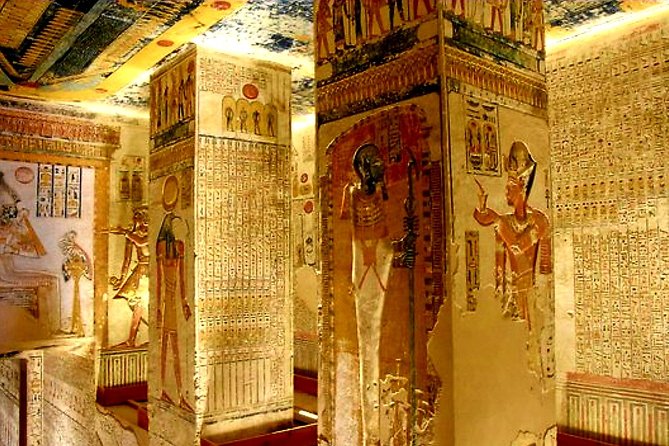
- Nefertari’s tomb with limited access: you’re visiting a site that’s restricted by time and visitor limits right now.
- Face-to-face moment at Tutankhamun’s tomb: you’ll see the mummy at KV62 and get context from an Egyptologist guide.
- Big-name Valley of the Kings tombs: you’ll cover multiple royal burials, not just the famous one.
- Hatshepsut at Deir el Bahari: the story of Egypt’s female pharaoh is built into the architecture.
- Karnak’s main hits: Hypostyle Hall’s 134 columns, plus major obelisks linked to Hatshepsut and Thutmose I.
- Private group pace: only your group participates, which usually helps you move and ask questions without feeling rushed.
The big idea: a focused Luxor day across both banks
This tour is designed to give you the maximum “readable” story of Luxor in one day. You start on the West Bank side (where the royal tombs are), then you shift to the East Bank for Karnak, where stone, columns, and symbols shout about power.
The value here isn’t just the number of stops. It’s the order and the way an Egyptologist guide links each site to the others—Tutankhamun to his ancestors, queens to kings, and funerary art to religious ideas about the afterlife.
Because it’s private, you also tend to get less friction. Fewer voices on the bus usually means it’s easier to hear explanations, and it’s simpler to adjust your pace when one tomb feels slow or when the lines and security move differently than expected.
You can also read our reviews of more private tours in Luxor
Getting set up: hotel pickup and an air-conditioned start
Pick-up happens around 8:00 am from your hotel in central Luxor or from the harbor area, with transport in an air-conditioned vehicle. This matters in practical ways: the Valley of the Kings sites are not “stroll and shop” places, so getting out early helps you stay sane later.
You’ll be out for about 8 hours. That’s long, but it’s a reasonable length for stacking several major tombs plus Karnak in one day.
Queen Nefertari’s Tomb: limited access, major payoff
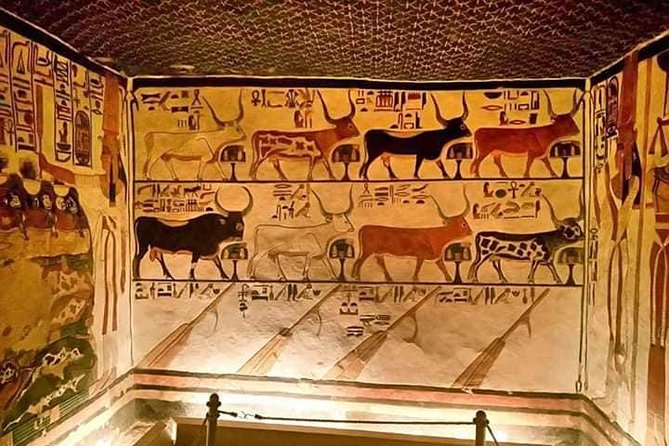
Queen Nefertari’s tomb is in the Valley of the Queens, and it’s described as being open for a limited time with limited visitors. That’s not a small detail. When access is restricted, it turns the visit from a quick stop into something closer to a time-slot appointment.
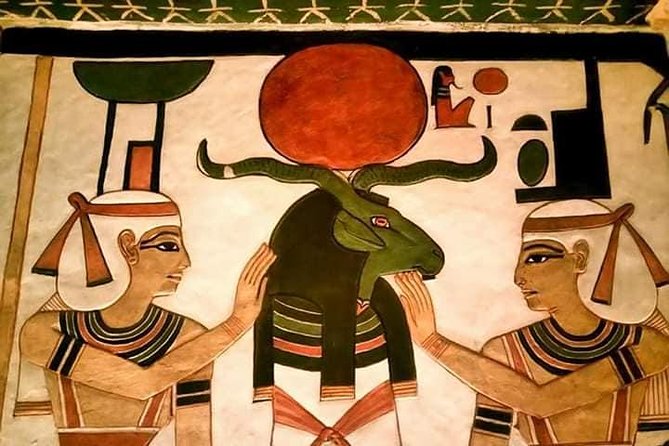
Your guide frames Nefertari as one of Egypt’s most famous queens—often grouped alongside Nefertiti and Cleopatra—while also grounding her in her real relationship to power: she was the beloved wife of Ramses the Great. You’ll also hear why her tomb is celebrated as the most beautifully decorated in the valley.
How to enjoy it (and what to watch for)
This is the kind of site where you’ll get more out of it if you slow down mentally. Ask your guide what to look at in the paintings and reliefs, because the scenes can start to feel similar across tombs unless someone helps you decode them.
Also, don’t assume you’ll spend ages inside. Limited access usually means the experience is controlled—so focus on quality over trying to “tick off” every corner.
The Valley of the Kings: Tutankhamun first, then the royal deep cut
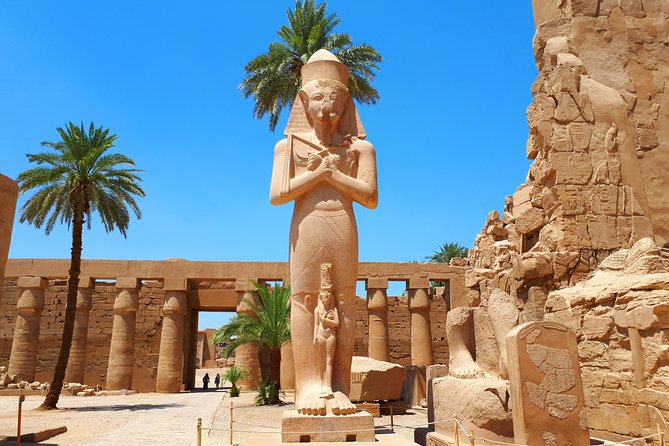
The Valley of the Kings is where the tour earns its name. You’re going to multiple burials rather than treating the valley like a one-tomb checklist.
The most famous stop is Tutankhamun’s tomb (KV62). You’re given time with an Egyptologist guide to explore the mysteries of his short reign: he ascended the throne around age 10 and died at about 19.
You’ll also have the chance to be face-to-face with his mummy inside the tomb. That’s the kind of moment that changes the tone of the entire day: suddenly the story stops being about names and turns into a very human, very specific relic of the ancient world.


What you should do before you walk in
Because tomb visits can move on a strict schedule, I’d go in with one goal: pick one or two scenes to understand deeply. If your guide points out symbols or details, let that become your “anchor.” Otherwise, a busy day can blur the difference between tombs.
Tutankhamun’s tomb: admission fees and time pressure
One careful note: the tomb time is listed as about 20 minutes, and the admission ticket is noted as not included. That’s your biggest planning reality here: you’ll likely pay site fees on the day, and you’ll need to stay flexible with pacing.
If you’re the type who wants long, quiet looking time, know that the structure of the tour and the site rules may limit how long you linger.
Royal tomb circuit: Merenptah, Ramses III, Ramses IV, and more
After Tut, the tour moves through other major Valley of the Kings stops. These are great because they show how the valley developed over time and how different rulers wanted their “journey” represented.
Tomb of Merenptah (Tomb 8)
You’ll visit Tomb 8, the burial place of Pharaoh Merneptah. The guide connects the tomb’s role to earlier and later ideas about protecting the dead in the journey to the West of Luxor.
The description also includes technical and historical notes that make the tomb feel less like a random room in a hillside. It discusses how the tomb design changes, including a single-axis layout and a wider entrance. It also mentions discovery by Howard Carter in 1903.
If you like the “how they built it” side of archaeology, this stop is one of the more satisfying because it gives you design details, not just legends.
Tomb of Ramses III (KV 11)
Next comes Ramses III (KV 11), described as a complex system with colorful painted reliefs and ritual texts. You’ll hear about texts like the Litany of Ra and the Book of Gates, and you’ll also learn that Ramses appears before the gods.
A unique feature highlighted here is the presence of scenes in side rooms showing secular material—foreign tributes, boats, and the “blind harpists,” which links to an alternative name for the tomb: Tomb of the Harpers.
Tomb of Ramses IV (KV 2)
This one gets very vivid. The walls depict scenes tied to religious texts such as the Litany of Ra, Book of the Dead, Book of Caverns, Book of the Heavens, Book of Amduat, and Book of the Night.
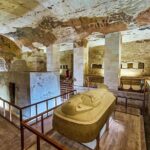
The description notes the blue-and-white painted tones inside the burial chamber, the king’s sarcophagus made of rose-colored granite, and Nut on the ceiling swallowing the sun. Even if you’re not a hieroglyphics reader, a good guide can help you “see the message” as you look.
Additional Valley stops you’ll likely experience
The tour also includes other Valley of the Kings tomb experiences such as Ramses IX and Ramses IV (with Ramses IX highlighted with plenty of color and detail, including ceiling artwork above the sarcophagi). It may also include Ramses VI.
I’m mentioning this because the Valley can feel repetitive if you only focus on “another tomb, another corridor.” When the tour includes several burials across different reigns, your guide can explain the differences in symbolism and layout.
Hatshepsut at Deir el Bahari: why the stone matters
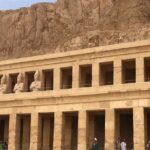
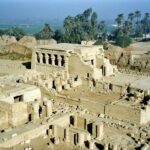
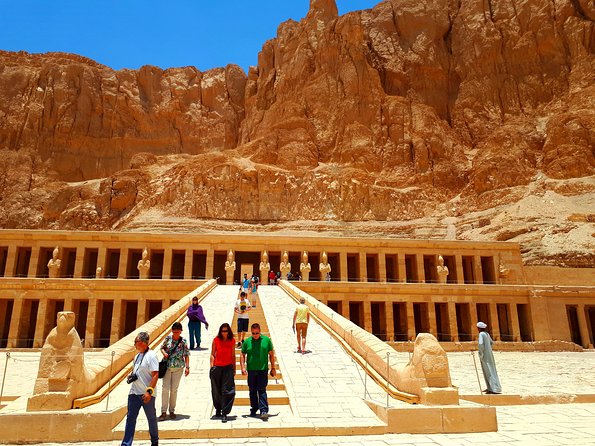
After the tombs, you move to Deir el Bahari to see the Temple of Hatshepsut. This is one of Luxor’s “stop and look” places because the building itself does the storytelling.
Hatshepsut is presented here as the only woman to reign over Egypt as Pharaoh, and the tour notes her connection to Tutankhamun’s dynasty. That family link gives the day extra structure: you’re not just seeing random monuments, you’re watching how royal legitimacy gets built in stone across generations.
Colossi of Memnon and lunch with Nile views
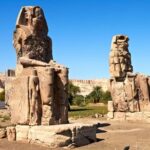
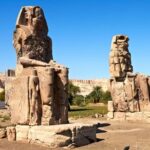
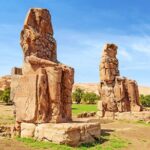
Then you get a short stop for the Colossi of Memnon—two large statues dating to the era of Amenhotep III (around 1391–1353 BC). These statues are often photographed, but with a guide’s context they become more than a backdrop.
After that you get a break: lunch at a restaurant on the Nile on the West Bank. Lunch is included, and you can request a vegetarian option when you book.
This is where the tour stays humane. Midday is when your body starts arguing with your feet, so the Nile-view lunch is a real quality-of-life win.
Karnak on the East Bank: Hypostyle Hall and the Hatshepsut obelisks
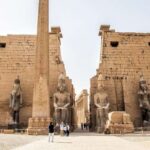
After lunch, you shift to Karnak Temples. If you’ve ever wondered how ancient architects managed to build something that feels bigger than your brain can hold, Karnak is the answer.
The tour focuses on key features:
- the Avenue of Sphinxes
- the Hypostyle Hall with 134 giant columns
- major obelisk highlights tied to Hatshepsut and Thutmose I
- the Temple of Amon with lotus and papyrus designs
- the Sacred Lake
- and notable stone/monument pieces like the Granite Scarabeus of Amenophis III
You’ll also have smaller stops at individual obelisks (Thutmose I and Hatshepsut) described as quick photo/time windows. Treat those like punctuation marks: short looks that help you connect the overall space to specific monuments.
Why Karnak is worth the full hour
Even with a tight schedule, Karnak is one of those places where the guide’s explanations make a huge difference. It’s easy to feel lost among halls and courtyards unless you know what to expect to see first.
If you only had time for one major temple complex on a Luxor visit, Karnak is a solid choice. This tour makes sure you see the big landmarks rather than wandering without a plan.
Extra Luxor stops that help stitch the day together
Depending on your route timing, the tour also includes brief stops connected to Luxor’s wider story, such as Ramesseum (Mortuary Temple of Ramses II), Luxor Temple, and the Howard Carter House.
These aren’t the main headline moments like Tutankhamun or Karnak, but they can be useful if you like seeing how Luxor’s royal timeline stretches beyond one valley.
Price and logistics: is $65 per person good value?
At $65 per person, this is a budget-friendly way to get an Egyptologist-led day that covers multiple World Heritage-level highlights. The included pieces that matter most for value are:
- qualified Egyptologist guide
- hotel pickup and drop-off
- lunch
What isn’t included is entrance fees, so you’ll likely add more once you’re there. Still, compared with DIY planning—transport, tickets, and coordinating guides at multiple sites—paying for a single guided day is often the simpler and safer way to spend your time.
The other “value” factor is structure. The tour gives you an efficient path through West Bank sites first, then Karnak afterward. If you’ve only got one day in Luxor, that routing is a big deal.
Who should book this private Luxor tour
This tour makes a lot of sense if you:
- want a one-day hits tour without giving up Egyptology-level explanations
- care about how and why tomb scenes and temple spaces were designed
- prefer private pacing (only your group) over a large shared crowd
It’s less ideal if you:
- want extremely long, quiet viewing time in tombs
- hate paying entrance fees on top of the tour price
- plan to spend the day trying to photograph everything instead of listening to the guide
Should you book this tour?
If you want a guided, Egyptologist-led day that connects Nefertari, Tutankhamun, Hatshepsut, and the big Karnak story in roughly 8 hours, this is a strong pick. The private format helps you get more from the explanations, and the lunch + transport combo makes the day feel organized.
I’d book it if your main goal is to understand the sites, not just see them from the doorways. And I’d come prepared for a full day and for entrance fees not included—that way the schedule won’t feel like a surprise.
If you do book, ask your guide to point out what matters in the tomb scenes, especially at Nefertari and in the more text-heavy tombs like Ramses IV. That’s where the time you spend inside really turns into memory.
FAQ
What time does the tour start?
The tour start time is 8:00 am.
How long is the tour?
The duration is listed as 8 hours (approx.).
Is hotel pickup and drop-off included?
Yes. Hotel pickup and drop-off are included.
Is lunch included?
Yes. Lunch is included, and a vegetarian option is available if you request it at booking.
Are entrance fees included in the price?
No. Entrance fee(s) are listed as not included.
Do I need to buy tickets in advance for the tombs?
The tour notes admission ticket not included for specific stops, so you should expect to pay admission fees during the visit.
Is this a private tour?
Yes. It’s a private tour/activity, and only your group participates.
Is free cancellation available?
Yes. There is free cancellation up to 24 hours in advance for a full refund.