REVIEW · LUXOR
Full Day Private Guided Tour in East and West Bank Luxor
Book on Viator →Operated by Alfa Tours Egypt · Bookable on Viator
Luxor hits different with a driver and guide. This full-day private route stitches together the West Bank tombs and East Bank temples in one smooth plan, with hotel pickup and air-conditioned transport. I like that your day starts with a simple grab-and-go from your central Luxor hotel, and I like the generous time blocks for the big hitters, especially the Valley of the Kings.
One thing to plan for: admissions are not included, and the Tomb of Tutankhamun (Tut) is an extra fee on top of Valley of the Kings entry. So you’ll want to budget a little more than the $42 headline price, and expect to factor in whatever ticketing takes at each site.
In This Review
- Key Highlights You’ll Actually Feel
- How the Private Setup Works in Luxor
- Valley of the Kings: 3 Hours Among Thutmose, Tut, and Ramesses
- Deir el-Bahari and Hatshepsut’s Temple: One Hour With a Pharaoh-Queen
- Colossi of Memnon: The 30-Minute Reset That’s Actually Worth It
- Luxor Temple: From Amunhotep III to Ramses II
- Karnak Temple With 2 Hours for Amun, Mut and Khonsu
- Price and Value for a $42 Private Day
- Practical Timing: How to Fit 8-9 Hours Without Losing the Plot
- Who This Luxor Day Makes Sense For
- Should You Book This East and West Bank Private Guided Tour?
- FAQ
- FAQ
- What’s included in the tour price?
- Is lunch included?
- Are attraction tickets included?
- Which sites are included in the day?
- Is the Tomb of Tutankhamun included?
- How long is the tour?
- Do I get hotel pickup?
- Is this tour actually private?
- How does the Colossi of Memnon entry work?
- What’s the cancellation window?
Key Highlights You’ll Actually Feel
- Private, just-for-you pacing across both banks of the Nile
- Licensed Egyptology guide plus bottled water and roundtrip hotel transport
- 3 hours in the Valley of the Kings for multiple tombs (and breathing room)
- Hatshepsut at Deir el-Bahari with time for an hour of architecture and royal story
- Colossi of Memnon is free and only takes about 30 minutes
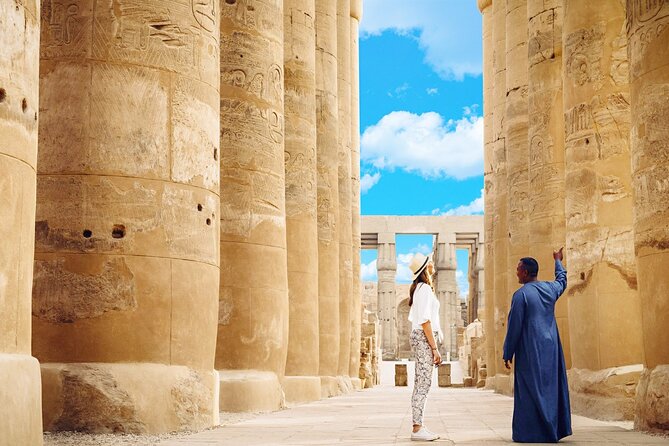
- Karnak Temple gets 2 full hours, not a rushed photo stop
How the Private Setup Works in Luxor
This is built as a true private day. You’re picked up from your central Luxor hotel (or cruise ship pickup is offered), then taken around in an air-conditioned car or minivan. That matters because Luxor can eat time fast if you’re constantly re-organizing transport between the Valley side and the temple side.
The plan also keeps things practical: you get a professional licensed Egyptology tour guide, plus bottled water. And you’re not sharing the same tight schedule with a swarm of strangers, which usually means you can move at a calmer speed when a site is crowded.
Another small but helpful detail: you’ll have a mobile ticket included. That can make check-in feel easier when you’re juggling multiple stops in one day.
You can also read our reviews of more guided tours in Luxor
Valley of the Kings: 3 Hours Among Thutmose, Tut, and Ramesses
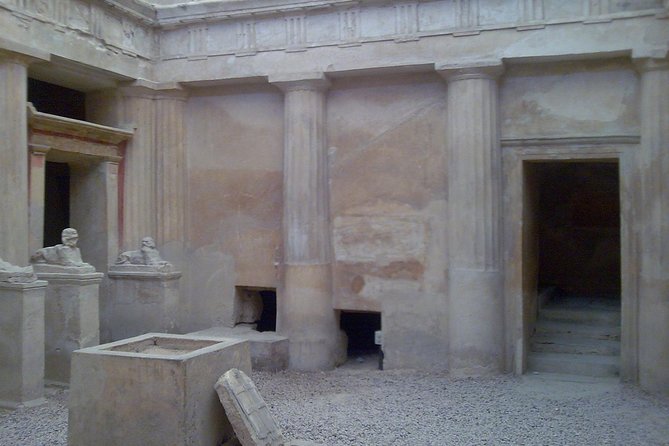
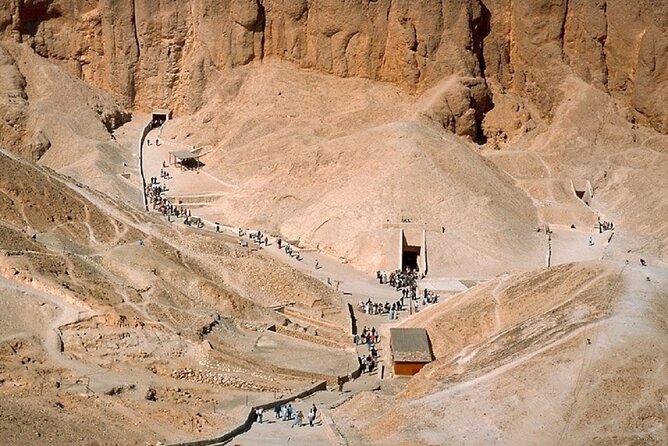
The day begins with the West Bank’s star attraction: the Valley of the Kings. You get about 3 hours here, which is exactly the right kind of time. The Valley isn’t one monument you quickly pass through—it’s a whole landscape of royal burials. With a longer block, you can actually choose what you want to see rather than getting yanked forward every few minutes.
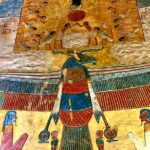
This stop is designed around the tomb lineup people come for, including Thutmose I, Thutmose III, Tutankhamun (Tut-Ankh-Amon), Ramesses VI, Merenptah, and Amenhotep II. Even if you only go into a subset of tombs, the guide can help you connect what you’re looking at to the royal stories behind it.
Two practical notes from the structure of the day:
- Admission to the Valley of the Kings is not included in the tour price.
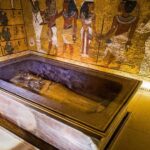
- The Tomb of King Tutankhamun (Tut) is an extra fee inside the Valley and is listed as a must-see add-on. It’s smaller than many other tombs and was not looted like several others, which is part of what makes it so compelling.
Why that extra time helps: if you arrive with just names in your head, it can feel like a lot at once. The extra hours give you time to settle in, compare tomb styles, and understand what makes each royal burial different.
Possible drawback: with admissions and the optional Tut add-on, your final itinerary at the Valley depends on ticketing and your own energy level. If you hate decision-making, you’ll want to commit early on which tombs you prioritize.
Deir el-Bahari and Hatshepsut’s Temple: One Hour With a Pharaoh-Queen
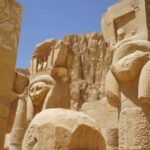
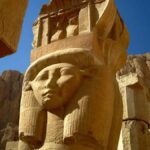
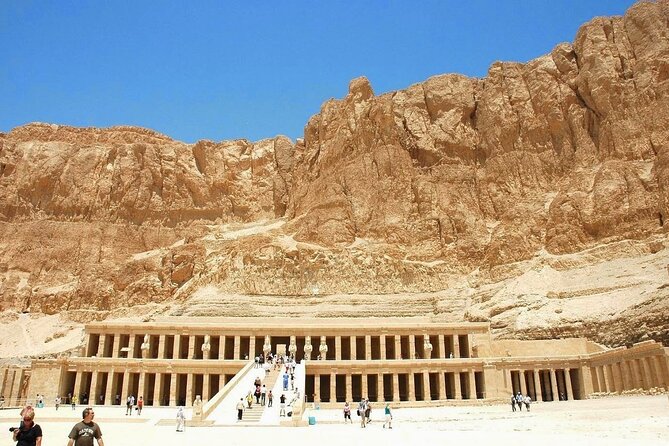
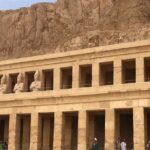
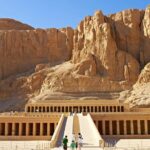
Next comes the Temple of Hatshepsut at Deir el-Bahari. You’ll have about 1 hour here, and that’s a reasonable length for a site like this. It’s famous for its striking layout and the fact that it’s tied to one of Egypt’s most unusual royal figures: a woman who ruled as a pharaoh.
The story built into this stop is specific. Hatshepsut is described as the daughter of Thutmose I and a ruler of roughly 20 years during the 18th Dynasty (around 1490–1469 B.C.). That context helps the temple feel less like scenery and more like the work of a ruler making a political and spiritual statement.
What I’d watch for with the guide’s help: how the architecture supports the idea of order, legitimacy, and lasting power. Even in an hour, you can still pick up the big visual cues when you’re not just wandering.
As with the Valley, admission is not included. So you’ll want to keep that in mind when you’re comparing total day cost.
A consideration: one hour is enough to see the essentials, but it’s not enough to linger slowly over every corner like a dedicated photographer. If you know you want that, plan to spend more time at Deir el-Bahari outside this tour.
Colossi of Memnon: The 30-Minute Reset That’s Actually Worth It
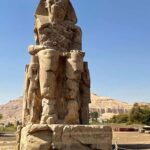
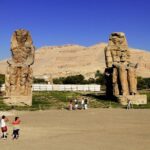
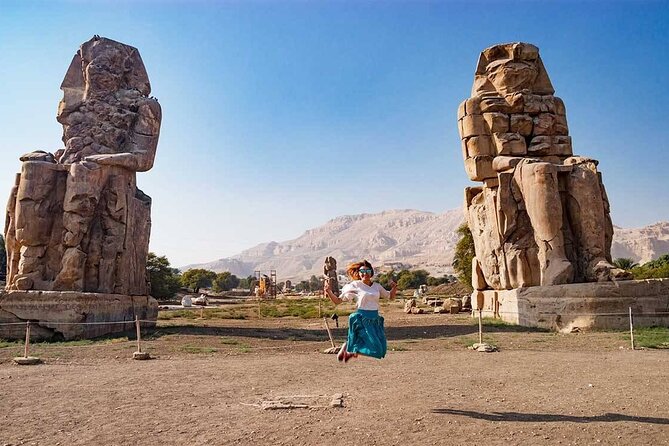
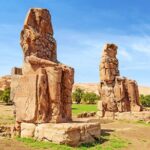
Then you move to the Colossi of Memnon, described here as the remaining statues from the mortuary temple of King Amenhotep III. This stop is only about 30 minutes, but it’s also listed with admission free.
That short duration is useful in two ways. First, it gives your legs a breather after earlier walking. Second, it prevents the day from turning into one long slog of sacred sites without any rhythm.
Even in half an hour, these statues tend to land. They’re monumental, and the fact that they’re surviving survivors helps you feel how long these places have been holding attention.
Possible drawback: if you’re hoping for a deep explanation of a mortuary complex beyond what you see at the statues themselves, 30 minutes can feel brief. Still, for most people, it works as a focused stop rather than a time sink.
Luxor Temple: From Amunhotep III to Ramses II
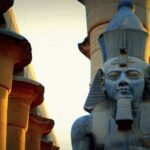
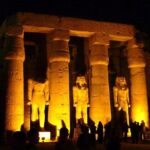
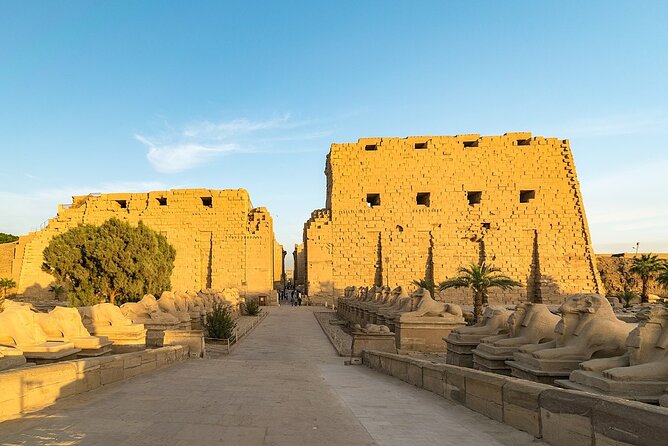
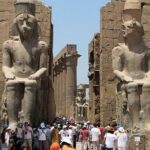
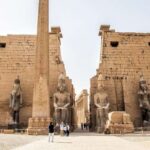
After the Colossi, you head to the East Bank for the Temple of Luxor, with about 1 hour 30 minutes on site. This temple has a layered backstory: it was initiated during the reign of Amunhotep III in the 18th Dynasty and completed under Ramses II in the 19th Dynasty.
That “two reigns” timeline is one of the reasons I like this stop. It gives you a way to think about how Egyptian temple building wasn’t always one-and-done. This was a project measured across generations, with later rulers stepping into earlier foundations.
As usual on this route, admission is not included for Luxor Temple. The upside is that, once you’re inside, the time block is long enough to let the space do its job without feeling rushed.
Why it fits the day: Luxor Temple acts like a transition point. You’ve seen royal burials on the West Bank; now you’re moving toward the daily and ceremonial world of the gods on the East Bank.
You can also read our reviews of more private tours in Luxor
Karnak Temple With 2 Hours for Amun, Mut and Khonsu
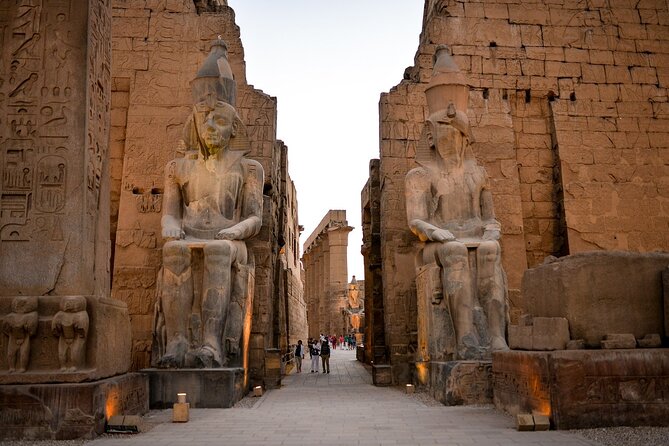
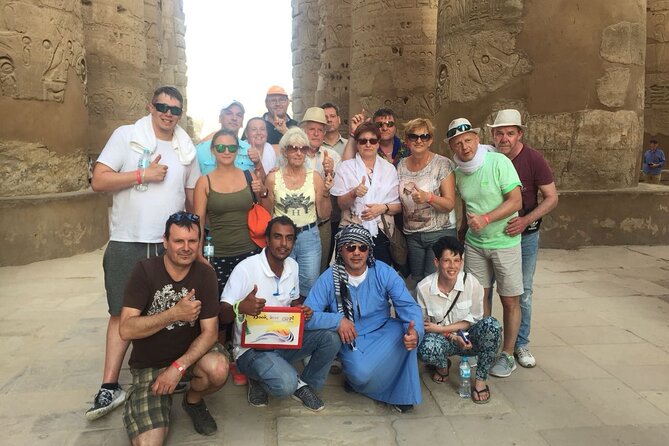
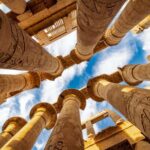
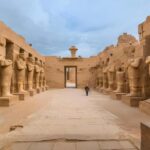
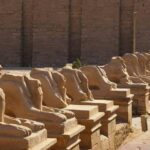
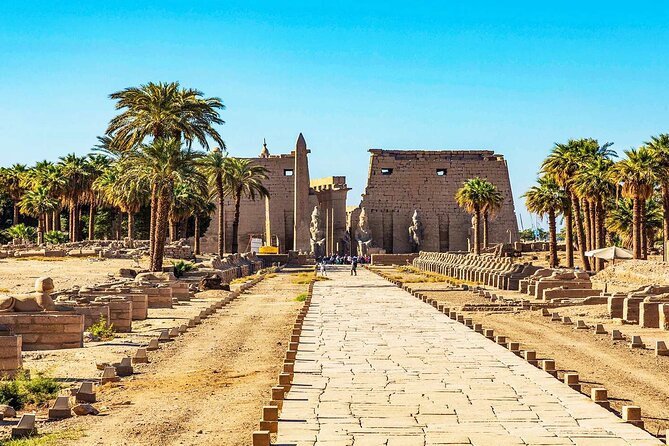
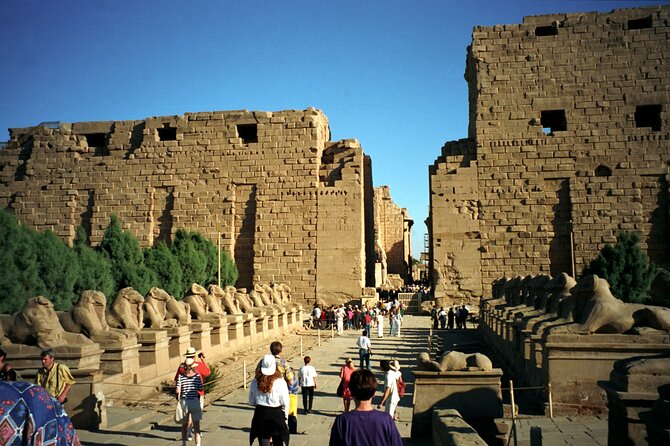
The last major stop is Karnak Temple, with about 2 hours given here. Karnak is the kind of place where two hours can feel short or perfect, depending on how you approach it. In this tour structure, it’s there long enough that you’re not forced into a sprint.
The temple complex is tied to worship dedicated to Amun, his wife Mut, and their son Khonsu. Knowing those names matters because it gives you a mental map while you’re looking at big halls and sacred spaces. Without that, Karnak can turn into a blur of scale.
How the time works for you: with a guide and a full 2 hours, you can usually step away from the mentality of seeing everything. You focus on what you’re actually noticing. That makes the temple feel like a place with purpose, not just a huge pile of carved stone.
Possible drawback: Karnak is big. Even with 2 hours, you’ll still see only a portion. That’s not a flaw in the tour—it’s the nature of Karnak. The benefit of a private guide is that you can spend your time where your interests line up.
Price and Value for a $42 Private Day
At $42 per person, this tour looks like a solid deal for what’s included: roundtrip transport, hotel pickup and drop-off, a licensed Egyptology guide, a private tour, and bottled water.
But here’s the honest part: the tour price is the base, and the biggest variable cost is entry. Admissions for the Valley of the Kings, Temple of Hatshepsut, Luxor Temple, and Karnak are not included. Also, the Tomb of Tutankhamun (Tut) has an extra fee within the Valley.
So the value question becomes this: are you paying for convenience and expert guidance, while covering site tickets yourself? For many people, yes. A day like this is exhausting to assemble on your own if you’re trying to coordinate transport across the Nile and make sure you’re hitting the right sites in the right order.
The route also covers both halves of the Luxor story in one go:
- royal burials and tombs in the West Bank
- the major temple experiences in the East Bank
Who gets the best value: first-time Luxor visitors who want the highlights without turning the day into logistics. It can also be good for couples or small groups who care about pace and don’t want to share a schedule with strangers.
One more practical note: the tour is noted as being commonly booked about 11 days in advance. If your dates are tight, that’s your hint to lock it in early so your pickup and timing options don’t shrink.
Practical Timing: How to Fit 8-9 Hours Without Losing the Plot
This is an 8 to 9 hour day. That’s the right length for six major stops when you’re including travel between them and enough time at each site to feel like you saw something, not just got dropped off.
The timing breakdown gives you a sense of how your day unfolds:
- Valley of the Kings: about 3 hours
- Hatshepsut (Deir el-Bahari): about 1 hour
- Colossi of Memnon: about 30 minutes
- Luxor Temple: about 1 hour 30 minutes
- Karnak Temple: about 2 hours
The main scheduling consideration is admissions plus the Tut add-on. Because those aren’t included, your day could shift slightly based on ticketing and how long you spend deciding at the Valley.
If you want a smooth day, treat admissions as part of the plan, not as an afterthought. Decide ahead of time whether Tut is a priority for you, since the tour specifically calls it out as an extra fee.
Who This Luxor Day Makes Sense For
This tour is a good match if you want:
- private pacing with your own guide and your own group only
- a single, guided plan that covers both sides of Luxor
- enough time in key places like the Valley of the Kings and Karnak, not just a quick “see it, leave it” loop
- comfort perks like hotel pickup, air-conditioned transport, and bottled water
It may be less ideal if you hate budgeting for separate entry fees. Because admissions aren’t included, your day cost depends on the tickets you choose at each site, especially at the Valley with Tut.
Should You Book This East and West Bank Private Guided Tour?
I’d book it if you want a guided, private Luxor day that keeps the heavy hitters in view and doesn’t treat your time like a factory line. The big strengths are the practical setup—pickup, transport, bottled water—and the fact that you get meaningful time blocks where it counts, particularly at the Valley of the Kings and Karnak.
I would hesitate only if you’re trying to keep total costs as low as possible, since admissions and the Tutankhamun add-on are extra. If you’re okay planning for that, this is a comfortable way to experience a large chunk of Luxor without turning the day into logistics.
FAQ
FAQ
What’s included in the tour price?
The tour includes roundtrip transportation from your central Luxor hotel (air-conditioned car or minivan), hotel pickup and drop-off, a professional licensed Egyptology tour guide, bottled water, and a private tour setup.
Is lunch included?
No. Lunch is not included.
Are attraction tickets included?
No. Admissions to the mentioned attractions are not included.
Which sites are included in the day?
You’ll visit the Valley of the Kings, the Temple of Hatshepsut at Deir el-Bahari, the Colossi of Memnon, Luxor Temple, and Karnak Temple. The Tomb of King Tutankhamun (Tut) is an extra fee option within the Valley.
Is the Tomb of Tutankhamun included?
Tut’s tomb is not included in the base admissions. It’s listed as an extra fee in the Valley of the Kings.
How long is the tour?
It runs about 8 to 9 hours.
Do I get hotel pickup?
Yes. Hotel pickup and drop-off are included, from your central Luxor hotel (and pickup from a cruise ship is also offered).
Is this tour actually private?
Yes. It’s a private tour/activity, so only your group participates.
How does the Colossi of Memnon entry work?
The Colossi of Memnon stop is listed as admission free, and it takes about 30 minutes.
What’s the cancellation window?
You can cancel for a full refund up to 24 hours before the experience’s start time. Free cancellation applies based on local time.
If you tell me your travel month and whether you’re visiting from a cruise or staying in a specific Luxor hotel area, I can help you think through which extra tickets are most worth it for your exact interests.