REVIEW · GIZA
Full-Day Private Tour: Historic Alexandria From Cairo
Book on Viator →Operated by Egypt Direct Tours · Bookable on Viator
Alexandria starts with an early alarm. This private, 10-hour outing from Giza takes you into Kom El-Shoqafa catacombs for a Roman-era underworld and pairs it with a private Egyptologist guide who can make the city’s layers click. One key consideration: the Bibliotheca Alexandrina visit depends on ticket timing because the library itself isn’t included—and it’s closed Fridays and Saturdays.
You’ll leave around 6:30am and spend most of the day touring the big Alexandria hits with hotel pickup/drop-off, a private vehicle, and lunch plus bottled water, soft drinks, and snacks. The long drive is real, so plan to treat this as a full-day “high points” sampler rather than a slow, in-depth day wandering at your own pace.
In This Review
- Key Highlights Worth Getting Excited About
- The Morning Start: 6:30am From Giza Means You Get More Alexandria
- Stop 1: Kom El-Shoqafa Catacombs—A Three-Level City for the Dead
- What to watch for
- Stop 2: Bibliotheca Alexandrina—Modern Library of Alexandria, and Ticket Reality
- A smart move before you go
- Stop 3: Pompey’s Pillar—A Roman Triumph Column With a Giant Backstory
- Photo tip
- Stop 4: Citadel of Qaitbay—Fortress Logic Along the Mediterranean
- What you’ll likely enjoy most
- Transportation, Timing, and Private Guide Pacing
- Price and Value: What You’re Really Paying For
- Who This Tour Fits Best (And Who Might Want Another Option)
- Practical Tips That Make the Day Smoother
- Should You Book This Alexandria From Giza Private Tour?
- FAQ
- What time does the tour start?
- How long is the tour?
- Does hotel pickup and drop-off happen?
- Are entrance fees included?
- Is the Bibliotheca Alexandrina open every day?
- Is lunch included?
- Can I cancel and get a full refund?
Key Highlights Worth Getting Excited About
- Underground at Kom El-Shoqafa across three levels, including the triclinium space where feasts were held for the dead
- Pompey’s Pillar: a major Roman triumphal column with an enormous Corinthian feel and imperial backstory
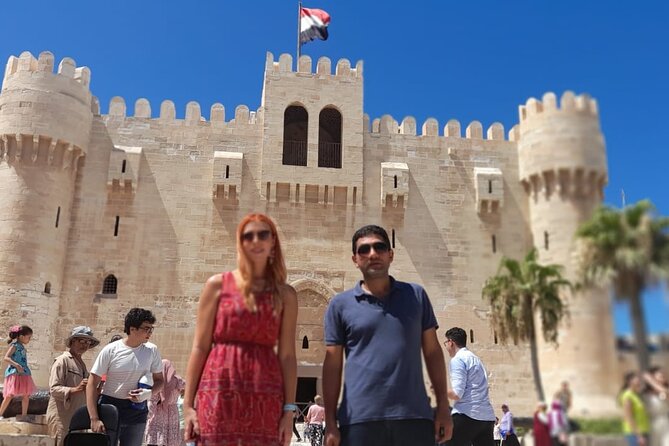
- Qaitbay Citadel: a fortified stop that explains Alexandria’s defensive role along the Mediterranean
- Bibliotheca Alexandrina (modern Library of Alexandria) with a clear heads-up that entry tickets aren’t included
- Private Egyptologist + private vehicle so you’re not stuck with a rushed herd
The Morning Start: 6:30am From Giza Means You Get More Alexandria
This tour is built around an early departure, starting at 6:30am, which is the difference between seeing the sites with energy and showing up when the day is already tired. Alexandria is close enough to day-trip, but not close enough to ignore the time on the road. Expect a long stretch of travel each way—think roughly three hours—and yes, city traffic can feel chaotic.
That’s exactly why I like the format: you’re in a private car with rest stops planned, plus you’re not negotiating public transport with luggage or trying to match taxi schedules. You also get practical support for the day—bottled water, soft drinks, and snacks help keep you from turning lunch into a sad snack corner.
There’s also a useful safety routine in place. The car is sterilized periodically, staff wear masks, and you’ll be asked to wear one during the tour. Hand sanitizer is available in the vehicle, which is comforting when you’re moving between multiple indoor/outdoor sites.
You can also read our reviews of more private tours in Giza


Stop 1: Kom El-Shoqafa Catacombs—A Three-Level City for the Dead
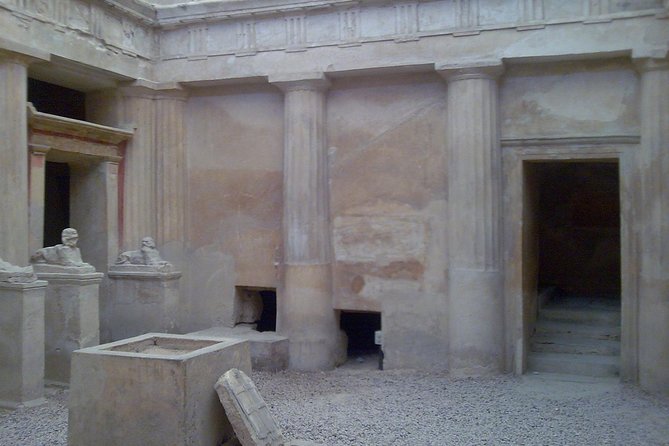
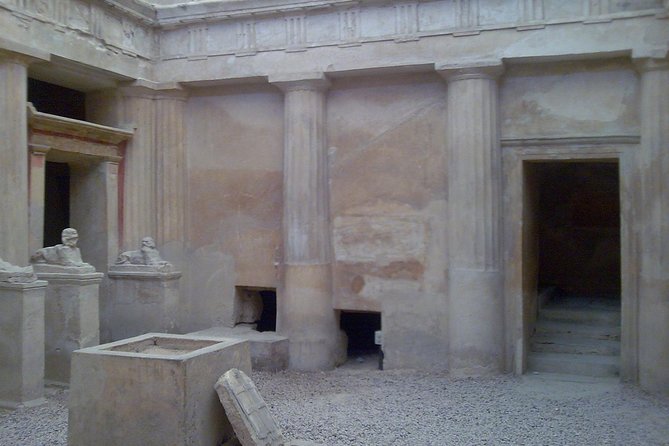
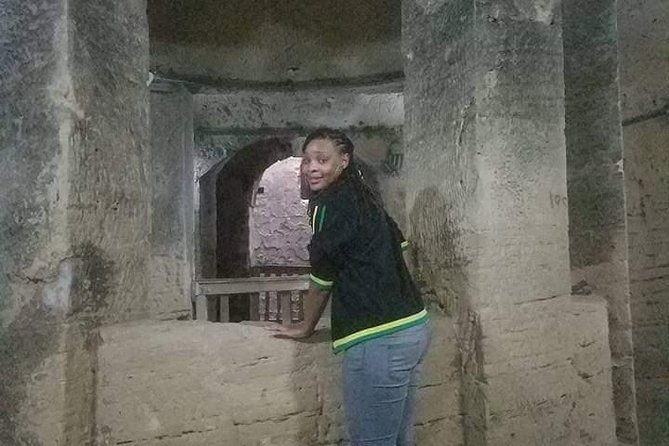
Kom El-Shoqafa is the kind of place that makes you look at the ground differently. You’ll spend about one hour underground in a catacomb complex arranged in three levels. This isn’t one single tunnel with a couple of tomb rooms—it’s a vertical underground world that feels planned, almost like a mini-city.
The standout area is the triclinium, where families once sat on stone benches to eat and honor the dead. The term might sound academic, but the concept is vivid: these weren’t purely “quiet burial spaces.” They were ritual places where memory was part of daily life, even after someone died.
Inside the catacombs, you’ll also see statues linked to Sobec and Anubis, and the details matter. The statues are described as wearing Roman armor and dating to the 2nd century A.D. That Roman blend is the point—Alexandria was a meeting ground, and Kom El-Shoqafa shows that mix in stone.
What to watch for
- This is underground. If you’re sensitive to enclosed spaces or uneven footing, go slowly and follow your guide’s pace.
- Expect a guided explanation to be a big part of what makes the hour feel worthwhile. If you like understanding symbolism and style, this is where the Egyptologist really earns their keep.
Stop 2: Bibliotheca Alexandrina—Modern Library of Alexandria, and Ticket Reality
Next comes the big name: Bibliotheca Alexandrina, the modern recreation of the idea behind the ancient Library of Alexandria. Your visit is scheduled for about one hour.
Here’s the practical catch that you should plan around: Alexandria Library tickets are not included, and the optional nature matters. You’ll need to decide on-site whether to buy tickets when it fits your timing. If you’re traveling on a day when the library can’t operate normally, you’ll need an alternate plan because the library is closed on Fridays and Saturdays.
This is also where expectations can get messy. The modern library is not the ancient manuscript world you might be picturing from movies. It’s a contemporary space tied to the story of the library—so you’ll get the setting and the educational tone, but not a direct walk into the ancient original.
That doesn’t make it pointless. It’s still worth it if you want to understand how modern Egypt and scholars reconnected with the cultural importance of Alexandria as a center of learning. Plus, your guide can usually help you read what you’re seeing—architecture, symbolism, and why the project was revived in the first place.
A smart move before you go
If the library matters most to you, confirm your day isn’t Fri/Sat and bring a payment method you can use. The tour notes suggest credit cards instead of cash, which is handy if ticket counters are streamlined and prefer card payments.
You can also read our reviews of more historical tours in Giza


Stop 3: Pompey’s Pillar—A Roman Triumph Column With a Giant Backstory
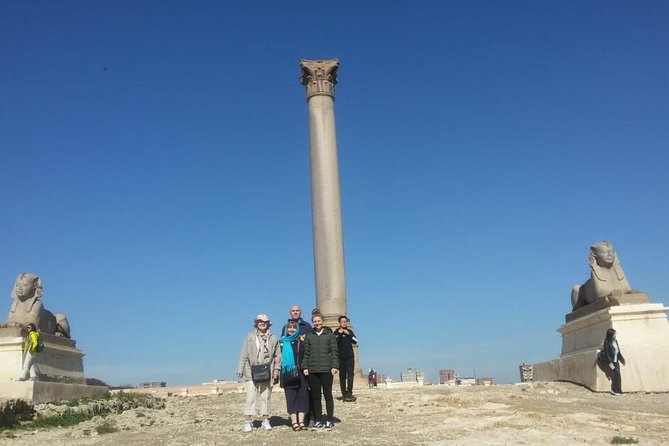
After the library stop, you’ll head to Pompey’s Pillar for about one hour. This is a Roman triumphal column, and the details are part of the fun.
The column is described as having been set up in honor of emperors around 298–302 A.D., and it originally supported a colossal porphyry statue of the emperor in armor. Even if you only spend a short time here, the guide’s explanation can turn this from a quick photo moment into a real history stop.
Pompey’s Pillar is also a good breather in the schedule. It’s not as time-consuming as the underground catacombs, and it’s outdoors, so you can feel the city air again. In a full-day tour, these rhythm points matter.
Photo tip
If you care about photos, arrive with one or two angles in mind. Columns look good from multiple distances, so a small shift in position can dramatically change the feel of the shot.
Stop 4: Citadel of Qaitbay—Fortress Logic Along the Mediterranean

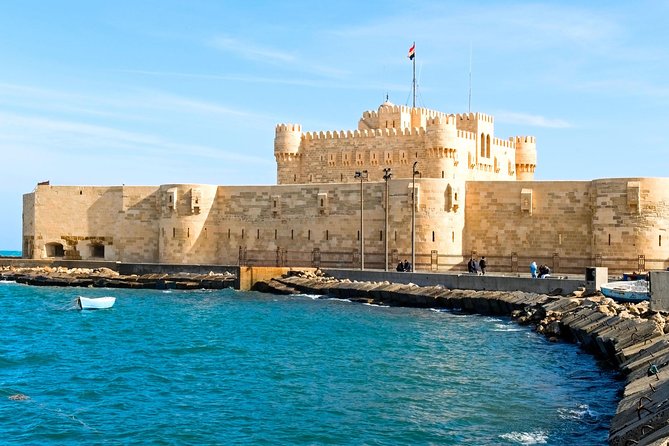
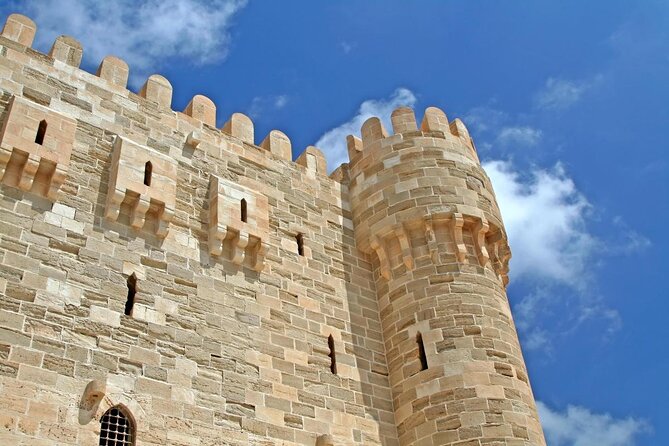
The last major stop is Qaitbay Citadel, also known as a key defensive stronghold. You’ll spend about one hour here.
The citadel is described as one of the most important defensive fortifications not just in Egypt but along the Mediterranean coast. The big takeaway is that it wasn’t only a statement—it was part of Alexandria’s defensive system, particularly in the 15th century A.D. In other words, the city’s location made defense urgent. This is where you can connect geography with why fortifications look the way they do.
Even if you’re not a fortress fanatic, this stop gives you a different angle on Alexandria. You’ve already seen the city as a burial site and as a learning symbol. Qaitbay adds the “strategic port city” layer.
What you’ll likely enjoy most
If your guide explains the defensive logic—visibility, coastline threats, and how cities protected themselves—you’ll come away understanding why these walls and placements mattered more than just how they look.
Transportation, Timing, and Private Guide Pacing
This is a private tour, so you’re not locked into what a big group wants to do every minute. That’s a real advantage for a schedule like this. Alexandria day trips are long, and a guide can adjust for time pressure without making the entire day feel like a sprint.
You also get a private vehicle with pickup and drop-off. That matters because the tour starts early and ends late enough that you don’t want to be hunting down transportation at the end. Bottled water, soft drinks, and snacks are included, so you can stay functional through the day’s rhythm.
One thing to keep in mind: admission fees are handled mostly, but the Alexandria library is a special case. The tour notes say entrances are included for the day tour except the Alexandria library, where tickets can be purchased at the location.
And if you land with an excellent guide, you’ll feel it quickly. Names like Nasar come up as a driver/guide who keeps things smooth and informative, with planned rest stops. Even if you don’t get the same person, the private-tour promise is that the day should run without you doing the heavy lifting.
Price and Value: What You’re Really Paying For
At $90 per person for a private, 10-hour day with hotel pickup, lunch, a private deluxe car, a multilingual Egyptologist guide, bottled water/soft drinks/snacks, and key site access, it can represent strong value if you want a guided “greatest hits” day.
Here’s how the value breaks down in human terms:
- Time value: a full day dedicated to Alexandria means you don’t spend your vacation figuring out connections and ticket logistics.
- Guide value: catacombs and Roman/fortress history are easier with an expert explaining what you’re looking at.
- Comfort value: snacks, water, and a private car help make the long drive tolerable.
- Ticket value: most entrances are covered, but you may still pay for Bibliotheca Alexandrina tickets separately.
The only time this price feels less satisfying is when your expectations are too broad. If you want a long, slow Alexandria exploration with lots of extra stops beyond the core sites, a fixed schedule like this can feel tight. Also, if your dream is to see the ancient library itself, you’ll want to adjust: this is about the modern Bibliotheca Alexandrina experience and the story around it, not the original manuscripts.
Who This Tour Fits Best (And Who Might Want Another Option)
I think this tour is ideal if:
- You want a guided Alexandria highlight loop without the stress of planning.
- You’re interested in Egyptian history through the lens of Egyptology—especially for symbolism-heavy places like Kom El-Shoqafa.
- You like a structured day where you leave with a clear mental map of what Alexandria meant to empires.
You might want to rethink it if:
- Alexandria is a priority and you want lots of extra neighborhoods, museums, and slower wandering.
- The Bibliotheca Alexandrina is your main goal and you’re traveling on a day it’s closed (Fridays/Saturdays), since the ticket situation is part of the experience.
For families: children must be accompanied by an adult, and the route is mostly manageable for most visitors, but you should keep in mind the underground nature of the catacombs.
Practical Tips That Make the Day Smoother
- Bring credit cards if you plan to purchase the library ticket on-site.
- Pack light layers. Early mornings can feel cool, and sites can vary between shaded and sun-exposed.
- Wear a mask as requested for your safety and the tour rules.
- If you’re vegetarian, ask for the vegetarian option at booking so lunch works for you.
Also, the tour uses a mobile ticket, so make sure your phone is charged.
Should You Book This Alexandria From Giza Private Tour?
If you want a structured, guided, private day that hits the big Alexandria themes—underground burial rituals, a Roman column, a major fortress, and the modern Library of Alexandria idea—this tour makes a lot of sense. The price can feel fair when you factor in hotel transport, lunch, and the guide-led interpretation at stops that otherwise would be harder to read.
Book it with one expectation set: this is not an all-day “wandering Alexandria” pass. It’s a concentrated highlights route, and the Alexandria Library experience may involve extra ticket decisions. If you’re good with that, you’ll get a memorable slice of the city’s layers in one long but well-run day.
FAQ
What time does the tour start?
The meeting start time is 6:30am, with hotel pickup and round-trip transport included.
How long is the tour?
The duration is listed as 10 hours (approx.) for the full day trip.
Does hotel pickup and drop-off happen?
Yes. Hotel pickup and drop-off are included.
Are entrance fees included?
Most entrances are included as part of the day tour, but the Bibliotheca Alexandrina admission is not included. You can buy tickets at the location.
Is the Bibliotheca Alexandrina open every day?
No. The Alexandria Library is closed on Fridays and Saturdays.
Is lunch included?
Lunch is included in the tour summary, along with bottled water, soft drinks, and snacks.
Can I cancel and get a full refund?
Yes. You can cancel up to 24 hours in advance for a full refund. If you cancel less than 24 hours before the experience starts, the amount paid is not refunded.