REVIEW · GIZA
A Day in the Coptic Quarter and the churches of Mokattam
Book on Viator →Operated by Charmante Égypte · Bookable on Viator
The Coptic Quarter keeps time in stone. This 6–7 hour private day connects Cairo’s major churches and their miracle stories in a sensible order, with an Egyptologist guide and lunch included. You’ll see how faith, architecture, and local geography all work together in Old Cairo and up at Mokattam.
What I like most is the focus on the sequence of events across the churches, rather than a random checklist. I also like that the tour includes private transport plus an Egyptologist guide, so you get explanations as you walk, not just photos.
One thing to keep in mind: the day includes stairs and mountain-area walking, and one major stop (the St. George church area) is stated as not open to the public, so you’ll spend more time around what you can access than on roaming freely inside everything.
In This Review
- Key highlights worth your time
- Why this Coptic Quarter day feels different
- Stop 1: The Hanging Church and the Fortress of Babylon view
- Stop 2: St. Sergius and Bacchus, plus a crypt you can’t ignore
- Stop 3: St Simon the Tanner Monastery in Mokattam’s carved terrain
- Stop 4: St. George (Mari Girgis) inside the Roman tower area
- Stop 5: Saint George Cemetery and its unusual tomb shapes
- The flow, timing, and what it means for your energy
- Price and value: is $74 a fair deal?
- Who this tour suits best
- Guide experience: why Ingy/Enjy makes a difference
- Quick prep tips so your day goes smoother
- Should you book the Coptic Quarter and Mokattam churches day?
- FAQ
- How long does the tour last?
- What is the tour price per person?
- Is pickup included?
- What does the tour include?
- What is not included in the price?
- Are mobile tickets used?
- Is this tour private?
- What hours is the tour available?
- Can I get a full refund if I cancel?
Key highlights worth your time
- Hanging Church (Staircase nickname): the church sits above the Fortress of Babylon gatehouse and you approach via 29 steps.
- St. Sergius and Bacchus crypt: a 10-meter-deep crypt that can flood when Nile levels are high.
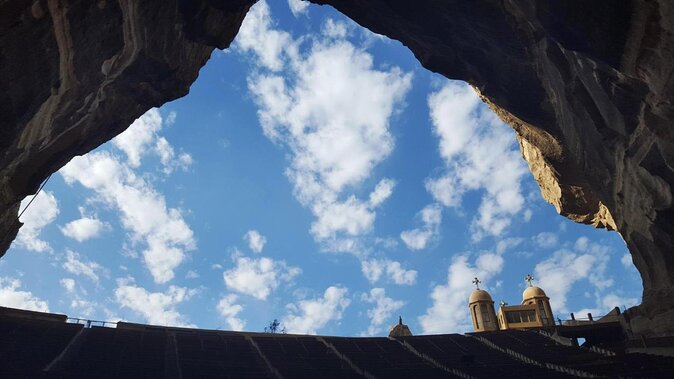
- Mokattam’s St. Simon the Tanner Monastery: carved in the mountain area near Abagya, and known for worldwide visitation.
- St. George complex in the Roman tower: connected to the Coptic museum area, with specific access limits noted.
- St. George Cemetery: striking tomb shapes and angel statues, with photographs of bodies located inside the tomb structures.
- Good value for what’s included: private vehicle, Egyptologist, lunch, and all fees/taxes are built into the $74 price.
Why this Coptic Quarter day feels different
Cairo’s Coptic sites can be easy to see, but hard to truly understand. This tour is designed for the opposite problem: instead of skipping around, you follow the story period by period through the churches. That matters, because a lot of what you’re looking at is layered—built, burned, restored, rebuilt again—each era leaving visible traces.
Another big win is the on-the-ground explanation. With an Egyptologist guide, you get context for why a church is where it is, what makes a crypt unusual, and how later rebuilding changed what you see today. And because it’s private (only your group), the pace can stay human-sized instead of rushed.
Finally, the route makes sense logistically for a single day: you start with classic Coptic Cairo architecture, then you go toward the Mokattam mountain area, ending with the St. George Cemetery. You aren’t forced to bounce between far-flung points on your own.
You can also read our reviews of more tours and experiences in Giza.
Stop 1: The Hanging Church and the Fortress of Babylon view
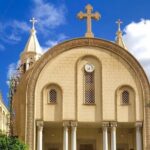
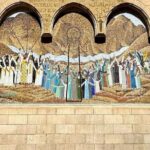
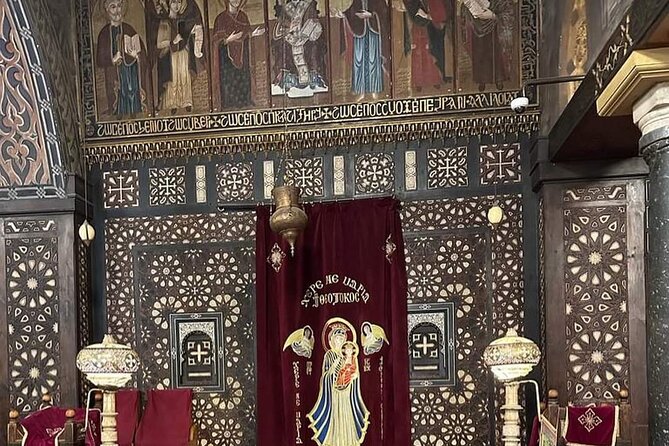
You begin at the Hanging Church, named for its location above a gatehouse of the Fortress of Babylon in Roman Coptic Cairo. Even the approach tells you something: you climb 29 steps, which is why early travelers nicknamed it the Church of the Staircase.
Look up as you move. The church’s “hanging” effect is linked to the Roman fortress structure beneath it. One detail that really helps you visualize the place is the city’s changing footprint over time: the land area increased by about six meters since Roman days. That means the Roman tower is now partly buried, so the elevated look isn’t as dramatic as it once would have been.
The entry is also worth noticing. From street level you go through iron gates under a pointed stone arch, then pass a narrow courtyard before you reach the 19th-century facade with twin steeples. That sequence—gatehouse to steps to facade—makes the whole experience feel like a carefully staged walk upward into history.
Practical tip: Wear comfortable shoes. The steps are part of the story here, but they’re still steps.
Stop 2: St. Sergius and Bacchus, plus a crypt you can’t ignore
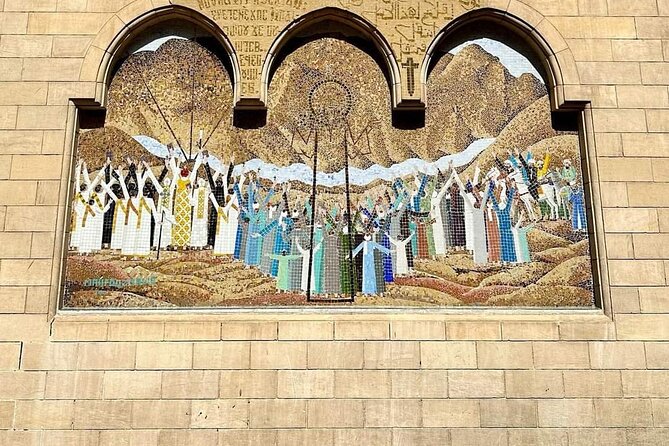
Next is the Church of St. Sergius and Bacchus, dedicated to holy soldiers martyred in the 4th century in Syria by the Roman Emperor Maximian. The emotional hook for many people is the crypt, where Mary, Joseph, and the infant Jesus are said to have rested.
This crypt is 10 meters deep. It’s the kind of detail that changes how you look at the whole church: you’re not just visiting a room; you’re visiting a vertical world below the main space. When Nile levels are high, the crypt is often flooded, which is a reminder that the environment is part of the religious experience here, not something separate.
The church’s timeline is also a useful guide for what you’re seeing:
- Built in the 4th century and likely completed in the 5th
- Burned down around 750 during the fire of Fustat
- Restored in the 8th century, then rebuilt and restored repeatedly since medieval times
So yes, the building has a “model of early Coptic churches” reputation—but what you’re really appreciating is resilience across centuries. You can mentally connect the changes you read about to the reality of a church that has survived repeated disruptions.
Practical tip: If you’re sensitive to damp or lower-light spaces, consider how you’ll handle the crypt area. It’s described as a place that can flood, so expect conditions to vary.
Stop 3: St Simon the Tanner Monastery in Mokattam’s carved terrain
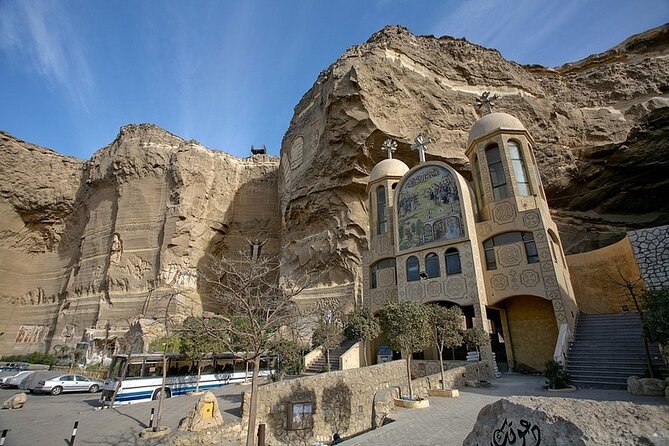
After the Coptic Cairo highlights, you move toward the Mokattam Mountain area. This stop is about place, not just structure. Once you get closer to Abagya, your eyes will lead you to one of the rarer architectural artifacts carved into Mokattam: the Saint-Simon le Tanneur monastery.
The way it’s described matters: it’s not just “a church on a hill.” The mountain itself blends into the architecture, and the monastery becomes part of that landscape. That’s why it draws people from all over the world—it’s a devotional site with a strong physical signature.
Also, it’s one of those stops that helps break the rhythm of urban Old Cairo walking. Even if you’re tired, Mokattam gives your brain a different visual texture: rock and carving rather than gatehouses and courtyards.
Practical tip: Bring water. The tour runs 6–7 hours and combines multiple zones. Even if the time at each stop feels short, the day adds up once you include transit.
Stop 4: St. George (Mari Girgis) inside the Roman tower area
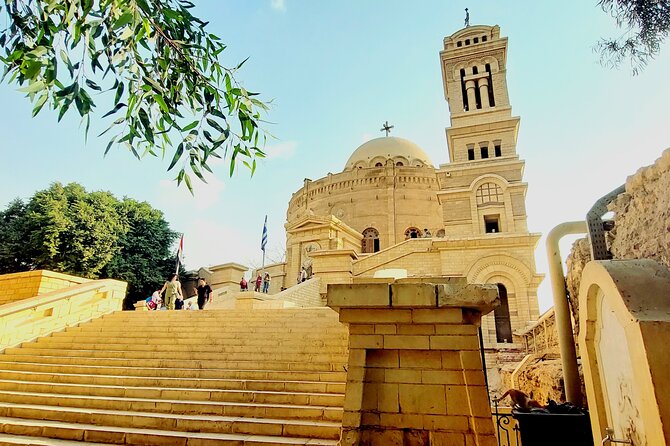
The Coptic Orthodox Church of St. George is tied to the Roman tower that adjoins the Coptic museum area, in the convent of Saint George of the Greek Orthodox faith nearby. This is one of those stops where understanding the setup helps you manage expectations.
The monastery is said to have been founded in the late 7th century and early 8th century. Since the beginning of the 19th century, it has been the residence of the patriarchs of Alexandria and of the entire African continent. That detail explains why it’s not operating like a free-for-all sight.
And here’s the access note that affects your planning: it is stated as not open to the public. Your visit is therefore more about learning what the site is and what it represents than about long interior wandering. The time you’re typically allocated for this portion is short—about 20 minutes.
Even with limited access, you can still get something valuable: you’ll see how different Christian traditions and institutions cluster geographically, sharing architecture, boundaries, and historic space in close quarters.
Practical tip: This is a stop to treat as informational. Don’t count on spending extra time inside.
Stop 5: Saint George Cemetery and its unusual tomb shapes
From the tower and monastery complex, you move to the Saint George Cemetery. This is a very different kind of visual experience: it can feel like you’re looking at a painting rather than a cemetery.
The tombs are described with distinct shapes—rectangles that sometimes look three-dimensional, and tombs surmounted by statues of angels. There are also photographs of the bodies inside the tomb structures. That’s emotionally heavy, so it helps to be mentally ready for a direct encounter with remembrance and how communities choose to mark it.
Architecturally, the cemetery is explained as reflecting Greek heritage and the Hellenistic civilization style. The tombs built in St. George’s Monastery are described as belonging to Greek tomb traditions in ancient Egypt, connected to influential figures in Egyptian and Greek society.
Yes, that’s a sad framing—but the practical point for you is: you’ll likely take more time looking at form, materials, and layout than at simple names on markers.
Practical tip: This is short (about 15 minutes), but plan to look slowly anyway. Your guide can point out what you’re seeing and why it’s arranged this way.
The flow, timing, and what it means for your energy
The whole tour runs about 6–7 hours. That’s long enough to feel like a full day, but structured so you don’t lose the thread. The route moves from major Coptic architecture into the Mokattam area, ending with the St. George Cemetery.
Each stop has a typical time window:
- Hanging Church: about 1 hour
- St. Sergius and Bacchus: about 1 hour
- St Simon the Tanner Monastery: about 2 hours
- St. George area: about 20 minutes
- St. George Cemetery: about 15 minutes
That mix is intentional. You get two longer Coptic Cairo anchors, then a mountain-area stop with room to absorb the environment, then shorter learning stops that are still meaningful.
A small but important value detail: many of these are marked as admission ticket free. That means a chunk of what you’re paying for goes toward guide expertise, transport, and lunch—rather than ticket line items.
Price and value: is $74 a fair deal?
At $74 per person, this tour is positioned as good value, especially because it includes:
- Private transportation
- Lunch
- All fees and taxes
- An Egyptologist guide
It also benefits from practical extras like pickup offered, group discounts, and a mobile ticket. And it’s booked on average about 15 days in advance, which hints that people treat this as a planned-day add-on, not a last-minute gamble.
Where the value really shows is in the guide and the logistics. In Cairo, the Coptic sites can be tricky to interpret on your own, and transportation can eat time if you’re not syncing schedules. Here, the tour is built to make the day run as one connected story.
When you compare to higher-priced versions of “church hopping,” the big difference is the focus: this day is meant to be understood, not merely collected.
Who this tour suits best
This is a strong match if you like:
- Religious architecture and how buildings change across centuries
- Clear guiding explanations tied to what you’re seeing in front of you
- A private pace that lets you ask questions without feeling rushed
It also fits travelers who want more than the usual Cairo highlights, especially if you’re interested in Coptic Christianity and the way Coptic sites sit inside the wider Roman and Greek-heritage layers of Egypt.
If you have mobility concerns, note that the Hanging Church involves a set of steps, and the Mokattam mountain area may involve uneven terrain. The tour notes that most travelers can participate, and there’s evidence the guide can be patient and helpful with guests who need extra support.
Guide experience: why Ingy/Enjy makes a difference
The name that shows up in feedback is Ingy (also written as Enjy). The consistent theme is not just friendliness, but being patient and extremely helpful, including support for a guest with a handicap during the day.
For you, that matters because Coptic sites often come with small surprises—uneven paths, restricted access areas, and sacred spaces where you need to move respectfully. A guide who can keep the day flowing while staying considerate can turn a good itinerary into a truly smooth experience.
Quick prep tips so your day goes smoother
You’ll be happier if you go in ready for a mix of walking, stairs, and varying access rules. Here are practical things that match what the day requires:
- Wear walking shoes for steps at the Hanging Church and any uneven terrain near Mokattam.
- Expect changing conditions in crypt areas since the St. Sergius and Bacchus crypt can flood when Nile levels are high.
- Plan your questions in advance if you care about why churches were rebuilt or how the crypt fits into the story.
- Bring water and keep a light layer for transitions between outdoor and indoor spaces.
Because lunch is included, you don’t have to hunt for a meal mid-day. Just note that dinner, breakfast, coffee/tea, and alcohol aren’t part of the package.
Should you book the Coptic Quarter and Mokattam churches day?
I’d book this tour if you want a single-day plan that actually explains what you’re seeing. The best reason is the structure: it follows the story across major Coptic sites and then adds Mokattam and the St. George complex so your day feels complete.
I’d think twice if:
- you strongly dislike stairs or uneven terrain,
- you expect long open-access time inside every church, since the St. George church area is noted as not open to the public,
- or you want only the most famous sites with maximum free-roaming time.
If your goal is understanding, and you’re happy to let an Egyptologist guide you through the key spaces, this is a thoughtful way to spend a half day in Cairo’s Coptic heart—plus the unforgettable angle of Mokattam.
FAQ
How long does the tour last?
The experience runs about 6 to 7 hours.
What is the tour price per person?
The price is listed as $74.00 per person.
Is pickup included?
Pickup is offered, and the tour includes private transportation.
What does the tour include?
It includes private transportation, all fees and taxes, lunch, and an Egyptologist guide.
What is not included in the price?
Breakfast, dinner, coffee and/or tea, alcoholic beverages, and brunch are not included.
Are mobile tickets used?
Yes, the tour includes a mobile ticket.
Is this tour private?
Yes. It’s private, meaning only your group participates.
What hours is the tour available?
It runs daily within the posted hours of 8:30 AM to 4:00 PM.
Can I get a full refund if I cancel?
Free cancellation is allowed, with full refunds if you cancel up to 24 hours in advance.