REVIEW · CAIRO
Cave Church in Garbage City and Coptic Cairo.
Book on Viator →Operated by Twitter Egypt Travel · Bookable on Viator
Cairo can feel endless. This two-day Coptic Cairo-and-Garbage-City route cuts through the noise with real stops. I like the church focus (St. Sergius, the Hanging Church, and Ben Ezra) and how the final visit goes off the standard map into Zabbaleen’s Saint Simon cave monastery. The pace is also practical: hotel pickup, an air-conditioned vehicle, and a guide to connect the dots between what you see and what it meant.
One thing to consider: the plan is not built for casual wandering. You’ll want moderate physical fitness, and one key stop involves stairs (29 steps to reach the Hanging Church). Lunch is also not included, so you’ll need to plan for a meal on your own.
In This Review
- Key things you’ll remember
- Why this Coptic Cairo route feels different
- Price and what you really get for $43
- Morning logistics: pickup, private pace, and the 8:30 start
- Stop 1: Church of St. Sergius and Bacchus and the crypt story
- Stop 2: The Hanging Church, 29 steps, and the Roman gatehouse frame
- Stop 3: Ben Ezra Synagogue for a different layer of Old Cairo
- Stop 4: Saint Simon the Tanner cave monastery in Zabbaleen
- What the guides add (and why names matter)
- Pacing, physical comfort, and what to pack
- Lunch not included: how to handle food without derailing the day
- The value check: who this tour is for
- Should you book this Coptic Cairo + Garbage City church day?
- FAQ
- What does the tour include?
- Where does the tour take place?
- How long is the tour?
- Are entrance tickets included?
- Is lunch included?
- Is it a private tour?
- What time does the tour start?
- Is there a cancellation option if plans change?
- Do I need good physical fitness?
Key things you’ll remember
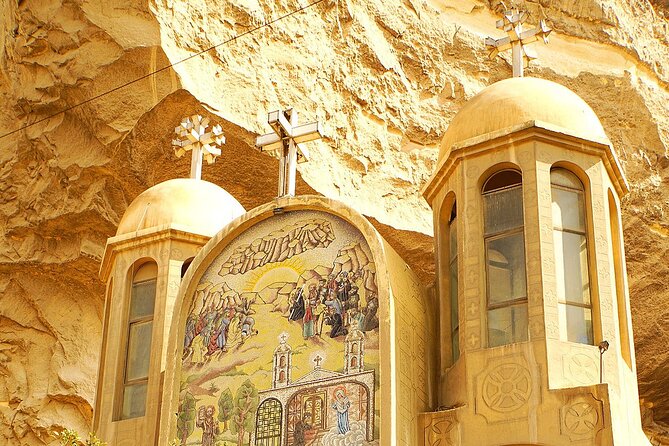
- Garbage City, explained in context: you’re not just looking at a place, you’re learning how the Zabbaleen community kept Coptic Christian faith alive
- A flooded crypt that changes with the Nile: the St. Sergius and Bacchus underground space can be affected when Nile levels rise
- The Hanging Church’s 29-step approach: a literal staircase church, tied to the Babylon Fortress gatehouse
- Old Cairo layers in one day: the Ben Ezra Synagogue adds a Jewish historical layer to the Coptic setting
- Private tour flexibility: you’re not stuck in a rigid group rhythm
- Free admissions at each main stop: ticket costs are minimal once you’re on the tour
Why this Coptic Cairo route feels different
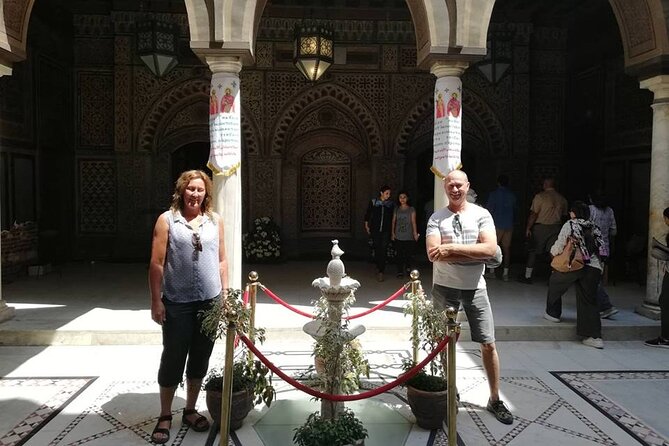
Most Cairo church days focus on a neat cluster of famous sites. This one does something smarter: it links major Coptic landmarks with two other deep-history stops, then finishes in the most unexpected place in your itinerary—Garbage City (Zabbaleen) and the Monastery of Saint Simon in a cave.
I love tours like this because you get contrasts that actually make sense. You’ll move from church architecture and underground sacred space to a fortified Roman backdrop, then out into a working community that still shapes religious life. It’s not just sightseeing. It’s Cairo’s layers, side by side.
The other big win is the guide-led connection. One-on-one style attention means you can ask the small questions that turn a church from a building into a story—like why a crypt might be flooded, or why a church got the name Hanging Church.
You can also read our reviews of more city tours in Cairo

Price and what you really get for $43
At $43 per person, this isn’t trying to be a budget bargain or a luxury splurge. It’s priced like a focused, high-value morning/afternoon plan: hotel pickup and drop-off, an air-conditioned vehicle, and a qualified Egyptologist guide.
You also get something that matters more than it sounds on paper: private transportation. In Cairo, that reduces hassle. You’re not negotiating your way through traffic or guessing where to stand. And since admission is free at the main stops listed, you’re not hit with lots of extra fees once you’re there.
The lack of lunch is the one “watch this” item. You’ll save money if you plan ahead, but you won’t have food provided as part of the experience.
Morning logistics: pickup, private pace, and the 8:30 start
The start time is 8:30 am, and the tour includes round-trip hotel transportation on both days. That matters if your hotel is outside the core tourist areas—or if you want to avoid spending your prime daylight hours arranging rides.
Because this is a private tour, you’re not forced into someone else’s schedule. If you want an extra few minutes at a particular point for photos or to hear one more detail, it’s easier to adjust. The time windows for the stops are built-in, so you’ll still cover everything, but with less pressure.
Also, keep the “private” part realistic. You’re still moving through busy areas. Your guide keeps the flow smooth, but you should stay alert for crowds, especially around well-known churches.
Stop 1: Church of St. Sergius and Bacchus and the crypt story
This is where you start with a church that’s famous for more than its surface. The Church of St. Sergius and Bacchus is dedicated to Sergius and Bacchus, soldier-saints martyred in the 4th century in Syria. That alone gives you a historical anchor right at the beginning.
But the star is the crypt. It’s described as being 10 meters deep, and it’s connected to the tradition that Mary, Joseph, and the infant Jesus rested there. Whether you view this as sacred tradition or historical layering, the physical reality of “a deep underground space” changes how you experience the church. You’re not just looking down a hallway. You’re looking at a place shaped for refuge and ritual.
One practical detail you might want to keep in mind: when Nile levels are high, the crypt can be flooded. That means your visit is partly shaped by the river’s seasonal behavior. You’ll likely see the staff and guide treat it with care, but it’s good to know the space can feel different at different times of year.
Time on site: around 30 minutes, with entry marked as free.
What you’ll get out of this stop: a church that uses space—surface and underground—as part of its spiritual messaging.
Stop 2: The Hanging Church, 29 steps, and the Roman gatehouse frame
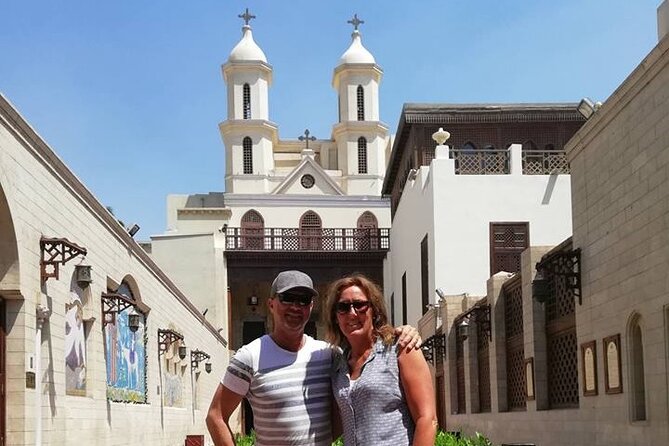
Then you’ll head to one of Cairo’s most dramatic church names: the Hanging Church. It’s called that for a simple reason tied to location. The church sits above a gatehouse of the Babylon Fortress—a Roman fortress in Coptic Cairo. The nave is suspended over a passage, which is why the church feels elevated even before you start climbing.
The approach is part of the effect. You go up 29 steps. Early travelers even called it the Staircase Church. If you’re the type who notices how architecture guides emotion, this stop works well because the building literally forces you upward.
There’s also a “timelines meet in your face” detail. Since Roman times, the land surface has risen by about six meters. That means the surrounding visual impact of the Roman tower is reduced, because so much is buried now. The church still impresses, but you also start to see how Cairo’s geography changes what you’re able to perceive.
Time on site: around 30 minutes, free admission.
A balanced way to experience this: don’t rush the climb. If you’re comfortable with steps, take it slow and let the elevated situation sink in. It’s not just stairs. It’s the church’s identity.

Stop 3: Ben Ezra Synagogue for a different layer of Old Cairo
Next up is the Ben Ezra Synagogue, located in the Fustat area of Old Cairo. It’s a different religious tradition than the churches, and that’s exactly why it works on this tour. Cairo’s sacred geography doesn’t stay in one lane; it overlaps.
You’ll also hear it connected to other names. It’s sometimes referred to as the El-Geniza Synagogue or the Synagogue of the Levantines. Local folklore links the site to the story of baby Moses being found there. Whether you treat that as tradition, local memory, or spiritual narrative, it adds a personal, story-based layer to the building.
One thing I appreciate about including this stop: it prevents the day from becoming a one-note lecture. You’re seeing Coptic history, but you’re also seeing that Old Cairo held multiple communities and traditions in the same larger urban story.
Time on site: about 20 minutes, free entry.
This is the “short but meaningful” stop. You won’t spend hours here, but you’ll leave with an expanded sense of the neighborhood’s historical stack.
Stop 4: Saint Simon the Tanner cave monastery in Zabbaleen
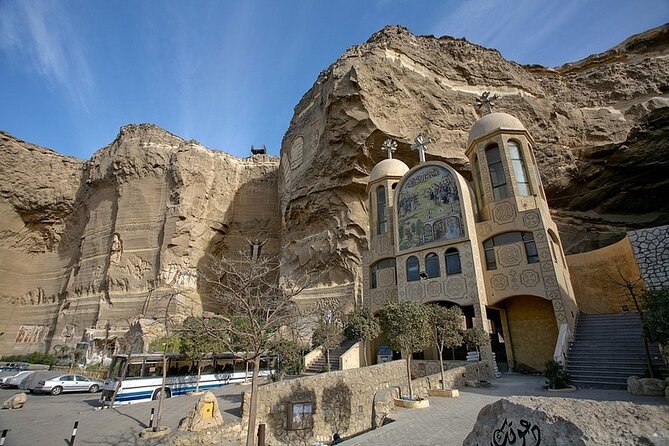
Now we arrive at the most emotionally striking part for many people: the Monastery of Saint Simon the Tanner, located in the Zabbaleen area and described as being inside a cave.
Zabbaleen gets its name from the community of garbage collectors who live there. The key point isn’t shock value. It’s continuity. Despite being in a mostly Muslim-dominated country, large Christian communities are not the norm—and yet the Zabbaleen community retained their Coptic beliefs and established a major Christian church presence here.
The tour frames this monastery as the largest Christian church in the Middle East, created and sustained within this community context. That statement is dramatic, but the underlying idea is grounded: this isn’t a heritage stop separated from life. It’s tied to living people and daily realities.
A cave monastery has its own atmosphere. Whether the air feels cooler, whether the space is more enclosed, or whether you simply feel a change from the street to the sacred room, caves tend to shift your mindset quickly. You’ll likely feel that transition as soon as you’re inside.
Time on site: about 1 hour 30 minutes, free entry.
Practical tip (the respectful kind): dress and behave like you’re entering a place of worship, not a museum. Ask your guide how to handle photography if you’re unsure, and keep your voice calm. The whole Zabbaleen setting asks for that baseline respect.
What the guides add (and why names matter)
This type of tour lives or dies by the guide. The best parts of these church visits are the “connections”: how one site answers a question the other one raises.
In the experiences shared with this operator, several guide names come up—Hoda, Dina, Gina, Michael, Ayah, and Mima—and the common thread is clear: they explain history and place meaning to what you’re looking at. Drivers were also praised for safe, steady handling in Cairo traffic, including names like Kiro and Mario.
You might also notice a pattern in how guides start off. One itinerary experience describes a short, early orientation over coffee before heading into the sites. Even if your day doesn’t include that exact rhythm, the goal is the same: get your bearings fast, then the buildings start making sense.
My advice: if you’re the curious type, bring questions. Ask about the crypt flood detail at St. Sergius, or why the Hanging Church’s name sticks so well. A good guide doesn’t just recite facts. They help you read the room.
Pacing, physical comfort, and what to pack
The tour runs for about four hours (per day plan style), and it includes multiple stops with time built in. You’ll have enough time to see each place, but not so much that you feel lost.
The biggest physical note is simple: moderate fitness is recommended. That’s because you’ll face steps at the Hanging Church (29 of them). If you’re okay with short climbs and uneven conditions, you’re in good shape. If not, tell your guide at the start. A private format is often easier for adjustments.
What to bring is not complicated. Wear comfortable shoes with grip. Cairo surfaces can be slippery or uneven around older sites. Bring something for heat if you travel in warmer months, and keep water on you since lunch isn’t included.
Also, since this is a mobile ticket tour, make sure your phone battery is healthy and you can access the ticket view when needed.
Lunch not included: how to handle food without derailing the day
Lunch is not included, which means you need a plan for when hunger hits. The good news is that the schedule is short enough that you can usually handle it with a snack and a late lunch after.
If you hate guessing, ask your guide during pickup where the closest reliable option might be. Since you’re on a private tour, you can tailor timing better than if you were on a group bus.
If you’re sensitive to local food or spice, bring something simple for the middle of the day. It’s easier than trying to solve lunch logistics while everyone’s already moving.
The value check: who this tour is for
This experience is a great fit if you:
- Love churches, Coptic Christian sites, and the way religious history shows up in architecture
- Want at least one stop that most tourists skip (Garbage City and the cave monastery)
- Prefer private, guided touring so you can ask questions and move at a comfortable pace
It’s less ideal if you:
- Want a purely famous landmark “greatest hits” day
- Strongly prefer a no-steps itinerary (the Hanging Church includes 29 steps)
- Need lunch to be included and fully planned by the operator
Should you book this Coptic Cairo + Garbage City church day?
Yes, with clear expectations. If you’re interested in Coptic history and you want Cairo in a form that feels more human and less staged, this is the kind of tour that delivers. The combination is the selling point: St. Sergius and Bacchus for underground sacred tradition, the Hanging Church for dramatic elevated design, Ben Ezra for Old Cairo’s layered religious identity, and Saint Simon the Tanner in Zabbaleen for a cave monastery tied to living community faith.
If you’re worried about comfort, focus on the one known physical challenge: the stairs. If that’s workable for you, you’re likely to love this trip. And if you hate surprises, just remember lunch isn’t provided, so plan your meal timing.
FAQ
What does the tour include?
Hotel pickup and drop-off, a qualified Egyptologist guide, an air-conditioned vehicle, and private transportation.
Where does the tour take place?
In Cairo, including Coptic Cairo and Old Cairo/Fustat, plus a visit connected to Garbage City (Zabbaleen).
How long is the tour?
It’s listed as approximately 4 hours.
Are entrance tickets included?
Admission is listed as free for the main stops included on the schedule.
Is lunch included?
No. Lunch is not included.
Is it a private tour?
Yes. It’s private, so only your group participates.
What time does the tour start?
The start time is 8:30 am.
Is there a cancellation option if plans change?
Yes. Free cancellation is available up to 24 hours in advance for a full refund.
Do I need good physical fitness?
Moderate physical fitness is recommended, mainly because of steps at at least one stop.