REVIEW · CAIRO
Private tour: GIza Pyramids, Memphis City & Sakkara Pyramid
Book on Viator →Operated by EMO TOURS EGYPT · Bookable on Viator
Pyramids, tombs, and a royal city in one day. What makes this tour work is the private setup plus hotel pickup that keeps you from wasting hours figuring out transport. I also like that the route links Giza to Saqqara to Memphis, so you’re not just staring at monuments—you’re seeing how the story of ancient Egypt moves across sites. The one drawback to watch: entry fees and the guide are upgrades, and shopping-style stops can nudge you toward extras you may not want.
This is a long day (about 8 hours 30 minutes), starting at 8:00am, with a car-and-driver option and optional add-ons. Many people get the smooth version of this day when they choose the right upgrade level and ask how time is spent—because at the pyramids, timing is everything and guides really shape your experience.
In This Review
- Key things I’d zero in on
- How the private setup keeps your day from slipping
- Giza Plateau and Valley Temple: start with the “why” before the “wow”
- Khufu’s Great Pyramid: where tickets decide how much you do
- Menkaure and Khafre’s pyramid complexes: the details hide in plain sight
- Saqqara (Sakkara): the Step Pyramid changes how you see the pyramids
- Memphis: putting the pyramids into a bigger picture
- The planned shopping stops: how to handle them without losing your day
- Lunch and the “what’s included” reality check
- Price and value: what that low headline price really means
- Logistics that matter: timing, traffic, and comfort
- What to ask before you go (so the day stays smooth)
- Should you book this private Giza–Saqqara–Memphis day?
- FAQ
- What sites are included in this private tour?
- How long is the tour?
- What time does the tour start?
- Does the tour include hotel pickup and drop-off?
- Is this a private tour?
- What’s included in the price?
- What is not included?
- Are there optional upgrades?
- Does the itinerary include shopping stops?
- Can I cancel for a full refund?
Key things I’d zero in on
- A full sweep of Giza Plateau, Saqqara, and Memphis in one go, with hotel transfers built in
- Two-way pickup and drop-off so you don’t burn your day on logistics
- Upgrade choices that change the feel of the tour (guide, entry fees, and lunch)
- Plenty of time per stop (often around 20–30 minutes at many points, longer at Saqqara)
- Government-related shopping stops are part of the rhythm (perfumes, papyrus, cotton, and carpets)
- Guide quality varies, and you’ll feel that most at the pyramids and ticketed areas
How the private setup keeps your day from slipping
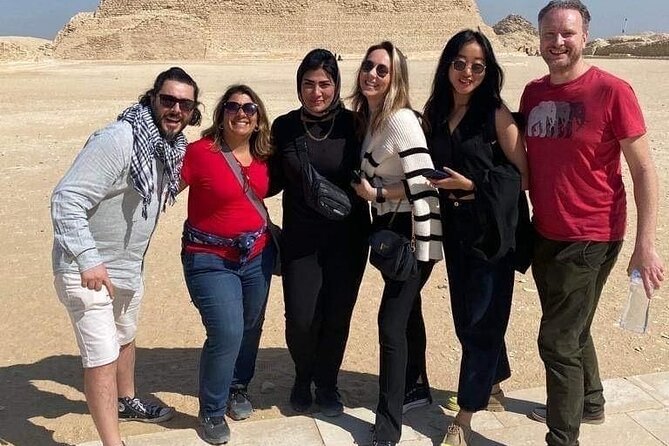
This is built as a private tour, meaning it’s just your group in the car. That matters in Cairo because traffic and wandering crowds can turn a “quick stop” into a slow chore. You start with hotel pickup (Cairo or Giza) and end with drop-off back at your hotel, which lets you focus on the sites instead of backtracking for transit.
The timing is a big deal. The tour begins at 8:00am, and the itinerary later stacks multiple major points: all three major pyramids at Giza, then Saqqara, then Memphis. You’ll be moving, but it’s the kind of moving that can be worth it if you’re aiming to see the highlights without returning to Cairo’s suburbs another day.
There’s also a modular feel to it. You can book car and driver only, or upgrade to add a private guide, entry fees, and lunch. That flexibility is great—if you’re the kind of traveler who wants control. If you’d rather have someone interpret the sites for you, upgrade for the guide and confirm what entrance tickets cover.
You can also read our reviews of more city tours in Cairo

Giza Plateau and Valley Temple: start with the “why” before the “wow”
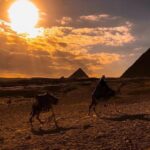
Giza is the main event, and this tour doesn’t jump straight to the biggest pyramid shot. It begins on the Giza Plateau and includes the Valley Temple and a close-up look at the Sphinx.
The Valley Temple stop is more than a photo break. It’s the place where the day’s story starts making sense—this was part of the ritual landscape around the pyramids, not just a single monument sitting alone. And if you’re curious about how the kings were honored, this stop sets the tone for everything you see later.
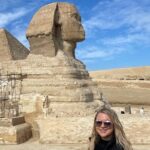
Then you’re at the Sphinx. The iconic shape—lion body with a pharaoh’s head—anchors the whole Giza complex. In this tour flow, it’s framed as a guardian by the funeral complex of King Chephren. You also get enough time to get closer views and not feel like you’re sprinting through.
Practical note: the itinerary shows an admission ticket free element early in the day for the plateau portion. That’s useful because it reduces one more uncertainty early on. Still, plan for additional ticketed sections later (more on that next).
Khufu’s Great Pyramid: where tickets decide how much you do
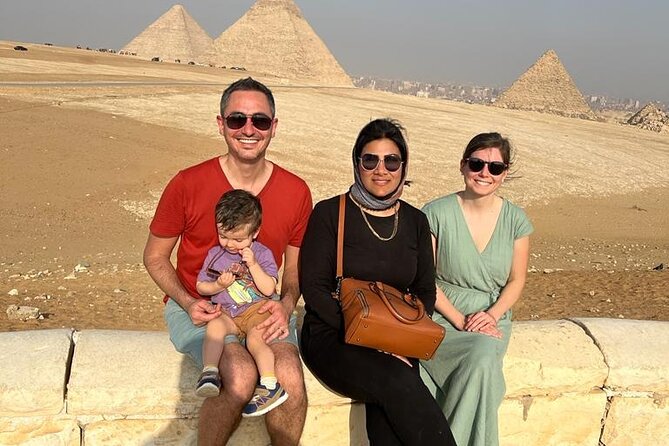
After the plateau introduction, you move to Great Pyramid of Cheops (Khufu). Here’s the key point: the pyramid complex’s “basic viewing area” isn’t the same thing as full access.
This stop is listed with admission not included, and the complex details include the valley temple and the fact that parts were buried beneath the village of Nazlet el-Samman—meaning there’s a lot of layers to what you’re seeing even when you can’t access everything. So if you want more than just the exterior, upgrade your entrance plan early and don’t assume the “basic area only” ticket covers what you care about most.
Time is listed as about 1 hour, which is workable if you have clear goals:
- If you mainly want exterior angles and context, you’ll be fine.
- If you want interior access (if your ticket option allows), you’ll want the guide to help you use the time efficiently and not miss the best moments.
Menkaure and Khafre’s pyramid complexes: the details hide in plain sight
The itinerary then cycles through the pyramid complexes of Menkaure and Khafre. The pattern is similar at both: valley temple ruins/contexts, causeway elements, mortuary temples, and the king’s pyramid.
Menkaure’s stop is shorter (about 30 minutes). Khafre’s is also around 30 minutes, followed by another Sphinx stop point (about 30 minutes) in the schedule.
Why do this back-to-back instead of lingering? Because the day is designed to let you compare. When you see these complexes in a single stretch, you start noticing how each king’s funerary program has its own rhythm. That’s hard to do when you only visit one pyramid and then leave.
The other advantage: if your guide is strong, these fast stops still feel “connected.” Some guide combinations in the past have been especially good at organizing time so you get the story plus the photos. Names like Hazem and Ahmed Brakat have shown up in feedback for doing exactly that—especially when they guide you through security smoothly and keep explanations understandable.
Saqqara (Sakkara): the Step Pyramid changes how you see the pyramids
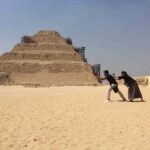
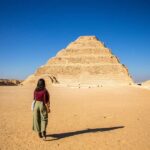
Once Giza is behind you, the tour heads to Saqqara, only about 27 km southwest of Cairo. This is where the itinerary stretches out: you get about 2 hours to visit the Step Pyramid built for King Zoser.
Saqqara is the bridge between early tomb architecture and the later pyramid style you’re used to picturing. The Step Pyramid is treated in the tour as a key part of the evolution—from simple mastabas to the more familiar pyramid form. That’s the kind of framing that helps the whole day click.
Two hours is enough if you take a few smart breaks:
- Walk slowly for key angles and scale.
- Don’t try to photograph everything at once.
- If you upgraded for a guide, ask for the “one idea” you should remember from this stop, then build from there.
This is also a place where shopping stops sometimes get less tempting because you’re mentally in the site, not hunting for souvenirs. Still, be ready: the tour includes planned stops tied to papyrus, perfume, cotton, and carpets.
You can also read our reviews of more private tours in Cairo




Memphis: putting the pyramids into a bigger picture
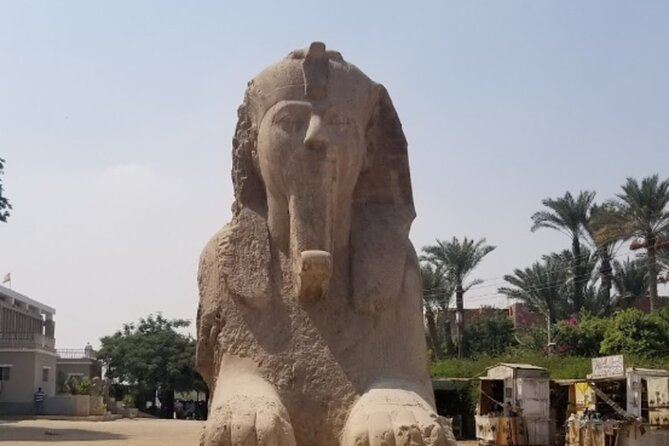
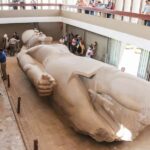
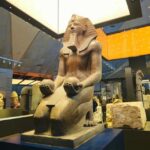
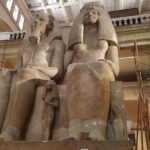
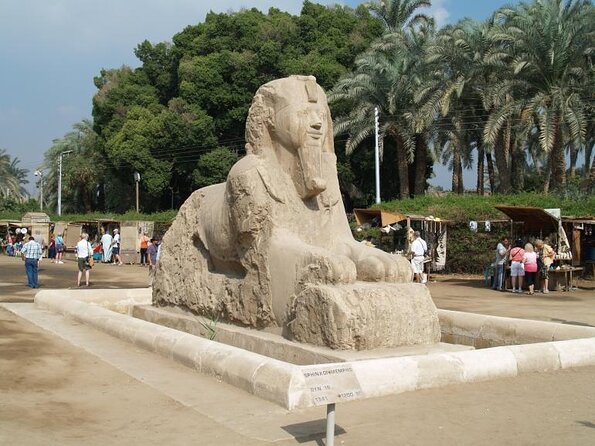
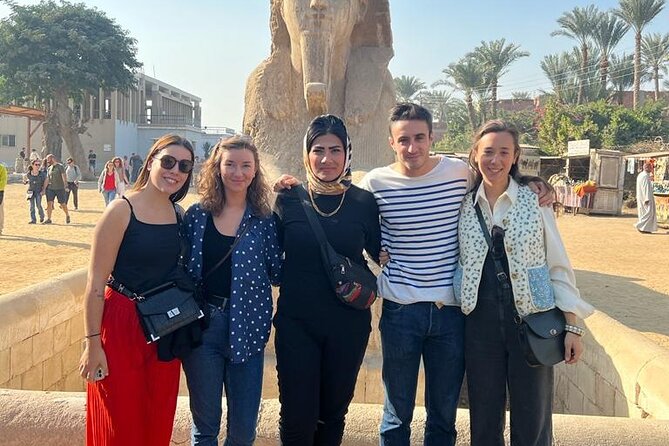
After Saqqara, the tour heads to Memphis, described as the ancient capital dating back to 3100 B.C. This stop includes the colossal statue of Ramses II and the Alabaster Sphinx.
Memphis is only listed as about 1 hour, so you won’t “see the whole city.” Instead, you’re getting anchor points—major symbols that help you picture what the pyramids fit into. It’s an important shift from pure pyramid-tour mode to a wider understanding of Egypt as a lived place, not just a museum of stone.
There’s a bonus factor here: if your guide is good at making the timeline feel human, Memphis turns into the “okay, so what happened next?” stop.
The planned shopping stops: how to handle them without losing your day
The itinerary includes scheduled stops tied to Egyptian goods and traditional crafts, including:
- Paradise Perfumes Palace and Key of Life Papyrus
- Flower cotton store
- Memphis Handmade Carpets
Each of these is described as taking about 20-minute stops, with demonstrations and viewing—like natural oils and soft Egyptian cotton, papyrus making, and hand-weaving rugs at a local school.
These stops can be either fun or annoying, depending on what you want. The practical approach is simple:
- Treat them as breaks, not the main event.
- If you’re not interested, say so early and move on.
- If you do go, buy small and specific. The goal isn’t to stock your suitcase; it’s to leave with one real craft memory.
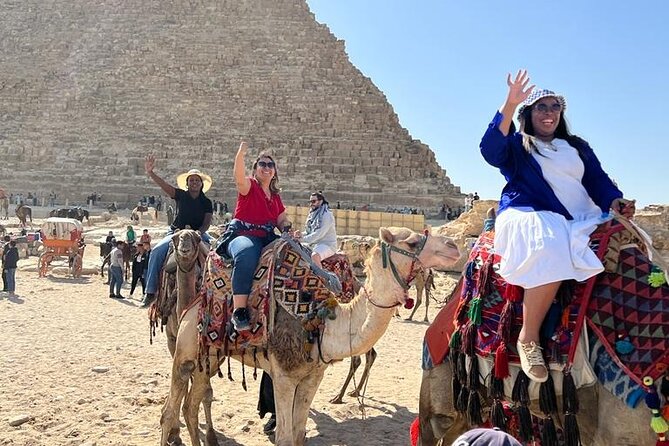
There’s also evidence that some versions of this tour add other upsells. Camel rides are one example that has been suggested during the day in some cases, along with pressure toward the perfume shop. The good news: at least in the experience you’re reading about here, these extra stops and purchases are described as optional in practice—so you can decline if they don’t match your priorities.
Lunch and the “what’s included” reality check
Lunch is listed as optional, with a note that koshari at local restaurants may be part of an upgrade. In other words: you should assume you might not have a full meal included unless you chose the lunch option during booking.
Because this tour is long and includes multiple short stops, lunch can become another decision point. If you tend to eat light and move fast, you can treat lunch as a flexible timing problem. If you get hungry quickly, upgrade for the lunch option so you’re not hunting during a busy part of the day.
Also keep an eye out for surprises. In one past experience, a visitor reported a surprise bill at lunch even though lunch was expected to be included. That’s not something you want to manage at the end of a long day. My advice: confirm what lunch is in your selected option before you sit down.
Price and value: what that low headline price really means
The published price is shown as $8.00 per person, but the tour is modular and entry fees are specifically not always included. The itinerary shows some areas as admission free early on, then other stops as not included. That pattern usually means your final cost depends on your upgrades.
So here’s how to judge value:
- If you’re paying for car/driver only, the value is convenience and time saved.
- If you upgrade for a private guide, you’re paying for interpretation, pacing, and fewer wasted moments at huge sites.
- If you upgrade for entry fees, you’re paying to reduce frustration from ticket confusion.
- If you add lunch, you’re buying a bit more predictability.
If you love history and want explanations tied to what you’re looking at, the guide upgrade is where you’re most likely to feel “money well spent.” If you’re a confident, independent museum-goer who just wants to see the monuments efficiently, you may be fine with car/driver only.
Logistics that matter: timing, traffic, and comfort
This is Egypt, so traffic happens. One past version of the day turned into a bit of problem-solving when time got tight; a short transfer by tuk-tuk helped keep things moving. That’s exactly the kind of flexibility you want in a driver.
You’ll also feel the difference if your driver is professional and calm. In multiple accounts, drivers like Kerim and Abdul were praised for safety and comfort, and car conditions were mentioned—things like clean vehicles and even air-conditioning working or not working.
Small but real tip: if you’re sensitive to heat or sitting in a van for hours, it’s worth checking the vehicle details in advance (or simply ask the operator to note AC). On a hot day, comfort is part of “quality of the tour,” not a luxury.
What to ask before you go (so the day stays smooth)
Because the itinerary mixes free areas with stops marked as not included, your best move is to confirm your ticket plan and how time is used. I’d ask these questions before booking:
- Which entrances are covered with my chosen option?
- Is the guide included, and will they handle tickets if needed?
- What exactly do the planned “government stops” include, and can I skip any of them?
- Is lunch fully included in my chosen upgrade?
Also consider the guide factor. One report flagged an inexperienced guide with weak explanations and limited interest, while other reports praised guides like Heba, Hazem, and Mohammed for clear explanations and strong pacing. You can’t control who you get, but you can control your expectations: pick the option that matches how much you want a guide to do.
Should you book this private Giza–Saqqara–Memphis day?
Book it if you want:
- A single-day hit at Giza plus Saqqara plus Memphis.
- Hotel pickup and drop-off so you don’t wrestle with Cairo transport.
- A private-car experience that keeps walking efficient between sites.
- The option to upgrade for guide + entry fees + lunch, which can make the day feel more complete.
Skip it (or at least adjust your plan) if:
- You hate shopping-style stops and don’t want to spend time at perfume/papyrus/cotton/carpet locations.
- You only care about one or two sites and would rather slow down with a longer stay.
- You’re the type who needs full clarity on tickets and wants everything spelled out with zero uncertainty—because you’ll still need to verify what your ticket options cover.
If you choose to go, I’d upgrade for the guide if you can. The pyramids are impressive enough on their own, but the real payoff is when someone helps you connect what you’re seeing across Giza, Saqqara, and Memphis—and keeps the day moving at a human pace.
FAQ
What sites are included in this private tour?
This tour includes the Giza Pyramids area (including the Sphinx and the Great Pyramids complex points), Saqqara (including the Step Pyramid), and Memphis (including the Ramses II statue and the Alabaster Sphinx).
How long is the tour?
It runs for about 8 hours 30 minutes.
What time does the tour start?
Start time is 8:00am.
Does the tour include hotel pickup and drop-off?
Yes. Hotel pickup and drop-off are included, and the tour ends back at your meeting point/hotel.
Is this a private tour?
Yes. It’s listed as a private tour/activity, and only your group participates.
What’s included in the price?
Included items are hotel pickup and drop-off, a private tour, and bottled water.
What is not included?
Entry fees are listed as not included (unless you choose the upgrade option). Tipping is also not included. Lunch at local restaurants is optional.
Are there optional upgrades?
Yes. You can upgrade to add a private guide, entry fees, and lunch.
Does the itinerary include shopping stops?
Yes. The tour includes planned 20-minute stops connected to Paradise Perfumes Palace, Key of Life Papyrus, Flower cotton store, and Memphis Handmade Carpets.
Can I cancel for a full refund?
Yes. Free cancellation is available up to 24 hours in advance for a full refund. If you cancel less than 24 hours before the start time, the amount paid is not refunded.