REVIEW · CAIRO
Private Giza Pyramids,Sphinx,camel,lunch, 2 tombs,Great Pyramid
Book on Viator →Operated by Cairo tours & packages / Egypt tours · Bookable on Viator
The pyramids feel close, even at a distance. This private half-day tour brings you from Cairo to Giza with a private Egyptologist guide and Great Pyramid entry, plus camel time and tomb stops that make ancient Egypt feel real. The only real catch is the timing: 4 to 5 hours means you’ll want to stay in a steady rhythm.
I like how the day is paced for first-timers. You get a quick orientation about Cairo landmarks and the Nile on the drive in, then structured explanations at each monument, including time inside the Great Pyramid and decorated tomb spaces. Guides such as Sahl or Hend are repeatedly praised for taking the stress out of the site and making sure you understand what you’re seeing.
You’ll also enjoy that this is a private setup: only your group, in an air-conditioned car with hotel pick-up and drop-off. Add a local Egyptian lunch to the mix, and it’s a good way to see the big Giza hits without turning your half-day into a scramble.
In This Review
- Key things worth knowing before you go
- Why a private Giza morning beats rushing the desert
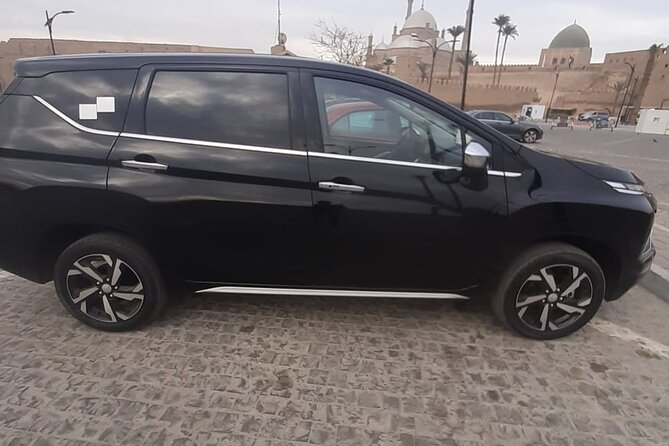
- Getting there from Cairo: pick-up, AC comfort, and quick context
- Pyramids of Giza: how the guide makes the plateau make sense
- Inside the tombs: decorated reliefs and the human side of Giza
- Great Pyramid of King Cheops: the included entrance that changes everything
- Camel ride and Sphinx viewpoints at the right pace
- Valley Temple of King Chephren: the site beyond the postcard
- Lunch and timing: making a half-day feel like a full visit
- Value for money: private guide, tickets, camel, lunch
- Who this tour suits best
- Should you book this private Giza tour?
- FAQ
- What is the duration of this tour?
- Is hotel pick-up and drop-off included?
- Is this a private tour?
- What sites are included besides the pyramids and Sphinx?
- Does the tour include tickets to enter the Great Pyramid?
- Is camel riding included?
- Is lunch included?
- What kind of ticket do I receive?
- What is the price per person?
- What is the cancellation policy?
- Is the tour suitable for most travelers?
Key things worth knowing before you go
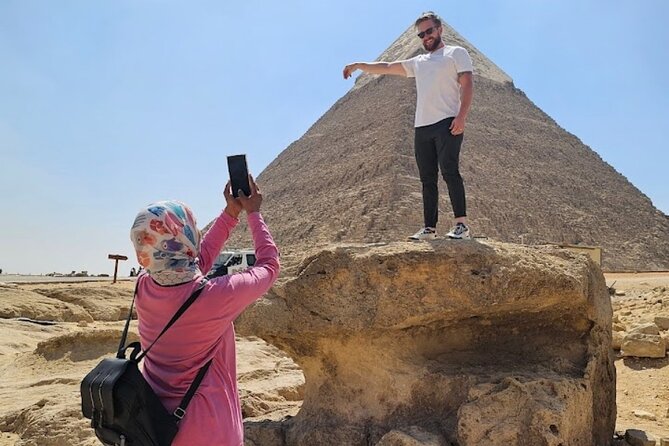
- Private Egyptologist guidance: clear storytelling at each stop, not just a quick point-and-look tour
- Great Pyramid of King Cheops entry: included, so you don’t have to figure out tickets on the fly
- Two tomb visits: including decorated reliefs that highlight both worker life and higher-status tomb art
- Camel ride included: a real Giza moment built into the itinerary
- Valley Temple of King Chephren + Sphinx viewpoints: you see the broader layout, not just the pyramids head-on
- Mobile ticket option: helps keep the on-site flow simpler
Why a private Giza morning beats rushing the desert
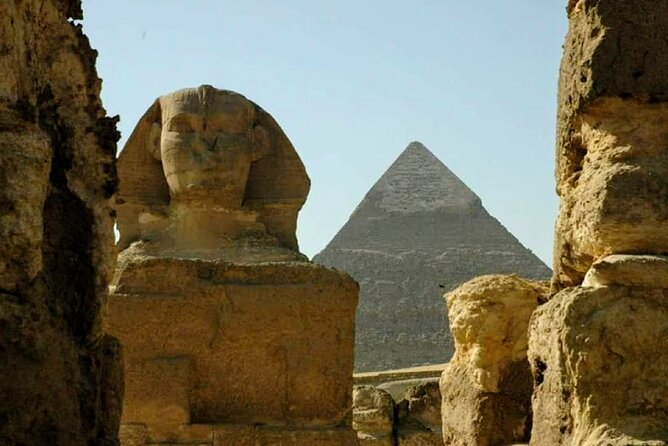
Giza is one of those places where you can easily burn half your day just figuring out what to do next. This tour is built to keep you moving with purpose. A private guide handles the narrative, the pacing, and the key transitions between monuments.
What makes it especially appealing is how the day is structured around understanding. You start with a big-picture timeline (from far back in prehistory through more recent eras), then you get the practical layer of how the pyramids and surrounding sites fit together. That approach matters at Giza, because the site is visually overwhelming until someone gives you a map for your eyes and questions.
And yes, the big-ticket moment is the Great Pyramid of King Cheops. Having that entrance included turns the pyramids from a photo stop into an actual visit.
You can also read our reviews of more private tours in Cairo

Getting there from Cairo: pick-up, AC comfort, and quick context
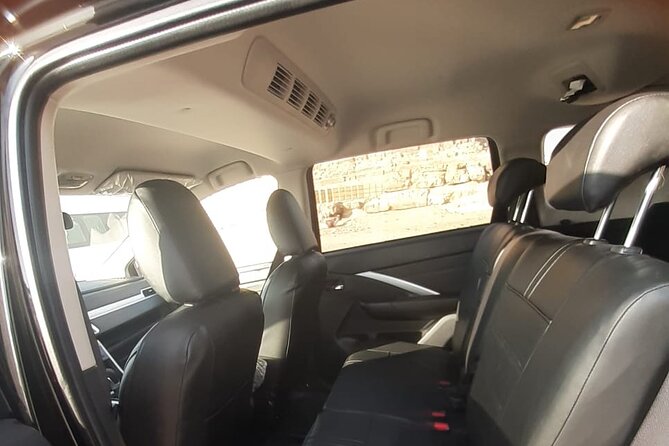
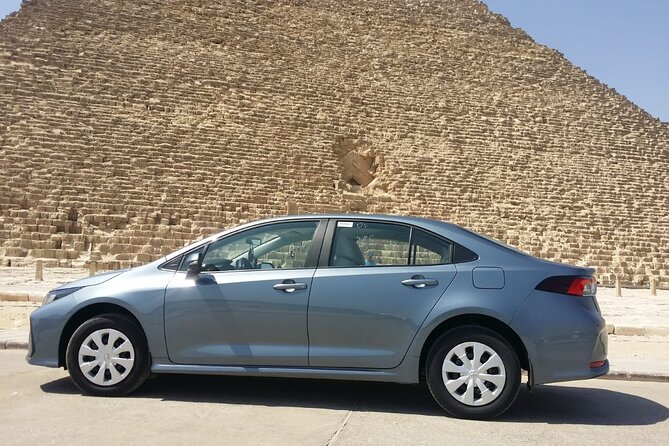
Your day starts with hotel pick-up in Cairo and transport by a private AC vehicle. That sounds basic, but in Cairo heat and traffic it’s the difference between feeling fresh versus fried before you even reach the plateau.
On the drive to Giza, your guide gives you a tour of Cairo in miniature: buildings, the Nile, museums, and other historical sights. It’s not random chatter. It helps you mentally place what you’re seeing later, because the pyramids aren’t floating in a vacuum—they’re part of a wider Egyptian story.
This is also where you can ask the questions that will shape your visit. Want the simple version first, or do you prefer the deeper archaeology-style context? A good guide will steer you accordingly.
If you get a guide like Sahl or Hend (names that come up often), you’ll likely notice a pattern: explanations that connect visuals to meaning, plus clear English delivery. One plus in the same spirit is the occasional mention that a guide who can speak Arabic helps keep the visit smoother and more controlled when you’re dealing with the site environment.
Pyramids of Giza: how the guide makes the plateau make sense

Once you reach the Giza area, your guide sets the stage with Egyptian history and then shifts into pyramid-focused storytelling. The point here is to give you a framework before you wander. You’ll hear how ancient Egyptians built the pyramids and why specific elements matter.
Then the visit becomes physical. You’ll be guided around the pyramids so you can orient yourself: where to stand for the best viewing angles, and what to notice as you move between monuments. This kind of guidance is huge at Giza because the scale is real—you can walk right past important details if you don’t know what you’re hunting for.
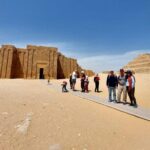
One of the standout parts of this tour is the tomb stop. You’ll go into one of the tombs (with the emphasis on decorated reliefs still in good condition), and the experience is designed to show you both artistic value and daily-life context. The tour’s focus is not just royal grandeur; it includes workers’ life through newly excavated tomb material, which is a meaningful contrast to the pyramids’ massive stone presence.
Inside the tombs: decorated reliefs and the human side of Giza
The tomb visit is where the tour often becomes more than sightseeing. Instead of treating Giza as a stone monument, you get a glimpse of what people carved into walls and why.
You’ll see painted or once-painted reliefs with pretty color that’s still remarkably preserved. Your guide talks through what you’re looking at, and the emphasis is on the story those scenes tell—especially worker-focused tomb content. That’s a valuable shift, because the pyramids can otherwise feel like a puzzle with no people attached.
There’s also the second tomb element on this itinerary. The overall structure aims to cover two tomb experiences, so you can compare styles and social perspective rather than just checking one box.
Practical note: going inside tomb spaces means you’ll likely want to keep your camera ready but not constantly out. Let the guide talk first, then take photos when you understand what you’re capturing.
Great Pyramid of King Cheops: the included entrance that changes everything
The Great Pyramid entry is included in the tour. That matters because the Great Pyramid isn’t just another viewpoint. It’s the moment where you feel how small a human body becomes compared to the architecture.
Your guide brings you inside the Great Pyramid of King Cheops after you’ve built context around how the pyramids were created. That sequencing is smart. If you enter without background, you might focus only on the interior details. With background, you’re more likely to connect design choices to real-world purpose and engineering.
Inside, pay attention to the feeling of space and the way ancient construction holds shape even after thousands of years. Also, your guide can help with what’s worth noting versus what’s mainly there for atmosphere.
This stop is often what first-time visitors remember most, simply because it’s the closest you’ll get to the monument from within, not just around its edges.
A few more Cairo tours and experiences worth a look



Camel ride and Sphinx viewpoints at the right pace
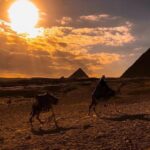
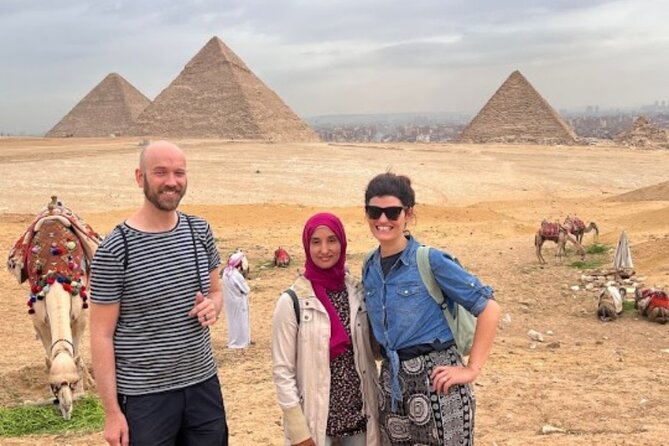
After the pyramid and tomb components, the tour includes a camel ride (included for 20). A camel ride can turn touristy fast if it’s treated like a ticket add-on. Here, it’s placed after you’ve already absorbed the history, so it feels like part of the Giza experience instead of a detour.
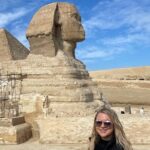
Then you shift toward the Sphinx area. The itinerary includes views from the foot of the Great Sphinx. That spot is a great reminder that the Sphinx isn’t a stand-alone statue—it’s part of the landscape composition, and the sight lines help you understand why ancient builders and later cultures kept returning to this exact viewpoint.
The guide’s explanations at this stage tend to make the Sphinx feel less mysterious and more connected to the broader Giza complex. You’ll understand what you’re seeing and how it fits into the whole layout.
Valley Temple of King Chephren: the site beyond the postcard
A lot of Giza days only touch the pyramids and then rush away. This tour takes you further to the Valley Temple of King Chephren.
This stop is valuable because it broadens your understanding of the complex. Temples and processional spaces explain how the site functioned in ancient times—how people moved, worshipped, and connected monuments with ritual space. Even if you’re not a deep-into-architecture person, the Valley Temple adds a layer of meaning you can feel in your feet as you explore.
It also balances the day visually. After climbing through viewpoints and interior pyramid space, having a temple component helps you see the Giza story in a more complete arc.
Lunch and timing: making a half-day feel like a full visit

The itinerary includes a local Egyptian meal for lunch. That’s one of those details that quietly improves the whole experience. You’re not trying to hunt down food near the site while deciding whether to keep walking in the sun.
Timing is also built for a half-day. The total duration is roughly 4 to 5 hours, which means you get the essentials without losing your entire day. The trade-off is that you won’t have a full slow stroll through every corner of Giza. If you’re the type who loves lingering for 30 extra minutes per viewpoint, plan to compromise a bit and let your guide keep the flow.
I’d treat this as a smart orientation day. Think of it as your foundation, not your final word on Giza.
Value for money: private guide, tickets, camel, lunch
The listed price is $5.00 per person. That number is striking, especially considering what’s described as included: private Egyptologist guide, transport in an AC vehicle, hotel pick-up and drop-off, tickets for the Giza area and the Great Pyramid, a camel ride, two tomb visits, Valley Temple, and lunch.
At that kind of price, the value isn’t just the money—it’s the structure. Having entrance included and a guide who can route you around the most important parts saves time and reduces the chance you waste hours figuring out logistics.
One practical step before you lock it in: confirm what your final booking total includes at checkout and that it matches the stated inclusions (especially the Great Pyramid ticket and the tomb stops). With Giza tours, what’s included can vary, and you want the full set, not just a highlights walk.
Also, keep expectations realistic. A private tour doesn’t mean everything is private in the sense of no crowds anywhere. It does mean you have control over pacing and interpretation once you’re there.
Who this tour suits best
This tour is ideal if you’re:
- First-time visitors to Cairo and Giza who want the main sites in one smooth half-day
- Travelers who like a clear story while walking—history and how the site fits together
- People who prefer private time and hotel pick-up/drop-off instead of public transportation stress
- Anyone who wants a balanced mix of pyramids, tombs, and the Valley Temple, not only the most famous angles
It may feel less ideal if you want to spend a lot of extra time lingering without movement. The itinerary is efficient by design, and the 4 to 5 hour window encourages a steady pace.
Should you book this private Giza tour?
I think you should book it if your top priority is a guided, ticketed Giza visit that includes the Great Pyramid, tomb experiences, and the Sphinx area—without forcing you to coordinate details yourself. The combination of private Egyptologist guiding, included entrances, camel ride, and lunch is a strong setup for getting real value out of a short day.
If you’re someone who wants to linger for hours at one monument, you might feel slightly time-crunched. But for most visitors, this tour is a solid, well-rounded first look at Giza—structured enough to keep you oriented, and flexible enough to enjoy the views along the way.
FAQ
What is the duration of this tour?
The tour lasts about 4 to 5 hours.
Is hotel pick-up and drop-off included?
Yes. The tour includes hotel pick-up and drop-off.
Is this a private tour?
Yes. It is private, and only your group participates.
What sites are included besides the pyramids and Sphinx?
You also visit the Valley Temple of King Chephren, plus tombs (two tombs are part of the experience).
Does the tour include tickets to enter the Great Pyramid?
Yes. Tickets for the Giza Pyramids area and the Great Pyramid are included.
Is camel riding included?
Yes. Camel riding is included (listed as 20).
Is lunch included?
Yes. Lunch is included as a local Egyptian meal.
What kind of ticket do I receive?
The tour includes a mobile ticket.
What is the price per person?
The listed price is $5.00 per person.
What is the cancellation policy?
You can cancel for free up to 24 hours in advance for a full refund.
Is the tour suitable for most travelers?
The information provided says most travelers can participate.