REVIEW · LUXOR
Luxor to Abu Simbel – Private Tour Nubian Monuments of Abu Simbel
Book on Viator →Operated by EgBride Travel · Bookable on Viator
Some mornings, Egypt feels unreal.
This private Luxor-to-Abu Simbel day trip sends you deep into Nubia to see UNESCO-listed temples carved for Ramses II, with an English-speaking guide and the kind of historical details that make the stone feel alive. You’ll start early, drive the long distance in an air-conditioned vehicle, and spend the day at Abu Simbel learning how the Great Temple was aligned with the sun.
I love the tight focus on the temples (not a rushed stop-and-go photo sprint) and the way the tour builds in comfort for a very long day: bottled water, lunch, and a private setup where your guide can actually pace things for you. The one real drawback is the time commitment—about 16 hours total—so it’s best if you can handle long car time without grumbling into your sunglasses.
In This Review
- Key things that make this tour worth your time
- Luxor to Abu Simbel: the one-day logistics you’re really buying
- First impressions at Abu Simbel: Ramses II takes center stage
- The sun alignment facts you’ll want to remember
- Nefertari’s temple: a different mood inside the complex
- Your guide and your pace: why private matters on a long drive
- A real-life example of service that can change how you feel
- Comfort on the road: air-conditioning, water, and what to pack
- Lunch included: practical fuel, but plan for beverages
- Admission, tickets, and what’s actually included
- Price and value: is $145 per person “fair” for Abu Simbel?
- Who this tour is best for (and who should skip it)
- Should you book? My take
- FAQ
- FAQ
- How long is the Luxor to Abu Simbel private tour?
- Is hotel pickup included?
- Is the vehicle air-conditioned?
- How much time do we spend at Abu Simbel?
- Is lunch included?
- Are admission tickets included?
- Do we get an English-speaking guide?
- Is the tour private?
- Is there Wi-Fi in the car?
- What’s the cancellation policy?
Key things that make this tour worth your time
- Early start + long drive managed for you: you’re not navigating this on your own
- Abu Simbel with an English-speaking Egyptologist (when that option is selected)
- Admission and fees included (when that option is selected), so you’re not hunting tickets on-site
- Lunch included, with bottled water provided
- Private guide attention so you can ask questions and slow down inside the temples
- Small-day-visit feel: you may get more breathing room at Abu Simbel when crowds are lighter
Luxor to Abu Simbel: the one-day logistics you’re really buying
This trip is sold as a private day tour, and what you’re truly paying for is the “how do we do this in one day without chaos?” part. Abu Simbel is far enough from Luxor that doing it independently can mean extra stress: coordinating drivers, figuring out timing, and trying to match entry windows. Here, pickup and round-trip transport are part of the deal, and the vehicle is air-conditioned—important because the drive can feel like it’s eating up your energy.
The duration is listed at about 16 hours. That’s long, and it’s the main consideration. If you hate being in a car all day, this will test your patience. But if you’re the type who values one big “wow” site more than a relaxed slow itinerary, the structure makes sense: early departure, a dedicated chunk of guided temple time, then lunch and the ride back so you’re not stuck sleeping away from Luxor.
Also, this is a private tour, meaning only your group goes with your guide. That usually helps a lot on a complex site like Abu Simbel, where good listening time matters more than checking off a list.
You can also read our reviews of more private tours in Luxor
First impressions at Abu Simbel: Ramses II takes center stage
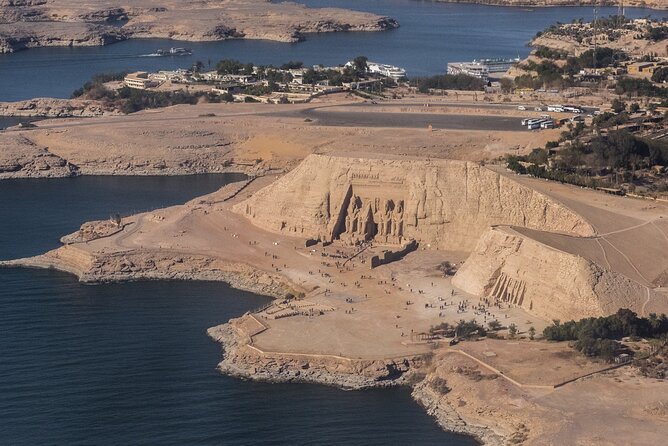
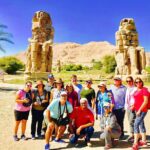
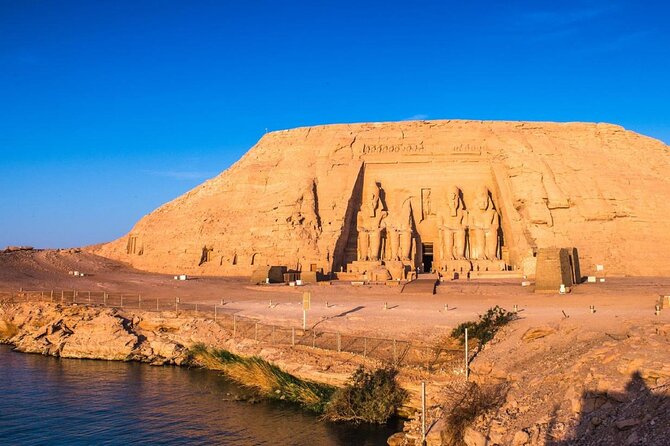
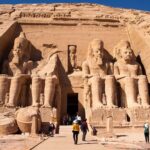
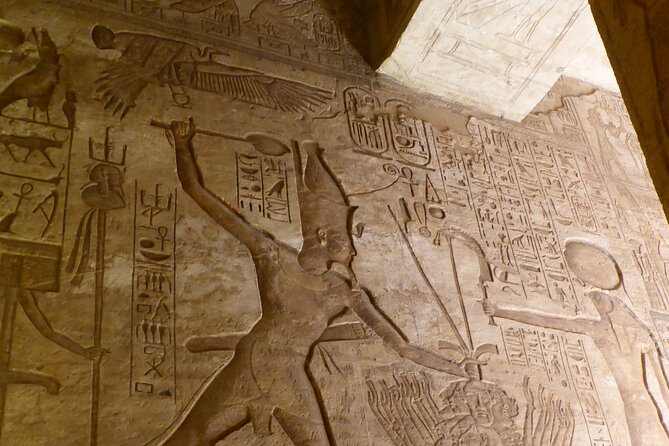
When you arrive, the Abu Simbel Temple Complex is the kind of sight that makes you immediately stop thinking about travel time. The Great Temple is massive—about 35m high and 30m long—and it was commissioned by Ramses II. It was also designed as political messaging: the temples were meant to impress Egypt’s southern enemies, turning architecture into a power statement.
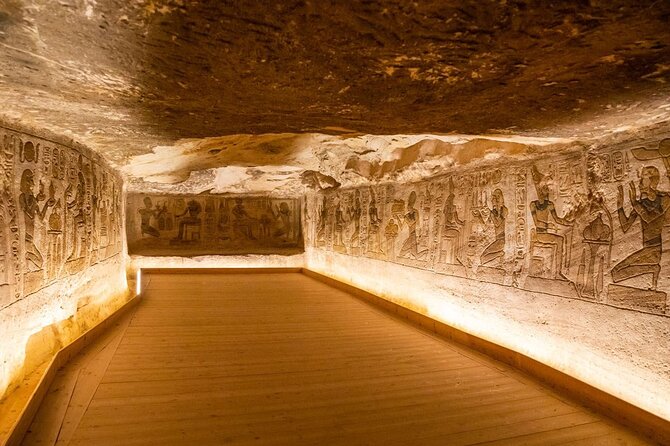
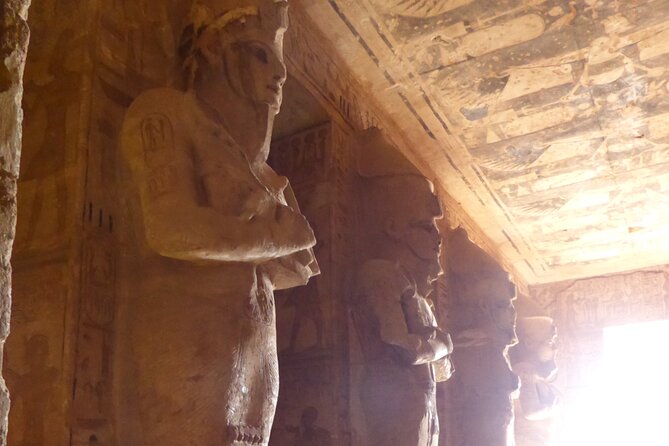
Your on-site time is built around a guided visit (about 2.5 hours at the temple complex), and that matters because the site has details you’d miss if you’re just wandering. You’ll learn why the Great Temple was constructed with the sun in mind, how the façade and sanctuary connect, and what the statues at the back wall actually represent.
One of the practical benefits of a private Egyptologist-style guide is that they can point out what to look at first. At Abu Simbel, you can either spend your time staring up at the scale—or you can understand the layout and the symbolism as you move. This kind of tour aims for the second option.
The sun alignment facts you’ll want to remember
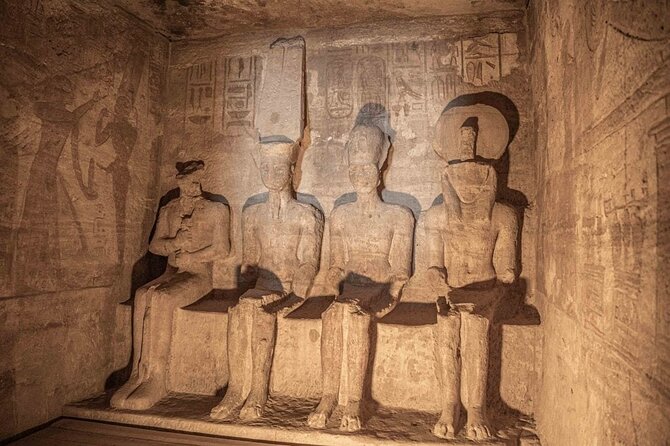
Abu Simbel isn’t only about size. It’s famous for light working its way into the sanctuary. The Great Temple was built so that on February 22 and October 22, sunlight penetrates roughly 55m into the inner sanctuary, illuminating 3 statues at the back wall. The fourth statue—Ptah, the god of the Underworld—stays in darkness year-round.
Even if you’re not visiting on those exact dates, you’ll get a clearer mental map of what the designers planned. That’s the difference between seeing a temple and understanding why it was engineered like a machine that runs on daylight. I think that’s why an English-speaking guide is so helpful here: the story is the point, not just the photos.
If you’re the sort who plans around astronomy or timed phenomena, it’s worth noting those dates. If you’re not, it’s still valuable to know the rules—because your eyes will start looking for cause and effect rather than only decoration.
Nefertari’s temple: a different mood inside the complex
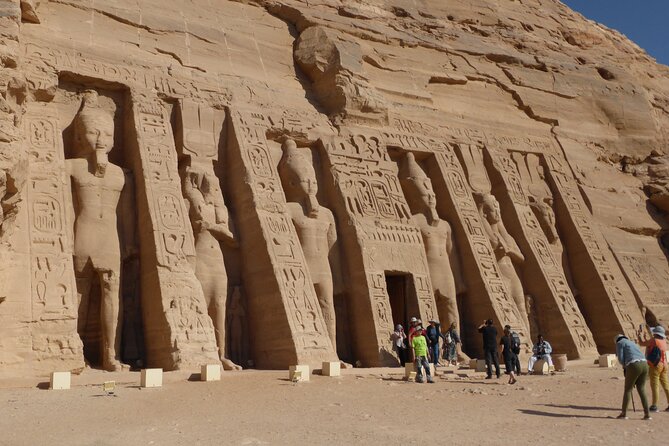
The smaller temple is dedicated to Nefertari, Ramses II’s beloved wife. While the Great Temple is about imperial grandeur, the Small Temple puts Nefertari in a divine spotlight, tying her to major goddess figures: she’s linked to Isis and Hathor and presented in a crowned, sacred role.
This is the part many people rush. Don’t. The contrast is the gift. The Great Temple can overwhelm you with scale; the Small Temple tends to read more like a focused portrait of status, devotion, and myth. With a guide, you’ll understand which features belong to which figures and why the iconography was chosen.
Your guide and your pace: why private matters on a long drive
The tour’s value really hinges on how the guide handles Abu Simbel. From the experience accounts tied to this tour, guides like Adam are described as very knowledgeable and excited to share, and also good at helping with photos—so you’re not left guessing where the best angles are. Another account mentions a guide named Kamal, plus the kind of thoughtful service that makes a long trip feel human rather than transactional.
Your pace matters here. Abu Simbel isn’t the kind of place where you can cover it properly while scrolling social media every five minutes. You’ll likely get more out of your time if you’re willing to pause, listen, and then look again with better context.
And because this is private, you can ask follow-up questions without feeling like you’re holding up a bus of strangers. That’s a small thing, but it changes the experience.


A real-life example of service that can change how you feel
In one account connected to this tour, the guide Kamal and driver Abdalla helped a couple by going out of their way to help buy a charger. That’s not something you should assume will happen every time, but it’s a good signal: the team tends to treat comfort and basic needs as part of the job, not an afterthought.
Comfort on the road: air-conditioning, water, and what to pack
Let’s be blunt: 16 hours is a long sit. The good news is the ride is air-conditioned, and the tour includes one bottled water per person. That alone is a plus on a route where heat and dehydration sneak up on you.
But comfort is still on you. Since the tour data doesn’t promise extras like in-car Wi-Fi, plan accordingly. One experience notes there was no Wi-Fi hotspot in the vehicle. So bring what you need before you leave—download maps or offline content, and have chargers ready since you’ll be using your phone a lot for photos and notes.
What I’d pack for a day like this:
- Water is covered, but bring your own snack if you’re sensitive to long gaps
- A light layer for the car (AC can be strong)
- Hat, sunglasses, sunscreen for the temple walk
- A small bag for temple essentials (camera, wipes, cash for tips)
You’ll also want to keep a bit of patience for timing. Long-distance tours depend on road conditions and daylight. The upside is that you’re not doing the scheduling work yourself.
Lunch included: practical fuel, but plan for beverages
Lunch is included, and that’s a big deal for a day trip this long. You’re not counting on finding food at random stops. The trade-off is simple: beverages are not included with lunch, so you’ll likely pay for drinks separately if you want more than plain water.
This can affect your comfort later, especially after lots of walking and sun exposure. If you’re picky about drinks, it’s smart to bring a plan—either budget for extras or pick up what you need before the meal window.
Admission, tickets, and what’s actually included
This tour lists several inclusion options, and it’s worth understanding the structure so you don’t get surprised.
Included when the matching option is selected:
- Admission/sightseeing tickets for the temple visit
- Private English-speaking Egyptologist guide
Regardless, you can expect:
- Private transportation in an air-conditioned vehicle
- All fees and taxes (as listed)
- Lunch (with beverages excluded)
- Mobile ticket
- One bottled water per person
There’s also an option note: if you want an Egyptologist guide in a language other than English, there’s a $25 supplement per tour, paid in cash. If language matters a lot to you, double-check which option you’re selecting during booking.
Price and value: is $145 per person “fair” for Abu Simbel?
At $145 per person, this is priced for a private day—meaning you’re not just paying for a driver. You’re paying for the full chain: early pickup, round-trip transport, an air-conditioned vehicle, guided time at the temple complex, lunch, and the admission/guide elements when selected.
Is it expensive? It’s not cheap. But Abu Simbel isn’t a quick half-day stop—it’s a whole-day effort. The value comes from:
- reducing planning stress (you don’t have to organize transport yourself)
- getting a guide’s interpretation at the one site where details matter most
- including lunch and water so you’re not piecing together the day
If you were to hire private transport independently and then arrange a guide and tickets, the cost can climb quickly once you factor in time and convenience. For many people, that’s exactly what makes this sort of tour feel worthwhile: you’re buying back mental energy.
If you’re traveling as a couple or small group, private pricing often feels better than you expect, especially when a guide’s commentary turns a huge site into something you actually understand.
Who this tour is best for (and who should skip it)
This tour is a strong match if you:
- want a once-a-visit Abu Simbel day without organizing logistics
- enjoy learning as you look, not just photographing and moving on
- are okay with a long day and prefer private attention
You might reconsider if you:
- hate long car rides and would rather split travel across multiple days
- need lots of downtime and don’t do well with tight time windows
- expect frequent onboard extras like Wi-Fi (it’s not something the tour promises)
It’s also a reasonable option for most travelers, and service animals are allowed. The location is near public transportation, but since this is pickup-included, you’ll likely rely on the tour’s timing more than transit.
Should you book? My take
If your goal is Abu Simbel with minimal hassle, I’d book this. The route is too far and the site too detail-driven to make DIY the easier option. The price is fair for what’s included—especially the guided temple time—and the comfort bits (AC, water, lunch) help you survive the long hours.
The key question is your tolerance for the 16-hour day. If you can handle that, you’ll come away with a real sense of why Ramses II’s builders cared about light, power, and myth in the first place.
If you can’t handle long drives, then Abu Simbel might be a “plan a different kind of trip” situation for you. But for a one-day hit from Luxor, this is one of the more sensible ways to do it.
FAQ
FAQ
How long is the Luxor to Abu Simbel private tour?
The tour runs about 16 hours (approx.), with time allocated for Abu Simbel and lunch before returning.
Is hotel pickup included?
Pickup is offered, meaning you’ll be collected early and taken to Abu Simbel and then back to your hotel.
Is the vehicle air-conditioned?
Yes, the tour includes round-trip transportation in an air-conditioned vehicle.
How much time do we spend at Abu Simbel?
You’ll spend about 2 hours 30 minutes at the Abu Simbel Temple Complex.
Is lunch included?
Lunch is provided for all participants. Beverages are excluded.
Are admission tickets included?
Admission fees and sightseeing tickets are included if you select the option that lists admission tickets.
Do we get an English-speaking guide?
An English-speaking Egyptologist guide is included if you select that option. If you choose another language, there is a $25 per tour supplement paid in cash.
Is the tour private?
Yes. This is a private tour/activity, and only your group will participate.
Is there Wi-Fi in the car?
Wi-Fi is not listed as included, and one experience noted there was no Wi-Fi hotspot in the vehicle.
What’s the cancellation policy?
It’s non-refundable and cannot be changed. If it’s canceled due to poor weather, you’ll be offered a different date or a full refund.