REVIEW · GIZA
Grand Egyptian Museum the GEM tour and Giza Pyramids
Book on Viator →Operated by EGYPT VACATION TOURS · Bookable on Viator
You can see ancient Egypt twice in one day. This private tour ties together the Grand Egyptian Museum before its full opening and the Giza Pyramids with the Sphinx, in a smooth, door-to-door format that keeps your time from getting eaten by Cairo logistics. You’ll also get a guided flow through the museum that’s timed for maximum seeing, then a focused run at Giza afterward.
I like that it’s built around two big wins: early access to the brand-new museum spaces and private transport that works around your pickup drop-off needs in Cairo or Giza. I also like that the museum visit is structured, not random—starting with the giant Ramses II presence, moving through the grand staircase, then into 12 pharaonic halls (with Tutankhamun galleries noted as not yet open).
One thing to plan for: entrance tickets are not included for either stop, so the $60 price covers the tour service and vehicle, not the site admission. If you hate surprise add-ons, budget ahead for those tickets and you’ll feel great about the value.
In This Review
- Key highlights to expect
- Two world-shakers: new museum energy plus Giza scale
- Getting into the Grand Egyptian Museum before full opening
- Museum highlights you can anchor your day around
- The Giza block: pyramids, Sphinx, and a tight hit of the classic view
- Lunch between monuments: where the rhythm gets real
- Private door-to-door transport in Cairo or Giza
- Price and value: what $60 actually buys
- Who this tour suits best (and who should adjust expectations)
- Tips to get more from the day
- Should you book this private Grand Egyptian Museum and Giza day?
- FAQ
- How long is the tour?
- Is hotel pickup and drop-off included?
- Are entrance tickets included?
- Does the tour include lunch?
- Can I request a vegetarian meal?
- Is this a group tour or private?
- Is there a mobile ticket?
- What’s the cancellation window?
Key highlights to expect
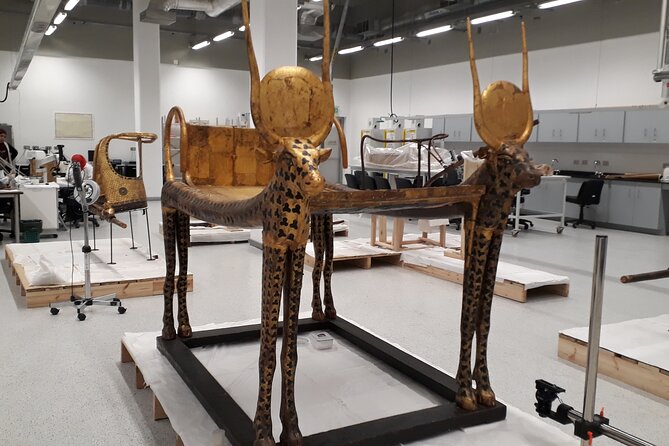
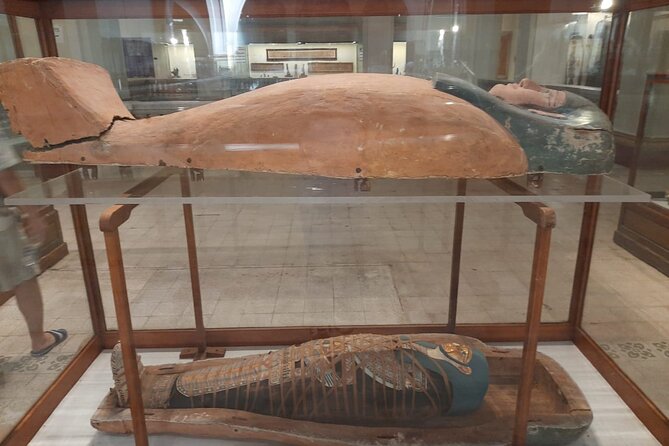
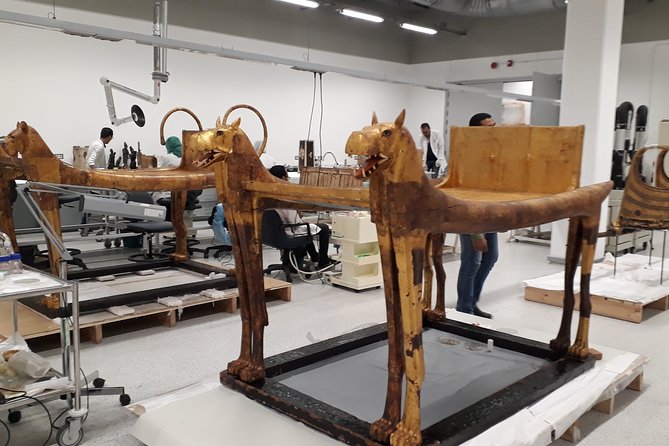
- Grand Egyptian Museum access during soft opening: You’ll see key areas even while certain sections are still closed, including 12 pharaonic halls that exclude the Tutankhamun displays that are not open yet.
- Ramses II, grand staircase, and a chronological feel: The route is organized so you don’t just wander—you get a story arc you can follow.
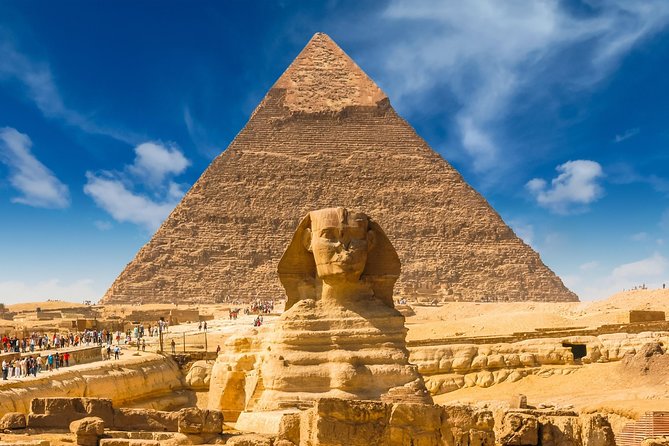
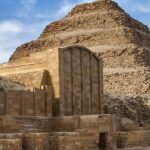
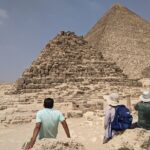
- Four hours at Giza with the main trio: Great Pyramid of Khufu plus Kefren and Mycerinus, plus the Valley Temple area connected to Khafre.
- Great Sphinx included: The lion-bodied, human-headed guardian is part of the standard Giza sweep here.
- Door-to-door private vehicle: Pickup and drop-off are offered in Cairo or Giza, with bottled water to keep the day practical.
Two world-shakers: new museum energy plus Giza scale
This is one of those rare Egypt days where the contrast is the whole point. You start at the Grand Egyptian Museum, which still feels fresh—new spaces, big architectural moments, and exhibits not fully rolled out yet. Then you switch gears and spend the other half of the day in Giza, where the main feeling is raw scale: pyramids you can see from a distance, and the Sphinx staring back like it’s keeping watch.
What I like for you here is how the day is paced as two clean blocks. Each block is about four hours, which matters when you’re traveling with limited energy, limited time, or both. If you try to stack museum chaos and Giza chaos into an unguided day, you end up doing math with your feet. This format keeps the movement intentional.
You can also read our reviews of more museum experiences in Giza
Getting into the Grand Egyptian Museum before full opening
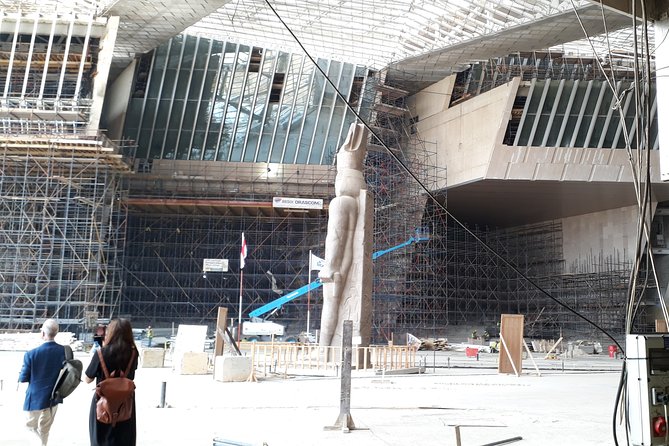
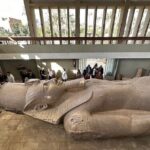
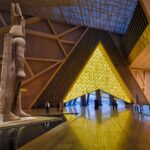
The Grand Egyptian Museum stop is built around the big visual hooks first, then the exhibit halls. You begin with the monumental statue of Ramses II by the sacred lake setting. Even if you’re not a hardcore Egypt-history reader, a giant king figure like that instantly gives you a sense of why Egyptians built these worlds the way they did.
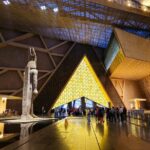
Next comes the grand staircase, which is one of those places where the architecture does some storytelling for you. The route includes hundreds of statues and pieces arranged in a chronological display style, so you can track time instead of bouncing randomly from object to object.
From there, you head into the 12 pharaonic halls. This is a helpful detail for planning: the museum is still in a soft opening phase, and Tutankhamun exhibits are excluded because they are not yet open. That doesn’t make the museum less worth it—it just means you should calibrate expectations. You’ll still see a lot, but you won’t get every single blockbuster gallery that might be on your mental checklist.
A practical note: since the museum is new and some sections may still be working through soft-opening rhythms, your guide’s pacing matters. The better guides know how to keep you moving without turning it into a sprint. The guides connected to this tour have repeatedly been praised for making the museum story feel clear and for tailoring what you focus on.
If you’re the kind of person who likes your museum time structured, you’ll likely feel satisfied here. If you prefer long, quiet, slow reading over guided flow, you might want to ask your guide to linger longer at your must-see areas and skip anything you’re not feeling.
Museum highlights you can anchor your day around
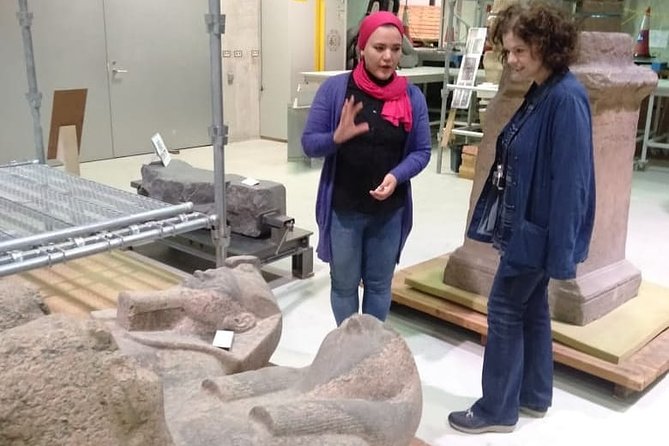
Here are the specific museum elements that help you make sense of what you’re seeing:
- Ramses II by the sacred lake: a strong “start here” visual that sets the tone.
- Grand staircase: a clear landmark, and the setting where you’ll be introduced to statue arrangements and the exhibit logic.
- 12 pharaonic halls: the main exhibit run during the soft opening, excluding Tutankhamun galleries that aren’t open yet.
- Chronological presentation: you’re not only learning facts—you’re getting a time track you can remember.
- Guided explanation style: multiple guide names linked to this tour—like Mahmoud El-Feky, Azmy Salama, Doha Abdalla, and Ayman—show up in strong feedback for clear storytelling and safety-conscious guidance.
One more thing I appreciate for your experience: there’s space for a vegetarian option for lunch. Even though lunch is after the Giza stop, having dietary flexibility arranged ahead of time saves stress.
The Giza block: pyramids, Sphinx, and a tight hit of the classic view
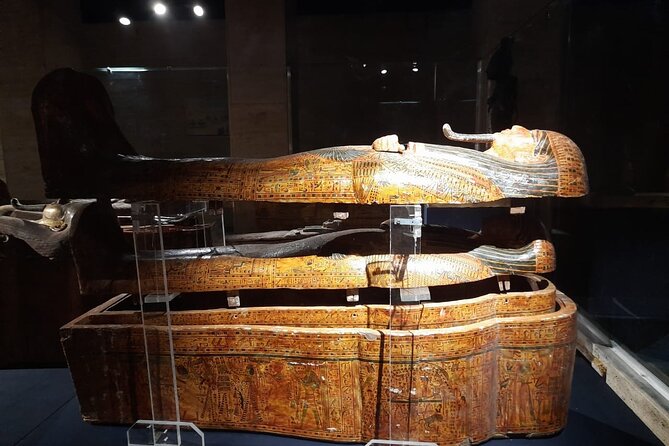
After the museum, you head to Giza for about four hours. This is the right length for most first-timers who want the big monuments without feeling like you’ve been walking all day with no breaks.
You’ll see the three headline pyramids:
- Great Pyramid of Khufu
- Pyramid of Khafre
- Pyramid of Menkaure (often referred to as Mycerinus)
You’ll also cover the Valley Temple of King Khafre, plus the Great Sphinx. The Sphinx isn’t a background photo moment here. You actually build it into the route, so it lands as part of the story of who built what and why this area mattered.
A drawback to keep in mind: four hours at Giza sounds long until you’re actually there and traffic, walking surfaces, and crowd movement start shaping your pace. You’ll want footwear that doesn’t punish you by hour three. If you’re expecting a leisurely wander with lots of time for extra stops beyond the main sights, this private format may still feel a bit “greatest hits.” That said, it’s a smart trade for pairing it with a major museum day.
Also, entrance tickets for Giza are at your own expense. If you plan ahead, this becomes one less mental load. If you don’t, it can feel like you’re constantly checking off paperwork while you’re trying to see pyramids.
Lunch between monuments: where the rhythm gets real
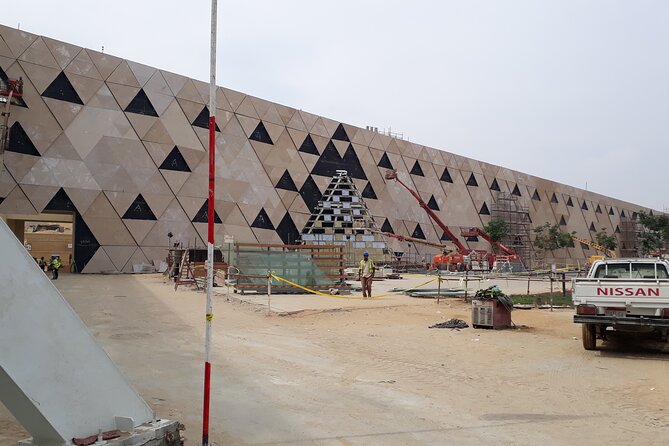
Between the main pyramid and Sphinx viewing, the tour includes lunch at a local restaurant. The exact restaurant isn’t specified, but the structure is helpful: you don’t get forced into a rushed snack-only day.
For most people, the best strategy is simple:
- Treat lunch like a reset button.
- Drink the bottled water provided with the tour, then order additional water with lunch if you feel thirsty.
If you’re traveling in hot conditions, don’t treat lunch as optional. The day is built as museum-first, Giza-second, so heat and walking can add up.


Private door-to-door transport in Cairo or Giza
This is a private tour with hotel pickup and drop-off by private vehicle, and it’s offered in Cairo or Giza. That matters more than it sounds. Cairo driving can be intense, and traffic can swallow time fast. Having a guide managing the route means you spend your energy on the sites instead of figuring out which road goes where.
The vehicle time also matters for safety and comfort. In the feedback tied to guides such as Mahmoud El-Feky and Mahmoud Azmy, a common theme is that the guide creates a calm, secure feeling—especially helpful if you’re a solo traveler. On days that include both a museum and Giza, that reassurance helps you relax into the experience instead of scanning for problems.
This tour is private, so it’s only your group. That usually translates into flexibility: you can ask for minor pacing changes, focus swaps (for example, what part of the museum to emphasize), and fewer “follow-the-pack” moments.
Price and value: what $60 actually buys
At $60 per person, this is positioned as a budget-friendly way to combine two high-demand stops in one day. The key is understanding what that price covers and what it doesn’t.
Included:
- Bottled water
- Hotel pickup and drop-off
- Private vehicle transport
- The guided tour service through both locations
Not included:
- Entrance tickets for the museum and Giza
- Lunch (not explicitly listed, but lunch is part of the plan at a local restaurant, so you should expect to pay there directly)
Here’s the value math that tends to make sense: if you tried to DIY this day, you’d pay for transport anyway, you’d still need museum and Giza tickets, and you’d lose the time and stress savings that come with having someone coordinate your route and pacing. For many people, the difference isn’t just money—it’s the mental calm of not worrying about logistics.
One more practical detail: the tour notes it’s commonly booked about 22 days in advance on average. That’s a hint to plan ahead, especially around busy weeks or when you want a specific time of day. If you leave it too late, you risk not matching your preferred schedule.
Who this tour suits best (and who should adjust expectations)
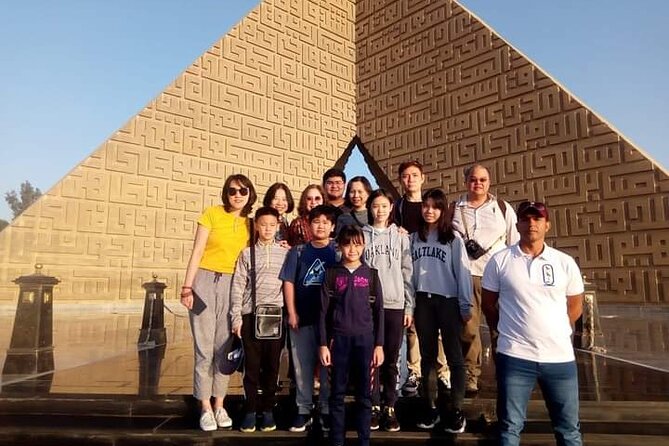
This is a strong fit if you:
- Want to see the Grand Egyptian Museum even before it’s fully open
- Have limited time and want a sensible structure (two four-hour blocks)
- Prefer a private guide who can explain and keep you moving without turning it into a rushed checklist
- Care about door-to-door pickup and transport planning
It’s also a good match for solo travelers who want a safety-first feel and clear guidance. If you’ve ever had a day in Cairo where you felt like you were constantly negotiating the city, this format can feel like relief.
If you don’t like guided pacing—if you prefer long museum reading and lots of hanging around—ask for extra time at the places that grab you and be ready that the schedule may still be firm around the two main stops. The tour is designed to hit major sights, not to slow down into a half-day at one location.
Tips to get more from the day
You don’t need a complicated plan, just a smart one:
- Ask your guide at the start what you should prioritize at the Grand Egyptian Museum, especially since Tutankhamun galleries aren’t open yet.
- Wear comfortable shoes for Giza. You’ll walk more than you think, and surfaces can be uneven.
- Carry sun protection. The pyramids area is exposed.
- Budget for entrance tickets in advance so you don’t get stuck solving payments while you’re trying to enjoy the moment.
- If you have dietary needs, ask for the vegetarian option when booking.
Finally, if you care about what the guides bring to the day, this tour has a track record of praising specific guide names for English ability, clarity, and tailoring. Names like Mahmoud El-Feky, Azmy Salama, Doha Abdalla, Ayman, and Mahmoud Azmy show up in strong feedback—so you can feel good about expecting more than a generic explanation.
Should you book this private Grand Egyptian Museum and Giza day?
I’d book this if you want maximum payoff with minimal hassle: a brand-new museum experience in soft opening mode plus the classic Giza sights in a structured, private format. It’s especially worth it if you don’t want to wrestle Cairo transport on your own.
Skip it or adjust expectations if you’re the type who wants everything. Since Tutankhamun exhibits aren’t yet open, you’ll miss those specific museum highlights. Also, because entrance tickets and lunch aren’t included, you’ll need to budget those costs separately.
If you want a practical, organized day that links two of Egypt’s biggest headline experiences, this is a solid pick.
FAQ
How long is the tour?
The total duration is about 8 hours. The day is split into two main stops, with roughly 4 hours at Giza and roughly 4 hours at the Grand Egyptian Museum.
Is hotel pickup and drop-off included?
Yes. The tour includes hotel pickup and drop-off by private vehicle.
Are entrance tickets included?
No. Entrance tickets are not included for either the Grand Egyptian Museum or the Giza sites.
Does the tour include lunch?
Lunch is included as part of the Giza portion, at a local restaurant. The details of what you pay for there are not listed as included in the tour price.
Can I request a vegetarian meal?
Yes. A vegetarian option is available if you advise the provider at the time of booking.
Is this a group tour or private?
This is a private tour. Only your group participates.
Is there a mobile ticket?
Yes. The tour offers a mobile ticket.
What’s the cancellation window?
Free cancellation is available up to 24 hours in advance for a full refund, based on the experience’s local time.