REVIEW · CAIRO
private tour to Giza pyramids Sphinx with Camel ride
Book on Viator →Operated by Egypt Tours Online · Bookable on Viator
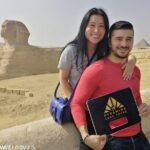
There are few places that feel this big. A private Giza pyramids and Sphinx tour with a 1-hour camel ride turns the usual photo stop into a smoother, more fun way to see the Giza Plateau and Great Sphinx. I love that you’re not wrestling transport or crowd flow, and I love that your private guide explains what you’re looking at as you go. One thing to plan for: pyramid or temple interior entry isn’t always included, even when you’re paying for the core area.
I also like the pacing. Your route is built to move through the major monuments (Great Pyramid complex, Khafre’s area, Menkaure’s pyramid grounds, and the Sphinx zone) without turning the day into a sprint, and you still get time for vantage points and photos. If you’re imagining standing inside a pyramid chamber, check what’s included in your chosen option before you go.
What really matters here is how you’ll feel doing it. Riding a camel gives you a different height and angle than walking, and it can save your legs for the walk-and-look parts. If you’re sensitive to sun and heat, also bring a hat and water—this tour does include bottled water, but you’ll still want protection.
In This Review
- Key things I’d focus on before you book
- Camel on the Giza Plateau: what this tour changes
- Price and what $45 really buys (and what it doesn’t)
- Pickup, timing, and the day’s rhythm
- Stop 1: Pyramids of Giza complex (your first big “wow”)
- Stop 2: Giza Plateau stretch (where spacing makes sense)
- Stops 3–5: Great Pyramid of Khufu, Khafre’s zone, Menkaure’s grounds
- Great Pyramid of Khufu (Cheops)
- Khafre’s pyramid zone
- Menkaure’s pyramid grounds
- Stop 6: Great Sphinx and the Valley Temple approach
- The camel ride experience: comfort, angle, and photo timing
- Bottled water, guide help, and the small logistics that matter
- About the add-on stops: perfumes, papyrus, and cotton stores
- Who this tour fits best (and who might want another option)
- A quick note on photos: where the value really shows
- Should you book this private Giza pyramids + camel + Sphinx tour?
- FAQ
- How long is the private Giza pyramids and Sphinx tour with camel ride?
- Is hotel pickup and drop-off included?
- Does the price include entry fees?
- What about the camel ride?
- Is lunch included?
- Is this tour private?
- What is the cancellation policy?
Key things I’d focus on before you book
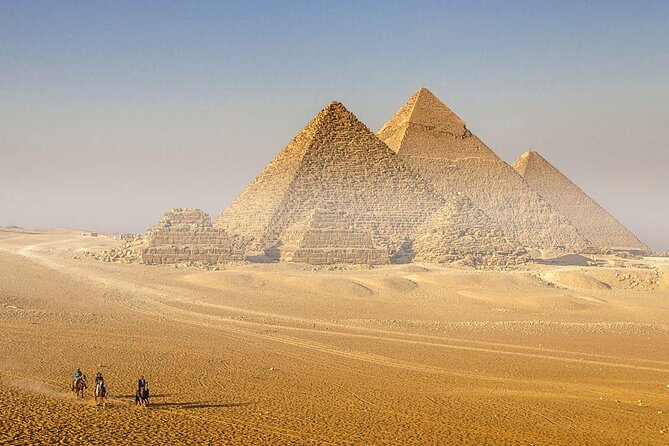
- 1-hour camel ride to see Giza from a classic, slower-moving perspective
- Private guide who helps you understand the monuments as you pass them
- Photo-friendly planning around the Great Sphinx, including goofy positions with help
- Hotel pickup and drop-off from Cairo or Giza to reduce travel hassle
- Basic area entry included, while interiors/temple access may be extra depending on option
- Short, structured stops that keep the day around 4 hours
Camel on the Giza Plateau: what this tour changes
Giza is famous for a reason, but it can also be a little chaotic. People arrive at different times, guides are calling different instructions, and you’re often trying to translate what you’re seeing while dodging sun, dust, and lines. This private format helps because it’s built around your group, a clear route, and a guide who stays with you.
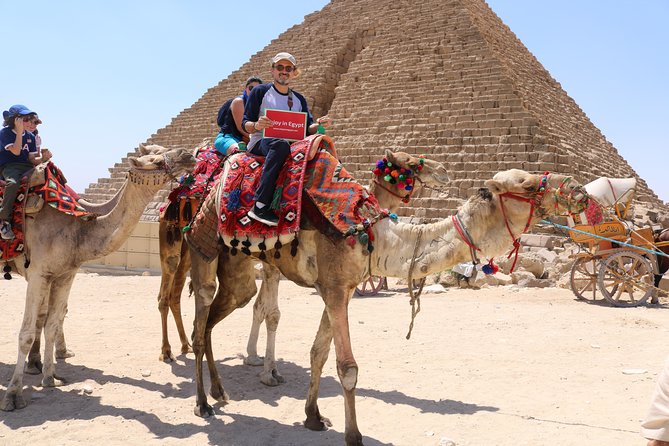
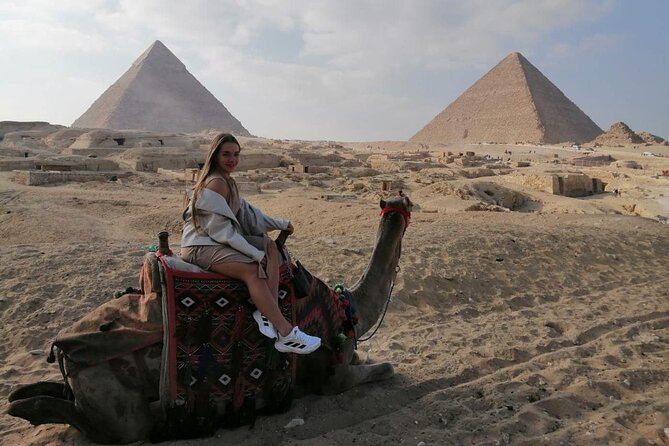
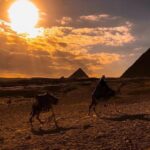
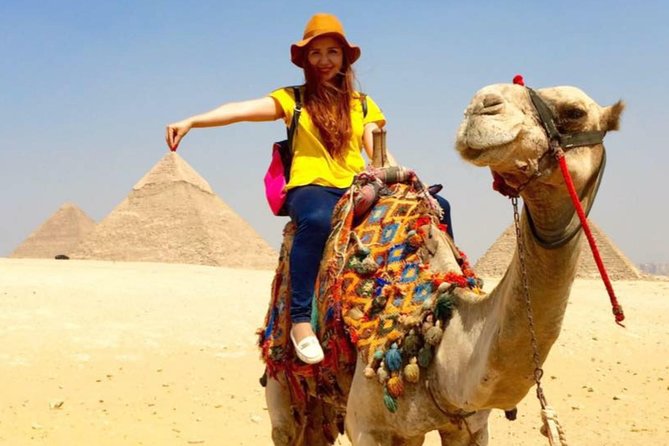
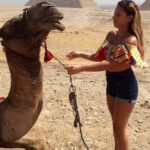
The big twist is the camel ride. Instead of spending your energy immediately on steep sand and long walks, you get a controlled ride window (about 1 hour) that also changes your viewpoint. From the camel, you’ll see how the plateau sits above Cairo’s sprawl, and the monuments look different when you’re not at ground level. It also turns a standard “walk and photograph” day into something more memorable—especially if you’ve already done other major sights and want a fresh angle.
If you’re not thrilled about animals, this is still worth considering because the camel time is clearly part of the plan (not an open-ended thing). You get the fun element without it swallowing your whole afternoon.
You can also read our reviews of more private tours in Cairo
Price and what $45 really buys (and what it doesn’t)
At $45 per person, this tour can feel like good value once you tally the parts. You get private guiding, hotel pickup and drop-off, bottled water, a 1-hour camel ride, and entry fees are included for basic areas.
Here’s the practical catch: the tour description says that inside entry fees to pyramids or temples are not included, but access can be arranged. It also notes that entry fees cover basic area only, and that entrances depend on tour options you choose. Translation: you’re likely covered for the core viewing zones, but if you want interior access, you may need an add-on or a specific option.
If you’re budgeting, I’d treat this as a “core monuments, core areas” package with the possibility of upgrades. Ask what your option includes before you show up, especially if your must-do is entering a pyramid or going into specific temple interiors.
Pickup, timing, and the day’s rhythm
This is designed as a 4-hour, private experience with pickup and drop-off. That matters because Giza can eat time if you’re trying to figure out transportation on your own. With pickup arranged, you don’t have to hunt rides or negotiate your own way to the plateau, and you avoid the stress of being late for a timed-entry window (if you add one).
The tour also runs with a steady sequence of stops. You’ll spend a concentrated hour at the main Pyramids of Giza complex, then move across the plateau areas, and finish with a focused Sphinx-and-approach experience. This structure is helpful if you want to see the big hits without burning out.
One more practical note: the tour says most travelers can participate. That’s useful if you’re deciding between a more strenuous day and a moderate one. The itinerary is paced in time blocks rather than “walk for hours,” which is generally friendlier for people who tire easily.
Stop 1: Pyramids of Giza complex (your first big “wow”)
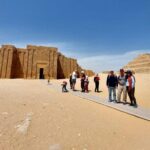
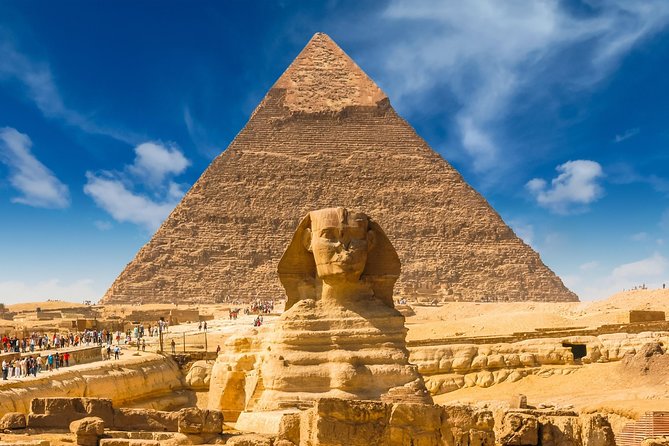
You’ll start at the Giza Pyramid Complex, also called the Giza Necropolis. This is where the Great Pyramid of Giza and the pyramids of Khafre and Menkaure sit, plus associated complexes and the Great Sphinx area nearby. The tour gives you about an hour here, which is enough time to see the scale and get oriented.
What I like about starting here is that your guide can set context early. You’re not just photographing stone blocks—you’re learning what you’re looking at as your eyes adjust. If you’re someone who wants to “get it” quickly, this first stop is a strong foundation.
Possible drawback: the area can be busy, and the time you’re given is fixed. If you’re aiming for lots of close-up wandering, you’ll probably feel a little pressure to keep moving. A good guide helps here by pointing out the best vantage points efficiently.
Stop 2: Giza Plateau stretch (where spacing makes sense)
After the main complex, the plan includes time on the Giza Plateau itself. This portion is described as a shorter stop (about 30 minutes) and says admission is free.
Even if it’s not the headline segment, I think this is smart. The plateau is the stage. When you take a breath here—seeing how the necropolis sits on the plateau—you understand why the monuments were built where they were. The spacing and lines between the pyramids make more sense when you’re not staring at just one corner.
The only consideration: if you love “slow travel,” you might wish you had more time. But the day stays balanced because it saves time for the later Sphinx finish.

Stops 3–5: Great Pyramid of Khufu, Khafre’s zone, Menkaure’s grounds
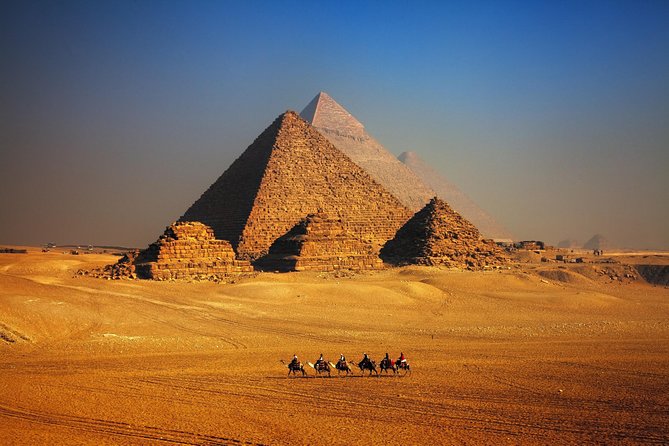
You’ll then move through three key pyramid areas, each with its own focus and a set time block. In practice, these segments are where your guide’s explanations do the most work, because the details are what separate one pyramid complex from the next.
Great Pyramid of Khufu (Cheops)
Your time here includes the Khufu pyramid complex and notes about elements like a valley temple connection (with causeway references) and what remains today. You’re getting a “what mattered then” snapshot—without pretending everything is perfectly preserved.
What helps you: you’ll see how the mortuary landscape is laid out. Even if the buried parts aren’t visible, your guide can point out what’s still there and how the layout worked.
Khafre’s pyramid zone
Khafre’s complex is described as having a valley temple, Sphinx temple, causeway, mortuary temple, and king’s pyramid. The tour also references statues found in connection with the valley temple.
This stop is often where you start noticing the differences in the plateau architecture and how the Sphinx area ties into the broader complex. Again, close enough for photos, paced enough to keep momentum.
Menkaure’s pyramid grounds
Menkaure’s complex is listed as having valley temple, causeway, mortuary temple, and the king’s pyramid. There’s also a note about a smaller ante-temple added later.
This stop works well if you like seeing that Giza wasn’t frozen in time. Even within the Old Kingdom, changes happened, and the complexes evolved.
Possible drawback across these segments: because each area has limited time, you may have to choose between slow, wandering curiosity and moving with the group for the best views. A private guide can help you steer that choice.
Stop 6: Great Sphinx and the Valley Temple approach
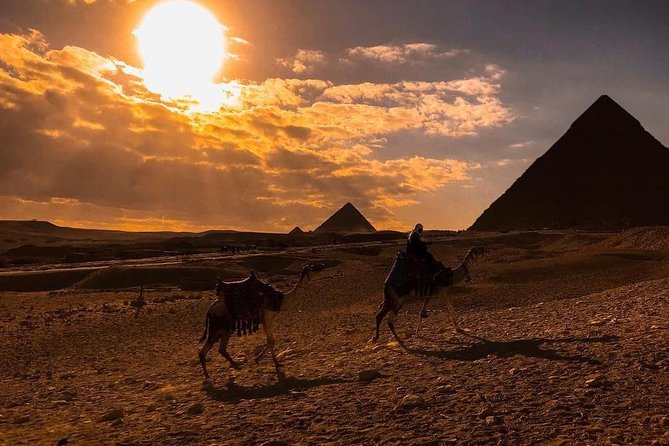
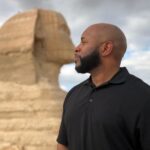
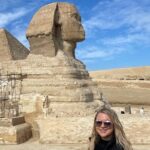
The grand finale is the Great Sphinx area, with a stop described around the Valley Temple and a close-up view of the Sphinx itself. The tour description frames the Valley Temple connection to mummification practices of King Chephren, and it sets you up for photos that feel personal—not just distant “postcard shots.”
This is also where the guide support matters most. The plan explicitly mentions help with amazing pictures and even playful posing in funny positions. Even if you don’t care about humor, having someone guide you to good photo spots can save time and frustration in a crowded setting.
Here’s the practical reality: the Sphinx area tends to be visually busy. From certain angles, you’ll get clearer composition and less clutter. A guide who knows where to stand (and when to move) is what turns this from “I took some photos” into “I got the shots I wanted.”
The camel ride experience: comfort, angle, and photo timing
Your tour includes a 1-hour camel ride, which is long enough to feel like you’ve done something meaningful, but not so long that your whole day revolves around the animal. The ride also fits the goal of the experience: conserving energy for the monument sightseeing.
The other benefit is angles. From a camel’s back, you get a slightly elevated view that can make the pyramids look more “connected” to the plateau. You’ll likely capture different photos than you would walking.
Comfort tip (based on general experience, not special claims): wear closed-toe shoes and dress for sun. You’ll be outside for the whole experience, and the tour includes bottled water, but that’s not the same thing as protection from heat.
Bottled water, guide help, and the small logistics that matter
The included basics are actually helpful: bottle water, tour guide, and pickup/drop-off. Those items sound minor until you’re sitting under a hot sun waiting for a ride or realizing you forgot water. Here, you’re not starting the day in survival mode.
The guide part is what most people care about at Giza, and this tour clearly leans into explanation. The reviews you provided emphasize clear, entertaining explanations and strong help with photos. In other words, you’re not just getting facts dumped at you—you’re getting guidance that makes the monuments easier to understand.
Also, this is a private tour, so the guide’s pace is more likely to match your comfort level. If you want extra time at one view, this format gives you a better chance of adjusting on the fly.
About the add-on stops: perfumes, papyrus, and cotton stores
The additional information mentions stops at places like Paradise Perfumes Palace, a Key of Life Papyrus store, and a Flower cotton store. These aren’t described as mandatory purchases, but they are part of the overall tour package as listed.
If you dislike shopping stops, treat these as optional attitude checks. You can use them as quick breaks in the shade, or you can plan to skip browsing beyond what’s comfortable. Just be mentally prepared that your time may include these points before or after the main monument blocks.
Who this tour fits best (and who might want another option)
This private camel-and-sphinx tour fits best if you:
- Want classic Giza sights without spending half the day figuring out logistics
- Like the idea of a camel ride as a fun contrast to walking
- Appreciate a guide who explains what you’re looking at in a clear, entertaining way
- Prefer a private group rather than crowd navigation
You might consider a different option if you:
- Want mostly museum-style time or long slow wandering with no set stops
- Care strongly about pyramid interior access (you’ll likely need to confirm what’s included in your option)
- Don’t want shopping-style stops added to the day
A quick note on photos: where the value really shows
Giza photography is harder than people think. Distances are huge, angles matter, and you can waste time trying to guess the right spot. The tour’s Sphinx portion is built with photo support in mind, including help with positioning and composition.
In practice, that means you’ll spend less time squinting through the camera screen and more time getting shots you actually like. That’s a real quality-of-life benefit in a place where the ground plan can be confusing.
Should you book this private Giza pyramids + camel + Sphinx tour?
If you want a structured, lower-stress Giza day with hotel pickup, a private guide, and a 1-hour camel ride, I think this is a solid choice. The price-to-experience match is good when you value guiding plus logistics plus the camel segment, and you’re only aiming for core monument areas.
Book it if:
- You want the big sights (pyramids + Sphinx) in about 4 hours
- You’d rather spend your energy on seeing than negotiating transport
- You like the idea of photo help and a playful Sphinx experience
Skip or verify first if:
- Your priority is entering pyramid interiors or temple interiors, since only basic area entry is clearly included and interiors may cost extra depending on your option
- You strongly dislike shopping stops, since the package lists store visits
If you confirm your entry expectations and arrive ready for sun, sand, and lots of stone scale, you’ll likely find this is one of those tours that feels like Giza, not just a checklist.
FAQ
How long is the private Giza pyramids and Sphinx tour with camel ride?
It’s about 4 hours (approx.), including multiple stops and a 1-hour camel ride.
Is hotel pickup and drop-off included?
Yes. The tour includes pickup and drop-off from Cairo or Giza hotels.
Does the price include entry fees?
Entry fees for basic areas are included, but the information also indicates that inside entry fees to pyramids or temples are not included and access can be arranged depending on the option.
What about the camel ride?
A 1-hour camel ride is included as part of the experience.
Is lunch included?
No. Lunch at local restaurants (like koshari) is listed as optional.
Is this tour private?
Yes. It’s described as a private tour/activity, meaning only your group participates.
What is the cancellation policy?
You can cancel for a full refund if you cancel up to 24 hours in advance of the experience start time.