Two temples, one clean plan. This VIP private tour is a smart way to hit Luxor’s East Bank highlights with door-to-door pickup and drop-off, then still leave you time in the afternoon for shopping or just not thinking about ancient schedules. You get a private Egyptologist guide who can answer your questions as you go, which turns the stones into a story you can actually follow.
I especially like how the visit is paced: Luxor Temple first, then Karnak, so you’re not bouncing around or waiting on a huge group. One thing to consider: temple entry fees are not included, so you’ll want to factor that into your total budget for the day.
In This Review
- What You’ll Love Most
- Key Highlights You’ll Actually Feel
- Two Temples, One Clean Plan: East Bank Time Management
- Door-to-Door Pickup: Why It’s Worth Paying for
- Luxor Temple First: Ramses II, the Theban Triad, and That Big First-Pylon View
- The small drawback
- Karnak Temple: 100 Hectares of Worship Through Multiple Eras
- What you’ll notice during the walk
- Time check
- The Lunch Break: Falafel Sandwich or Koshry, Kept Simple
- Egyptologist Q&A: Getting More Than Facts
- Price and Value at $16 Per Person (What That Includes, and What’s Extra)
- Who This Tour Fits Best
- Should You Book This VIP Luxor and Karnak Tour?
- FAQ
- What temples are included in the tour?
- Is admission to the temples included?
- How long does the tour last?
- Does the tour include hotel pickup and drop-off?
- What lunch is included?
- Is this tour private?
- Is free cancellation available?
- Is bottled water provided?
What You’ll Love Most
The best part is the match-up. You start with the famous obelisk moment at Luxor Temple, and then you shift to Karnak, where worship stretches across major periods of Egyptian history. If you’re the type who likes photos and context, this tour’s private format makes it easier to stop where it matters—like the angles for better pictures—and ask why things were built the way they were.
Key Highlights You’ll Actually Feel
- Private Egyptologist guide with on-the-spot answers while you walk
- East Bank power pair: Luxor Temple plus Karnak in one half day
- Photo-friendly timing thanks to the private pace and guided photo stops
- Bottled water and light lunch included so you don’t lose the afternoon
- Ram-headed avenue + scarab figures moment where your guide can explain the meaning
- Hotel pickup and drop-off so you’re not managing transport mid-day
You can also read our reviews of more guided tours in Luxor
Two Temples, One Clean Plan: East Bank Time Management
Luxor’s East Bank can be overwhelming if you try to do it all on your own. This tour solves the big problem: time. You’re given a structured visit that focuses on two of the most important temple experiences, without turning your day into a marathon.
The tour runs about 2 to 4 hours, which is short enough to keep your afternoon free. That matters because Luxor heat can work against you late morning and early afternoon. A half-day plan means you can still shop, relax, or just wander without feeling like you’re behind schedule.
And it’s truly private—just your group—so the pace is yours. That’s the quiet advantage people don’t always notice until they’re stuck in a crowd at a place that deserves breathing room.
Door-to-Door Pickup: Why It’s Worth Paying for
Logistics are where many “cheap” tours fall apart. Here, the tour includes hotel pickup and drop-off and transport by private vehicle. That’s a big deal in Luxor, where hopping between sites by yourself can eat up time you’d rather spend at the monuments.
You also get a mobile ticket, which is usually a smoother way to handle entry-related paperwork. Combine that with the bottled water included, and it’s one less thing to think about once you’re already in the temple complex.
If you’re traveling with limited mobility or you just want the day to feel easy, this kind of door-to-door setup is the difference between a stressful day and a satisfying one.
Luxor Temple First: Ramses II, the Theban Triad, and That Big First-Pylon View
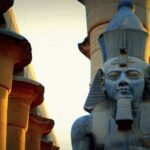
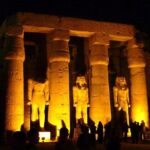
Your first stop is Luxor Temple, the smoother opener to the day. It’s tied directly to two major rulers and the way Egyptian power was displayed through architecture.
Here’s the key context you’ll hear from your guide: the temple was built by Amunhotep III in the 18th Dynasty and completed by Ramesses II in the 19th Dynasty. That time span isn’t just trivia—it helps explain why the temple feels like it carries messages from more than one era.
Luxor Temple is dedicated to the god Amun-Ra, along with Mut and Khonsu—the Theban triad. When you understand that family relationship of gods, carvings and layouts start to make more sense. You’re not just looking at walls; you’re looking at a religious system that was meant to guide visitors, rulers, and ritual life.
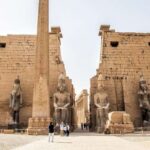
A highlight is the Obelisk of Ramses II in front of the 1st Pylon. This is one of those “stand here and look” moments where the scale and placement do the teaching. Your guide can help you find the best angles for photos, and the private format makes it easier to take a few seconds longer without slowing everyone else down.
The small drawback
Two hours at Luxor Temple can feel fast if you love reading every inscription or you want to linger for lots of photos. The trade-off is you’re also saving time for Karnak, which is the bigger “wow” site for most people.
You can also read our reviews of more private tours in Luxor
Karnak Temple: 100 Hectares of Worship Through Multiple Eras
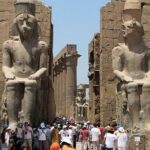
Then you move to Karnak Temple, the massive complex that people point to when they talk about Egyptian worship at full scale. Your guide will frame it as more than one building—Karnak is essentially a history of temple construction across long stretches of time.
The dedication stays consistent: Amon, Mut, and Khonsu. But the development is what makes Karnak so important. It was constructed from the beginning of the Middle Kingdom all the way to the Graeco Roman Kingdom. That’s a long arc, and it means you’ll see traces of changing styles and priorities rather than one single “snapshot” in time.
In practice, this is why a guide helps. Without someone explaining what you’re looking at, it’s easy to feel lost in the scale. With a private Egyptologist, you can connect the big ideas—who worshipped here, why it mattered, and how the complex grew—with what’s in front of you.
What you’ll notice during the walk
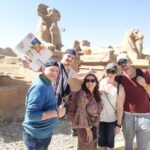
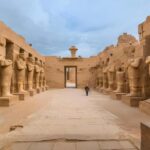
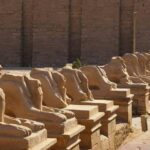
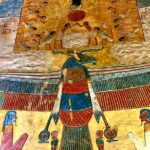
Karnak is full of procession routes and symbolic paths. A strong moment is the ram-headed avenue. You’ll also come across large scarab figures along the way. Your guide can explain the meaning—and there’s also a local tradition connected with making a wish as you walk around certain elements. If that’s your thing, ask your guide to show you what to do and what it represents.
Time check
This stop is also listed at about 2 hours. Karnak is huge, so think of this as a curated highlight tour through a very large place. You’ll come away with clear “first visit” understanding rather than trying to cover everything.
The Lunch Break: Falafel Sandwich or Koshry, Kept Simple
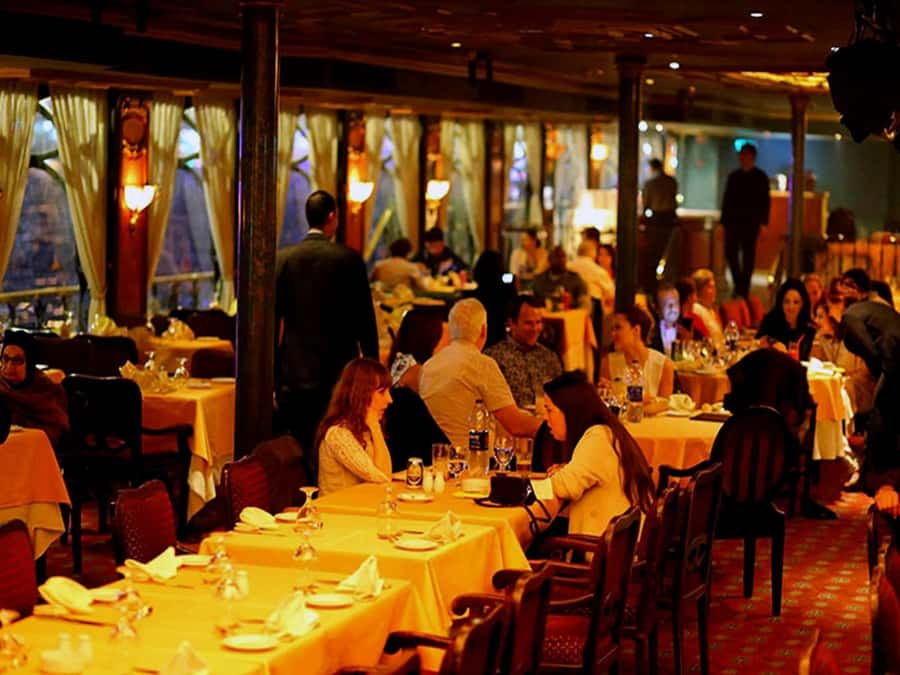
Lunch is included as a light lunch with a choice of falafel sandwich or koshry. That’s a practical inclusion because it keeps you from hunting for food while your day is already timed.
I like this approach for two reasons. First, it helps you avoid the common Luxor problem: you get hungry at the worst moment and lose time figuring out where to eat. Second, the meal type is filling enough to keep you going, but not heavy enough to slow you down right before more temple walking.
If you’re picky about food, you still have two straightforward options, and your guide can help you plan around it during the route.
Egyptologist Q&A: Getting More Than Facts
A lot of tours claim you’ll learn a lot. What you actually need is help turning details into understanding. With a private Egyptologist guide, your questions don’t feel like interruptions—they’re part of the rhythm.
This tour’s design makes that easy. You’re not stuck with a script where questions only happen at the end. You’re walking, seeing, and then asking. Want to know how the Theban triad fits together? Ask. Want the point behind the obelisk placement? Ask. Want to understand why Karnak grew across such different eras? Ask.
Also, there’s a “real life” benefit: the guide can help you with photo-op locations. In the experiences shared by people who were guided by Remon, he was noted for being professional, passionate about Egyptian history, and for spotting the best spots to take photos. Even if your guide is someone else, the private format means you should be able to get similar help with timing and angles.
Price and Value at $16 Per Person (What That Includes, and What’s Extra)
At $16 per person, the big value question is: is this actually a bargain or just a marketing trick?
Here’s what you get for that price: private tour, qualified Egyptologist guide, private vehicle transport, hotel pickup and drop-off, bottled water, and a light lunch (falafel sandwich or koshry). You also get all taxes/fees/handling charges included.
What’s not included is the temple entry fees. That’s the main extra cost you should plan for. When comparing options, treat this tour as a “guide + logistics + lunch” package, and then add temple entry separately.
The other “value” point isn’t just what’s included—it’s what the private pacing protects. You avoid wasted time and you get better control over how long you want to spend at specific parts, especially around the most photographed monuments.
So if you want an efficient day with clear teaching and minimal hassle, this can be strong value. If you’re the kind of traveler who insists on doing everything independently and long-form reading, the short time per temple may feel limiting.
Who This Tour Fits Best
This tour is a great match if:
- you want a first-time East Bank visit that hits the big two
- you prefer private attention over crowded group pacing
- you like learning with context, not just passively looking
- you want lunch handled for you and transport taken care of
It may be less ideal if you:
- want a full “every hall, every wall” Karnak experience
- plan to spend most of the day doing shopping far from the pickup/drop-off
- are not comfortable with walking temple grounds for roughly a couple hours at a time
Should You Book This VIP Luxor and Karnak Tour?
I’d book it if your priority is a clean, well-guided East Bank highlight day. The combination of private Egyptologist guidance, hotel pickup and drop-off, and an included light lunch makes it easy to stay relaxed. At the same time, you’re aware of the trade-off: it’s not trying to cover everything at Karnak in one go, and you’ll pay temple entry fees separately.
If you want maximum value, go in with a plan: decide what you most want from the day—like the Obelisk of Ramses II view at Luxor Temple and the “ram-headed avenue + scarab figures” portion at Karnak—then let your guide help you make it meaningful.
And if you care about photos, choose this kind of private format and ask your guide where the best angles are as you arrive. That small step can make your day look better and make the learning stick.
FAQ
What temples are included in the tour?
The tour covers Luxor Temple and Karnak Temple on Luxor’s East Bank.
Is admission to the temples included?
No. Temple entry fees are not included in the tour price.
How long does the tour last?
The duration is approximately 2 to 4 hours.
Does the tour include hotel pickup and drop-off?
Yes. Hotel pickup and drop-off are included.
What lunch is included?
A light lunch is included, with a choice of a falafel sandwich or koshry.
Is this tour private?
Yes. It’s a private tour, meaning only your group participates.
Is free cancellation available?
Yes. You can cancel up to 24 hours in advance for a full refund.
Is bottled water provided?
Yes. Bottled water is included.