Two days, two banks, one easy plan. The big win here is a real Egyptologist guide plus air-conditioned vehicle comfort, so you can focus on the sights instead of working out logistics. I like how the route hits the must-sees on both banks in a paced way, with brief stop time where it matters and a bit of freedom to wander. One thing to consider: entrance fees are not included, and the West Bank day can feel longer on your feet.
This is a private tour, meaning it’s just your party in the vehicle, not a crowd shuffle. Hotel pickup and drop-off remove the hassle, and the mobile ticket is there to keep things simple. If you’re traveling with kids, I also appreciate that schedules can be adjusted to keep attention spans intact.
At $75 for roughly two days, the value comes from what’s wrapped into the price: guide time, transport, parking, fuel surcharge, and service charges. Then you add site tickets and any extras you choose, like the option to visit Tutankhamun’s tomb for an additional fee.
In This Review
- Key points I’d plan around
- Two banks, one clear route: how this 2-day plan saves you time
- West Bank day: Valley of the Kings, Hatshepsut, and the Colossi of Memnon
- Valley of the Kings: seeing the royal “what to look for” inside
- Temple of Hatshepsut: courtyards plus a human story
- Colossi of Memnon: short stop, big presence
- East Bank day: Karnak’s Avenue of Sphinx and Luxor Temple’s Ramses II carvings
- Karnak Temple: Avenue of Sphinx to the Hall of 134 columns
- Luxor Temple: Ramses II, Alexander the Great, and an obelisk connection
- Entrance fees, Tutankhamun, and what to budget beyond the tour price
- Private comfort that actually helps: A/C rides, hotel pickup, and guide names to look for
- Who should book this Luxor two-day private tour (and who might change plans)
- Should you book this Luxor West and East Banks private tour?
- FAQ
- Are entrance fees included in this tour?
- Is the tomb of Tutankhamun included?
- What’s the main difference between Day 1 and Day 2?
- Does the tour include hotel pickup and drop-off?
- What transportation do you use during the tour?
- Is food included during the two days?
Key points I’d plan around
- West Bank hits the big emotional sites first: Valley of the Kings, Hatshepsut Temple, then the Colossi of Memnon
- East Bank gets the classic entry moment: Avenue of Sphinx into Karnak, then Luxor Temple later
- Tombs are limited inside: your guide explains what you’ll see even though guides can’t go into the tomb rooms
- Free time is built in: enough room to look around without being rushed
- A/C transport matters in Luxor heat: especially when you’re moving between far-flung monuments
Two banks, one clear route: how this 2-day plan saves you time
Luxor is two different moods in one city. On the West Bank, you’re in “the world of the dead” with royal tombs and funerary temples. On the East Bank, you’re in the “living side” of ancient worship at major temples.
What I like about this two-day structure is that it doesn’t try to cram everything into one frantic day. You get a full West Bank run, then a full East Bank run, and that split makes a big difference for pacing. It also helps you connect themes: kings and afterlife on the West, gods and kingship on the East.
You’ll ride in an air-conditioned vehicle between stops. That’s not a luxury detail. In Luxor, it changes how much you can enjoy the day, because you’re not overheating between sites. Add hotel pickup and drop-off, and you avoid the time sink of figuring out local transport on your own.
You can also read our reviews of more private tours in Luxor
West Bank day: Valley of the Kings, Hatshepsut, and the Colossi of Memnon
The West Bank day has the emotional “wow” factor built in right from the start. You start with the Valley of the Kings, move into Hatshepsut’s temple, and then end with the Colossi—those two massive standing statues that feel like something paused mid-story.
Valley of the Kings: seeing the royal “what to look for” inside
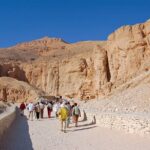
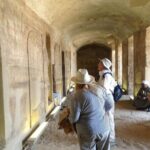
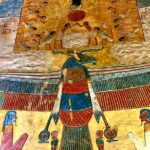
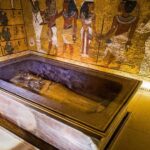
You’ll have a brief stop at the visitors center first. Then you move to the tomb area where your guide explains how to interpret what’s on the walls. Here’s an important practical point: guides aren’t permitted inside the tombs, so you won’t have someone walking through the rooms with you. Instead, your Egyptologist tells you what to look for in the elaborately decorated spaces before you go in.
If you want to visit the tomb of Tutankhamun, there’s an additional cost payable directly on-site. It’s not included, and it’s not automatic. I like that the tour clearly flags it, because you can decide based on your budget and interest.
Time on this stop is set at about 1 hour 30 minutes. That usually gives you a reasonable window for a visit without dragging the whole day behind it.
Temple of Hatshepsut: courtyards plus a human story
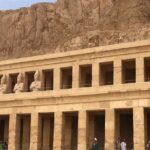
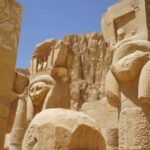
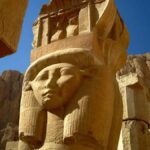
Next up is the Temple of Hatshepsut, one of the most striking monuments on the West Bank. This stop works because your guide doesn’t treat it like a pile of stones. You get the story of Queen Hatshepsut—famously, she ruled by presenting herself in a masculine role to gain the throne.
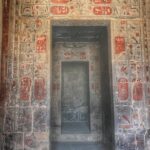
Then you’re given free time to explore the temple’s large courtyards at your leisure. The hieroglyphic decorations are a major feature here, and your guide frames what you’re seeing so you can look with more confidence. You’re not stuck staring at directions; you’re wandering through a place where the details matter.
Colossi of Memnon: short stop, big presence
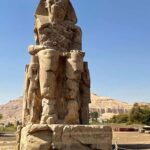
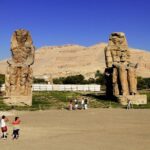
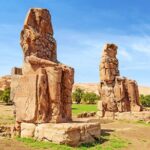
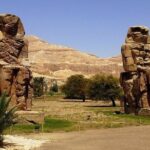
The day closes with the Colossi of Memnon. This is a quick stop—about 20 minutes—but it’s a great final “West Bank snapshot.” These two giant statues mark what’s left of Amenhotep III’s funerary temple complex.
Admission is free for this stop, which helps keep your extra costs down. Even with the short time, the scale gives you that classic Luxor photo moment without eating your whole schedule.
A few more Luxor tours and experiences worth a look

East Bank day: Karnak’s Avenue of Sphinx and Luxor Temple’s Ramses II carvings
If the West Bank feels like the past in silence, the East Bank feels like the past on stage. You’re in major temple spaces where kingship and religion were meant to impress everyone who entered.
Karnak Temple: Avenue of Sphinx to the Hall of 134 columns
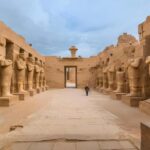
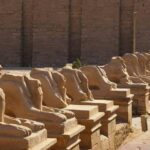
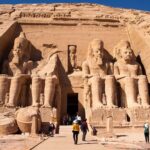
You start at Karnak with the walk along the Avenue of Sphinx. It’s a simple moment that changes how you experience the entrance. You’re not just arriving at ruins; you’re moving along an ancient processional route while your guide explains how the massive facade was constructed.
Inside Karnak, you’ll notice layers of time. Your guide points out how different pharaohs added to the complex as it grew over centuries. The deeper you go, the further back in time you travel—over 3,000 years is the kind of timeframe you’re thinking about here.
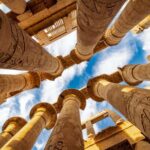
Then comes the Great Court and the Great Hypostyle Hall, with 134 towering columns overhead. It can feel overwhelming in the best way. I like that the stop includes multiple “structures of meaning,” not just one photo spot.
At the rear of the complex you’ll find the sacred lake, tied to purification rituals in earlier periods. After the guided portion, you’ll get additional free time to explore on your own.
This stop is about 2 hours. It’s the longest single block of the day, and that’s smart because Karnak is the kind of place where speed ruins the experience.
Luxor Temple: Ramses II, Alexander the Great, and an obelisk connection
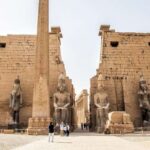
After Karnak, you move to Luxor Temple. This temple matters because it was once connected to Karnak by a 2-kilometer Avenue of Sphinx. Only parts remain, but the idea of that long approach is part of the story.
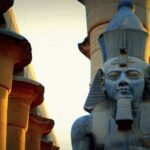
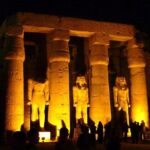
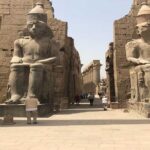
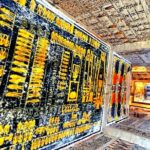
Luxor Temple is dominated by statues connected with Ramses II, and it survived Nile floods, foreign invasions, and thousands of years of exposure. Your guide also helps you focus on the inner walls and columns where hieroglyphics cover the surfaces.
One of the neat historical notes here is that Alexander the Great is connected to Luxor Temple’s history. You’ll also be able to see one of the original pair of obelisks, with the other obelisk now in Paris at Place de la Concorde.
Time at Luxor Temple is about 1 hour. It’s enough to understand the key areas without feeling like you’re stuck in one spot too long.
Entrance fees, Tutankhamun, and what to budget beyond the tour price
The headline price is $75 for about two days, and that’s a solid base. But here’s the budget truth: entrance fees to all sites are not included. Your plan should assume you’ll pay tickets on top of the tour cost.
Some parts help balance that out. The Colossi of Memnon stop is free, for example. On the other hand, the Valley of the Kings tombs have ticket requirements, and Tutankhamun’s tomb is an extra cost you pay directly.
Food and drinks aren’t included unless specified, and gratuities are recommended. I’d treat the day like a proper sightseeing outing: bring or buy water, and don’t rely on the tour to handle meals for you.
If you’re trying to keep total costs predictable, decide in advance whether you really want the Tutankhamun option. It’s the clearest “extra” decision point built into the West Bank plan.
Private comfort that actually helps: A/C rides, hotel pickup, and guide names to look for
This experience is private for your group. That means you’re not stuck with the pacing problems that come with mixed interests in a larger group.
Hotel pickup and drop-off are included, which is huge in Luxor because you’re usually hopping between areas. The air-conditioned vehicle is also included, with parking fees, fuel surcharge, and the driver all covered.
The guide is a real part of the value, not just a name on a schedule. In particular, I like that your guide explains what to see in spaces where access is limited—like the Valley of the Kings tomb rooms where guides can’t go inside.
From the guide perspective, the names Mansour and Khalid show up in customer feedback as people who made the story land. Mansour, for example, is praised for being kind with a 9-year-old and for answering questions. Khalid is noted for excellent organization and willingness to adjust the schedule based on preferences. Those are the kinds of details that matter: you get history explained clearly and timing handled with common sense.
Also, a mobile ticket is included. When you’re dealing with busy entry lines and changing schedules, anything that reduces friction is welcome.
One small consideration: since the West Bank day is generally longer on foot, you’ll want to plan comfortable shoes. The tour spreads things out over two days for a reason, but West Bank walking still adds up.
Who should book this Luxor two-day private tour (and who might change plans)
I think this tour is a great fit if you want a clean, guided route through Luxor’s biggest hits without becoming a logistics expert. It’s especially useful if you like the idea of an Egyptologist guide connecting the dots between the monuments.
It’s also a smart pick if:
- you want private time rather than a crowded group day
- you appreciate guided context for hieroglyphic-heavy spaces
- you’re traveling with kids and need some schedule flexibility (adjustments are part of the feedback)
- you prefer air-conditioned transportation in Luxor heat
You might choose a different plan if:
- you’re working with a very tight entrance-fee budget, since tickets are extra
- you want a slower, more self-directed “wander forever” style day (this tour builds in some fixed time blocks)
Should you book this Luxor West and East Banks private tour?
Yes, if you want an organized two-day plan that covers the core Luxor monuments with guided explanations and comfortable transport. The value is in the combination: Egyptologist time, hotel pickup/drop-off, and A/C rides—plus free time built into major sites so you’re not glued to the guide.
I’d book it when you care about understanding what you’re looking at, not just collecting photos. Especially if Mansour or Khalid is the kind of guide you’d enjoy—someone who answers questions and adapts—this is the style of tour that tends to work well.
If you’re cost-sensitive, budget for entrance tickets from the start and decide ahead about Tutankhamun. That single choice helps you avoid last-minute sticker shock.
FAQ
Are entrance fees included in this tour?
No. Entrance fees to all sites are not included in the tour price.
Is the tomb of Tutankhamun included?
You can visit it only if you pay an additional cost directly. It’s not included in the standard plan, and the guide notes this during the Valley of the Kings stop.
What’s the main difference between Day 1 and Day 2?
Day 1 focuses on the West Bank highlights: Valley of the Kings, Temple of Hatshepsut, and the Colossi of Memnon. Day 2 focuses on the East Bank highlights: Karnak Temple and Luxor Temple.
Does the tour include hotel pickup and drop-off?
Yes. Hotel pickup and drop-off are included.
What transportation do you use during the tour?
You travel in an air-conditioned vehicle, with parking fees, fuel surcharge, and the driver included.
Is food included during the two days?
No. Food and drinks are not included unless specified.