REVIEW · LUXOR
Private 2 Days The Best of Luxor
Book on Viator →Operated by Luxor Travels · Bookable on Viator
Luxor in two days, without the stress. This private tour strings together the big-name sights on both banks of the Nile, with an Egyptologist on hand to translate what you’re looking at. I love the way the West Bank and East Bank stops connect into one clear story of ancient Thebes.
I also like that it’s run as a true private experience: you’re in an air-conditioned vehicle and moving on a schedule built around your guide’s explanations. The one real consideration is entrance fees add up, and the Tomb of Tutankhamun is an optional extra cost.
I went in expecting to see monuments. I came out with names, symbols, and connections in my head—thanks to the kind of on-the-ground storytelling that makes Karnak stop feeling like “a bunch of columns.” If you want your Luxor days to feel efficient, not rushed, this is a strong fit.
In This Review
- Key things that make this Luxor private tour worth it
- Price and logistics: what $150 buys you in Luxor
- Day 1 on the West Bank: Valley of the Kings and the tomb circuit
- The Valley of the Kings: more than one tomb stop
- Tomb of Ramses III (KV 11): color, ritual texts, and side-room surprises
- Tomb of Ramses IX: a ceiling you notice even with time pressure
- Tomb of Merenptah: a model of royal tomb design
- Optional Tomb of Tutankhamun: famous for a reason, with an extra ticket
- Deir el Bahari: Temple of Hatshepsut at a glance
- Colossi of Memnon: quick but satisfying
- Mortuary temple of Ramses III: wrap-up stop
- Day 2 on the East Bank: Karnak, Luxor Temple, and the Avenue of Sphinxes
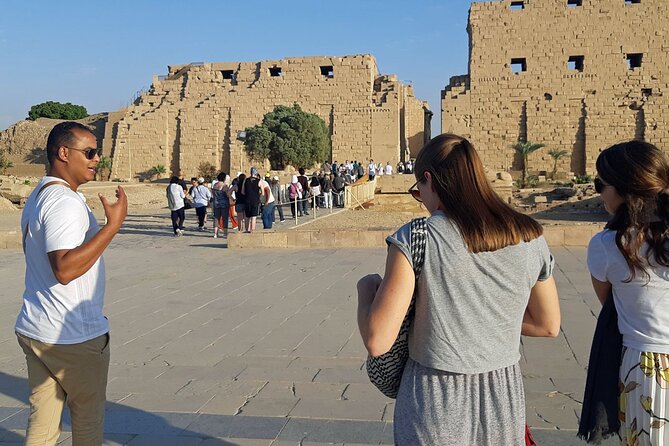
- Karnak Temple: the Hypostyle Hall and the feeling of scale
- Luxor Temple: the Theben Triad connection
- Obelisks and the Avenue of Sphinxes: small stops, big payoff
- Luxor Museum with your Egyptologist: artifacts that make the tombs legible
- The Egyptologist factor: why this tour feels clearer than a standard sightseeing day
- Hot air balloon possibility: a nice extra, not part of the package
- Who this private 2-day Luxor tour is best for
- Should you book Private 2 Days The Best of Luxor?
- FAQ
- What time does the tour start?
- Is this a private tour?
- What’s included in the price?
- Are entrance fees included?
- Is the Tomb of Tutankhamun included?
- Do I have to arrange pickup?
- Is the hot air balloon ride included?
- What if I need to cancel?
Key things that make this Luxor private tour worth it
- Private guide plus private vehicle for a calmer pace between sites
- A full Valley of the Kings morning paired with key tombs you can actually connect to each other
- Karnak Temple highlights including the Hypostyle Hall with its 134 columns
- Luxor Temple and the Avenue of Sphinxes to see how the east-side complex works as a system
- Luxor Museum with recognizable finds, including artifacts tied to Tutankhamun’s era
- Flex time for museum exploring, so you’re not stuck only listening
Price and logistics: what $150 buys you in Luxor
At $150 per person for a private 2-day tour, the value comes from the structure: you’re not just “visiting places,” you’re spending two long days with a guide who can make the sites click. The tour includes hotel pickup and drop-off, plus transport by air-conditioned vehicle, which matters in Luxor when the sun gets loud and the walking adds up.
One more practical point: this is booked as far ahead as about 61 days on average. That usually means you should plan early if your dates are fixed, especially if you want the best chance at your preferred pickup timing and schedule flow.
Also, start time is 8:00 am. That’s good. It helps you beat some of the worst heat and gives your guide enough daylight to hit the highlights without sprinting.
You can also read our reviews of more private tours in Luxor
Day 1 on the West Bank: Valley of the Kings and the tomb circuit
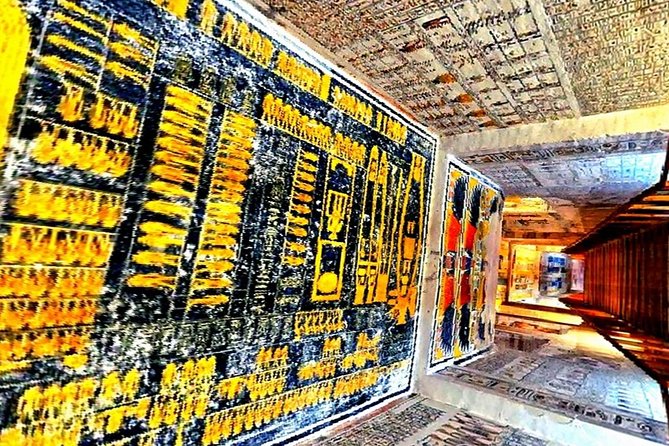
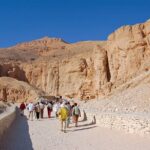
Day 1 runs about 8 hours after your morning pickup from central Luxor or the harbor. You head to the Necropolis of Thebes, the Valley of the Kings on the West Bank, where the whole theme is burial, protection, and royal power made stone.
The Valley of the Kings: more than one tomb stop
You don’t just pass by one tomb and call it a day. The plan takes you through multiple royal tombs, including Ramses III (KV 11), Ramses IX, and Merenptah, plus the option of King Tutankhamun’s tomb.
That matters because each tomb has its own visual style and emphasis. It’s easier to understand the “why” of the decoration when you can compare one decorated ceiling or corridor to another within the same morning.
Tomb of Ramses III (KV 11): color, ritual texts, and side-room surprises
KV 11 is highlighted for a reason: the decorations include colorful painted sunken reliefs tied to ritual texts like the Litany of Ra and the Book of Gates. You also see Ramses before the gods, with the tomb presenting a lot of what you’d call classic royal messaging.
Then the tour gets more interesting in the smaller side spaces. You get secular scenes with foreign tributes, described with details like pottery imported from the Aegean, royal armoury items, boats, and the blind harpists, which is associated with the name Tomb of the Harpers. Even if some paintings have aged, the tomb’s structure and the mix of sacred and everyday-looking details can be a memorable contrast.
Tomb of Ramses IX: a ceiling you notice even with time pressure
Ramses IX is presented as a tomb with strong color and detail. You’ll also be directed to the ceiling above the sarcophagi, with the goddess Nut stretching across the space. The sarcophagus is described as one of the largest in the valley, even though some paintings have deteriorated.
This stop is short, so the goal is not to study every inch. The guide’s job here is to help you spot the main motifs quickly so it still feels rewarding.
A few more Luxor tours and experiences worth a look

Tomb of Merenptah: a model of royal tomb design
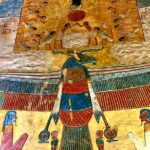
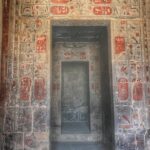
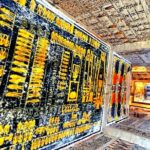
Merenptah’s tomb is framed with context: Ptah as a demiurge and craftsmen/protectors linked to the dead, and the idea of falcon form deities appearing in tombs. The tomb itself (Tomb 8) is presented as the burial place of Pharaoh Merneptah, described as a son of Ramesses II and Queen Isis-Nofret, and it’s also noted as having been discovered by Howard Carter in 1903.
The timing stays tight here too, so it’s worth keeping expectations realistic: you’re there long enough to get the main visual story, not long enough to become an Egyptology scholar on-site.
Optional Tomb of Tutankhamun: famous for a reason, with an extra ticket
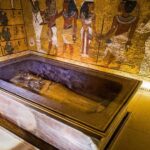
You’ll have the chance to visit the Tomb of Tutankhamun. The notes include the optional entrance fee (given as 360 EGP). This is the stop most people know before they even arrive, and the tour gives you time to face his royal mummy in the tomb.
If you skip it, you still see a lot. If you go for it, it can feel like the “headline moment” that anchors the rest of your day’s viewing.
Deir el Bahari: Temple of Hatshepsut at a glance
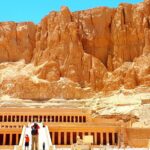
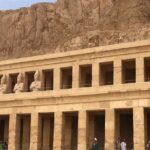
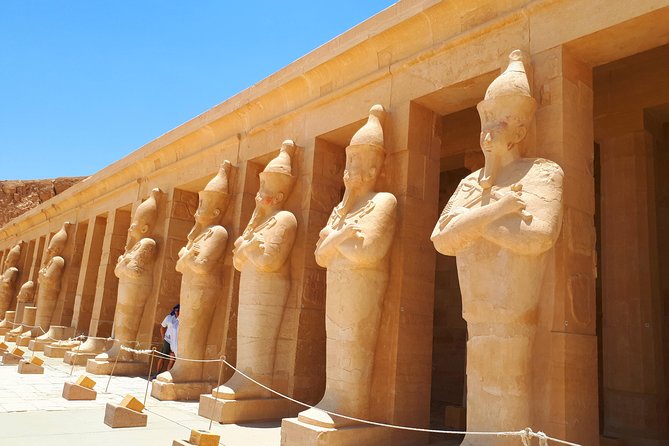
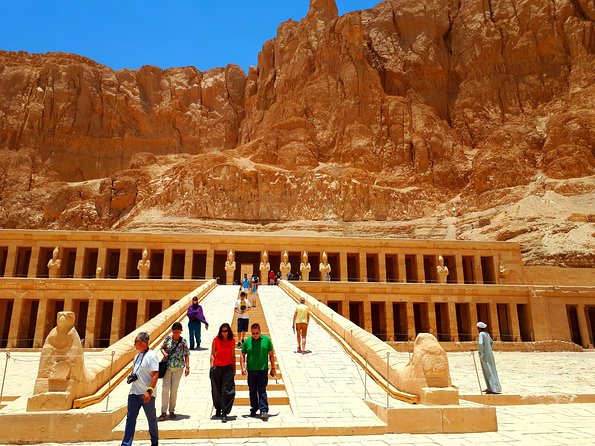
After the tomb cluster, the day moves to the Temple of Queen Hatshepsut at Deir el Bahari. The tour emphasizes that she’s the only woman ever to reign over Egypt as Pharaoh, and that she’s an ancestor of Tutankhamun within the same dynasty.
This is a good pairing after tombs because it shifts the focus from burial to monumental rule, and it’s an easy mental reset: instead of corridors and ceilings, you get a temple space meant for visibility and ceremony.
Colossi of Memnon: quick but satisfying
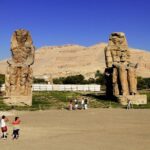
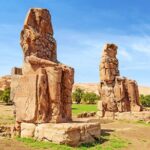
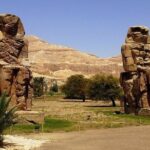
The Colossi of Memnon are described as the two largest ancient statues in Egypt, dating back to King Amenhotep III’s era. Admission is listed as free here, and the stop is short (about 20 minutes).
Think of this as your palate cleanser between bigger temple and museum time.
Mortuary temple of Ramses III: wrap-up stop
The Mortuary temple of Ramses III closes out Day 1. It’s listed as a 30-minute stop with admission not included. This final stop is useful because it brings Ramses III back into view in a different setting than the Valley tomb.
Day 2 on the East Bank: Karnak, Luxor Temple, and the Avenue of Sphinxes
Day 2 shifts east toward the temples of Luxor, and the tour stacks major landmarks with specific features your guide can point out.
Karnak Temple: the Hypostyle Hall and the feeling of scale
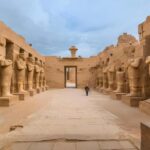
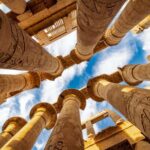
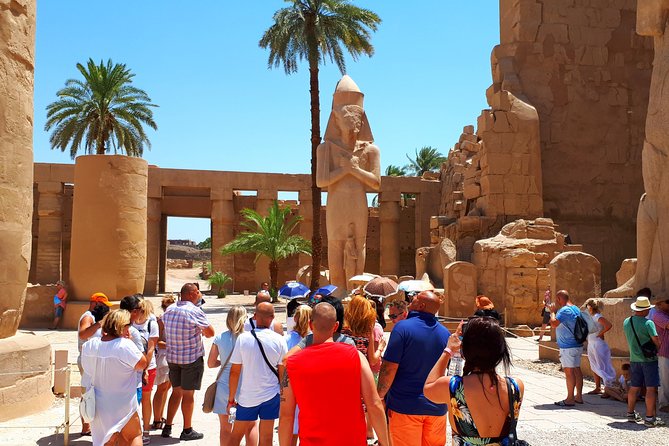
Karnak is presented as one of the world’s greatest architectural masterpieces, and the tour doesn’t keep it vague. You’re guided through the Avenue of Sphinxes, the Hypostyle Hall with its 134 gigantic columns, the obelisks of Queen Hatshepsut and Tutomosis I, and the Temple of Amon with lotus and papyrus designs.
You’ll also see the Granite Scarbeus of Amenophis III and the Sacred Lake. That list matters because Karnak can be overwhelming if you only see it as “lots of ruins.” Having named sections and a guided flow helps you build a map in your head.
Luxor Temple: the Theben Triad connection
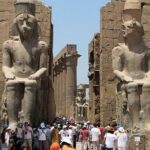
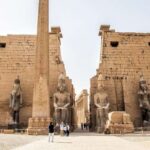
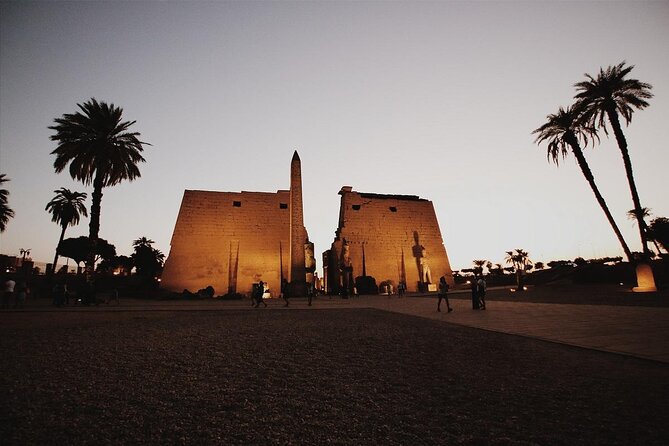
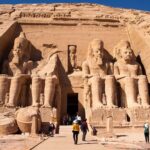
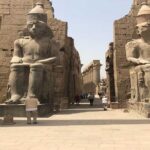
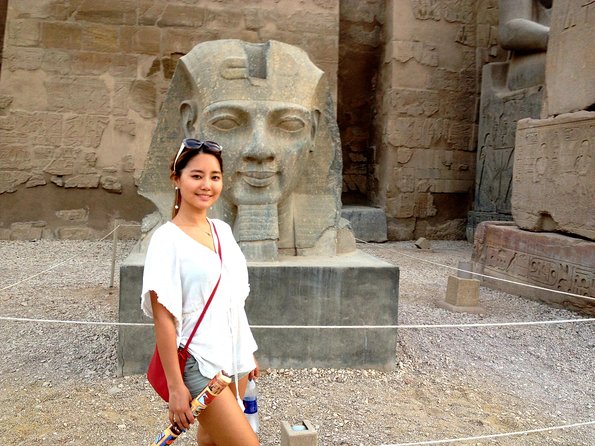
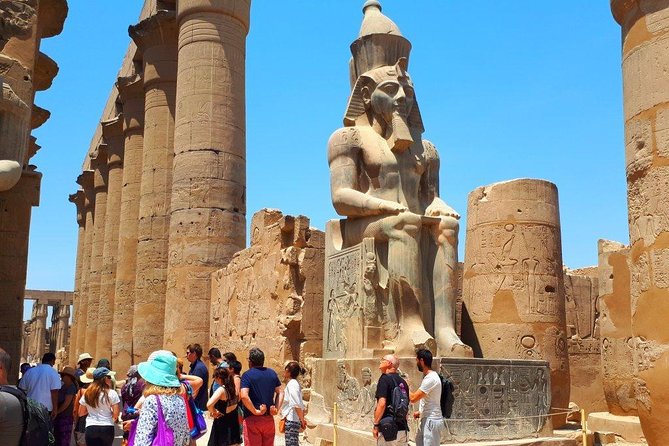
Luxor Temple is dedicated to the Theben Triad: Amun-Ra, Mut, and Khonsu. You’ll see granite statues of Ramses the Great. The stop is about 1 hour, and it works well after Karnak because the scale feels different—still impressive, but less like you’re standing inside a forest of columns.
Obelisks and the Avenue of Sphinxes: small stops, big payoff
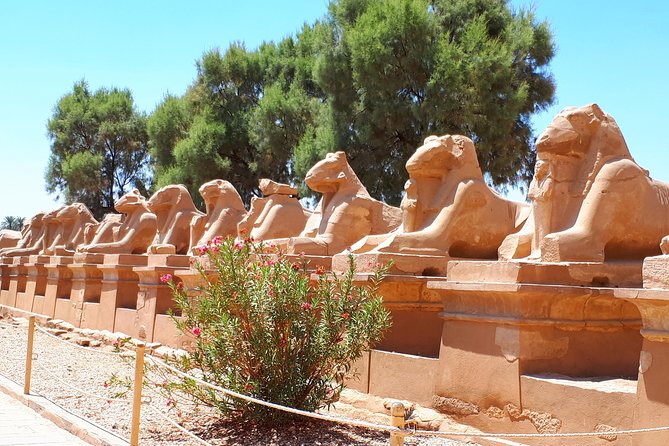
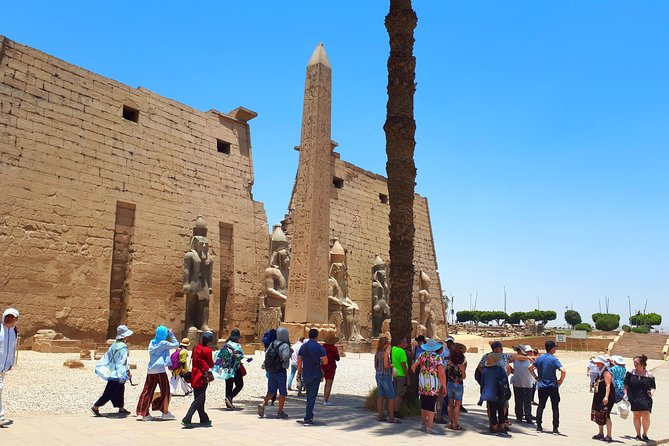
There are separate stops for the Obelisk of Thutmoses I and the Obelisk of Queen Hatshepsut. Then you finish with time at the Avenue of Sphinxes.
Here the notes give you a useful sense of contrast: the avenue was stretched from Luxor to Karnak, with descriptions that it’s currently only a few hundred metres long. The details also mention both 3 kms and a six miles description, so if the numbers sound inconsistent, don’t panic. The key takeaway is that what you see today is a shortened remnant of a much longer ceremonial route lined with sphinxes.
Luxor Museum with your Egyptologist: artifacts that make the tombs legible
After two days of stone monuments, the Luxor Museum is the “hold on, now I get it” step. The tour includes a guided visit with your Egyptologist for about 1 hour, plus free time to explore on your own.
The museum collection is described as focused on items found in Luxor, including objects from the tomb of Tutankhamun. You’ll also see a double statue of Sobek, the crocodile god, and king Amenhotep III, along with several mummies.
What I like about this stop is that it gives your brain a place to rest. Outside, you’re decoding walls. Inside, you can slow down and compare. The guide’s explanations about colors and construction tools used to decorate ancient tombs and temples can also make the carvings you saw earlier feel less mysterious.
If you’re the kind of person who worries you’ll forget details, this museum session is a practical solution. It ties the big sights together with physical objects you can look at longer.
The Egyptologist factor: why this tour feels clearer than a standard sightseeing day
The reviews highlight guides who don’t just recite facts—they connect the dots. Names you might hear in this tour context include Khalid and Ragab Elmotgalye. In both cases, the praise centers on clear explanations and a sense that the guide genuinely loves the material.
That matters because Luxor can be a lot. Even if the monuments are stunning, the “meaning” part is what turns photos into understanding. A strong Egyptologist helps you notice what’s important in the décor and how different sites relate.
You also get a personalized rhythm. Because this is private and you have your own vehicle, you’re not stuck waiting on a large group to line up. That usually means you can ask the simple questions that make the day stick: Why is this symbol here? What does this scene show? How does this tomb differ from the next one?
Hot air balloon possibility: a nice extra, not part of the package
There’s a mention of a possible hot air balloon ride over the city. The key detail is simple: it’s not included. If you want that view, plan it as an add-on and treat it like its own experience with its own timing needs.
If you’re doing the balloon, you’ll want to think about how it affects your sleep and morning energy. Otherwise, the two-day temple plan is already scheduled to start at 8:00 am, and you don’t want to feel like you’re touring on fumes.
Who this private 2-day Luxor tour is best for
This plan is a great match if you want the “greatest hits” of Luxor in two days without feeling like you’re guessing. You’ll like it if you enjoy learning while you walk—Valley tombs one day, Karnak and Luxor Temple the next, then museum artifacts that tie it together.
It’s also a smart choice if you prefer control and comfort. Hotel pickup and drop-off, plus an air-conditioned vehicle, keep the day moving. You’ll also have a private guide, so you can go at a pace that works for you.
If you’re the type who wants very slow wandering and lots of free time in each monument, you might find the tomb stops feel short. In that case, you’d likely use this as a “core overview,” then add extra independent time later.
Should you book Private 2 Days The Best of Luxor?
Yes, if you want a guided Luxor that feels organized and meaningful. The biggest strength is the combination: West Bank tombs plus East Bank temples, both explained by an Egyptologist, then anchored with a museum visit that includes items linked to Tutankhamun’s era.
I’d book it with one caveat in mind: budget for entrance fees, since they’re not included. Also, decide early whether you want the optional Tomb of Tutankhamun, because that extra ticket changes your day.
If your goal is to leave Luxor with clear, connected understanding—not just a pile of photos—this private 2-day tour is a solid value.
FAQ
What time does the tour start?
The meeting/start time is listed as 8:00 am.
Is this a private tour?
Yes. It’s a private tour/activity, so only your group participates.
What’s included in the price?
Included items are a qualified Egyptologist tour guide, hotel pickup and drop-off, and transport by air-conditioned vehicle.
Are entrance fees included?
No. Entrance fees for the mentioned sites are not included.
Is the Tomb of Tutankhamun included?
It’s listed as optional. The entrance fee is stated as 360 EGP for the Tomb of Tutankhamun.
Do I have to arrange pickup?
No. Pickup and drop-off are included, and pickup is described as from hotels in central Luxor or from the harbor.
Is the hot air balloon ride included?
No. A hot air balloon ride over the city is mentioned as a possibility, but it’s not included.
What if I need to cancel?
You can cancel for a full refund up to 24 hours before the experience’s start time.