West Bank temples, minus the headache. This private full-day route in Luxor’s West Bank ties together the big hits and the quieter places, from Medinat Habu to Deir el-Medina, with a tight plan that keeps things moving. I like how the pacing feels human, not frantic, especially when you’re bouncing between multiple sites.
What I love most is the air-conditioned pickup and round-trip transport from your hotel or Nile cruise. You also get water and snacks, which matters in Luxor when the sun turns your day into a long endurance test. The one catch I’d flag: entrance fees and optional add-ons (like parts of the Queens area or lunch) can vary by booking option, so it’s smart to confirm what’s covered for your exact tickets.
In This Review
- Key highlights (what makes this day work)
- A Private West Bank Day That Lets You Think While You Walk
- Meeting Point and the Early Habu Temple Connection
- Valley of the Kings: Royal Tombs With a Clear Focus
- Deir el-Bahari and Hatshepsut’s Temple: The Architecture Is the Story
- Colossi of Memnon: Two Giants and a Lot of Atmosphere
- Medinat Habu: Ramesses III and the Bigger Temple Complex Feel
- Deir el-Medina’s Valley of the Artisans: Meet the People Behind the Tombs
- Valley of the Queens and Tombs of the Nobles: A Calmer Kind of Royal
- Transport, Time, and the Real Value of the $14 Price
- Guides and Drivers: What to Expect From the People Running the Day
- Who This Tour Is Best For (and who should think twice)
- Should You Book This Luxor West Bank Private Tour?
- FAQ
- How long is the Luxor West Bank private tour?
- Is hotel or Nile cruise pickup included?
- What does the tour include for meals and drinks?
- Are entrance fees included?
- Is this a private tour?
- Is there free cancellation?
Key highlights (what makes this day work)
- Licensed guiding across the West Bank’s main themes, so the monuments connect instead of feeling like random stops
- Comfort-first transport in a private A/C vehicle, making the day easier on your legs and patience
- Medinat Habu gets real time, with attention to Ramesses III and related temple areas
- Deir el-Medina (Valley of the Artisans) adds the people story, not just pharaohs
- Valley of the Queens + Tombs of the Nobles offers a different vibe than the Valley of the Kings
- Water, snacks, and a fixed 8-hour framework help you plan a full day without guesswork
A Private West Bank Day That Lets You Think While You Walk
Luxor’s West Bank can feel like a greatest-hits album played at full volume. This tour is built to slow the volume down. You start with pickup in Luxor (hotel or Nile cruise), then head into the Theban necropolis zones where tombs and temples sit close enough to link stories—but far enough that transport and timing really matter.
The most practical win is the private format. You’re not sharing your guide’s attention with a busload of people trying to sprint to the next photo angle. That matters at sites like the Valley of the Kings and Deir el-Medina, where a good guide helps you spot the details you’d otherwise miss or misunderstand.
You can also read our reviews of more private tours in Luxor
Meeting Point and the Early Habu Temple Connection
Your day begins with pickup by a licensed tour guide and private A/C vehicle transfer to the West Bank, near Medinat Habu. The plan gives you a first look at the Medinat Habu area early, then later returns with a longer, deeper visit to the Mortuary Temple complex.
That structure makes sense if you’ve ever shown up to Medinat Habu and realized you need a second pass to absorb what you’re seeing. You get an orientation feel first, then you come back for the longer look—less rushing, more understanding.
Also, because the day is private, you have a little room for real-world timing. If one site runs longer (shade breaks, questions, or just wanting a better view), the rest of the day can be adjusted within the tour’s overall schedule.
Valley of the Kings: Royal Tombs With a Clear Focus
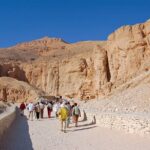
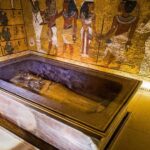
The Valley of the Kings is where Luxor’s ancient power gets loud. This part of the day is designed around the royal burial ground concept, with elaborate tombs linked to major pharaohs—think big names like Tutankhamun, Ramses II, and Seti I. Even when you’re not going into every tomb (which can depend on what you’re allowed to enter on the day), the setting tells the story.
What I like about this segment in a guided format is the way it helps you understand what you’re looking at. These tombs aren’t just “cool rock rooms.” They reflect beliefs about kingship, afterlife preparation, and how art and text worked as part of that plan.
The time you’re given here—about two hours—is enough to get your bearings, not just speed through. Wear solid shoes. The ground can be uneven, and you’ll want to be comfortable so you can actually look up at carvings and murals.
Deir el-Bahari and Hatshepsut’s Temple: The Architecture Is the Story
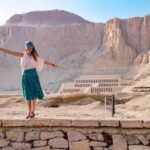
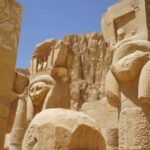
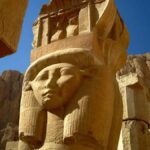
Next comes the Temple of Hatshepsut at Deir el Bahari. This is one of the most distinctive silhouettes on the West Bank: terraces, ramps, and a layout that feels engineered to make you slow down and climb step by step.
Hatshepsut’s mortuary temple is dedicated to a renowned female pharaoh, and the emphasis here is on how her reign shows up in the site’s scale and design. If you’re used to the more straightforward “main hall” temple styles, you’ll notice how Deir el-Bahari plays with elevation and staging. It’s impressive from a distance, but the details matter too—this is where the guide’s interpretation helps you connect geometry to meaning.
You get about an hour at this stop. That’s a good amount for seeing the key areas without turning the visit into a marathon. If you’re the type who wants to sit and stare at carvings, you might wish you had a bit longer—but an hour keeps the rest of the day from feeling like one long wait in the heat.
Colossi of Memnon: Two Giants and a Lot of Atmosphere
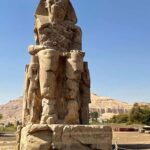
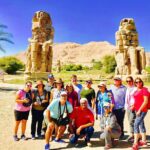
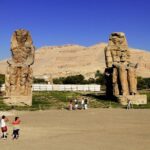
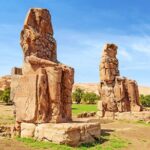
After Deir el-Bahari, you stop at the Colossi of Memnon—huge twin statues made from quartzite sandstone. The time here is shorter (around 30 minutes), but that’s actually ideal for this kind of stop. The statues are big enough that you don’t need to “tour” them for hours. You need a moment to register their scale, then take in the surroundings and context.
The practical value of a guided stop at the Colossi is simple: you get the why. What these figures represent, how they relate to broader temple activity, and what you should notice when you’re standing in front of them.
If you’re photographing, be aware that light changes the vibe fast. Plan for a few minutes to walk for angles, then settle. The weather can move from clear to dusty quickly.
A few more Luxor tours and experiences worth a look




Medinat Habu: Ramesses III and the Bigger Temple Complex Feel
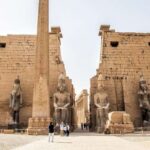
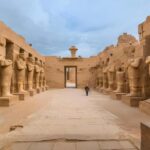
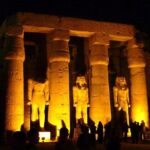
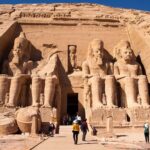
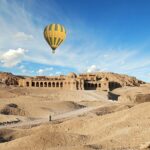
This is one of the strongest parts of the itinerary. You spend about two hours at the Temple of Medinat Habu, specifically focusing on the Mortuary Temple of Ramesses III. The site is described as a long structure—around 150 meters—so you’ll feel the scale in your legs even before you get into the details.
Medinat Habu is also grouped with other temples within the Habu complex. The route includes the Temple of Amun dating to the 18th Dynasty, with connections to Queen Hatshepsut and Thutmose III. In plain terms: you’re not just seeing one ruler’s work. You’re seeing a layered place where different periods left their marks.
This is where a private guide pays off. Medinat Habu can look like “a lot of stone” unless someone points out what to look for—inscriptions, carvings, how the complex functions as a mortuary setting, and how the architecture links back to the surrounding geography.
If you only had time for one big West Bank temple day stop, this would be high on my list. It has weight. It doesn’t feel like a quick checkbox.
Deir el-Medina’s Valley of the Artisans: Meet the People Behind the Tombs
Then the day shifts focus to the Valley of the Artisans, also known as Deir el-Medina—the Valley of the Worker. Instead of only pharaohs and queens, you get the human machine that built the tombs.
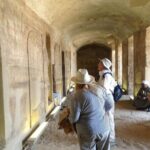
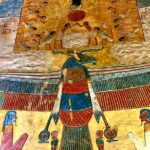
This area was the home of artisans who worked on royal tombs in the Valley of the Kings during the 18th to 20th dynasties. That timeframe matters because it ties the village directly to the royal burial ground you visited earlier. The guide’s job here is to connect daily life in the village to the monumental artwork you’ve been seeing.
One of the most useful aspects of this stop is the way preserved paintings and village remains turn archaeology into daily life. You can understand the difference between a tomb as a monument and a tomb as a workplace outcome.
You’re given about two hours here as well, and that’s ideal. Deir el-Medina isn’t a “run to the next doorway” site. It rewards slower attention.
Valley of the Queens and Tombs of the Nobles: A Calmer Kind of Royal
The Valley of the Queens, also known as Ta-Set-Neferu, is where burial sites for wives of pharaohs and other high-status family members were located. The setting tends to feel more subdued than the Valley of the Kings, and that’s part of its value. It’s a different angle on the same royal afterlife system.
In the tour details, the Valley of the Queens is marked with admission not included, but the Tombs of the Nobles visit later is marked with admission included. Translation: you should expect ticket rules to be a little site-specific. Before you go, confirm what your package covers at each segment so you’re not surprised by a last-minute paywall.
The Tombs of the Nobles stop focuses on a large cluster—more than 400 tombs—belonging to nobles. You’ll also hear about cryptic passages from the Book of the Dead, which guided people through the afterlife. This is a powerful concept because it explains why the tombs aren’t just decoration. They’re intended as instruction.
Transport, Time, and the Real Value of the $14 Price
At $14.00 per person, this tour is priced in a way that’s hard to ignore—especially because it’s described as a private full-day experience. The real question is: what does that low price buy you, and what might cost extra?
Here’s what you can count on from the tour info:
- Private A/C vehicle with pickup and return to your hotel or Nile cruise
- A professional guide for the day
- Water and snacks during the trip
- Entrance fees are described as included for multiple stops, but the details also show some sites with optional or non-included admission
The practical takeaway: the value comes from cutting out the logistics stress. For many people, the money you save isn’t only about the itinerary—it’s about not figuring out transport between West Bank zones, not losing time negotiating tickets, and not getting stuck in crowds.
If you’re traveling in a group (or can bundle with others), the listing also notes group discounts, which can make the price even more attractive. For solo travelers, the private format can feel like getting “full service” without the big-city price tag.
Just don’t assume every single entry cost is handled automatically. This tour has specific “included vs not included” flags for different parts, especially around the Valley of the Queens. If you confirm that before you start, you’ll have a smooth day.
Guides and Drivers: What to Expect From the People Running the Day
This is a licensed guide-led experience, and that matters at the West Bank. The monuments are old enough that the basics are easy to see, but the meaning comes from interpretation: how texts and images fit together, why certain temples belong to particular dynasties, and what to notice in a damaged carving.
From prior service styles, names like Muhammed, Ahmed, Eslam, and Tareq show up with a consistent theme: patience and attention. In a private day, that kind of temperament is more than nice—it keeps you from feeling rushed or lost when a site needs a second look.
Who This Tour Is Best For (and who should think twice)
This day suits you if you:
- Want a structured 8-hour West Bank overview without the scramble of coordinating taxis
- Like explanations that connect sites, not just facts shouted over background noise
- Prefer private pacing, especially at Deir el-Medina and Medinat Habu
- Care about comfort—pickup in A/C, plus water and snacks to keep you steady
It might be less ideal if you:
- Want total freedom to pick and choose ticketed tomb entries on the fly (because ticket inclusion can be site-specific)
- Are only interested in the single biggest headline tombs and want minimal temple time
If you fall into the “I want the full West Bank story” camp, this tour is built for that.
Should You Book This Luxor West Bank Private Tour?
I’d book it if you want a day that feels organized, not exhausting. The combination of Medinat Habu, royal tomb country, and Deir el-Medina gives you both the power side and the people side of Theban history. The private vehicle, A/C comfort, and guide-led interpretation turn it from a long sightseeing slog into a coherent route.
Book with one smart caution: confirm what entrance fees are truly included for your exact package, especially for the Valley of the Queens-related parts and lunch options. Once you know that, the day looks like strong value for a private, full-day West Bank experience.
FAQ
How long is the Luxor West Bank private tour?
The tour runs for about 8 hours.
Is hotel or Nile cruise pickup included?
Yes. Pickup is offered from your hotel in Luxor or from your Nile cruise, and you’re also returned after the tour.
What does the tour include for meals and drinks?
You’ll have 1 bottle of mineral water, and water and snacks are provided. Lunch is included only when you choose the option that includes Car + Guide + Entry + Lunch.
Are entrance fees included?
Some sites show admission included in the tour details, while others show admission not included or optional. It’s best to confirm what’s covered in your specific booking.
Is this a private tour?
Yes. It’s a private tour/activity, and only your group participates.
Is there free cancellation?
Yes. You can cancel for a full refund if you cancel up to 24 hours in advance. If you cancel less than 24 hours before the start time, the amount paid is not refunded.
If you tell me your travel month and whether you want to add lunch, I can help you sanity-check what to expect cost-wise for the Queens area and the Nobles tomb visit.