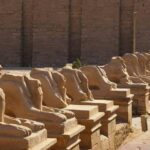
Luxor can feel like a giant outdoor museum. This private full-day tour is built to cover the West Bank tombs and the East Bank temples in one efficient swing, with a proper English-speaking guide to translate the big picture.
I especially like that the day includes the core hits (Valley of the Kings, Hatshepsut, Karnak, and Luxor Temple) with admission tickets already covered at each stop. I also like the practical setup: hotel pickup/drop-off, air-conditioned van transfers, and a bottle of water so you stay focused on the sights. The only real drawback to consider is time: with 6 to 7 hours total, you’ll be moving between major sites and won’t have the luxury of lingering everywhere.
You also get a true private feel. Only your group participates, and guides people name in their experiences include Hassan Ali, Samah Ahmed, Hisham, Nermian, and Samah—so you’re not left guessing in a language barrier.
In This Review
- Key highlights worth knowing
- Why this East and West Bank day works in 6 to 7 hours
- Pickup, comfort, and the stress you avoid
- Valley of the Kings: named tomb highlights with a tight time window
- Temple of Hatshepsut: the women-ruler stop that keeps the story human
- Colossi of Memnon: big monuments, minimal time, good photo payoff
- Karnak Temple: the worship complex block you’ll remember
- Luxor Temple: ending where the day feels complete
- Guide quality is the difference between seeing and understanding
- Price and value: why $12 can make sense here
- How to plan your day so you don’t feel rushed
- Should you book this private full-day Luxor tour?
- FAQ
- What sites are included in the Luxor East and West Bank tour?
- How long is the private tour?
- What’s included in the price?
- What is not included?
- Is this tour private?
- What is the cancellation policy?
Key highlights worth knowing
- Valley of the Kings time (2 hours): enough time to see major named tomb highlights without rushing straight through
- Admission tickets included at each stop: you’re not juggling cash or tickets while you’re on the move
- Hatshepsut Temple (1 hour): a focused stop for the story of Egypt’s only pharaonic woman
- Karnak Temple (2 hours): the day’s biggest “worship complex” block, with time to breathe between parts
- Luxor Temple (1 hour): a strong closing stop when you still have energy for photos
- Air-conditioned van + hotel pickup: comfort matters in Luxor heat, even on a short day
Why this East and West Bank day works in 6 to 7 hours
The best reason to book this style of tour is simple: you get a full Luxor overview without turning your day into a logistical mess. In roughly 6 to 7 hours, you’ll move from the burial world of the West Bank to the temple world of the East Bank, hitting the main sites that most first-time Luxor days aim for.
What I like is the pacing. It’s not one-hour “photo stops” all day. Valley of the Kings and Karnak each get 2 hours, which is where your understanding really builds. The remaining stops are shorter—1 hour each—so you can keep momentum.
The one thing you should plan mentally for is travel time between sites. Even with an organized van, Luxor is still Luxor. If you hate being on a clock, this may feel fast. If you want the highlights efficiently, it’s a good fit.
You can also read our reviews of more private tours in Luxor
Pickup, comfort, and the stress you avoid
This tour is set up for the start-to-finish convenience that makes a day like this actually enjoyable. Pickup and drop-off from your hotel means you’re not hunting for transport before you even start seeing monuments.
Transfers are by an air-conditioned van, and you get a bottle of mineral water during the excursion. That sounds basic until you’re dealing with midday conditions and the constant back-and-forth that ruins your energy. Here, the comfort pieces are built in, so your day is sight-first instead of logistics-first.
One small detail that matters: it uses a mobile ticket. In busy places, anything that cuts friction is a win.
Also, tipping isn’t included. That’s normal in Egypt tour culture, but it’s worth keeping in mind so you’re not doing last-minute math at the end of the day.
Valley of the Kings: named tomb highlights with a tight time window
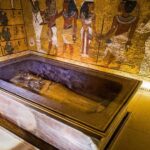
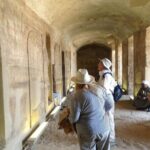
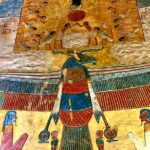
Your West Bank begins at the Valley of the Kings, and the tour frames it around specific royal burials. The named highlights include King Tutmosis I, Tutmosis III, Tut-Ankh-Amon, King Ramssess VI, King Mrenptah, and Amonhotep II.
The big advantage of this stop is focus. The Valley can sprawl, and without a guide you can waste time choosing. With an English-speaking guide, you get the story behind the tombs and you’re more likely to pick the ones that match your interests.
You also get a full 2 hours here, which is long enough to see more than one tomb interior or at least to spend quality time inside the key spaces. The possible drawback is also time-based: with only 2 hours, you can’t expect to do everything deeply. If you’re a “one tomb, long slow visit” kind of person, you’ll feel the squeeze.
Practical tip: wear comfortable shoes and plan for walking. This is tomb territory, and the ground is not designed for fancy footwear.
Temple of Hatshepsut: the women-ruler stop that keeps the story human
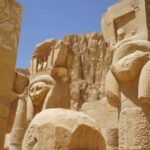
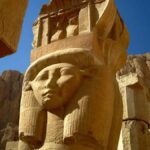
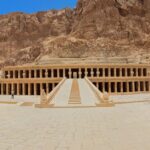
Next comes the Temple of Hatshepsut, a stop described as the reign of the only pharaonic woman who reigned ancient Egypt. That framing matters because it pulls you out of “king names on walls” mode and turns the day into a bigger narrative.
At 1 hour, it’s intentionally not an all-day detour. You’ll get enough time to grasp what you’re looking at and take photos without needing to constantly check your schedule.
The drawback is similar to other shorter stops: you’ll likely want more time once you’re there. But the tour’s structure is designed for balance—if Hatshepsut gets too long, Karnak suffers.
If you like a guide who can explain why this place is important (not just what it looks like), this is one of the most rewarding hours in the day.
Colossi of Memnon: big monuments, minimal time, good photo payoff
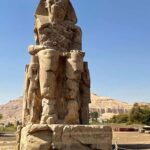
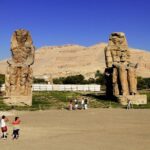
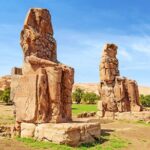
Then you move to the Colossi of Memnon, described as remains of the mortuary temple of Amenhotep III. Even if you’re not chasing every single archaeological detail, the Colossi are one of those “instant scale” moments. They give you a visual anchor for the West Bank before you shift to temples.
This stop is 1 hour, which is about right for seeing them, reading the context with your guide, and getting photos without turning it into a long detour.
The trade-off: because the time is limited, you won’t have a deep archaeology session here. You’re going for understanding and atmosphere, not a study course.
A few more Luxor tours and experiences worth a look


Karnak Temple: the worship complex block you’ll remember
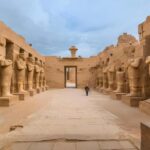
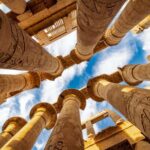
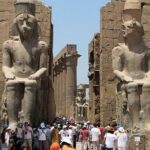
Karnak is scheduled for 2 hours, and it’s positioned as the greatest example of worship in the history of Luxor. That alone signals what your guide should be doing here: connecting the scale to the meaning.
This is the heart of the East Bank day. The longer time slot helps because Karnak isn’t just one doorway you step through; it’s a major compound where your brain needs a little time to catch up. With 2 hours, you can actually move between key parts and let the place register instead of feeling like you’re sprinting.
A consideration: Karnak can be busy and bright. If you’re sensitive to heat or glare, plan to lean on shade when you can and keep water use steady. The tour’s included water helps, but it’s still smart to bring sun protection as your own personal expense.
If you only have one East Bank temple day, Karnak is typically the one that delivers the most “wow per minute.” This schedule agrees with that instinct.
Luxor Temple: ending where the day feels complete
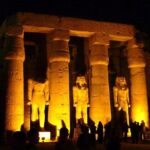
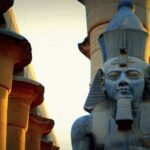
Your day closes with Luxor Temple, described as a sacred place built by two Pharos in different dynasties. It gets 1 hour on the clock, which works well as a final stop.
I like ending here because it ties the day together. You’ve spent time with tombs and one major worship complex; Luxor Temple gives you a calmer, more rounded finish while you still have the energy to enjoy it.
The only drawback is the same timing reality: one hour is enough for the highlights, not enough for slow exploration. If you like to revisit details for photos, you might feel that the clock moves quickly.
Still, as a final monument on a full-day route, it’s a strong closer.
Guide quality is the difference between seeing and understanding
This is a “big sites” day, so your guide matters. The tour includes an English-speaking guide at the sites mentioned above, and that turns the day from monument-watching into actual learning.
From the experiences shared around this tour, guides people have named include Hassan Ali, Samah Ahmed, Hisham, Nermian, and Samah. The common thread in those names is clear communication—especially helpful when you’re standing in front of Egyptian sites that can feel confusing without a roadmap.
What makes this valuable is not fancy storytelling. It’s practical context: what you’re looking at, why it’s important, and how each stop connects to the next.
If you’ve ever toured ancient places with a guide who just reads dates off a wall, you’ll appreciate what a good guide does here: keeps you oriented so you don’t get lost in details.
Price and value: why $12 can make sense here
At $12.00 per person, this tour pricing looks unusually low for a private day. The reason it can feel like a value is that the tour setup includes several things that often cost extra on other Luxor tours: hotel pickup/drop-off, air-conditioned transfers, an English-speaking guide, and admission tickets included at every stop listed.
You’re also not paying for bottled water during the excursion, which is a small cost but an annoying one when you’re already spending on tickets and snacks.
Two cautions for value-thinking:
- Private doesn’t always mean “luxury.” It means you won’t share the van with random strangers, but you still follow a timed schedule.
- The price may not include tipping or personal expenses, so budget a little extra for that.
Overall, for a first-time Luxor day, this format can be a smart use of time and money because it folds most key costs into one package.
How to plan your day so you don’t feel rushed
This tour runs about 6 to 7 hours, and the site times add up to a clear structure. That means you should plan your morning around it, not around “maybe we’ll see what happens.”
If your schedule is flexible, book this as one of your first Luxor days. It gives you context fast. If you already know you’ll want to return, this tour also helps you decide what deserves a second visit.
Pack basics:
- Comfortable shoes (tomb sites and temple grounds = walking)
- Sun protection and sunglasses (especially for Karnak)
- A small amount of cash for personal extras, since tipping and personal expenses are not included
Weather matters here. If Luxor weather turns unpleasant, the experience may need a different date. Build in a little flexibility so you’re not stuck with just one shot at your day.
Should you book this private full-day Luxor tour?
Book it if you want a high-coverage East and West Bank day with included admission tickets, hotel pickup, and an English-speaking guide, without spending your precious hours on transport hunting.
Skip it (or consider adding more time) if you’re the kind of traveler who loves long, slow museum-style visits and hates the idea that a 1-hour stop can end while you’re still getting into the story.
One more helpful check: this tour has a strong satisfaction profile in the data you provided—4.9 rating with 16 reviews and 100% recommended. That’s not a guarantee, but it’s a good sign that the day usually runs smoothly.
If you’re trying to make the most of a limited Luxor stay, this is one of the more sensible ways to do it.
FAQ
What sites are included in the Luxor East and West Bank tour?
You’ll visit the Valley of the Kings, Temple of Hatshepsut, Colossi of Memnon, Karnak Temple, and Luxor Temple.
How long is the private tour?
The tour lasts about 6 to 7 hours.
What’s included in the price?
The tour includes an English-speaking guide, a bottle of mineral water, air-conditioned van transfers, hotel pickup and drop-off, and service charges and taxes. Admission tickets are included for the listed stops.
What is not included?
Tipping and personal expenses are not included.
Is this tour private?
Yes. It’s a private activity, and only your group will participate.
What is the cancellation policy?
You can cancel up to 24 hours in advance for a full refund. If it’s canceled due to poor weather, you’ll be offered a different date or a full refund.