REVIEW · CAIRO
2 Days best of Cairo & Giza private guided tour
Book on Viator →Operated by Egypt Tours Experience · Bookable on Viator
Two days in Cairo, and time feels huge. This private tour strings together Giza pyramids and the Sphinx with a focused day of museums and Cairo’s old neighborhoods, so the city doesn’t just look famous—it feels understood.
What I liked most is how the Giza stops are organized: walking around the Great Pyramid area, then hitting the panoramic viewpoints and photo moments with a clear path to the Sphinx and the surrounding monuments. The other big win for me is the Egyptian Museum, built to hold thousands of artifacts and still powerful for seeing how Egyptian civilization is stitched together from prehistory through Greco-Roman times.
The one thing to consider is pace. It is a full 2-day highlights plan with early starts and lots of walking and time outdoors, and some popular add-ons (like going inside the pyramids or the solar boat ticket) aren’t included.
In This Review
- Key highlights you’ll care about
- Why the Best of Cairo & Giza tour works as more than a checklist
- Day 1: Giza pyramids, Sphinx, Memphis, and Sakkara’s Step Pyramid
- Inside the Giza visit: walking, panoramas, and the Sphinx moment
- Memphis and the “white house” story you get to see in ruins
- Sakkara’s Step Pyramid: the first stone pyramid moment
- Day 2: Egyptian Museum, Coptic Cairo, the Citadel, and Khan el-Khalili
- Egyptian Museum (National Museum of Egyptian Antiquities): 120,000 pieces, major Tutankhamun impact
- Coptic Cairo: churches, Babylon Fortress area, and the holy family tradition
- Saladin Citadel and Muhammad Ali Mosque: medieval fortress to Ottoman grandeur
- Khan el-Khalili: a practical hour for browsing and snacks
- Private transportation with AC and Wi‑Fi: how it affects your day
- Price and value: what $154.29 per person really covers
- Who this tour suits best (and who might want to adjust it)
- Tips to make your 2 days easier
- Guide energy matters: Ahmed, Mohammed, and Mostafa show up in the feedback
- Should you book this 2-day Best of Cairo & Giza private tour?
- FAQ
- What time does the tour start?
- Is pickup included?
- How long is the tour?
- Are entrance fees included?
- What about extra tickets like going inside the pyramids or the solar boat?
- Is the tour private or shared?
- What’s included for comfort during the drive?
- FAQ
- What is the cancellation window?
- Is the tour dependent on weather?
- Do you provide mobile tickets?
- Are guide services included?
Key highlights you’ll care about
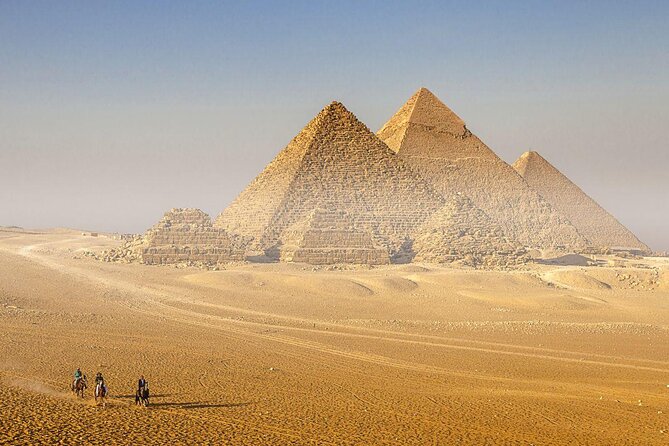
- Giza in a tight loop: walk the Great Pyramid area, then view the whole line from viewpoints before finishing near the Sphinx
- Step Pyramid context: Sakkara isn’t just another pyramid stop—it’s framed as the first built in stone, plus a major necropolis
- Museum time with weight: the Egyptian Museum visit is long enough (about 2 hours) to see major Tutankhamun treasures without rushing
- Old Cairo through different lenses: Coptic Cairo covers churches tied to early Christianity, then you continue into the Islamic Cairo vibe
- Real Cairo ending: Saladin Citadel views plus a practical hour for Khan el-Khalili browsing
- Private comfort: AC and Wi‑Fi in the car, bottled water, and snacks help you keep energy for the day
Why the Best of Cairo & Giza tour works as more than a checklist
If you only have a short window in Cairo, this tour is built like a storyline: you start with monumental Egypt, move to early state power (Memphis and Sakkara), then pivot into Cairo’s layered religious history and end with a classic bazaar walk. It is exactly the kind of schedule that helps you connect what you’re seeing—rather than just taking photos and moving on.
I also like that the tour is private. You are not sharing logistics with random strangers while you’re trying to see the pyramids before the crowds (or before you melt). Pickup is offered, and the transportation includes AC and Wi‑Fi, plus bottled water and snacks.
The best part is that it keeps the “big names” but still gives you enough structure to understand why they matter: the Great Pyramid and Sphinx aren’t treated as isolated icons, and the museum visit isn’t treated like a quick pass-through.
You can also read our reviews of more guided tours in Cairo



Day 1: Giza pyramids, Sphinx, Memphis, and Sakkara’s Step Pyramid
Day 1 is the heavy-hitter day. You begin at the Pyramids of Giza and then connect the story forward to Memphis (Egypt’s first federal capital) and Sakkara (the oldest necropolis associated with that same era). The rhythm matters because it turns two distant sites into one timeline.
Timing-wise, you start around 8:00 am and then you get roughly:
- Pyramids of Giza: about 3 hours
- Memphis: about 1 hour
- Sakkara Step Pyramid area: about 2 hours
That is a long day, but it’s also the right order: start while you can still think clearly outside, then keep the momentum with nearby historical anchors.
Inside the Giza visit: walking, panoramas, and the Sphinx moment
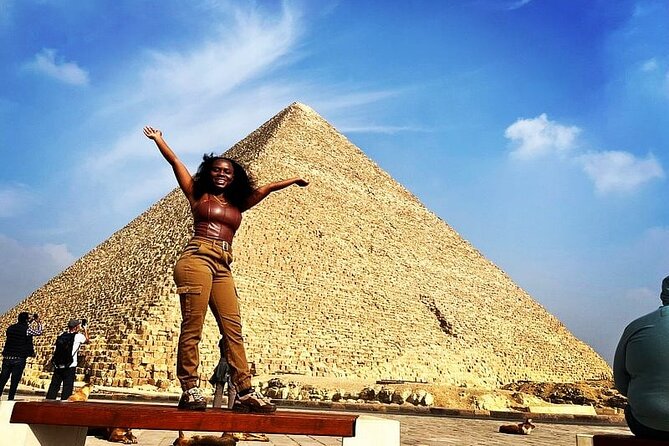
At Giza, you start with the Great Pyramid. The tour frames it with the scale you want to hear in person: built on an order of King Cheops, described here as about 146 meters high, with roughly 2.4 million stones and around 7 million tons. Even if you don’t obsess over the exact numbers, you will feel the scale in your body when you walk the area.
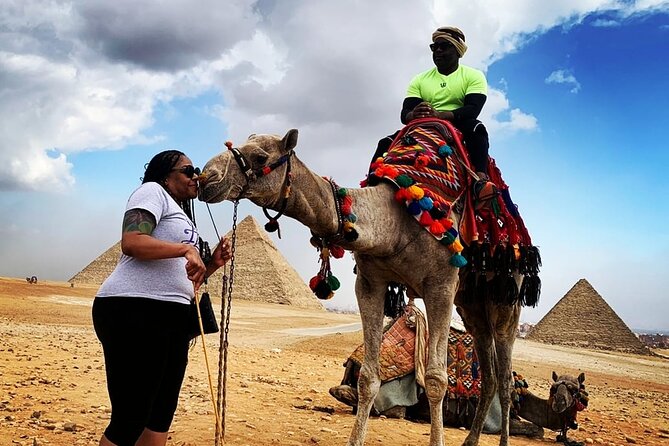
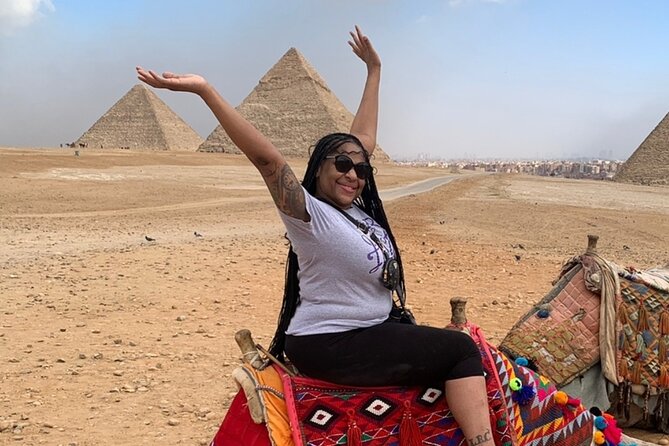
Then you drive to a panoramic view where you can see the pyramids lined up in one direction—great for orientation and those all-pyramids-in-one-frame pictures. After that, you can stop in front of the pyramid of Chefren, and continue toward Menkaure.
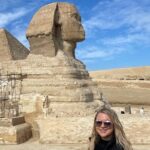
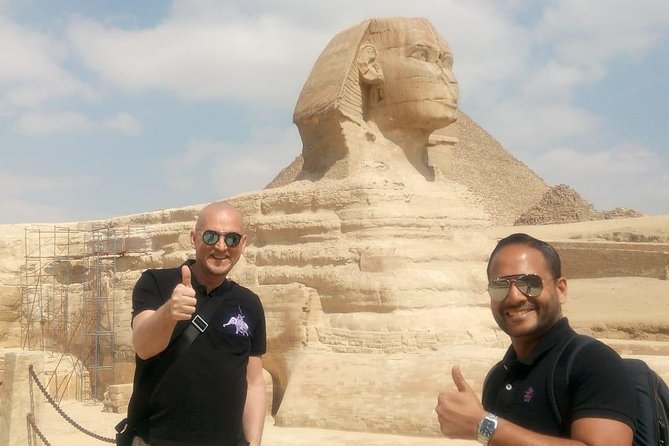
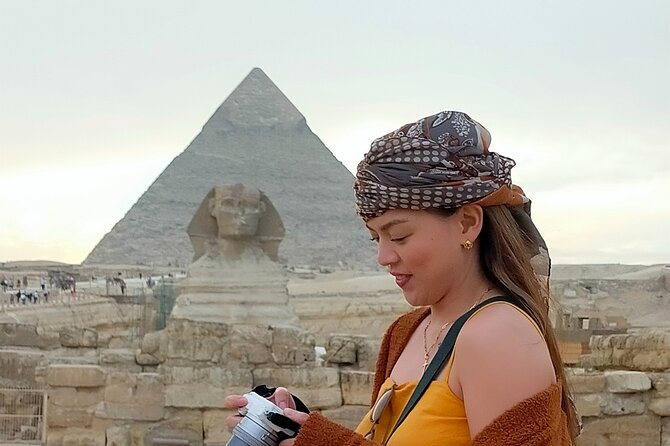
Finally, you reach the Sphinx, described as a lion’s body with a man’s head, lying behind the valley temple of the second pyramid. This stop is where the tour becomes less about counting monuments and more about seeing relationships: how the Sphinx sits with the temple/valley layout and how you can line up viewpoints.
Practical note: the tour includes entrances for what is listed, but it does not include extra tickets for things like going inside the pyramids or the solar boat area. If you really want those, you’ll need to budget separately.
Memphis and the “white house” story you get to see in ruins
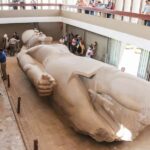
After Giza, the stop at Memphis helps you understand that pyramids did not appear in a vacuum. Memphis is treated here as the first federal capital of Egypt, tied to the name Mn-Nefer meaning beautiful town (and also linked to Pr-hedj, described as the white house).
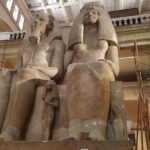
You’ll see remains and highlights from early periods and major reigns, including statues connected with the second Ramses period. The route is practical: you get a guided look at key pieces without it turning into a museum-only day.
The time for Memphis is about 1 hour, so this is not a deep excavation experience. It’s a focused “you are standing on the first power center” kind of stop.
Sakkara’s Step Pyramid: the first stone pyramid moment
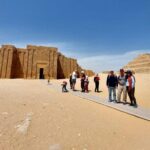
Then you head to Sakkara, about 20 kilometers south of Giza. This is one of those places where the tour does a good job explaining the emotional logic of history: Sakkara is called the oldest necropolis associated with the first federal capital at Memphis.
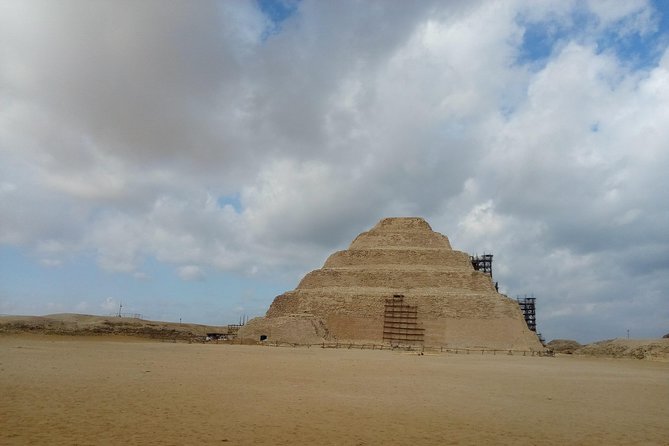
The big feature is the Step Pyramid—presented as the first pyramid built in the world and as the first complex built by stone on earth, ordered by King Zoser. Whether you’ve read about it before or not, hearing it tied to the “first of its kind” idea helps you look at the structure differently when you stand there.
The rest of the stop includes the broader context: Sakkara was used as a major cemetery, stretching through long periods up to the Greek-Roman era as described in the tour framing. That extra context is what keeps Sakkara from feeling like a single photo stop.
You can also read our reviews of more private tours in Cairo





Day 2: Egyptian Museum, Coptic Cairo, the Citadel, and Khan el-Khalili
Day 2 is about Cairo the city: museums for the artifacts, then neighborhoods that show how religion and power changed over centuries. It’s also where the tour feels most like Cairo rather than just Egypt’s famous monuments.
The planned sequence is:
- National Egyptian Museum: about 2 hours
- Coptic Cairo: about 2 hours
- Cairo Citadel: about 1 hour
- Khan el-Khalili: about 1 hour
You’ll travel by private vehicle with AC and Wi‑Fi between stops, with the tour guide coordinating timing so you’re not constantly waiting or wandering.
Egyptian Museum (National Museum of Egyptian Antiquities): 120,000 pieces, major Tutankhamun impact
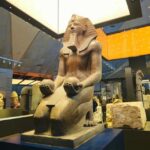
You start with the National Egyptian Museum, built in 1901 and described as one of the oldest and most important museums in the world. The tour frames it as a mirror of ancient Egyptian history from prehistory through the Greek-Roman period, with about 120,000 pieces.
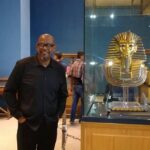
What makes this visit feel worth the time is the emphasis on the Tutankhamun treasure collection, described as including more than 3,500 masterpieces. The tour also notes that Howard Carter discovered Tutankhamun’s tomb in 1922 in the Valley of the Kings.
You get about 2 hours, which is a sweet spot for a highlights approach: enough time to see the big centerpieces and still ask questions without feeling like you need an entire week.
Coptic Cairo: churches, Babylon Fortress area, and the holy family tradition
After the museum, you shift to Coptic Cairo, part of Old Cairo. The route includes the Babylon Fortress, the Hanging church, and the Greek church of St. George, plus other Coptic churches.
This stop is grounded in Christian tradition. The tour notes that the Holy Family visited this area and connects the tradition to sites and churches linked to saints Sergius and Bacchus (Abu Serga). You also hear the historic arc: Coptic Cairo was a stronghold for Christianity until the Islamic era, and many of today’s church buildings were built after the Muslim conquest of Egypt in the 7th century.
Again, this is guided context more than a “sit and read” visit. In about 2 hours, you can walk through meaningful sites and leave with a clearer sense of how Cairo’s religious layers overlap.
Saladin Citadel and Muhammad Ali Mosque: medieval fortress to Ottoman grandeur
Next you head to the Cairo Citadel. This stop has a strong power-story behind it: built on order of King Saladin between 1176 to 1183 CE to protect Cairo from Crusaders. You’ll also hear a note that the stones were recycled from the Giza pyramids to speed construction.
The Citadel served as royal court from Al-Nasir Muhammad ibn Qalaoun through Muhammad Ali Pasha (up to 1807 CE), and then Muhammad Ali built major palaces and the Muhammad Ali Alabaster Mosque between 1828 to 1848 CE.
The timing here is about 1 hour. That is enough for the main viewpoint experience and the core architectural impressions without turning it into a long sit-down tour.
Khan el-Khalili: a practical hour for browsing and snacks
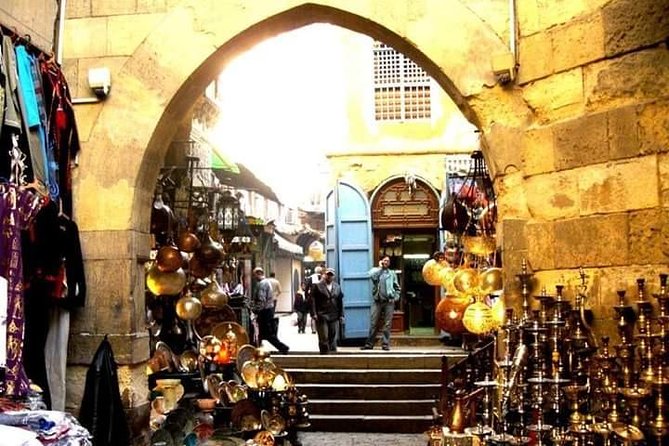
You wrap day 2 at Khan el-Khalili, one of Cairo’s major souks in the historic center of Islamic Cairo. The tour gives you about 1 hour here, which is perfect for a first sweep: see the street rhythm, browse shops, and pick up small souvenirs without losing the whole day to shopping.
If you like to shop, this is also a smart final stop because you are already in the historic mood. If you don’t, it still works—you can stroll, look, and treat the hour as a photo-and-people-watch buffer.
Private transportation with AC and Wi‑Fi: how it affects your day
This tour includes private transportation with AC and Wi‑Fi, plus bottled water and snacks. In Cairo, that matters more than it sounds. Heat and traffic can drain you faster than the walking at the sites.
A private setup also helps at these monuments and museums. You’re not trying to keep up with other groups while you read signs or stop for a question. Your guide can time your movements so you stay focused on the next place.
Also, you get a mobile ticket. That reduces friction on the ground when schedules change slightly.
Price and value: what $154.29 per person really covers
At $154.29 per person for about 2 days, this tour looks like a “value bundle” because it includes more than just a guide. Entrance fees for the sights in the itinerary are included, and you also get private AC transportation, bottled water, and snacks.
So you’re paying for four things:
- someone to connect the dots between Giza, Memphis/Sakkara, the museum, and Old Cairo
- entrance fees for each listed stop
- private transport so you do not waste time moving between distant points
- comfort items (water, snacks) to keep the day livable
The main cost “gotcha” is the extras not included: pyramids inside and the solar boat ticket, plus personal expenses and tipping (tipping is recommended).
If you’re trying to keep total spending controlled, this tour is better than piecing it together yourself with separate tickets and separate arrangements.
Who this tour suits best (and who might want to adjust it)
This is a strong fit if:
- you want the classic Cairo and Giza highlights without building your own route
- you like guided explanations that connect monuments to the larger story
- you want a private experience with comfort basics like AC and snacks
It may be less ideal if:
- you want a slow, deep archaeological experience at only one site (this schedule is built for coverage)
- you hate early starts or long outdoor hours
- you want lots of optional add-ons inside monuments (since extras like pyramids inside and solar boat are not included)
Tips to make your 2 days easier
Wear comfortable shoes. The tour includes walking at major sites and you’ll benefit from having something you can stand in for long stretches.
Bring sun protection and plan your hydration. Bottled water is included, but Egypt weather can still be relentless, especially if you get behind schedule.
If you care about the inside-pyramid experience or the solar boat, decide in advance. The tour’s included coverage covers the listed stops, but these extras require separate tickets.
Guide energy matters: Ahmed, Mohammed, and Mostafa show up in the feedback
One of the recurring themes in the feedback is guide personality and pacing—people mention guides who keep things upbeat, funny, and easy to manage across long days. Names that appear in Cairo-related feedback include Ahmed Fadayat, Mohammed, Mostafa, and Ahmed Farahat.
Even without assuming who you’ll get, that pattern tells you what to expect: you’ll want a guide who can explain what you’re looking at and keep the day moving without making you feel rushed.
Should you book this 2-day Best of Cairo & Giza private tour?
Book it if you want maximum clarity in limited time. This itinerary does a good job of linking Giza to Sakkara and Memphis, then linking artifacts at the Egyptian Museum to the living feel of Old Cairo via Coptic Cairo, the Citadel, and a final browse at Khan el-Khalili.
Consider booking a different approach if you know you want lots of extra time inside monuments. Because extras like pyramids inside and solar boat aren’t included, you might end up adding costs and rebalancing your day anyway.
My final advice: if this is your first time in Cairo and you want structure, comfort, and the big highlights done in a logical order, this one is an easy yes.
FAQ
What time does the tour start?
The meeting start time is 8:00 am.
Is pickup included?
Yes, pickup is offered.
How long is the tour?
It’s listed as 2 days (approx.).
Are entrance fees included?
Yes. Entrance fees for all sights mentioned in the itinerary are included.
What about extra tickets like going inside the pyramids or the solar boat?
Those extra tickets are not included (for example, pyramids inside and the solar boat).
Is the tour private or shared?
It’s private, meaning only your group participates.
What’s included for comfort during the drive?
You get private transportation with AC and Wi‑Fi on board, plus bottled water and snacks.
FAQ
What is the cancellation window?
You can cancel for a full refund up to 24 hours before the experience’s start time.
Is the tour dependent on weather?
Yes, it requires good weather. If it’s canceled due to poor weather, you’ll be offered a different date or a full refund.
Do you provide mobile tickets?
Yes, the tour uses a mobile ticket.
Are guide services included?
Yes. You’ll have an expert Egyptologist tour guide who speaks your language(s).