REVIEW · HURGHADA
Trip to valley of the kings from Hurghada small group
Book on Viator →Operated by Samegypt tours · Bookable on Viator
Luxor hits early, and it’s worth it. I love the small-group size (max 8) and the professional Egyptologist guide, which keeps the day focused instead of chaotic. I also like that you actually go inside tombs at the Valley of the Kings. The main tradeoff is the long day starting at 5:00am, plus the famous Tutankhamun tomb is usually extra.
You’ll be picked up in Hurghada and transferred by a deluxe air-conditioned van, which matters a lot when you’re doing a full 15–16 hours. The tour runs with a tight rhythm: morning tombs, midday Karnak, then quick hits like the Colossi—so you’ll see a lot, but it won’t feel slow or lazy.
If you’re expecting a short and comfortable “highlights only” day, this might feel like a workout. But if you want real access—tomb entry at the Valley of the Kings and a guided walk through Karnak’s key spaces—this kind of structure is exactly what makes the day feel efficient.
In This Review
- Key things that make this tour tick
- The 5:00am start: how an early departure changes the whole day
- Valley of the Kings: tombs, the place called the Valley of Truth, and real inside time
- Karnak Temple and the hypostyle hall: where names matter more than guesses
- Colossi of Memnon: big impact in a very short window
- Lunch and pacing: the secret ingredient on a 15–16 hour day
- Tutankhamun’s tomb: how to decide if the extra cost fits your priorities
- Price and value: what you’re actually paying for at $125 per person
- Who this tour fits best (and who should think twice)
- Should you book this Hurghada to Luxor small-group trip?
- FAQ
- What time does the tour start from Hurghada?
- How long is the trip?
- How many people are in the group, and how do you travel?
- What is included in the tour price?
- Is Tutankhamun’s tomb included?
- What if the weather is bad or the minimum number of travelers isn’t met?
Key things that make this tour tick
- Max 8 people means you hear your guide and move at a sensible pace.
- Valley of the Kings tomb entry is included, so it’s not just photos from outside.
- Karnak’s hypostyle hall and major monuments come with names and context, not just wandering.
- Colossi of Memnon is brief, but you get the big wow factor of the huge statues.
- Lunch is included, so you’re not spending time hunting food mid-tour.
- Tutankhamun’s tomb costs extra, so you can decide based on your priorities.
The 5:00am start: how an early departure changes the whole day
This tour starts at 5:00am. Yes, it’s early enough to make your alarm feel personal. But here’s the payoff: you’re not rolling into Luxor at the same time as every late-morning crowd. That means the first visit—especially the Valley of the Kings—tends to feel more manageable and less rushed.
Also, starting early helps the schedule work. You’re looking at a 15 to 16 hour day total, which is long even for people who love history. When the day is this packed, timing is everything. The company builds the day so you can hit major sites without dropping one completely.
If you’re the type who travels best with a plan, you’ll like this structure. You’ll know what’s next, your guide keeps the pace, and the day doesn’t drift into hours of “where are we going now?”
You can also read our reviews of more tours and experiences in Hurghada.


Valley of the Kings: tombs, the place called the Valley of Truth, and real inside time
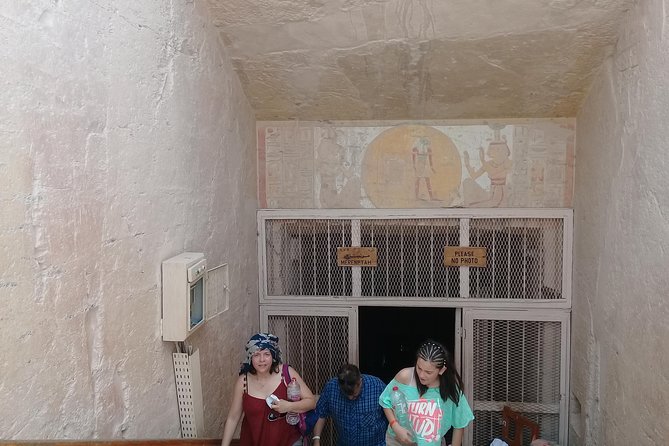
The Valley of the Kings is the star for many people, and it’s easy to see why. Even though the valley contains 64 tombs, only 25 are king’s tombs. That detail matters because the site isn’t just a random cemetery—it’s a curated concentration of royal burials from Egypt’s New Kingdom era.
On this tour, you get about 2 hours at the Valley of the Kings, and admission is included. The biggest value for me is the chance to enter tombs rather than only view them from the outside. Inside, the scale changes. You get a sense of how these places worked: corridors, chambers, and wall scenes meant to guide the dead through the afterlife. Even if you only enter a couple of tombs, you still come away with that “wow, this was built for a purpose” feeling.
Your guide also sets up the concept of the valley as a place tied to truth and royal memory. That framing helps when you’re faced with a row of entrances—because it’s not just “which tomb has the coolest pictures?” It becomes “which tombs represent what kind of royal authority and religious beliefs?”
One more bonus from the tour description: you’ll also have time to watch the Valley of the Nobles and get photo time at burial areas connected with generals, ministers, and priests from the New Kingdom. It’s not the main event like the kings’ tombs, but it adds texture—like realizing this was a whole system, not one isolated valley.
Practical tip: wear shoes you trust. The paths can be uneven, and you’ll be walking more than you’d expect for a day that starts so early.
Karnak Temple and the hypostyle hall: where names matter more than guesses
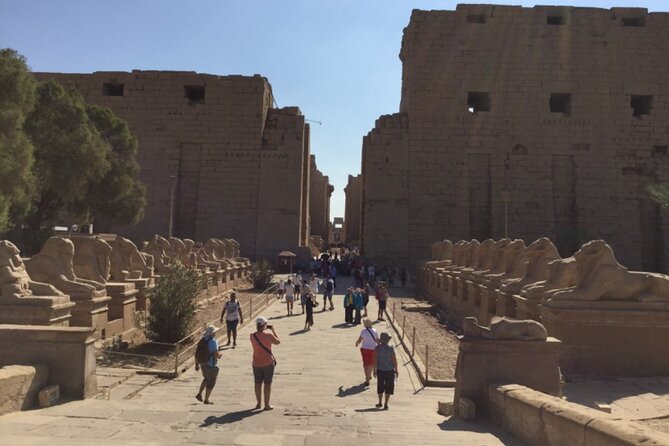
After the tombs, the tour heads to Karnak Temple. Karnak is often described as massive, and the description you’ll get ahead of time is not exaggerating. This stop is built for people who like architecture and readable symbolism.
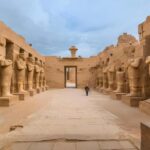
You’ll have about 2 hours at Karnak, with admission included. The highlight is the hypostyle hall, where columns turn the space into a forest of stone. Without a guide, you can wander and still take great photos—but with guidance, you start noticing the logic: why certain statues are where they are, which king’s propaganda is being displayed, and how the temple’s layout reinforces power.
Expect your guide to point out key figures and specific monuments, including statues of Ramesses II. You’ll also get hands-on moments tied to famous stone markers, such as the obelisk associated with King Thutmose (Tutmosis) and the obelisk linked to Queen Hatshepsut. The tour description even calls out touching the obelisks—your guide will show you exactly where.
There’s also a stop mentioned as the chamber of one thousand secrets. Even if you don’t treat that name like a sci-fi slogan, it tells you how the space feels—full of carved detail and layered meanings. The guide’s Egyptology angle matters here. It helps you read the place, instead of only watching it.
The drawback to note: Karnak can feel like a lot of stone, fast, especially if you’re tired. With a short attention span, you might want to ask your guide what the “must-see” points are and then stick to those rather than trying to see everything.
Colossi of Memnon: big impact in a very short window
Next comes the Colossi of Memnon—two colossal statues connected to Amenhotep III (Imenhotep III). The tour description is clear about scale: each statue is around 18 meters high and weighs roughly 500 tons. Even if you’ve read the numbers before, seeing something that huge in person tends to recalibrate your sense of what’s physically possible.
This stop is short—about 10 minutes. That’s enough for the key photos, but not enough to linger like you would in a museum. I like that about this part of the day. It gives you a quick visual reset after the long tomb and temple walking.
Also, these statues are often remembered because of their mythic association with “Memnon,” and they’re described as the last remains of the Temple of Amenophis III. So even though the visit is brief, it still feels connected to the larger story of lost monuments.
Practical tip: take your photos early here. The day’s already long, and you’ll want the time saved later for breaks and unexpected walking.
Lunch and pacing: the secret ingredient on a 15–16 hour day
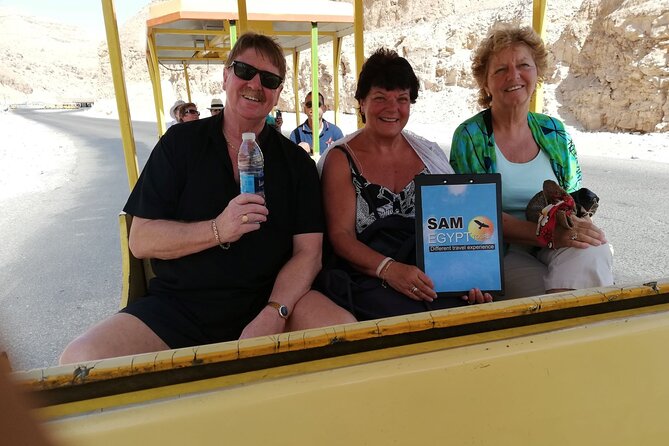
This tour includes lunch, which sounds simple but is a big deal on long travel days. When you’re starting at 5:00am and getting back well after dark, “we’ll grab something later” usually turns into stress, delays, or overpriced fast food.
The small-group setup also helps pacing. With a maximum of 8 travelers, you’re less likely to have a group getting split up during transitions, and you’re more likely to get quick answers from your Egyptologist guide. In the past, guides credited on this kind of day have included Ousama and Hamada, and that lines up with what you want: someone who can explain the site clearly without turning the day into a lecture marathon.
One more pacing detail: the sites are meaningful, but not equally long. The day is structured so the long stays are the two main anchors—Valley of the Kings and Karnak—while the Colossi is a quick hit. That’s smart. It keeps the big-ticket moments from being rushed.
My advice: bring water and something small to snack on during transit. Lunch is included, but your energy will still thank you before midday.





Tutankhamun’s tomb: how to decide if the extra cost fits your priorities
You’ll hear about the most famous burial site everywhere in Luxor: Tutankhamun’s tomb. On this tour, visiting it is listed as not included and typically comes with an extra charge.
So should you pay? Here’s the balanced way to think about it:
- If Tutankhamun is your #1 reason for coming, spending the extra money can be worth it because the tomb is the one everyone knows.
- If you’re more interested in the broader royal landscape—especially how tombs connect to New Kingdom beliefs—then you can still have a powerful experience without the additional stop.
Given that the Valley of the Kings visit already includes entry to tombs, you won’t leave the valley feeling like you only looked from the outside. The extra cost is an add-on, not a requirement for a strong day.
Practical tip: if you’re short on stamina due to the early start, ask your guide how it affects the pace and what tradeoff you might feel. On long days, a small schedule hit can matter.
Price and value: what you’re actually paying for at $125 per person

At $125.00 per person, the value comes from bundling that would be hard to match on your own. You’re not only paying for transport. You’re paying for:
- Hotel pickup and drop-off
- Air-conditioned vehicle
- Professional Egyptologist guide
- Lunch
- Admission included for key parts like Karnak, the Valley of the Kings, and the Colossi of Memnon
- All fees and taxes
Most budget frustrations in Egypt aren’t about the ticket price. They’re about time lost—figuring things out, coordinating entry, and managing multiple day-long logistics. This tour reduces those headaches by turning it into one organized flow.
The real thing to watch is what’s not included: Tutankhamun’s tomb, shopping, personal expenses, and optional items like a Nile boat trip (listed as optional at an extra cost). If you’re the kind of traveler who will buy souvenirs anyway, budgeting is easy. If you like to keep spending tight, plan on whether you’ll want the Tutankhamun upgrade.
Also, the maximum group size of 8 is part of the value. It’s not just a small number for marketing; it changes how smoothly transitions work.
Who this tour fits best (and who should think twice)
This tour is a great match if you:
- want a guided day with Egyptology explanations and a clear route
- like seeing multiple big sites in one go, without planning headaches
- prefer a small-group format over a large coach crowd
You might think twice if you:
- hate very early starts (5:00am is the anchor)
- don’t do well with long days and lots of walking
- are planning to skip guided context and only care about doing the “one famous tomb”
It’s not a calm, slow museum afternoon. It’s a full-day mission. The payoff is that you’ll leave Luxor feeling like you actually processed it, not just photographed it.
Should you book this Hurghada to Luxor small-group trip?
I’d book it if your goal is a high-value, guided day that hits the essentials—Valley of the Kings, Karnak Temple, and the Colossi of Memnon—with lunch and a small-group format that keeps the day organized. The main reason to hesitate is the long schedule: starting at 5:00am and running 15–16 hours means you should be ready for a serious day.
If Tutankhamun’s tomb is the one thing you truly can’t miss, you’ll need to factor in the extra charge and plan for the time impact. If not, you still get an excellent Valley of the Kings experience with tomb entry included, plus Karnak’s hypostyle hall and major monuments.
If your body can handle the early wake-up, this is the kind of day you’ll talk about because it feels like you saw the real Luxor story, not just the postcard version.
FAQ
What time does the tour start from Hurghada?
The tour start time is 5:00am.
How long is the trip?
The duration is about 15 to 16 hours.
How many people are in the group, and how do you travel?
The group is limited to a maximum of 8 travelers, traveling in a small deluxe air-conditioned van with a private guide.
What is included in the tour price?
Included are hotel pickup and drop-off, an air-conditioned vehicle, a professional Egyptologist guide, lunch, and admissions for Karnak Temple, the Valley of the Kings, and the Colossal statues of Memnon. All fees and taxes are included too. A mobile ticket is also provided.
Is Tutankhamun’s tomb included?
No. Tutankhamun’s tomb is under extra charge.
What if the weather is bad or the minimum number of travelers isn’t met?
The experience requires good weather. If it’s canceled due to poor weather, you’ll be offered a different date or a full refund. If it’s canceled because the minimum number of travelers isn’t met, you’ll also be offered a different option or a full refund.