REVIEW · LUXOR
Full-Day Private Guided Tour in the West Bank of Luxor
Book on Viator →Operated by Ahmad Salah-eldin Zaki Best Egyptologist Guide in Egypt · Bookable on Viator
West Bank Luxor feels like time travel. This private full-day tour focuses on the big three monuments most people dream about: Hatshepsut’s terraces, the Valley of the Kings, and Medinet Habu. I like that you’re guided by Ahmad Salah-eldin Zaki Best Egyptologist Guide in Egypt, with 9+ years in tourism guidance, so the day feels organized and explained rather than chaotic.
I also like the way the tour gives you specific, scene-level context, not just names on walls. At Deir el Bahari, you’ll spend time in the three-terrace layout and reach the sanctuary area, and you’ll also see scenes tied to Queen Hatshepsut’s famous naval expedition to Somalia. And in the Valley of the Kings, you get an idea of the mummification process while standing in the tomb landscape that includes Tutankhamun.
One consideration: the tour price includes transport and guiding, but entrance fees and lunch are not included, so you’ll want to budget extra for the sites you’re visiting.
In This Review
- Key things I’d mark on your Luxor map
- The 7:00 am start that actually makes sense on the West Bank
- Your guide: Ahmad Salah-eldin Zaki’s job is to keep the day clear
- Temple of Hatshepsut at Deir el Bahari: terraces, sanctuary, and royal design
- How long to expect and what it costs
- Valley of the Kings: where Tutankhamun lives inside the tomb landscape
- The time box and the ticket math
- Medinet Habu (Temple of Ramesses III): best-preserved vibes and 22-metre drama
- Time on site and the ticket
- Price and value: what $200 per group really buys
- What to expect from the day, step by step
- Who this tour is best for (and who should look elsewhere)
- Should you book this West Bank private day tour?
- FAQ
- How long is the Full-Day Private Guided Tour in the West Bank of Luxor?
- What time does the tour start?
- Is pickup included?
- Are entrance fees included in the price?
- Is lunch included?
- What sites does this tour visit?
- What is the cancellation policy?
Key things I’d mark on your Luxor map
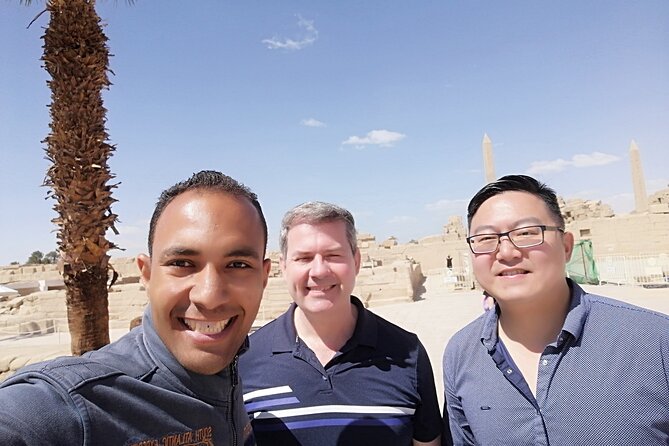
- Private, up-to-15 group format with an air-conditioned vehicle and guiding for a smooth day
- Ahmad Salah-eldin Zaki as your guide, praised for being flexible, friendly, and quick to help with questions
- Temple of Hatshepsut at Deir el Bahari with its three-terrace design and the sanctuary in the deepest part of the mountain
- Valley of the Kings with its 62 royal tombs and the Tutankhamun story (discovered in 1922)
- Medinet Habu (Temple of Ramesses III), including the 22-metre-high first gate and king-name cartouches
- Mobile ticket plus pickup options to help you start the day with less stress
The 7:00 am start that actually makes sense on the West Bank
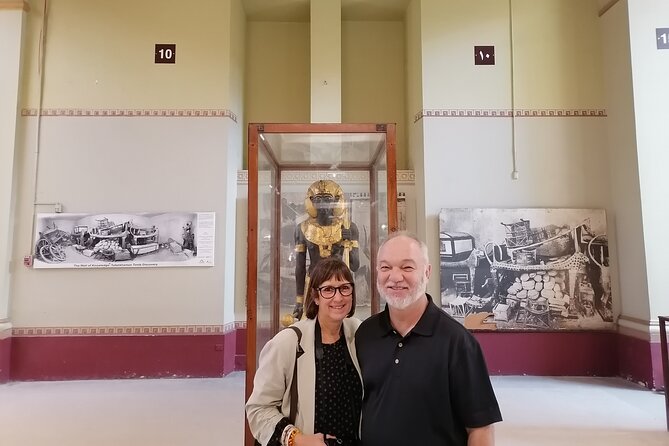
This tour kicks off at 7:00 am, which matters more than it sounds. The West Bank sites are spread out, and you’ll want daylight and clear headspace before you’re doing multiple big monuments in a row. By the time you reach Deir el Bahari, the day feels paced rather than rushed.
The schedule is also set up around short, focused visits: about 2 hours at Hatshepsut, 2 hours in the Valley of the Kings, and 1 hour at Medinet Habu. If you like to linger slowly, you might wish you had more time at each stop. If you want to hit the highlights with strong explanations (and you’re okay with a guided pace), this timing is a solid fit.
You’ll be in an air-conditioned vehicle for the transfers. That’s not just comfort. It helps you keep your energy for the walking and stairs that come with temple and tomb areas.
You can also read our reviews of more guided tours in Luxor
Your guide: Ahmad Salah-eldin Zaki’s job is to keep the day clear
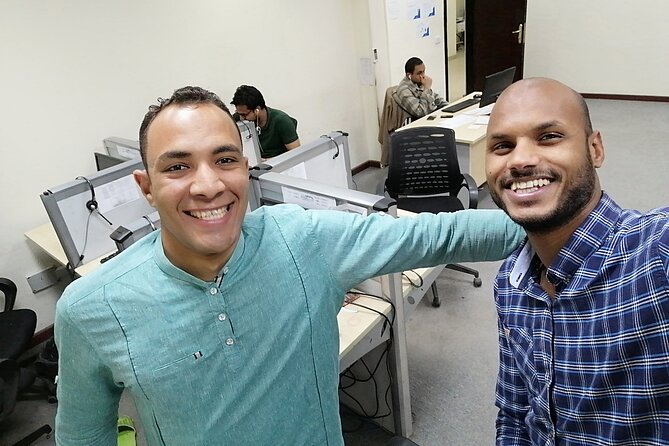
A big reason this tour earns such strong marks is the way Ahmad works as a guide. He’s not just reciting dates. He’s set up to help you understand what you’re seeing and why it mattered, and he’s described as enthusiastic about sharing Egyptian culture and history.
In practical terms, that shows up in three ways you’ll feel during the day:
First, you’ll get answers in the moment instead of leaving you to figure things out on your own. That’s especially useful in Luxor, where symbols and layouts can feel abstract until someone connects them.
Second, there’s an emphasis on comfort and flexibility. People highlight that Ahmad is thoughtful and flexible with the schedule. That means if you have questions at Hatshepsut, you won’t feel brushed off while the group moves on.
Third, he’s positioned as someone who can help you avoid hassle from unwanted attention. One reviewer explicitly mentioned help with protecting against infamous scammers. Even if you’re an experienced traveler, having someone who knows how things work on the ground is a real quality-of-life upgrade.
If you value a guide who can switch between big-picture context and small “look here” moments, this kind of guiding style is exactly what you want.
Temple of Hatshepsut at Deir el Bahari: terraces, sanctuary, and royal design
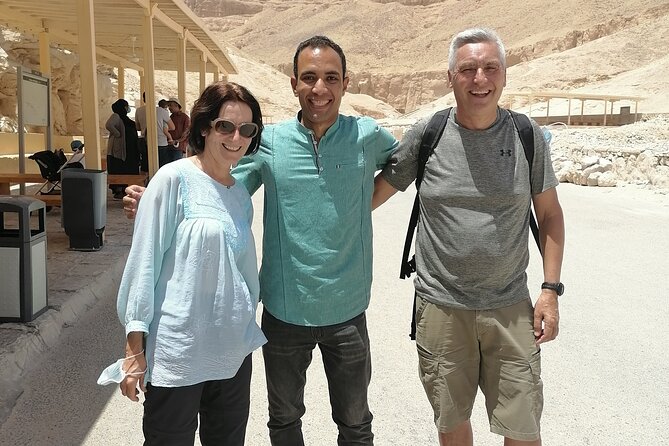
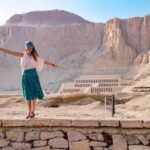
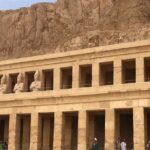
Deir el Bahari is one of those places where the architecture does half the storytelling for you. You’ll visit the Temple of Queen Hatshepsut, and the design is a key part of why this stop feels so special.
Here’s what you should pay attention to during your time there:
- The temple’s three-terrace layout, built into the shape of the hillside
- The sense of progression as you move deeper into the complex
- The sanctuary in the deepest part of the mountain, built into the rock
Hatshepsut is presented as the only real queen who ruled Egypt for more than 21 years, and you’ll hear the framing that she’s also considered the oldest real queen to rule the ancient world. That context helps you see the site as more than a pretty set of stairs and columns.
You’ll also get specific scene context connected to her reign. The tour focuses on scenes from her first famous naval expedition sent to the land of Somalia. That detail matters because it ties the temple’s grandeur to state power and real political ambition, not just ceremonial symbolism.
How long to expect and what it costs
You’ll typically spend about 2 hours at Hatshepsut. Entrance fees are not included, and the ticket cost listed is 12 USD for this stop.
If you’re short on time in Luxor but want one place that shows you Egyptian royal planning at its most dramatic, this is the stop that usually delivers the strongest emotional impact.
Valley of the Kings: where Tutankhamun lives inside the tomb landscape
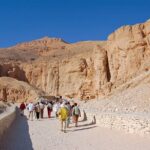
The Valley of the Kings is the headline. This is where you go when you want the iconic Luxor experience: tombs cut into the cliffs, layered royal history, and a sense of how elaborate mummification-related beliefs were.
This tour positions the Valley around its scale and its most famous discovery:
- The valley is described as having 62 Royal tombs
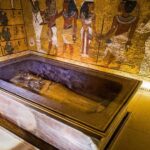
- The best-known name is Tut Ankh Amun (Tutankhamun)
- You’ll hear the discovery story: 1922 by the British archaeologist Howard Carter
- You’ll also get a historical note that it was first discovered in 1817 by the Italian traveler Giovanni Battista Belzoni
- You’ll get an idea about the mummification process in ancient Egypt while you’re there
That last point is important. People sometimes expect the Valley of the Kings to be only about tomb doors and a “seen it” checklist. A good guide helps you connect the physical space to the belief system, so your brain gets a framework instead of just images.
You can also read our reviews of more private tours in Luxor
The time box and the ticket math
You’re looking at about 2 hours at the Valley. Entrance fees are not included, and the listed ticket cost is 16 USD.
In terms of pacing, this is usually a sweet spot. Two hours is enough time to follow a guide’s logic, look at details, and still have a chance to take in the setting without feeling completely burned out.
Medinet Habu (Temple of Ramesses III): best-preserved vibes and 22-metre drama
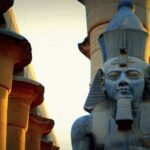
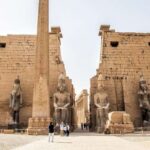
If Hatshepsut is about sculpted terraces and royal ambition, Medinet Habu is about staying power. This stop is described as the most well preserved temple in the world, built by King Ramesses the Third.
You’re guided through specific features that make Medinet Habu feel different from the other major temples:
- The temple’s reputation for being mind blowing and strongly intact
- The first gate being about 22 metres high
- How the cartouche design includes king names in an oval circle
- The visual presence of Ramesses III’s legacy throughout the complex
The emphasis on Ramesses III is also tied to his identity as a warrior who enlarged the ancient Egyptian empire. That matters because it frames the temple as a statement of power, not just a religious site.
And there’s a reason this temple often lands well with first-time visitors: even if you know very little, the scale and preservation help you understand Egyptian civilization as something physical and real. You’re not just hearing about kings and queens; you’re standing in spaces built for their memory.
Time on site and the ticket
Plan on about 1 hour here. Entrance is not included, and the ticket cost listed is 8 USD.
Because it’s shorter than the other two stops, this visit works best when you’re ready to focus. If you treat Medinet Habu like a quick, guided highlight rather than a long wandering day, you’ll get the most out of it.
Price and value: what $200 per group really buys
The price is listed as $200.00 per group (up to 15 people), with the tour lasting about 8 hours. Since it’s a private guided day, the value depends on what you’re comparing it to.
Here’s a fair way to look at it:
What you get in the base price:
- Air-conditioned vehicle for transport
- Private transportation
- Guiding services
What you should budget separately:
- Entrance fees for the three stops (total listed):
- Hatshepsut at Deir el Bahari: 12 USD
- Valley of the Kings: 16 USD
- Medinet Habu: 8 USD
- Total: 36 USD in entrance tickets
- Lunch is not included
So your day’s base cost is $200 for up to 15 people, plus about $36 in entrance fees per person (based on the listed ticket prices) and whatever lunch you choose.
If you’re traveling as a small family or a group who wants a guide to keep the story coherent across multiple major sites, this pricing can make sense fast. You’re effectively paying for the convenience of not figuring out logistics on your own, plus a guide who’s good at explaining what you’re looking at.
If you’re going solo and comparing against cheaper group options, the base price can feel steep. But the tradeoff is private guiding across three heavy hitters in one organized day.
What to expect from the day, step by step
This is a tightly built West Bank day built around movement from monument to monument. With the 7:00 am start, you’ll likely be deep into the major sites early, which helps keep the day feeling like a “real tour” rather than a loose collection of stops.
For each location, the structure is pretty clear:
- You arrive with your guide
- You spend focused time learning and looking
- You move on before the day gets too heavy
The big practical win here is that you’re not stuck trying to translate architecture and royal symbolism while also dealing with on-site confusion. With Ahmad guiding, you can follow the flow: terraces to sanctuary, then tomb landscape, then a preserved temple complex linked to Ramesses III.
Also, this includes a mobile ticket, which usually helps with smoother check-ins. It won’t change the ancient sites themselves, but it can reduce the small annoyances that add up when you’re visiting multiple venues.
Who this tour is best for (and who should look elsewhere)
This is a strong choice if:
- You want West Bank highlights in one day without juggling too many decisions
- You care about having a guide who connects scenes to meaning (like Hatshepsut’s expedition and the Valley’s tomb world)
- You appreciate a calm, flexible guide style from someone like Ahmad Salah-eldin Zaki
You might want to look elsewhere if:
- You expect lunch and entrance fees to be included in the package price
- You prefer lots of free time wandering without a structured guide path
- You’re hoping for extra East Bank or temple stops not listed in this day plan
In other words, this tour is built for people who want the classics, explained well, with transport handled.
Should you book this West Bank private day tour?
I’d book it if your Luxor trip has limited time and you want the West Bank’s three defining monuments handled in one clean plan. The combination of private guiding, a guide who’s described as enthusiastic and flexible, and a route that hits Hatshepsut, the Valley of the Kings, and Medinet Habu makes a lot of sense for first-timers.
My main caution is the usual one: the entrance tickets and lunch aren’t included, so your final spending will be a bit higher than the base price. If you can handle that, you’re paying for a day that’s built to make the ancient sites feel connected, not just visited.
If you value clear explanations and a guide who can keep you comfortable while you move through major monuments, this one is a solid match.
FAQ
How long is the Full-Day Private Guided Tour in the West Bank of Luxor?
It’s listed as about 8 hours.
What time does the tour start?
The start time is 7:00 am.
Is pickup included?
Pickup is offered, and the tour includes private transportation.
Are entrance fees included in the price?
No. Entrance fees are not included. Tickets listed are 12 USD for Hatshepsut at Deir el Bahari, 16 USD for the Valley of the Kings, and 8 USD for Medinet Habu.
Is lunch included?
No, lunch is not included.
What sites does this tour visit?
The tour visits Temple of Hatshepsut at Deir el Bahari, the Valley of the Kings, and Temple of Medinat Habu (Medinet Habu).
What is the cancellation policy?
You can cancel for a full refund up to 24 hours in advance. If you cancel within 24 hours of the start time, the amount you paid is not refunded.