REVIEW · LUXOR
From Hurghada: Luxor Private Guided Day Tour with Lunch
Book on GetYourGuide →Operated by Emo Tours Sweden · Bookable on GetYourGuide
Two banks, one packed day.
This private Luxor excursion is built around a tight storyline: you start on the east bank with Luxor Temple and Karnak, then cross to the west bank for the Valley of the Kings, Hatshepsut’s Mortuary Temple, and the Colossi of Memnon. The drive from Hurghada to Luxor is about 240 km, but the day is organized so you’re not just stuck in transit—you’re moving through key monuments with an Egyptologist who can explain what you’re seeing as you go.
I love the practical balance here: you get major sights, plus real context (why those temples were built and why they matter), without turning it into a rushed checklist. I also like the human details that show up in how the day is paced—guides like Hani, Hosam, Mohammad Hisham, and Adel are repeatedly noted for keeping you comfortable with things like water, food, and shade when it’s hot. One possible drawback: there can be a messy feel around roadside or market stalls, so if that’s not your thing, keep your browsing quick and stick to your plan.
In This Review
- Key highlights I’d zero in on
- Hurghada to Luxor: the drive that shapes your whole day
- Entering Luxor Temple: the “southern sanctuary” on the Nile’s east bank
- What to watch for
- Karnak Temple Complex: why this place took centuries to build
- The practical advantage of a guide here
- Lunch in Luxor: fuel the day before the west-bank heat
- Valley of the Kings: tombs cut into the desert for nearly 500 years
- A realistic expectation for your comfort
- Hatshepsut’s Mortuary Temple (Deir el-Bahari): a powerful queen’s stone setting
- Why this stop adds value to the whole day
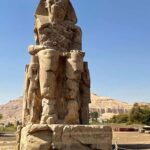
- Colossi of Memnon: the surviving giants of Amenhotep III
- A good way to enjoy it
- How the Egyptologist guide improves your Luxor Temple to Colossi of Memnon flow
- Price and value: is $223 per person worth it from Hurghada?
- Who should pay this price
- The main trade-offs to consider before you book
- Who this Luxor private day trip fits best
- Should you book this Luxor private guided day tour?
- FAQ
- What does the tour include besides the guided sightseeing?
- Where is the pickup point?
- How long is the drive from Hurghada to Luxor?
- Which major sites are visited during the day?
- Is lunch included?
- Do I need to buy entry tickets?
- What languages is the guide available in?
- What should I bring for the day?
- Is bottled water provided?
- Can I pay later or cancel for a refund?
Key highlights I’d zero in on
- Private, air-conditioned transport from Hurghada, including bottled water
- Egyptologist guidance that ties each site to the big picture
- East + West Luxor in one day: Karnak and Luxor Temple, then Valley of the Kings and Hatshepsut
- True “New Kingdom” focus at the Valley of the Kings, where royal tombs were carved for nearly 500 years
- Colossi of Memnon: two enormous Amenhotep III statues that still anchor the Theban landscape
- Lunch included at an Egyptian restaurant, so you’re not hunting food in the heat
Hurghada to Luxor: the drive that shapes your whole day
Your day starts with pickup from your hotel or airport, then you head out toward Luxor by private transportation in an air-conditioned vehicle. The distance is about 240 km, so even with a comfortable car, this is not a short hop—it’s a real day trip.
What matters is how you prepare for it. Wear comfortable clothes and shoes because you’ll be on your feet for temple visits, and bring an extra layer if you run cold from air-conditioning during the ride. Bottled water is included, and that’s important here—Luxor can feel punishingly hot, and you’ll want small, steady hydration rather than waiting until you feel thirsty.
You can also read our reviews of more guided tours in Luxor
Entering Luxor Temple: the “southern sanctuary” on the Nile’s east bank
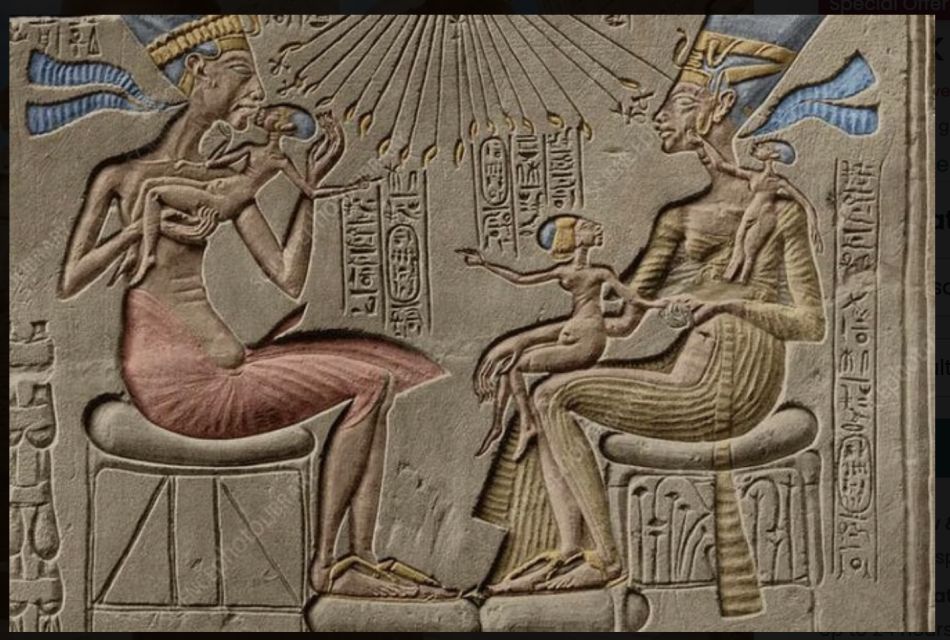
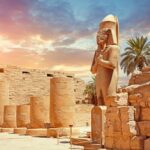
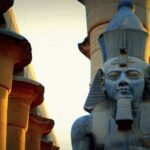
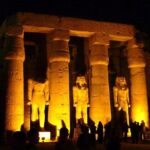
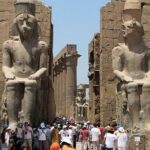
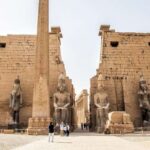
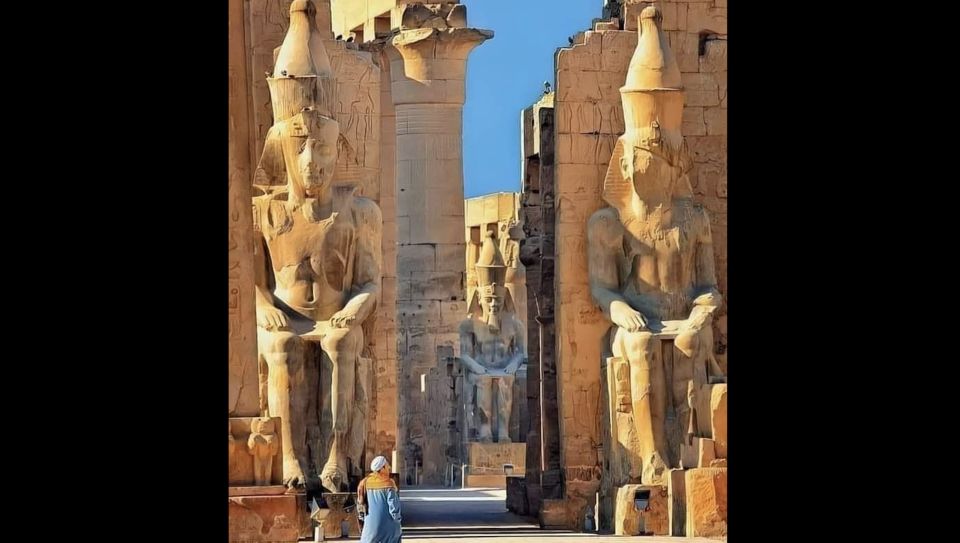
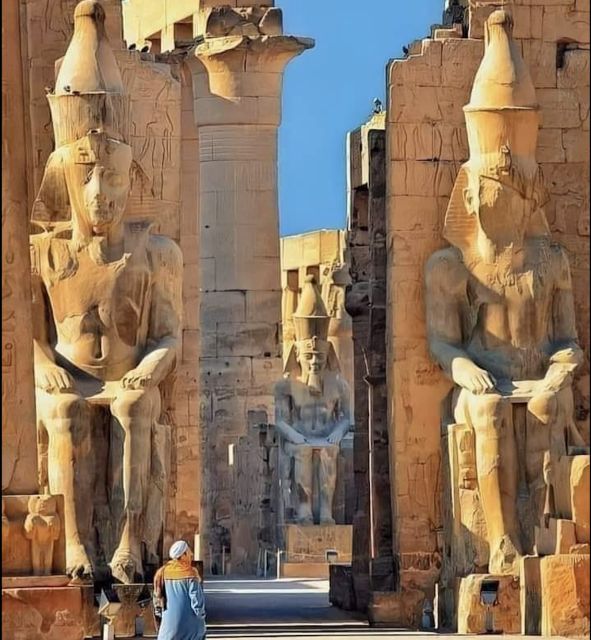
Luxor Temple is on the east bank of the Nile and was constructed around 1400 BCE. In Egyptian, it’s known as ipet resyt, the southern sanctuary, and that name isn’t random—it hints at how the ancient Egyptians thought about sacred geography.
This stop works best when you take it slowly. Even if you don’t know hieroglyphs, the scale and the layout give you the sense that this wasn’t built for one lifetime—it was meant to be used, visited, and reinterpreted across generations. Having an Egyptologist with you helps you connect what you’re looking at to the purpose of the complex, instead of just moving from photo spot to photo spot.
What to watch for
The beauty of Luxor Temple is that it gives you a first “anchor point” for the day’s themes: sacred architecture, royal power, and how temple life fit into the city on the Nile’s east bank.
Karnak Temple Complex: why this place took centuries to build
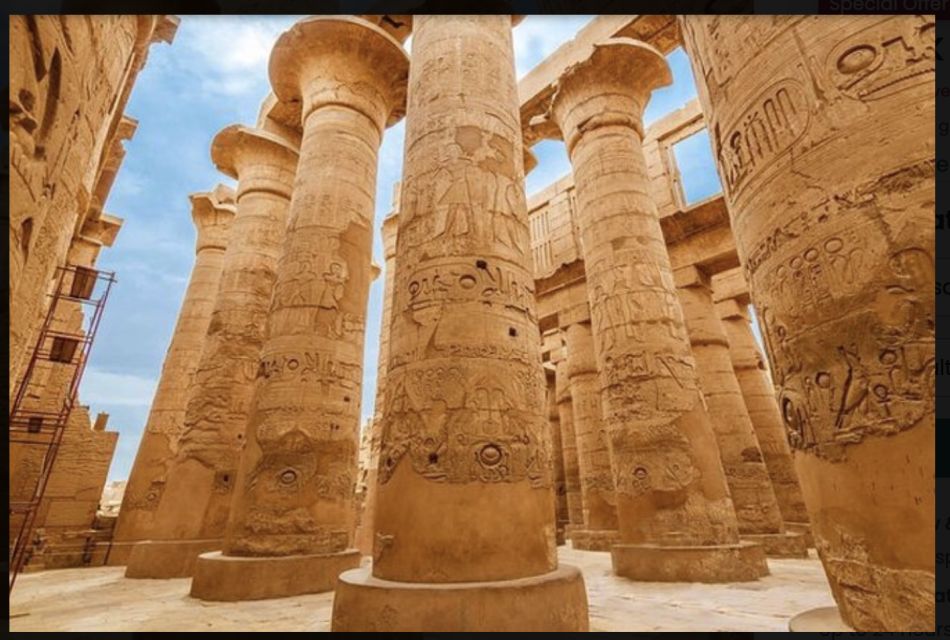
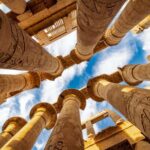
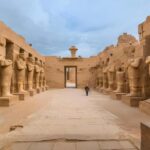
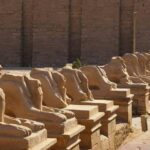
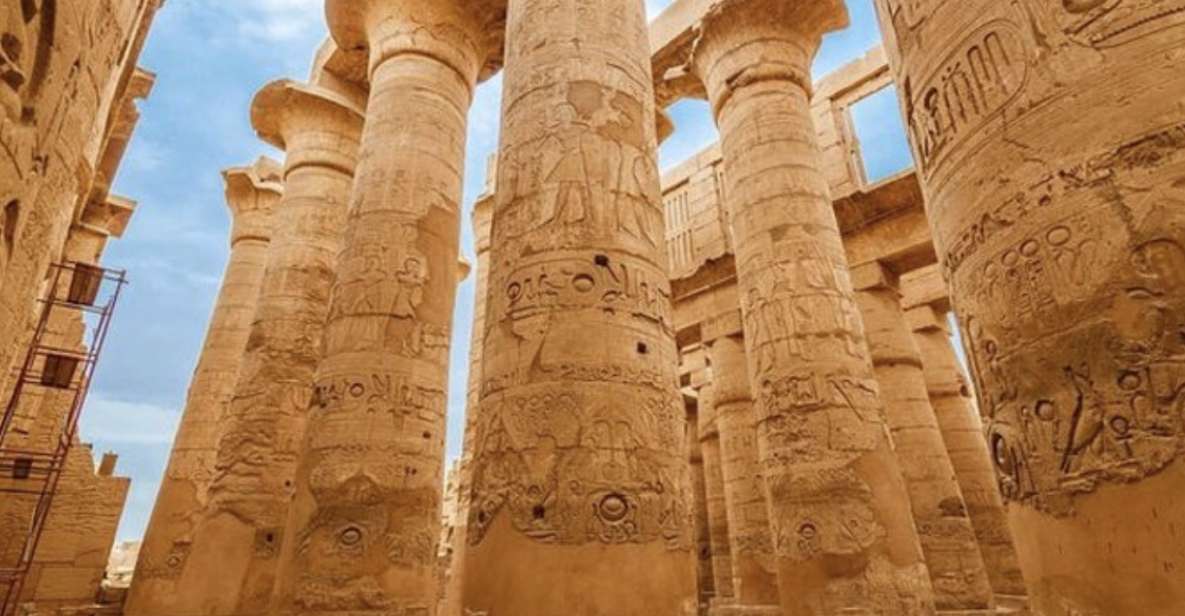
Karnak is not one temple. It’s a vast complex of temples, chapels, pylons, and other buildings near Luxor, and it’s famous for how long it was in development. Construction began during the reign of Senusret I in the Middle Kingdom (around 2000–1700 BC) and continued all the way into the Ptolemaic period (305–30 BC).
That range—Middle Kingdom to Ptolemaic—changes how you should view the site. Instead of asking yourself which monument is “the main one,” you can treat Karnak like a timeline made of stone. Each era added its own layers, which is why you’ll see a jumble of forms that still feels coherent when explained well.
The practical advantage of a guide here
With a good Egyptologist, Karnak stops being intimidating. You can listen for the story of who built what, when, and why, and you’ll understand why some sections feel older or more fragmented than others.
You can also read our reviews of more private tours in Luxor
Lunch in Luxor: fuel the day before the west-bank heat
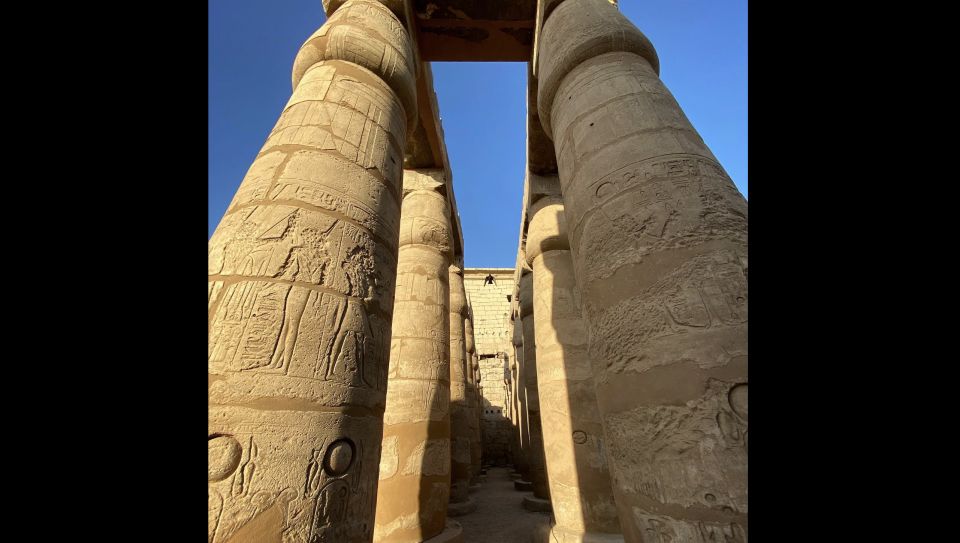
Lunch is included at an Egyptian restaurant. This matters more than it sounds, because after you’ve been walking among big stone monuments, you’ll want energy and a planned break rather than scrambling for something quick.
Aim to eat at a relaxed pace, drink water, and don’t pack yourself with heavy food if you’re sensitive to heat. You’re about to shift into the west bank itinerary, where you’ll keep moving—so lunch is your reset button. Bottled water is provided, and some guides are also noted for looking after guests with practical comforts when it’s hot, which can make this break feel genuinely helpful instead of perfunctory.
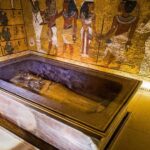
Valley of the Kings: tombs cut into the desert for nearly 500 years
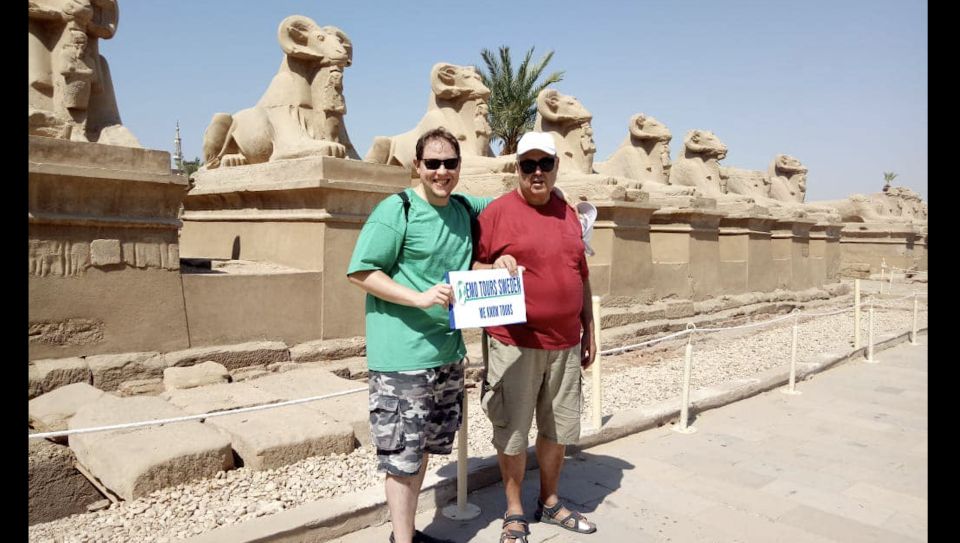
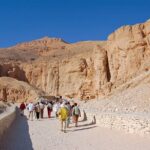
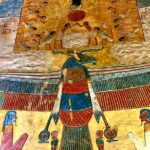
Then you head to the Valley of the Kings, also known as the Valley of the Gates of the Kings. This is where, for nearly 500 years—from the 16th to 11th century BC—rock-cut tombs were excavated for pharaohs and powerful nobles of the New Kingdom.
This stop hits hardest when you remember it’s not a “museum valley.” It’s a burial landscape carved into rock, built for a specific purpose: protecting the memory and the afterlife of high-status people. The guide’s context can be the difference between seeing entrances and truly understanding what that meant.
A realistic expectation for your comfort
Valley of the Kings is a place where weather and footing matter. Wear the comfortable shoes you packed, keep an eye on shaded routes when they’re available, and be ready for stairs and uneven ground. If you’re the kind of traveler who gets overwhelmed by crowds, a private format helps here—you’re not constantly being pushed along by the largest group in the schedule.
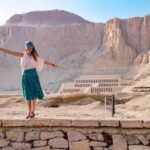
Hatshepsut’s Mortuary Temple (Deir el-Bahari): a powerful queen’s stone setting
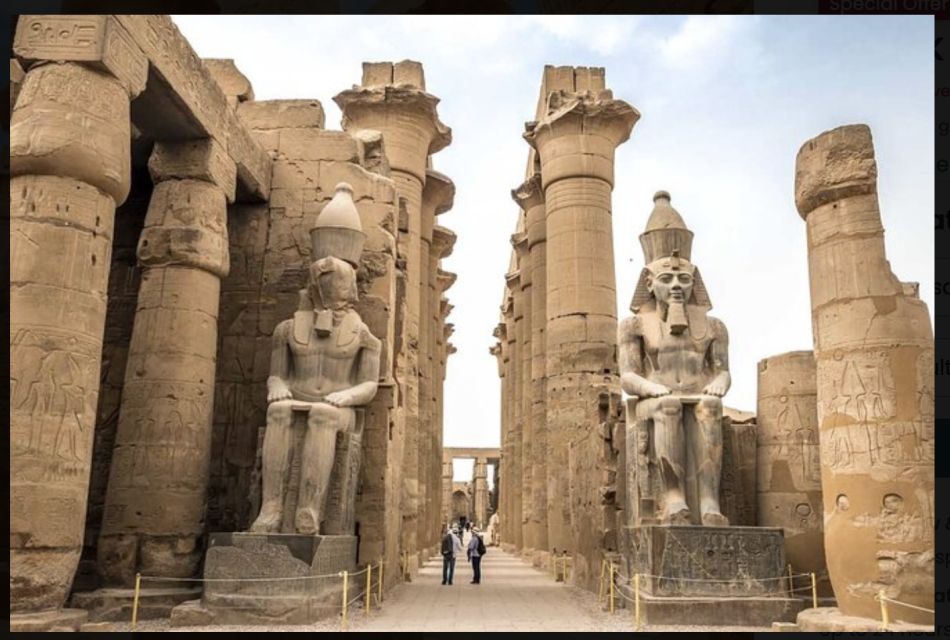
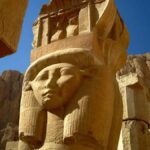
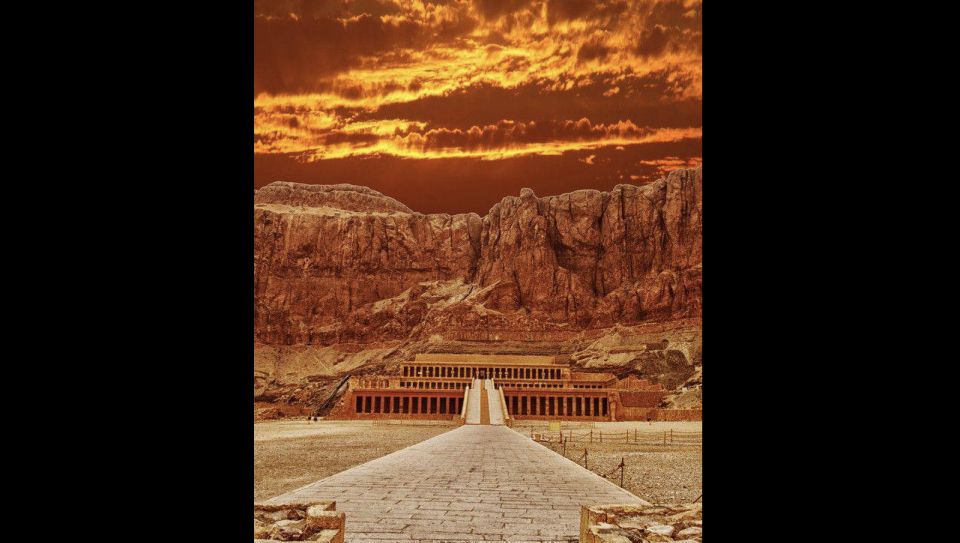
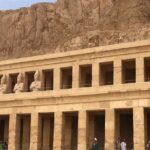
Next comes the Mortuary Temple of Hatshepsut, also known as Djeser-Djeseru. It’s built for the Eighteenth Dynasty pharaoh Hatshepsut, and she died in 1458 BC. The temple is located beneath the cliffs at Deir el-Bahari on the west bank of the Nile near the Valley of the Kings.
Even without a deep background in Egyptian chronology, this site feels different from the others in the best way. It’s tied to a single ruler’s legacy, and it’s placed in an environment that amplifies the drama—sitting beneath cliffs rather than out in open space.
Why this stop adds value to the whole day
In a one-day trip, it’s easy to only chase famous names. This temple gives you a specific human anchor—Hatshepsut—so the west-bank part of your itinerary isn’t just about tombs and ruins. It’s also about how power, belief, and architecture were used to craft a ruler’s long-term story.
Colossi of Memnon: the surviving giants of Amenhotep III
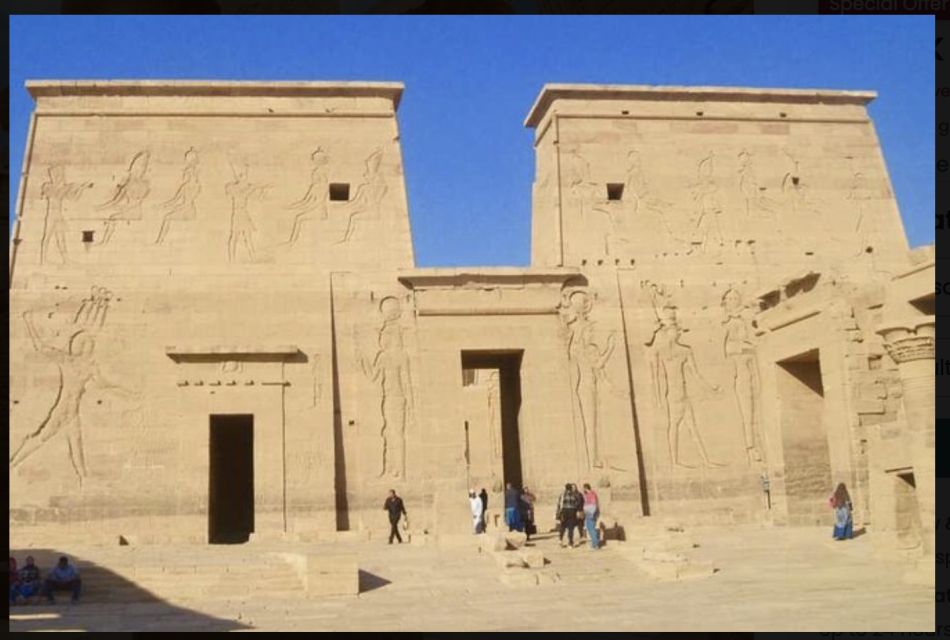
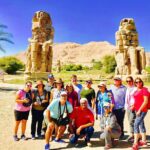
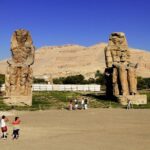
To close the tour, you’ll visit the Colossi of Memnon. These are two massive stone statues of Pharaoh Amenhotep III, who reigned during the Eighteenth Dynasty. Since 1350 BCE, they’ve stood in the Theban Necropolis, located west of the Nile from the modern city of Luxor.
This is a “wow from a distance” stop. The statues don’t need a long explanation to impress, but a guide can help you understand what you’re looking at: royal scale, monumental art, and how these figures were meant to signal presence and authority.
A good way to enjoy it
Take a moment before you move on. Step back, look at the statues as paired landmarks, and let the size land. It’s one of those final moments that helps the whole day feel complete—like the west bank finally gave you a strong visual after spending time in more structured sacred spaces.
How the Egyptologist guide improves your Luxor Temple to Colossi of Memnon flow
This tour is designed around an Egyptologist tour guide, and that’s the secret sauce. Luxor is famous, yes—but without context, you can end up staring at stone and thinking, I know it’s important, but I can’t place it.
A great guide helps you connect the dots across stops:
- Luxor Temple gives you an east-bank starting point tied to the sacred identity of the area.
- Karnak shows you how different reigns left layered additions across centuries.
- Valley of the Kings explains the New Kingdom burial landscape and its purpose over time.
- Hatshepsut’s temple shifts the story into a single ruler’s legacy on the west bank.
- Colossi of Memnon closes with monumental royal imagery.
In the reviews shared for this experience, guides such as Hani, Hosam, Mohammad Hisham, and Adel are praised for being full of knowledge and for practical care when conditions are hot. If you tend to learn best through conversation, a private format makes it easier to ask questions without feeling like you’re slowing a big group down.
Price and value: is $223 per person worth it from Hurghada?
At $223 per person, this isn’t a bargain-basement outing—but it’s also not overpriced for what you actually get. The value comes from several key inclusions that travel days often charge extra for:
- Private transportation in an air-conditioned vehicle
- Egyptologist guide
- Entry tickets to all the mentioned sites
- Lunch
- Bottled water
- Landing and facility fees
When you add up those categories, the price starts to look more like a packaged experience than a simple “driver drops you off.” You’re paying for time with a guide and for ticket access across multiple major landmarks in a single day.
Who should pay this price
If you want your day to feel organized and you value getting history tied to each stop, this price can feel fair. If you’re a solo, independent traveler who likes to go at your own pace without guidance, you might choose a cheaper self-guided approach—but you’ll also lose the narrative thread between east and west Luxor.
The main trade-offs to consider before you book
This is a full day trip with a long drive (about 240 km). That means you should be okay with:
- A packed schedule
- Walking on temple grounds and in tomb-leaning environments
- Heat management and staying hydrated
- Being flexible if you end up near vendor stalls, which can feel chaotic (depending on how your day is handled)
Also, this tour is private, but it’s still concentrated around big, high-demand sites. If you’re sensitive to crowds, you’ll appreciate the private pacing, but Luxor Temple, Karnak, and the west-bank highlights can still be busy at certain times.
Who this Luxor private day trip fits best
You’ll probably love this tour if:
- You want the big Luxor hits in one day: Luxor Temple, Karnak, Valley of the Kings, Hatshepsut, Colossi of Memnon
- You prefer an Egyptologist guiding you through context, not just tickets and maps
- You want convenience from Hurghada, including air-conditioned private transport and lunch
You might skip it if you:
- Don’t like long travel days or you’re easily worn out by heat
- Prefer long, slow wandering over a structured itinerary
- Hate any stop that might involve vendor areas or stalls
Should you book this Luxor private guided day tour?
I’d say book it if your goal is a focused, high-value Luxor day with minimal hassle. The combination of private transport, an Egyptologist, included tickets, and a real lunch break makes the price feel more justified. And the site selection is strong: you get the east-bank temple story, the west-bank tomb landscape, Hatshepsut’s monumental setting, and the Colossi finale.
If you’re the type who needs a quieter pace, plan to stay intentional—wear good shoes, take shade breaks when they’re offered, and keep your browsing short if vendor stalls feel overwhelming. For most travelers aiming to understand Luxor rather than just see it, this is a solid way to do it in one day.
FAQ
What does the tour include besides the guided sightseeing?
The tour includes private transportation with an air-conditioned vehicle, entry tickets to all the mentioned sites, an Egyptologist tour guide, lunch, bottled water, and landing and facility fees.
Where is the pickup point?
You’ll be picked up by the tour guide from your hotel or airport.
How long is the drive from Hurghada to Luxor?
The tour includes a drive of about 240 km to Luxor.
Which major sites are visited during the day?
You visit Luxor Temple, Karnak Temple Complex, the Valley of the Kings, the Mortuary Temple of Hatshepsut, and the Colossi of Memnon.
Is lunch included?
Yes, lunch at an Egyptian restaurant is included.
Do I need to buy entry tickets?
No. Entry tickets to all the mentioned sites are included in the tour price.
What languages is the guide available in?
The tour languages include English, Spanish, German, Italian, and Arabic.
What should I bring for the day?
Bring comfortable shoes and comfortable clothes.
Is bottled water provided?
Yes, bottled water is included.
Can I pay later or cancel for a refund?
You can reserve and pay later (book now and pay nothing today). You can cancel up to 24 hours in advance for a full refund.