REVIEW · LUXOR
Private Tour: Valley of the Kings – Tombs of Seti I & King Tut
Book on Viator →Operated by Luxor Travels · Bookable on Viator
One day, lots of tomb magic. This private Luxor tour stacks the West Bank’s biggest names—King Tut’s tomb, Seti I’s stunning chamber, and Deir el Bahari—in about 6 hours.
I like two things right away. First, the hotel pickup and drop-off plus air-conditioned vehicle keeps the day sane, especially in the heat. Second, the qualified Egyptologist guide (friendly and knowledgeable, with guides like Ameen) helps you understand what you’re actually looking at, not just where it is.
The main thing to consider: admission tickets are not included, and you’ll be moving through several tombs in one day. Seti I is also described as open for limited time and limited visitors, so it’s worth going in with flexible expectations and a comfortable pace.
In This Review
- Key highlights you’ll care about
- Why this Luxor private tomb tour makes sense for your time
- Start time at 8:00: how the schedule helps (and what to watch)
- Tomb of Ramses III (KV 11): painted ritual texts and side-room surprises
- King Tutankhamun’s tomb: what you’ll see beyond the famous mask
- The Valley of the Kings segment: how multiple tombs fit into one block
- Tomb of Merenptah: the design choices and the Howard Carter connection
- Tomb of Seti I: long, colorful, and (in season) limited-entry
- Tomb of Ramses IV (KV 2): the funerary texts and the rose-colored sarcophagus
- Temple of Hatshepsut at Deir el Bahari: seeing the dynastic link to King Tut
- Colossi of Memnon: 18-meter statues watching the West Bank story
- Price and value: what $60 gets you and what to budget separately
- Who should book this tour (and who might want a different plan)
- Book it or skip it: my practical call
- FAQ
- What does the tour include?
- Are entrance tickets included?
- How long is the tour?
- Is this a private tour?
- Where does the tour start?
- Which tombs and sites are included?
- How much time do you spend at each stop?
- Why is Seti I special on this tour?
- Who discovered King Tutankhamun’s tomb?
- What is the cancellation policy?
Key highlights you’ll care about
- A private pace across the West Bank, so you’re not stuck waiting with strangers
- King Tut’s tomb plus deeper tomb context from an Egyptologist guide
- Seti I’s limited-access opening, when you can actually enter
- KV 11 Ramses III with rare side-room details like foreign tributes and harpists
- Deir el Bahari and Hatshepsut in the same day as the royal burial grounds
- Colossi of Memnon as a quick, dramatic finale near Luxor’s ruined temple landscape
Why this Luxor private tomb tour makes sense for your time
If this is your first trip to Luxor, the West Bank can feel like a lot at once: tombs, temples, legends, and a maze of ticket lines and opening hours. This tour is built to handle that pressure by focusing on the most famous royal sites in a single, organized run.
The other big win is the private format. You’re not bargaining for your turn in tight passages or waiting for a slow-moving group. Instead, you get a steady flow from tomb to tomb, with a guide who can explain the meaning of the scenes you’re seeing—religious texts, royal symbolism, and the practical differences between each tomb’s layout.
It’s also a good match for travelers who want more than a photo stop. Even when the time in each tomb is short, the guide-led context helps the art and inscriptions land. That matters in a place like the Valley of the Kings, where every wall is trying to tell a story.
You can also read our reviews of more private tours in Luxor
Start time at 8:00: how the schedule helps (and what to watch)
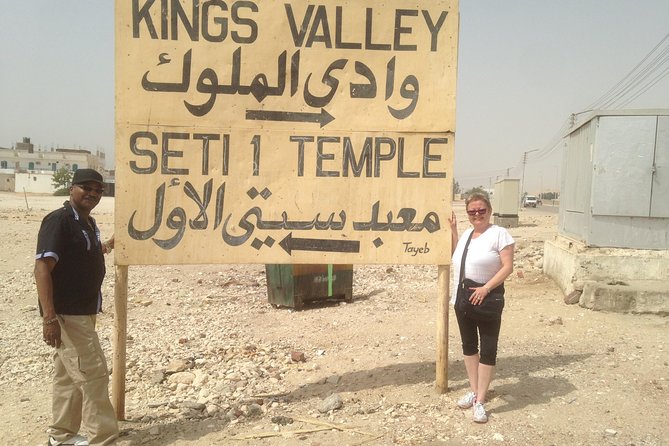
You start at 8:00 am, which is a smart choice for the Valley of the Kings. Morning light and cooler temperatures make a real difference when you’re walking between entrances and moving through multiple sites.
The day is planned for about 6 hours total. That’s just long enough to see major tombs and still include Deir el Bahari and the Colossi of Memnon. The trade-off is that you won’t have hours and hours in one single tomb chamber. You’ll be in and out, taking in key details with time limits.
Because Seti I is described as open for limited time and limited visitors, keep a flexible mindset. If the day’s access rules affect timing, the guide’s role becomes even more important: they’ll help you focus on what’s available that day rather than what’s on a wish list.
Tomb of Ramses III (KV 11): painted ritual texts and side-room surprises
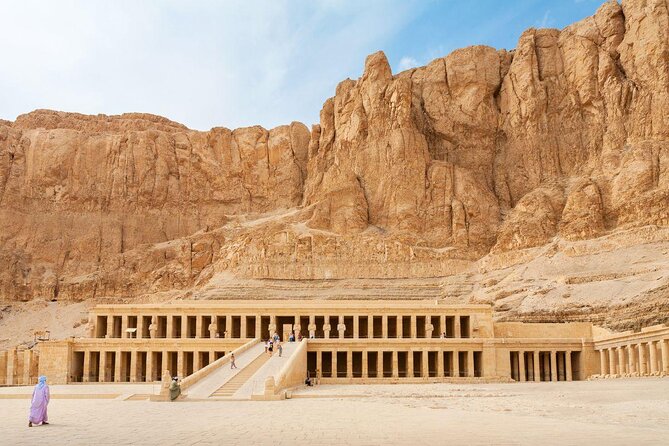
Your first stop is the Tomb of Ramses III (KV 11), a complex site within the Valley of the Kings. You’ll be inside long enough to notice both the main program of decoration and the smaller, more unusual side-room scenes.
The highlight here is the combination of grand religious imagery with unexpected everyday-or-foreign details. The decorations include colourful painted sunken reliefs with ritual traditions like the Litany of Ra and other major funerary texts. You also see Ramses positioned before the gods, which is the core royal theme you’ll keep meeting across tombs.
What makes KV 11 especially interesting is what appears in the side rooms near the entrance corridor. These chambers include secular scenes—foreign tributes and detailed imported goods, including pottery from the Aegean. You also get royal armoury imagery, boats, and a set of figures described as blind harpists, giving the tomb one of its alternate names: the Tomb of the Harpers.
Practical tip: since this stop is about 25 minutes, I’d treat it like a guided “spot the themes” visit. Let your eyes follow the guide’s points—ritual texts first, then the weird-but-amazing side rooms second. That order prevents you from getting lost in details you can’t fully absorb in a short window.
King Tutankhamun’s tomb: what you’ll see beyond the famous mask
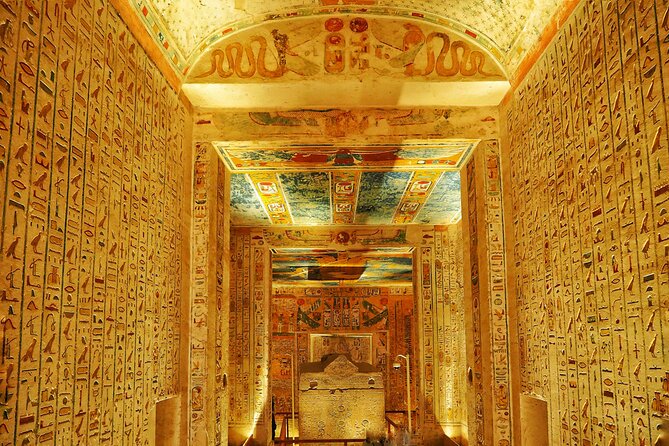
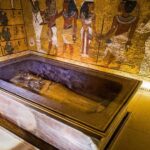
Next comes the Tomb of King Tutankhamun (Tut), also a 25-minute stop. This tomb is the one people know from modern history because it was discovered nearly intact in 1922 by Howard Carter.
Here’s the useful context: the famous golden mask is on display in the Egyptian Museum in Cairo, but this stop gives you the chance to be amazed by the royal mummy of the young king. That difference matters. In Cairo you get the most iconic object; in Luxor you get the emotional punch of seeing the burial site itself connected to the discovery.
Even with a short visit window, you can get value if you focus on two things: the sense of what made the tomb special at discovery time, and what the walls and burial context say about Egyptian royal beliefs. A good Egyptologist guide makes that shift from museum facts to on-site meaning.
A small reality check: the tomb experience here is time-limited. Don’t expect a long, slow browse. Instead, go in prepared to notice a few key elements well.
The Valley of the Kings segment: how multiple tombs fit into one block
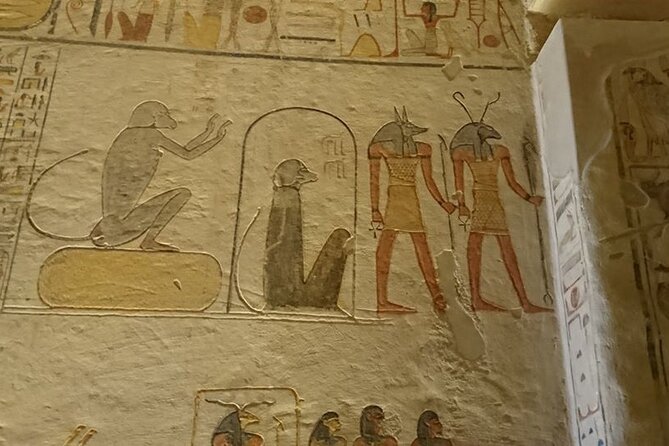
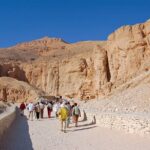
After King Tut, the tour moves into the Valley of the Kings for a longer 2-hour segment. This is where you’ll see several royal tombs as part of one organized run.
The Valley of the Kings is the West Bank necropolis of Thebes, and it’s easy to get overwhelmed if you treat it like a list of entrances. This structure helps. You’re not just walking from point A to point B; you’re moving through a curated set of tombs that show different styles, different emphasis, and different variations on royal afterlife design.
In this Valley stretch, you’ll visit multiple royal tombs, including tombs described in the plan such as Ramses, Horemheb, Merenptah, and King Tut. Then the schedule continues with the specific tomb stops that round out the day, like Seti I and Ramses IV.
Practical tip: if you start feeling tomb fatigue, remind yourself why this works. The art and architecture aren’t random. Each tomb reflects the era, the priorities of the pharaoh, and the evolving conventions of royal burial design. The guide’s job is to point out those differences quickly, so you leave with comparisons in your head—not just photos on your phone.


Tomb of Merenptah: the design choices and the Howard Carter connection
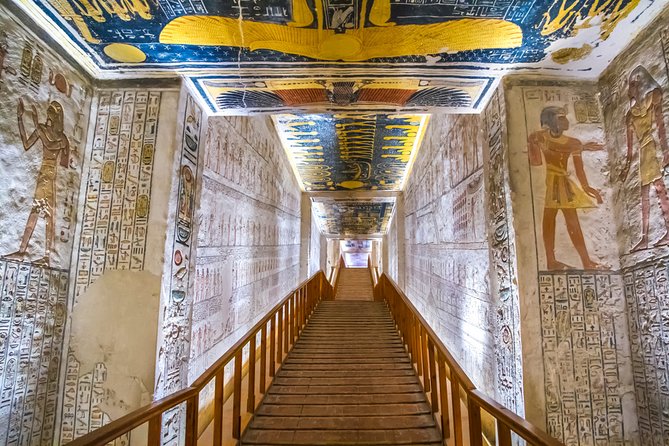
The plan includes Tomb of Merenptah, identified as Tomb 8 in the Valley of the Kings. You’ll spend about 25 minutes here.
What I like about this stop is that it’s not just “another tomb.” It’s connected to specific religious ideas and to the way Egyptians thought about protection and identity in the afterlife. The text mentions Ptah as the demiurge of Memphis and explains how deities were represented in forms used to accompany and protect the dead on the journey to the West of Luxor.
It also anchors Merenptah in a family and historical line: he’s described as a son of Ramesses II and Queen Isis-Nofret. That’s helpful because it turns the name into a real person, not just a tag on a ticket.
Architecturally, you’re told to look for a design shift: fewer lateral rooms and corridors that increase dramatically in height. In a short visit, that’s exactly the kind of detail your guide can help you spot fast.
And yes, this tomb also has a Howard Carter tie-in: it was discovered by him in 1903. If you remember that date, you’ll naturally think about what “discovery” meant across different tombs—sometimes intact, sometimes damaged, always significant.
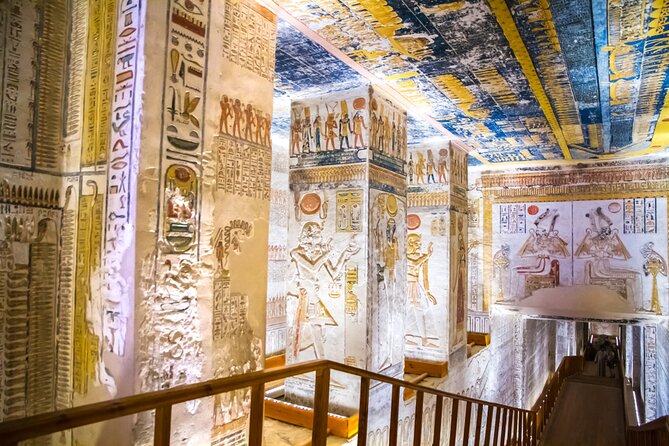
Tomb of Seti I: long, colorful, and (in season) limited-entry
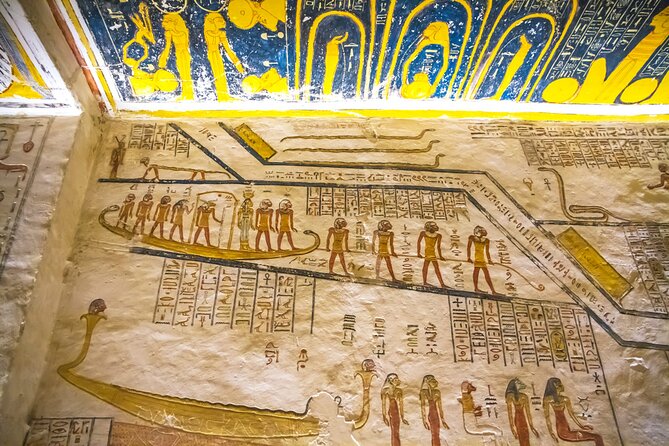
Now you reach one of the biggest draws: Tomb of Seti I. You’ll get about 30 minutes here, which is a fair amount for the level of detail you’re told to expect.
Seti I is described as one of the longest and most beautifully decorated tombs discovered. The emphasis is on vivid colors and intricate carvings. This is the kind of tomb where a guide’s explanations really pay off because there’s a lot to see and the time is limited.
The key practical point is that it’s currently open for limited time and limited visitors only. That limitation is exactly why you’d choose this particular tour instead of a generic Valley list. When Seti I access is restricted, having an organized tour plan that includes it becomes a real value.
In your own head, set expectations like this: you won’t “finish” the tomb in 30 minutes. Instead, you’ll likely focus on the most striking sections and the overall layout, then let the Egyptologist help connect the imagery to meaning.
Tomb of Ramses IV (KV 2): the funerary texts and the rose-colored sarcophagus
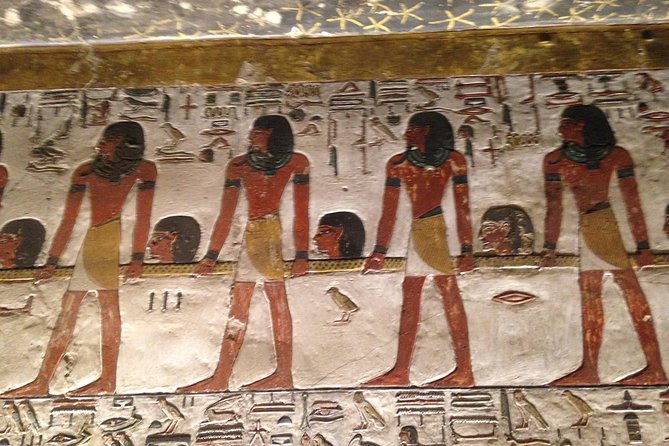
Your next Valley stop is Tomb of Ramses IV (KV 2) for about 25 minutes. This one is described as different from most others in the Valley, and it’s said to be among the most spectacular.
The wall scenes focus on major funerary literature. You’ll see hieroglyphic depictions tied to the Litany of Ra, the Book of the Dead, the Book of Caverns, the Book of the Heavens, the Book of Amduat, and the Book of the Night.
Then there’s the color and materials. The description highlights blue and white hues inside the burial chamber that look very vibrant, plus the king’s sarcophagus described as rose-colored granite. One more detail to note is the ceiling scene with goddess Nut swallowing the sun and the idea of it traveling through her so the sun is reborn.
If Seti I is the “long, richly decorated” tomb, Ramses IV is the “thematic intensity” tomb. It’s a good pairing, because you’ll start recognizing how the Egyptians structured their afterlife world in different ways.
Temple of Hatshepsut at Deir el Bahari: seeing the dynastic link to King Tut
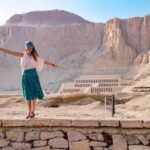
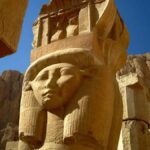
After the Valley tombs, you move to Temple of Hatshepsut at Deir el Bahari, about a 1-hour stop. This is where the day shifts from underground passages to bright, monumental architecture.
Hatshepsut matters because she’s described as the only woman ever to reign over Egypt as Pharaoh. She also connects directly to the story of King Tut: this temple is described as connected to the same dynasty, and she’s presented as an ancestor of Tutankhamun.
So you’re not just seeing another temple. You’re seeing a dynastic bridge. After the tomb sequence, it helps to see the political and religious stage where that royal authority was displayed.
Practical note: because this is an hour, it’s best to focus on the big architectural ideas rather than trying to read every carved detail. Let your guide point out what to look for, and use your own eyes to appreciate symmetry, terraces, and the way the temple sits in the Deir el Bahari landscape.
Colossi of Memnon: 18-meter statues watching the West Bank story
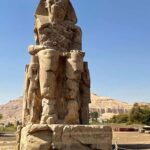
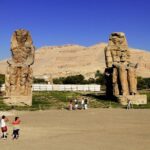
The last stop is quick: Colossi of Memnon, around 15 minutes. These are two massive statues of Pharaoh Amenhotep III, each about 18 meters tall.
They’ve been described as guarding the Luxor/Thebes area for over 3,400 years, originally built to honor the king as a god in the afterlife. The mortuary temple complex they belonged to is now largely lost to floods and time, so what remains are these long-lived “guardians” rising over the site.
You’ll get the best value if you use this final stop as a visual anchor. After walking through tombs full of symbolic text, these statues bring you back to the physical scale of royal power. They’re a reminder that these people weren’t just buried—they were remembered on a monumental scale.
Price and value: what $60 gets you and what to budget separately
The price is listed at $60 per person, and the tour duration is about 6 hours. For that time, you’re paying for a private format plus a qualified Egyptologist guide, plus hotel pickup and drop-off and travel in an air-conditioned vehicle.
That’s a strong value equation because the West Bank sites are spread out enough that transportation and coordination matter. If you’ve tried to manage multiple tomb entrances on your own, you already know how quickly time evaporates.
The one cost you must plan for: entrance tickets are not included. That doesn’t make the tour “expensive,” but it does mean you should budget separately. Also remember that Seti I access is described as limited, so the tour’s inclusion of Seti I is part of what you’re paying to lock in.
A final value tip: since admission isn’t included, ask yourself whether you’re okay buying tickets separately day-of or whether you prefer a package deal. If you’re fine doing that, this tour looks like a smart use of time.
Who should book this tour (and who might want a different plan)
This is ideal for you if:
- It’s your first trip to Luxor and you want the key royal tomb sites in one day
- You care about understanding what you’re seeing, not only checking off names
- You prefer private pacing, air-conditioned transport, and a guide who can explain quickly
It may be less ideal if:
- You want long, slow time inside fewer tombs
- You don’t want to manage separate entrance tickets
- You’re hoping for an unhurried experience at every stop. This plan is designed to cover major sites efficiently.
The good news is that the structure still feels humane. Tomb visits are kept to short windows, and the guided context helps you absorb more without losing the day to waiting around.
Book it or skip it: my practical call
I’d book this if your priority is a high-impact West Bank day with Seti I and King Tut built in, plus Deir el Bahari and the Colossi to wrap things up. The private transport and Egyptologist guide add real value, especially when you’re juggling tomb time limits and limited access sites.
Skip it if you want a photography-only outing, or if entrance tickets separately would feel like a hassle. In that case, you might prefer a plan that bundles everything you need in advance.
If you do book, come ready to move. Wear comfortable shoes, keep water handy, and let the guide lead you through the “what am I looking at?” layer. That’s where this day turns from sightseeing into understanding.
FAQ
What does the tour include?
The tour includes a qualified Egyptologist guide, private transport in an air-conditioned vehicle, and hotel pickup and drop-off from select hotels.
Are entrance tickets included?
No. Entrance tickets are not included for the tombs and temples.
How long is the tour?
The duration is about 6 hours.
Is this a private tour?
Yes. It’s a private tour/activity, meaning only your group will participate.
Where does the tour start?
The tour starts at 8:00 am.
Which tombs and sites are included?
The tour includes Tomb of Ramses III, Tomb of King Tutankhamun, the Valley of the Kings (including multiple royal tombs), Tomb of Merenptah, Tomb of Seti I, Tomb of Ramses IV, Temple of Hatshepsut at Deir el Bahari, and the Colossi of Memnon.
How much time do you spend at each stop?
The schedule lists approximately 25 minutes each for Tomb of Ramses III and Tomb of King Tutankhamun, about 2 hours for the Valley of the Kings segment, about 25 minutes for Tomb of Merenptah, about 30 minutes for Tomb of Seti I, about 25 minutes for Tomb of Ramses IV, about 1 hour for Hatshepsut’s temple, and about 15 minutes for the Colossi of Memnon.
Why is Seti I special on this tour?
Seti I is described as open to the public for a limited time and limited visitors only, which is why it’s emphasized as a rare opportunity.
Who discovered King Tutankhamun’s tomb?
Howard Carter is described as the discoverer of King Tutankhamun’s tomb, discovered nearly intact in 1922.
What is the cancellation policy?
Free cancellation is available up to 24 hours in advance for a full refund. If you cancel less than 24 hours before the start time, the amount paid is not refunded.