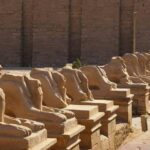
The West Bank is a full-on time machine. This private day trip strings together the big names of Luxor’s west side, from the Valley of the Kings to Queen Hatshepsut’s temple, with a hotel pickup and a private English-speaking Egyptologist guide. What I like most is that you get to see three tombs (not just a drive-by) and you can choose the option where entrance fees are included for the featured sites. One thing to consider: the plan intentionally skips the Tomb of King Tutankhamun, so if that’s your top must-see, you’ll want a different itinerary.
What makes the pacing work is how the stops are sequenced for a logical flow: royal tombs first, then the grand temple at Deir el-Bahari, a quick photo break at the Colossi of Memnon, and then the deeper history around Medinat Habu and Deir el-Medina. You’re also not stuck negotiating logistics; you’ll have bottled water, and the driver keeps things moving while your guide handles the story and the questions.
In This Review
- Key highlights at a glance
- Getting on the West Bank: Pickup, timing, and how to plan your day
- Valley of the Kings: Seeing three tombs without chasing King Tut
- Deir el-Bahari and Hatshepsut: Where the story turns to a queen’s power
- Colossi of Memnon: Quartzite giants in a short, sweet window
- Medinat Habu: Ramses III and the feel of a temple built to last
- Deir el-Medina (Valley of the Artisans): Meet the people behind the royal tombs
- Valley of the Queens and Nefertari: A strong finale for royal women’s history
- Price and value: $12 per person, plus the entrance-fee question
- What’s included in your private day (and what you’ll handle yourself)
- Who this West Bank tour is best for
- Quick, smart booking advice before you go
- Should you book this West Bank full-day tour?
- FAQ
- Is this a private tour?
- How long is the tour?
- Will I visit the Tomb of King Tutankhamun?
- Are entrance fees included?
- What’s included for food and drinks?
- What language options are available?
Key highlights at a glance
- Private Egyptologist guidance to connect each monument to the rulers who built them
- Three tombs in the Valley of the Kings, with the common exception of King Tutankhamun’s tomb
- Queen Hatshepsut at Deir el-Bahari, one of the most dramatic temple-complex backdrops in Luxor
- Medinat Habu (Ramses III) with a strong sense of power and remembrance
- Deir el-Medina artisans’ village, built around how royal tombs were actually decorated
- Nefertari’s tomb in the Valley of the Queens, a standout finale for anyone into royal women’s history
Getting on the West Bank: Pickup, timing, and how to plan your day
This is an 8-hour private-style experience on Luxor’s west side, starting with pickup from your hotel and ending with return. That time matters because the West Bank isn’t a single site; it’s a cluster of tombs and temples that all feel different. If you arrive expecting one “main stop,” you’ll miss how the day works best as a sequence.
The tour is priced very accessibly at $12 per person, which instantly makes it tempting. The value is strongest when you choose the all-inclusive option that includes entrance fees for the places listed. If you choose not to include entrances, you may feel that low starting price but then have to pay several sites separately. Either way, you should sanity-check what’s covered when you book.
One practical plus: bottled water is included in the vehicle. Small comfort, big payoff in a long day. And the vehicle setup tends to keep you comfortable between stops, which helps when you’re moving between bright outdoor areas and darker interiors.
You can also read our reviews of more private tours in Luxor
Valley of the Kings: Seeing three tombs without chasing King Tut
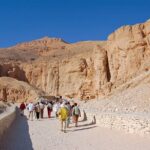
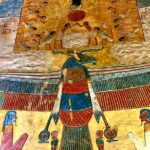
Your morning starts in the Valley of the Kings, where burial architecture was engineered for eternity. This is not a place built for casual wandering. It’s built to represent the afterlife, with corridors and chambers that follow specific religious ideas. With your Egyptologist guide, you’ll get more out of each tomb than just “wow, paintings.”
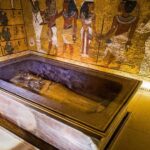
You’ll visit three tombs, with one key limitation: the itinerary says excluding the Tomb of King Tutankhamun. That doesn’t make the visit less worthwhile. Tut’s tomb is famous, but the Valley of the Kings has plenty of other royal burials where the art, layout, and themes can feel just as impressive—especially once you understand what each tomb was trying to protect.
A sensible expectation: tomb interiors can be dim and the time you spend inside will shape the feeling of the day. If you’re someone who gets a little claustrophobic in tight spaces, plan to take your time. The upside is that the Valley of the Kings works best when you’re not rushing; you’ll have the structure to do it right.
Deir el-Bahari and Hatshepsut: Where the story turns to a queen’s power
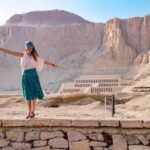
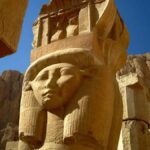
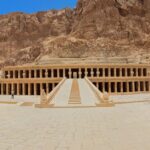
Next up is the Temple of Hatshepsut at Deir el Bahari, and this stop is one of the reasons the itinerary feels strong. Hatshepsut wasn’t a minor figure. She ruled Egypt for about 20 years during the 18th Dynasty (roughly 1490 to 1469 B.C), and she’s described here as the only pharaonic woman who reigned ancient Egypt.
Deir el-Bahari is also a visual experience. You’re going from burial caves to a temple that feels like it’s designed to stand up to time. When you’re looking at architecture at this scale, it helps to have someone explain why the forms matter—how the temple’s presence ties into legitimacy, religious authority, and the king’s relationship with the afterlife.
One practical tip: keep an eye on your energy here. This is one of the most impressive stops in the day, and it can tempt you to spend extra minutes taking photos. Balance it. If you give Deir el-Bahari too much time, the later stops can feel rushed. The tour timing is built to keep the day flowing.
Colossi of Memnon: Quartzite giants in a short, sweet window
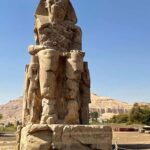
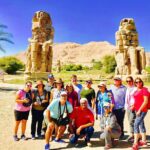
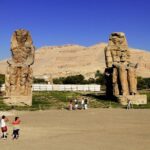
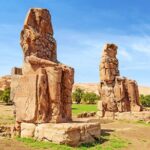
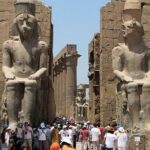
The Colossi of Memnon are a different kind of stop: two massive statues made of quartzite stone, and the schedule gives you about 30 minutes. That short window is actually a plus for many people. You get the classic West Bank sight without losing half your afternoon to a single location.
These are “big from far away” monuments. Even if you’re not a hardcore sculpture person, they tend to land emotionally because of their scale and sheer weight. With a good guide, you’ll get the historical framing for what they represent and why they became known across time.
The only consideration here is simple: if you’re hoping for a deep architectural walk, don’t expect it in only 30 minutes. This is your moment for the statues, the overview, and a few smart photos before moving on.
Medinat Habu: Ramses III and the feel of a temple built to last
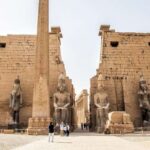
After lunch break, you’ll head to Temple of Medinat Habu. This is commissioned by King Ramses III, and the itinerary emphasizes the temple as a grand statement of his reign.
What makes Medinat Habu meaningful on a structured tour is that you’re not just looking at stones. You’re seeing a monument in context of a specific ruler. When you connect that to the earlier stops—royal tombs, Hatshepsut’s temple, and the idea of legacy—the day becomes more than sightseeing. It becomes a theme: how Egyptian leaders used architecture to speak to eternity.
Time-wise, you get about 1 hour here, including time to absorb the main features. That’s enough to appreciate scale and layout, especially with guidance. If you’re someone who loves reading every carved detail, you might wish you had longer, but the tour keeps momentum for good reason.
A few more Luxor tours and experiences worth a look

Deir el-Medina (Valley of the Artisans): Meet the people behind the royal tombs
Then comes a stop that many people overlook—Valley of the Artisans (Deir el-Medina). This is the ancient workmen’s village, described as the residence of artisans, craftsmen, and laborers who built and decorated royal tombs.
This stop changes your perspective. Instead of thinking only about kings and queens, you start thinking about the human workforce that made the monuments possible. It’s a shift from mythic grandeur to daily work, skill, and organization.
You’ll have about 1 hour. For this kind of site, that duration makes sense because you’re looking at layout and remnants that communicate living patterns. With an Egyptologist guide, the “how they did it” angle becomes clearer—why certain tomb decoration styles show up, how labor was structured, and why the workers’ lives mattered to the larger state project.
If you like the social-history side of Egypt, this is one of the most satisfying stops of the day.
Valley of the Queens and Nefertari: A strong finale for royal women’s history
Your day finishes in the Valley of the Queens, where you’ll visit the Tomb of Queen Nefertari, listed as the wife of King Ramses II. This stop is scheduled for about 59 minutes, and it’s a fitting conclusion after you’ve already seen Hatshepsut earlier.
The logic works. You’ve already toured a pharaonic woman’s monument at Deir el-Bahari. Then you return to the theme with Nefertari, in a burial setting built specifically for queens. If you pay attention to the art and symbolism in a tomb like this, you can see how royal women’s status was carved into the afterlife plan.
As a practical note, don’t plan to cram every photo at the end of your day. If you save your best attention for the Nefertari stop, you’ll feel like the day “lands” instead of just ends.
Price and value: $12 per person, plus the entrance-fee question
At $12 per person, this tour is easy to price-compare. But the real value depends on which option you choose for entrances.
The tour information says entrance fees for the mentioned places are included if you choose an all-inclusive option. If you don’t, you’ll likely pay admissions on top of the base price. Either option can still make sense, but your cost structure changes.
Here’s how I’d think about it:
- If you want a smooth day with fewer surprise payments, pick the entrance-fee inclusion.
- If you already plan to purchase admissions yourself, you might still enjoy the guide and private routing value.
Also consider this: this is a full-day lineup with multiple tombs and temples. When you spread the time over the day and factor in a private Egyptologist guide, the low starting price can feel like a bargain—assuming entrances are handled in the option you select.
What’s included in your private day (and what you’ll handle yourself)
You’ll have:
- Hotel pickup and return in Luxor
- A private English-speaking Egyptologist guide
- Bottled water in the vehicle
- Group discounts (if applicable to your booking setup)
- A mobile ticket
- Entrance fees if you pick the all-inclusive option
What you should budget for:
- Tipping (not included)
- If you need a German, French, or Spanish-speaking guide, that costs 15 dollars extra
- Airport pickup is extra charge
A small but important comfort detail comes from a recent-style experience on similar private setups: the driver is friendly, keeps things calm, and doesn’t pressure you if you say no to shopping stops. That matters in Egypt, where “optional” add-ons can become annoying fast. Here, the tone is described as patient and relaxed, and that makes the day feel less like a checklist.
Who this West Bank tour is best for
This tour is a strong match if you want a structured West Bank day with a guide who can connect sites into a story, not just translate signs.
It’s especially good for:
- First-timers to Luxor’s west side
- People who like tombs and temples but don’t want to plan every ticket and route
- Anyone who cares about royal women’s legacy (Hatshepsut and Nefertari are both included)
- History-minded visitors who appreciate the artisan side at Deir el-Medina
It may feel less ideal if:
- Your single biggest goal is the Tomb of King Tutankhamun, since it’s excluded here
- You prefer a slower pace with more free time at one site (the itinerary keeps moving)
Quick, smart booking advice before you go
1) Decide early whether you want the all-inclusive entrances option. It affects value more than the headline price.
2) If tombs are a big priority, plan to move at a steady pace and keep expectations realistic about time inside each site.
3) Wear shoes you trust on uneven surfaces. The West Bank is not a smooth mall floor.
4) Bring a water-ready mindset. Bottled water is included, but it’s still a long day.
Should you book this West Bank full-day tour?
If you want a full, guided West Bank day that hits the major story points—royal tombs, Hatshepsut, Medinat Habu, Deir el-Medina, and Nefertari—this is a very sensible booking. The private setup, hotel pickup/return, and Egyptologist guidance make it efficient and less stressful than piecing things together yourself.
My only “skip it” reason is the Tutankhamun factor. If Tut is the main event for you, this schedule won’t satisfy that specific goal. If you can enjoy the Valley of the Kings beyond Tut, and you want the day to feel complete, then this tour is easy to recommend.
FAQ
Is this a private tour?
Yes. It’s described as a private tour/activity, so only your group participates.
How long is the tour?
The duration is listed as about 8 hours.
Will I visit the Tomb of King Tutankhamun?
No. The plan says it visits three tombs in the Valley of the Kings excluding the Tomb of King Tutankhamun.
Are entrance fees included?
Entrance fees are included if you choose the all-inclusive option for the mentioned places.
What’s included for food and drinks?
Bottled water is included on board the vehicle. Lunch is mentioned as a break, but meals are not listed as included.
What language options are available?
A private English-speaking Egyptologist guide is included. A guide speaking German, French, or Spanish is listed as an extra 15 dollars.