REVIEW · LUXOR
Private Day Tour to Dendara and Abydos from Luxor
Book on Viator →Operated by Luxortourguide · Bookable on Viator
Abydos and Dendera, explained like you mean it. This private Luxor day trip pairs an Egyptologist guide with hassle-free air-conditioned pickup for the big spiritual sites of ancient Egypt, so the scenes on the walls become stories instead of decoration. I also like that you get time on your own at each temple, which makes the day feel balanced rather than rushed.
One thing to plan for up front: entrance tickets are not included for either Abydos or Dendera, so budget for that before you go.
In This Review
- Key highlights to watch for
- Why Abydos and Dendera are the right pairing
- Getting rolling: the early start from Luxor
- Stop 1: Abydos and the Temple of Osiris
- What I’d focus on during your Abydos time
- A practical note
- Stop 2: Dendera’s Temple of Hathor (plus its astrological side)
- The Cleopatra-era scenes you can’t miss
- Dendera is also where you really benefit from an Egyptologist
- The private guide: how the best tours actually feel
- Lunch and the pace: how to handle a full temple day
- My pacing advice
- Value and price: what $125 buys you here
- What to bring (so the day feels easy, not exhausting)
- Who this tour fits best
- The practical side: tickets, timing, and mobile access
- Should you book this Abydos and Dendera private tour?
- FAQ
- How long is the Private Day Tour to Dendara and Abydos from Luxor?
- What time does the tour start, and how do I get picked up?
- Is this tour private?
- What’s included in the tour price?
- Are entrance fees included?
- Is lunch included?
- What is the cancellation policy?
Key highlights to watch for
- Private format for your group with an Egyptologist leading the whole day
- Two major temple complexes in one outing: Abydos first, then Dendera
- Plenty of guided context so hieroglyphs, gods, and royal scenes make sense
- AC vehicle and hotel/Nile Cruise pickup to keep the commute painless
- Time to wander independently after the walkthroughs so you can linger where you feel pulled
Why Abydos and Dendera are the right pairing
Most Luxor trips stack the East Bank and West Bank. This one skips that standard rhythm and goes straight for two temples that feel like different chapters of the same ancient book.
Abydos is tied to Osiris and the underworld. Dendera is tied to Hathor, with temples that look so well preserved they can feel unreal, like the stone is still holding its breath. Seeing them back-to-back lets you notice how ancient Egyptians changed the mood from site to site: Abydos has that heavy, sacred gravity around burial, gods, and cosmic order. Dendera feels more decorative and intricate, with a temple program that focuses on Hathor and celestial timing.
And because it’s private, you’re not stuck trying to keep pace with a crowd. The guide can slow down when you have questions, and that matters a lot at these places, where the best parts are often the details.
You can also read our reviews of more private tours in Luxor
Getting rolling: the early start from Luxor
Pickup starts at 7:00 am from your hotel or Nile Cruise. You’ll ride in a private air-conditioned vehicle, which is a big deal on a day that can run around 8 to 10 hours. You’ll also have a driver and parking handled, plus service charges and taxes covered.
What this buys you: less stress. You don’t need to figure out transport, parking logistics, or how to stitch your day together between two distant temple areas. You simply show up, get briefed, and then focus on the temples.
Tip for your comfort: wear shoes you trust. Even if the schedule gives you guided time plus some free time, temple floors can be uneven, and you’ll likely want to move around to see wall scenes from different angles.
Stop 1: Abydos and the Temple of Osiris
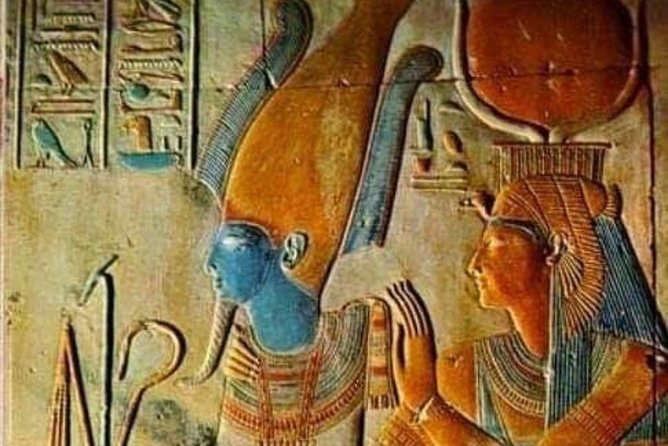
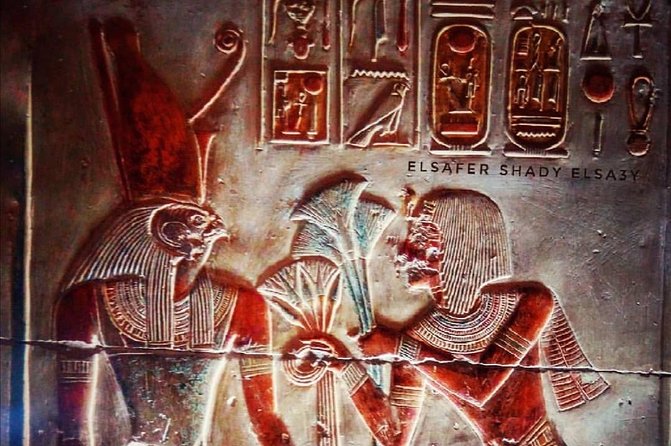
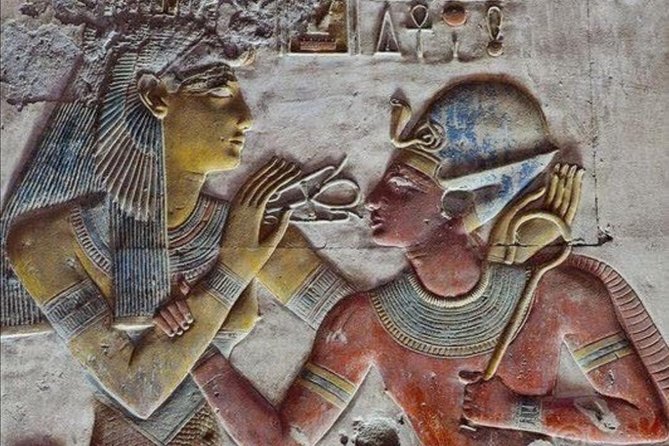
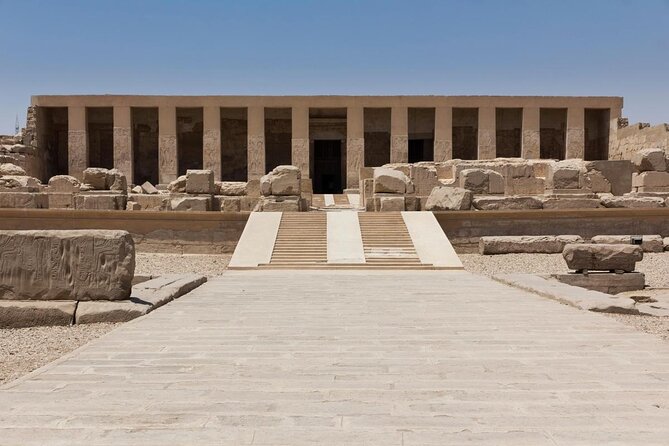
You’ll head to Abydos first, with the idea that ancient Egyptians believed Osiris, god of the underworld, was buried there. The guided portion at Abydos is where the day gains its spiritual backbone.
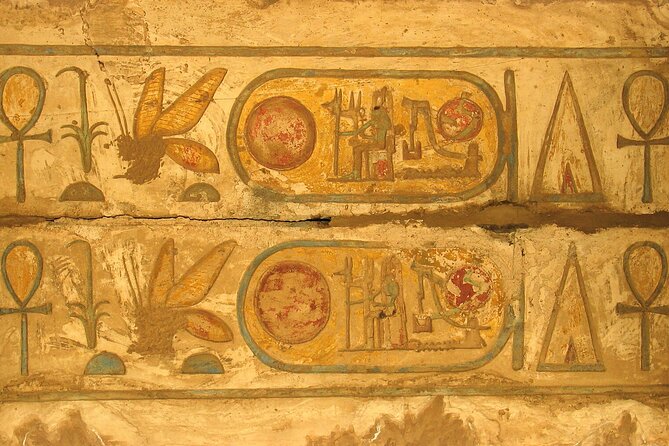
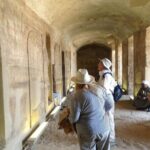
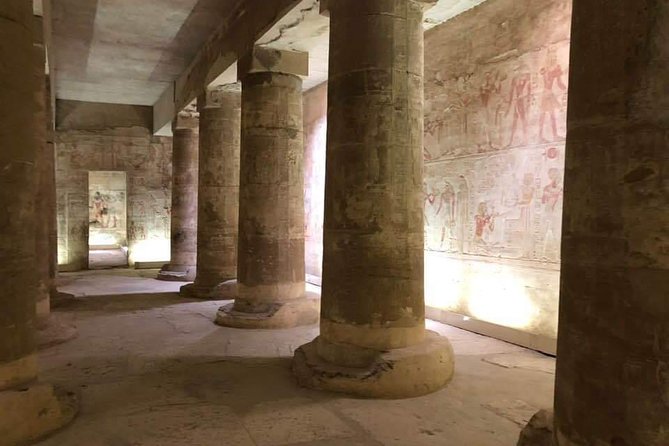
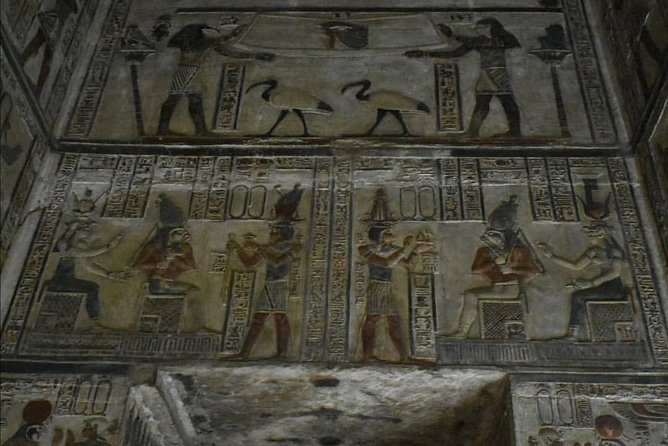
The standout draw here is the Osiris Temple, and especially the paintings of gods and pharaohs. The walls are among the most beautifully preserved in Egypt, and with an Egyptologist at your side you can start to read the temple instead of just scanning it.
What I’d focus on during your Abydos time
Even without getting overly technical, you can enjoy Abydos more if you keep a few goals in mind while you walk:
- Look for how the temple connects royal figures to the gods.
- Pay attention to wall scenes that repeat symbols. Repetition is how these places teach you.
- Use the guide’s explanations to spot the difference between what you are seeing and what the Egyptians wanted you to understand.
Your stop time is about 2 hours, with admission tickets not included. After your guided walkthrough, you’ll have time to explore on your own as well. That mix is smart: Abydos can overwhelm you if you go in cold, but it can also reward you if you slow down and let the carvings settle.
A practical note
Abydos is a long day partner for Luxor. You’re balancing travel time plus around two hours at each temple. If you tend to get tired after morning excursions, you may want to pack a simple routine: water, sunglasses, and a hat.
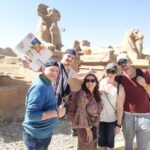
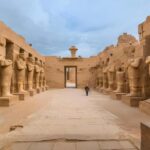

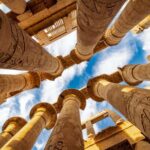

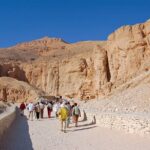
Stop 2: Dendera’s Temple of Hathor (plus its astrological side)
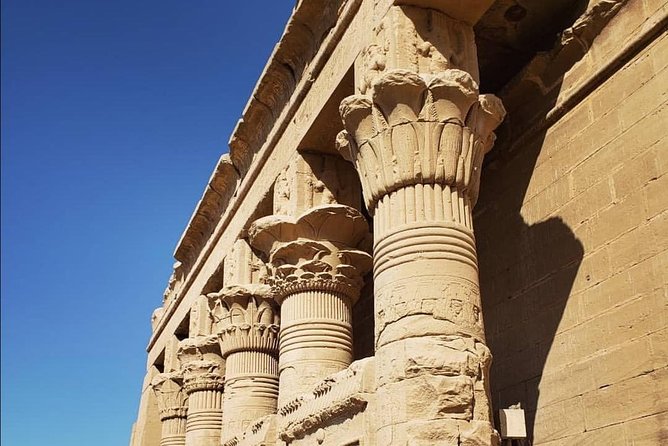
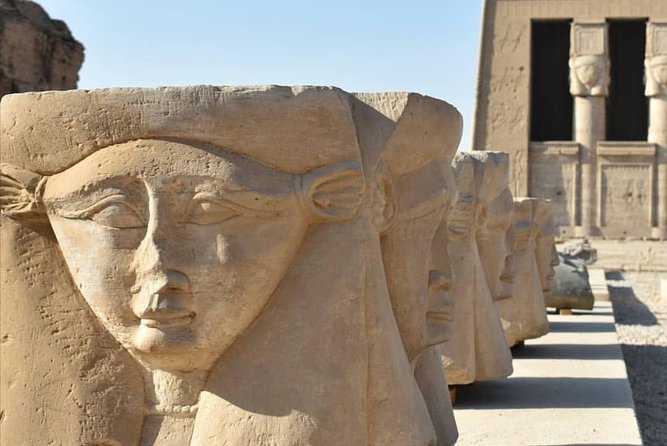
After Abydos, you’ll transfer to Dendera, home of the Temple of Hathor, a site often described as one of Egypt’s best-preserved temple complexes. If Abydos gives you the mythic weight, Dendera gives you the beauty and the geometry.
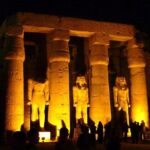
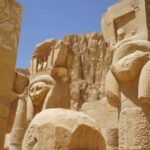
This temple complex isn’t just one hall. It’s a whole program of spaces: massive stone roof areas, darker chambers, columns with hieroglyphs, and even underground passages you can’t appreciate fully unless someone helps you understand what you’re looking at.
The Temple of Hathor is also connected to a sacred lake and a major feature often associated with the temple’s astronomical focus: the great astrological roof. Put simply, Dendera doesn’t just worship gods; it maps time and celestial cycles into architecture.
The Cleopatra-era scenes you can’t miss
One detail that people find especially fascinating is the presence of scenes showing Cleopatra VII with her son by Julius Caesar, Caesarion, on the rear outside wall. It’s a reminder that ancient Egypt’s temple world kept talking long after the earlier pharaoh legends, and it helps you see how rulers used sacred spaces to legitimize their power.
Dendera is also where you really benefit from an Egyptologist
The Egyptologist guide is the difference between a good visit and a memorable one. At Dendera in particular, the hieroglyphs and iconography are dense, and having someone explain what matters helps you notice patterns you would otherwise miss.
In real terms, you can walk around for hours at Dendera and still feel like you didn’t quite get it. With a guide, you start asking different questions: what’s the message of this layout, why this symbol here, and what does the repetition mean?
Your stop time is again about 2 hours, and admission tickets are not included. You’ll also get some free time after the main explanation, so you can linger where the stones catch your eye.
The private guide: how the best tours actually feel
This tour is built around a guide who’s an Egyptologist. That’s not just a title; it changes the rhythm of the day.
You’ll likely spend less time wondering what something is and more time enjoying the meaning behind it. The guide can answer questions in real time, and that turns temple visiting into a conversation rather than a lecture.
From what’s been shared about guides on this route, some names you may see assigned include Khaled, Mohamed, Ahmed, Ayman, and Mahmoud. People describe them as thoughtful with extra details and helpful explanations, including oddities and small points that make the sites feel less generic and more specific.
Even if your interest is casual, a good Egyptologist helps you make fast sense of what you’re seeing. And with private touring, you’re not paying for a headset system where you barely catch the words.
Lunch and the pace: how to handle a full temple day
The tour includes lunch. For many visitors, that’s one of the hidden values of a day like this. Two temple sites plus a long drive can burn through your energy, and when lunch is included you don’t have to hunt for a reliable meal between sites.
But food and drinks beyond lunch are not clearly packaged in the details, so if you like bottled water, plan to buy it. Gratuities are also not included, so if you want to tip your driver or guide, keep some cash aside.
My pacing advice
Because you’re in and out of temples with about 2 hours at each stop, you’ll get the best day if you don’t try to see everything from every angle. Pick a few moments:
- One or two scenes you want to understand deeply
- One roof or ceiling area you want to look at from the right spot
- A place you want to return to during free time
That approach matches how the day is structured: guided context first, then independent exploring.
Value and price: what $125 buys you here
At $125 per person, this tour sits in the mid-range for private Egypt excursions. The reason it’s worth considering is that you’re not only paying for a car and a driver.
Your cost covers:
- Hotel or Nile Cruise pickup and drop-off
- A private air-conditioned vehicle
- An Egyptologist guide
- Parking fees, fuel surcharge, and driver costs
- Service charges and taxes
Entrance fees are separate, and gratuities and personal spending are extra. Still, the overall package is strong because it removes the hardest parts of planning: transport between sites, the timing, and guided explanations that you’d otherwise need a second guide or a lot of self-study to replicate.
If you’re traveling with a small group, the private format can also feel efficient. The day is built for you, not for a mass schedule.
And there’s a detail worth noting: the tour offers group discounts. If you’re traveling with friends or family, ask about how your group size affects the price.
What to bring (so the day feels easy, not exhausting)
Even though the tour handles transport and access basics, you’ll enjoy it more if you prepare for heat and lots of walking. Based on how temple days tend to work in this region, I’d plan with these basics:
- Comfortable closed-toe shoes
- Sun hat and sunglasses
- Water (especially since drinks beyond lunch aren’t included)
- A light layer for inside temple shadows
- Cash for entrance tickets and any tipping you choose
Also, consider your photo plan. Dendera and Abydos are visually dramatic, but you’ll likely be standing still while reading inscriptions from a guided explanation. Having a simple photo routine helps you avoid rushing at the wrong moment.
Who this tour fits best
This is a great fit if you:
- Want a private day with an Egyptologist, not a bus ride
- Prefer temples with strong preservation and clear iconography
- Care about learning what you’re looking at, especially hieroglyphs and religious symbolism
- Want to see more than just the standard Luxor East/West Bank itinerary
It may be less ideal if you only want broad, quick sightseeing with minimal structure. Since the day includes guided time and a tight schedule, you’ll want at least a little interest in context.
On the flip side, even if your interest is just curiosity, the format helps. It’s easier to appreciate these temples when someone helps you notice what matters.
The practical side: tickets, timing, and mobile access
Confirmation comes after booking, and the tour uses a mobile ticket. Both Abydos and Dendera require separate admission tickets, so don’t count on entrance being included in the base price.
Timing is straightforward: pickup at 7:00 am, then guided time at Abydos, then transfers to Dendera, and return to your hotel after. If your main goal is to avoid planning headaches, this kind of door-to-door schedule delivers.
Should you book this Abydos and Dendera private tour?
I’d book it if you want the best shot at truly understanding two of the most striking temple complexes near Luxor—especially if you care about inscriptions, gods, and what the stones are trying to say. The private format, the Egyptologist guide, and the included lunch all add real value for a full-day outing.
I’d think twice only if you’re trying to keep strict costs low, because entrance tickets and personal spending are extra. Also, it’s a long day, so if you’re prone to fatigue, plan your energy and be ready for lots of walking.
If you’re the type who likes asking questions while you look, this is one of the smarter ways to spend a Luxor day.
FAQ
How long is the Private Day Tour to Dendara and Abydos from Luxor?
The tour typically lasts about 8 to 10 hours, with a guided schedule that includes time at both Abydos and Dendera.
What time does the tour start, and how do I get picked up?
Pickup is offered starting at 7:00 am from your hotel or Nile Cruises in Luxor, using an air-conditioned vehicle.
Is this tour private?
Yes. It’s a private tour/activity, meaning only your group will participate.
What’s included in the tour price?
Included features are hotel pickup and drop-off, an expert Egyptologist guide, private air-conditioned transport, parking fees, fuel surcharge, driver, plus service charges and taxes.
Are entrance fees included?
No. Entrance tickets for Abydos and Dendera are not included.
Is lunch included?
Lunch is included as part of the tour summary, while food and drinks beyond what’s specified are not guaranteed in the included list.
What is the cancellation policy?
Free cancellation is available up to 24 hours in advance for a full refund, and any changes less than 24 hours before the start time aren’t accepted. If the experience is canceled due to poor weather, you’ll be offered a different date or a full refund.