REVIEW · LUXOR
First impression of Luxor-Explore secrets of Luxor by horse carriage
Book on Viator →Operated by Budget Friendly Tours FZE LLC · Bookable on Viator
A horse carriage turns Luxor into a moving postcard. This tour is interesting because you get guided context instead of wandering in confusion, and you travel by horse carriage along the Nile without haggling with drivers. I especially like the pairing of an Egyptologist guide with the big-name sites, and how the stops include both monumental temples and the Abu Haggag Mosque built into an ancient temple. One drawback to consider: there have been reports of animal-welfare issues and also some confusion about whether the carriage is actually part of the pickup, so it’s smart to check that from the start.
You’re looking at about 4 hours total, with time at Karnak Temple and Luxor Temple on foot, plus shorter stops at the Avenue of Sphinxes and Abu Haggag. The main thing that can change your final cost is that temple entrances for Karnak and Luxor are not included, so plan for the extra ticket fee. If you’re heat-sensitive, this schedule can feel brisk, but it’s still a strong value for first-time visitors who want the highlights without a complicated plan.
In This Review
- Key points you should know before you go
- First stop at Luxor Museum: an easy start on the Corniche
- Karnak Temple on foot: why 4,000 years still hits hard
- Luxor Temple: pharaohs layered across hundreds of years
- Avenue of Sphinxes: a rediscovered road with modern momentum
- Abu Haggag Mosque: the past still being used
- Price and temple tickets: what $30 really covers
- Meeting-point reality checks and animal-welfare concern
- Group size and timing: when 4 hours feels short
- Who should book this, and who might look at other options
- Should you book Luxor-Explore secrets of Luxor by horse carriage?
- FAQ
- How long is Luxor-Explore secrets of Luxor by horse carriage?
- What is included in the price?
- What temples or sites does the tour cover?
- Are entrance tickets included?
- Where is the meeting point?
- Do I get a mobile ticket?
- How many people are in the group?
- Can most people participate?
- Is free cancellation available?
Key points you should know before you go
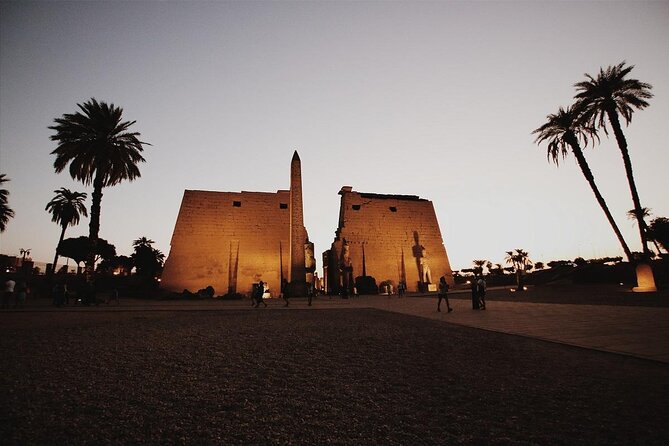
- Egyptologist guide: you’ll hear explanations that make the carvings and layouts easier to read
- Horse carriage transport: less bargaining, more relaxed pacing between the East Bank sights
- Karnak + Luxor Temple: two of the most important temple complexes in Egypt, in one outing
- Avenue of Sphinxes: includes a stop at the re-opened sphinx road area
- Abu Haggag Mosque: a working mosque built into an ancient temple structure
First stop at Luxor Museum: an easy start on the Corniche
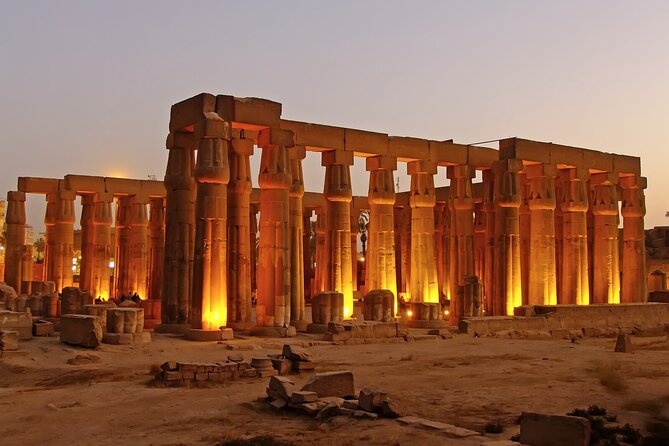
The tour begins in front of the Luxor Museum on the Corniche, so you’re right by the Nile from minute one. The meeting point is easy to find because the tour leader holds a red flag, and then you head out by horse carriage to your next stop.
This is the kind of tour where the logistics are kept simple on purpose. The “4 hours (approx.)” timing means you’ll move through five focused stops without feeling like you need a full day to do Luxor justice, but it also means you won’t have endless time at every single photo spot.
I like that the first stop sets the tone: you don’t start with a chaotic ticket line or a mad dash. You start near the river, get oriented, then spend your main time where it matters—Karnak and Luxor Temple—instead of burning hours on transit.
A few more Luxor tours and experiences worth a look


Karnak Temple on foot: why 4,000 years still hits hard
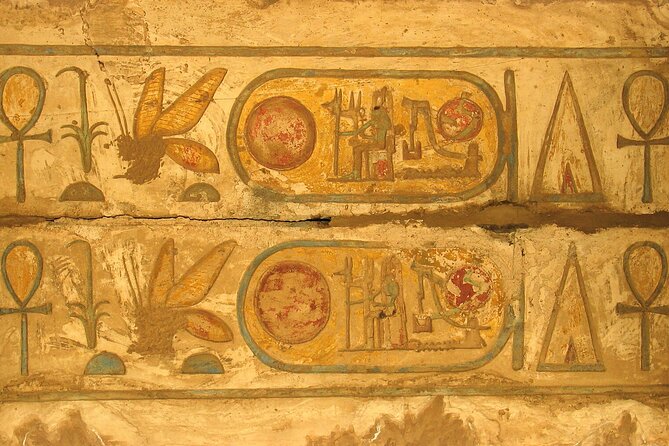
Your first major temple stop is Karnak Temple, and the big idea here is scale over one ruler’s ego. Construction at Karnak began about 4,000 years ago and continued for centuries, going until Roman control about 2,000 years later. That long timeline is why you’ll see marks left by multiple Egyptian rulers, not just one “signature” reign.
The most significant structure is the Temple of Amun-Ra, and the Hypostyle Hall is the part people come to see. The Hypostyle Hall was built during the reign of Seti I, and it’s famous for its dense forest of columns—exactly the kind of sight that makes you look up even when you think you’ve already seen enough columns.
Here’s what I’d watch for while you’re there: don’t just treat Karnak as a backdrop for photos. Use the Egyptologist’s explanations to connect the meaning of the temple areas to the carvings and layout. When you understand who was worshiped there and what each space was used for, Karnak stops feeling like a random pile of stones.
One practical note: entrance tickets for Karnak aren’t included, so you’ll need to budget for that. The good news is your time inside is about 1 hour, which is usually enough to grasp the main sections without rushing through everything.
Luxor Temple: pharaohs layered across hundreds of years
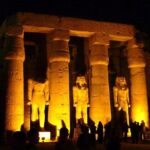
Next comes Luxor Temple, and it’s a different mood than Karnak. Karnak can feel like an entire civilization of stone, while Luxor Temple feels more like a focused stage—built over long stretches of time by pharaohs including Amenhotep III, Ramses II, and Tutankhamun.
Luxor Temple was tied to the annual reenacted coronation story of Amun’s rebirth, so the place isn’t only about power—it’s about ritual. As you move through, you’ll see remnants like the Great Colonnade Hall, about 61 meters long with 28 columns that stand around 21 feet high. One reason that hall matters is that the decoration was largely undertaken by Tutankhamun.
You also get a real-world sense of change over time. Some sidewalls were removed later and recycled for building materials, which helps you picture Luxor not as a museum piece but as something that kept being used, dismantled, and reused.
This stop is also about 1 hour on foot, and again, the temple entrance is not included. I recommend planning to have the extra ticket fee ready so you don’t end up stuck in a last-minute scramble when everyone else is moving.
Avenue of Sphinxes: a rediscovered road with modern momentum
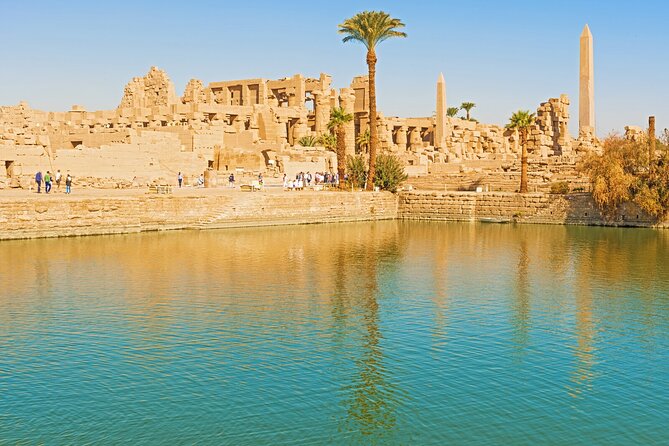
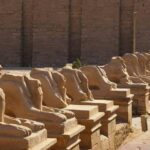
After Luxor Temple, you’ll have a stop along the Avenue of Sphinxes, with about 30 minutes here. This is one of those “you can see it now, but it wasn’t always visible” stories: the avenue was buried under sand layers for centuries after it was completed.
Construction started in the New Kingdom era, and it was completed during the reign of Nectanebo I (dated here between 380–362 B.C.). The modern story adds extra meaning because the road became visible again after archaeology work began in the 20th century.
The facts that make this stop interesting are specific: in 1949, archaeologist Mohammed Zakaria Ghoneim discovered eight sphinx statues near Luxor Temple, and additional figures were uncovered in later periods up through the 1961–1964 range. The area reopened in a grand ceremony on 25 November 2021, which means you’ll likely notice it has a more “present-day” feel than some fully ancient, untouched ruins.
If you care about photos, this is one of your easier chances to frame a long perspective shot. If you’re short on time, focus on getting the avenue alignment and let the guide do the heavy lifting on history.
Abu Haggag Mosque: the past still being used
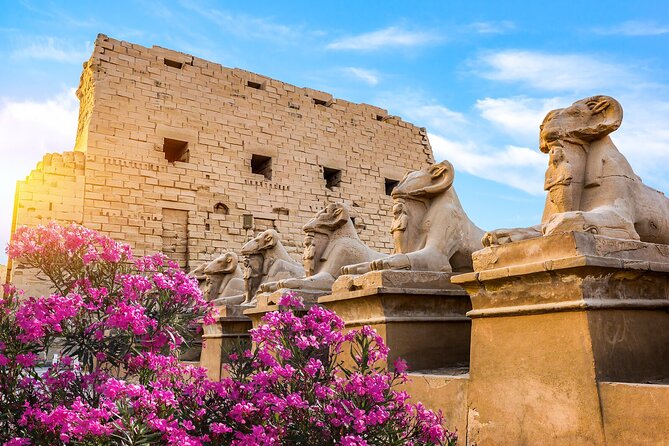
The last stop is Abu Haggag Mosque, integrated into the structure of Luxor Temple. That mix is the point: you’re not just looking at an ancient site you can’t touch. This is a working place of worship that has been used continuously for a very long time.
The mosque dates back to the reign of Pharaoh Amenhotep III in the 14th century B.C., and it’s often described as one of the oldest continuously used places of worship in the world. Even if you’re not deeply religious, it adds a layer to your understanding of Luxor: these sites don’t exist only in the past.
Your time here is about 10 minutes, and the stop being short is a blessing if you’re managing heat. You’ll probably want to keep your expectations realistic here—this isn’t a long guided lecture. Think of it as a quick, meaningful capstone: ancient temple → later religious life → today.
If you’re planning photos, be respectful and follow what people around you are doing. In places like this, the best pictures usually come from patience and quiet observation.




Price and temple tickets: what $30 really covers

The tour price is $30 per person, and it’s typically booked around 15 days in advance. With a 4-hour running time and an Egyptologist guide included, that’s a reasonable rate for Luxor, especially because you’re also getting transportation by horse carriage.
Where the budget can shift is entrances. Karnak and Luxor Temple tickets are not included, and the total listed amount for those is 200 EGP (about 12 USD). So your realistic planning number is closer to $42-ish when you factor in those fees, assuming the conversion and what you actually pay matches the estimate.
Two value notes I like:
- You’re paying for someone to explain what you’re seeing, not just for movement between sites.
- You’re not paying for car hire or juggling your own timing between major attractions.
Also, you’ll have a mobile ticket for this activity, which tends to reduce the stress at check-in. If you prefer cashless travel, that’s a small win. If you’re the type who likes to be prepared for anything, keep some local cash for entrances anyway.
Meeting-point reality checks and animal-welfare concern

A horse carriage is part of the concept here, but this is the section where you do your due diligence. There has been at least one serious report involving an emaciated horse that collapsed and couldn’t get up on a hot day. That’s not a small complaint; it’s a safety and welfare red flag.
So here’s what I recommend doing at the start: look closely at the carriage setup. If something seems off—horse condition, harnessing, or handling—ask questions right away. If you’re uncomfortable, it’s completely fair to step back and ask for a different arrangement.
There’s also been confusion about the title and whether you meet directly with the carriage as advertised. The safe approach is simple: confirm where you meet (front of the Luxor Museum, red flag) and confirm how the first ride works before you commit to loading up.
I’m not saying this to scare you away. I’m saying it because Luxor should feel magical, not worrying, and you have some control over that first moment.
Group size and timing: when 4 hours feels short
This experience has a maximum of 50 travelers. That’s big enough that you might feel like you’re in a group, but small enough that you shouldn’t be completely lost among hundreds of people.
The timing is also tight, and that’s the main trade-off. You have about:
- 10 minutes around the starting point at Luxor Museum
- 1 hour at Karnak
- 1 hour at Luxor Temple
- 30 minutes at the Avenue of Sphinxes
- 10 minutes at Abu Haggag Mosque
So yes, you’ll see a lot, but you won’t have hours to wander slowly through every corridor or column. If you’re the type who wants to sit and read every inscription, you might feel rushed. If you want the biggest highlights with clear explanations, this schedule is designed for you.
Heat matters too. Luxor can be intense, and temples are not always cool inside. Plan for water, sun protection, and the possibility that you’ll need to pace yourself during outdoor sections between stops.
Who should book this, and who might look at other options
This tour is a solid fit if:
- it’s your first time in Luxor and you want Karnak + Luxor Temple in one organized plan
- you like history explained by an Egyptologist guide, not just signboards
- you want an easier day with carriage transport and good Nile photo opportunities
It might be less ideal if:
- you’re very sensitive to animal-welfare issues and need reassurance before committing
- you prefer a slower, deeper visit with more time inside each site
- you’re expecting entrances to be included in the base price
One nice bonus is the flexibility of the sites themselves: Karnak and Luxor give you monumental architecture, the Avenue of Sphinxes adds a “rediscovered” archaeological feel, and Abu Haggag Mosque gives you a real living layer of worship inside an ancient complex.
Should you book Luxor-Explore secrets of Luxor by horse carriage?
If you’re choosing this for the right reasons, I think it’s worth considering. The value is strong for $30 because you’re bundling a guide with horse-carriage transport and covering the key East Bank sights. The Egyptologist context is also the difference between looking at temples and actually understanding what you’re looking at.
Just go in with two expectations: plan for the extra Karnak and Luxor entrance tickets, and do a quick animal-safety check at the start. If the carriage and horse situation feels healthy and properly handled, you’ll likely come away with the kind of Luxor day that feels efficient, scenic, and genuinely informative.
FAQ
How long is Luxor-Explore secrets of Luxor by horse carriage?
The tour lasts about 4 hours.
What is included in the price?
You get an Egyptologist tour guide and transportation by horse carriage.
What temples or sites does the tour cover?
You visit Karnak Temple, Luxor Temple, the Avenue of Sphinxes, and Abu Haggag Mosque. The tour starts at Luxor Museum.
Are entrance tickets included?
No. Karnak and Luxor Temple entrance tickets are not included, at an estimated total of 200 EGP (about 12 USD). The other listed stops are marked as free.
Where is the meeting point?
You meet in front of the Luxor Museum on the Cornish Al Nile.
Do I get a mobile ticket?
Yes, the tour includes a mobile ticket.
How many people are in the group?
There is a maximum of 50 travelers.
Can most people participate?
The tour notes that most travelers can participate.
Is free cancellation available?
Yes. You can cancel for a full refund up to 24 hours before the experience’s start time.