REVIEW · LUXOR
Luxor City Tour by Horse Carriage Visit Local
Book on GetYourGuide →Operated by Al Hajeej Travel Lux Egypt · Bookable on GetYourGuide
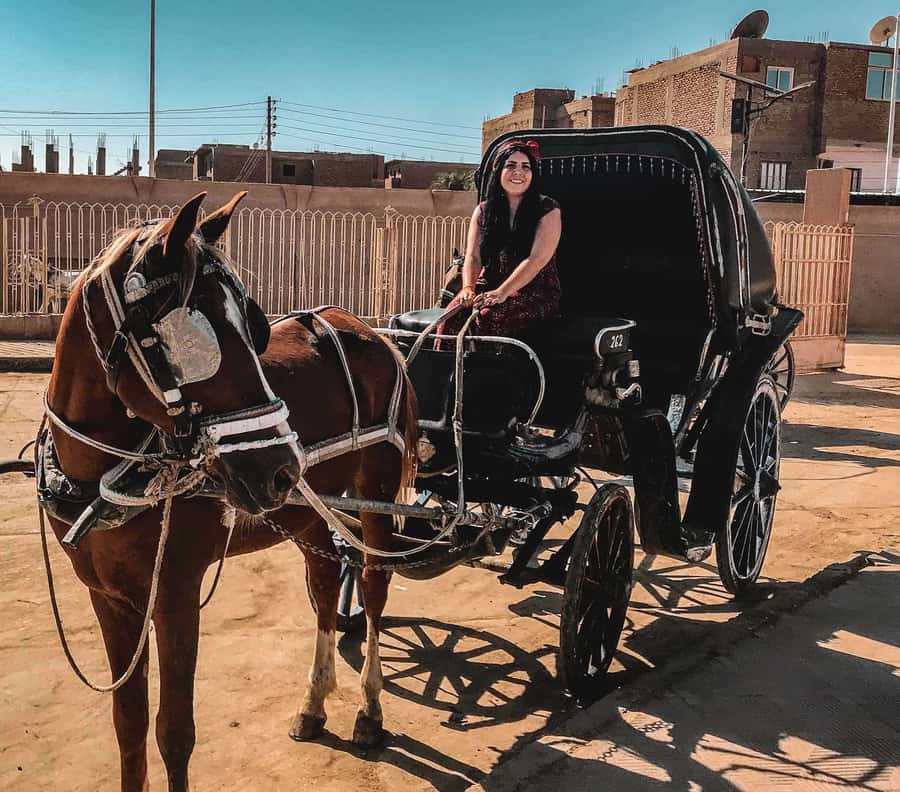
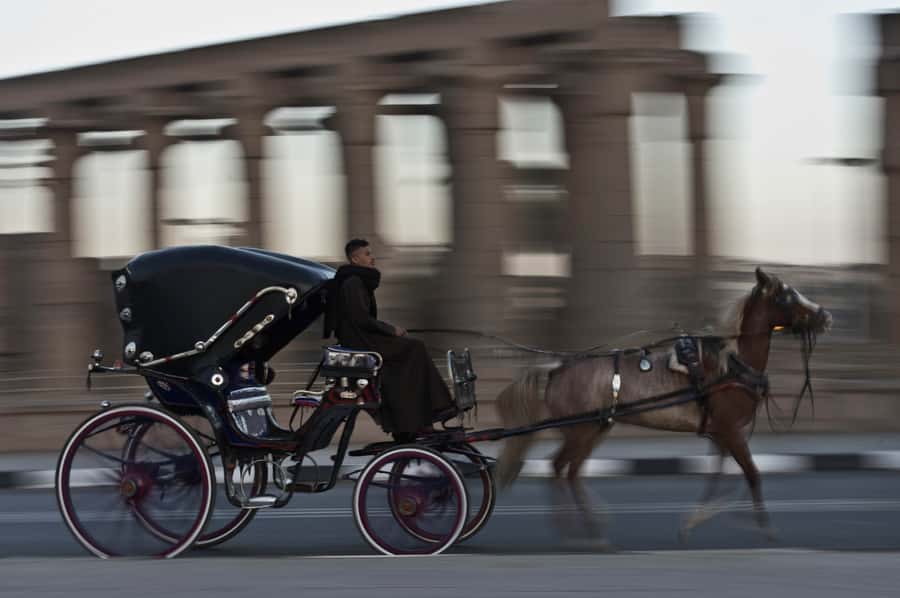
Luxor by carriage feels like slow time. This tour is a simple, guided ride through real neighborhoods, with stops at major landmarks like Luxor Temple and the Mosque of Abu Haggag, plus time in the souq with a guide explaining what’s going on.
What I like most is the peaceful pace—you move slowly enough to actually look around—and the way your guide connects the sights to everyday Egyptian life, not just dates on stone. In the best-rated rides, guides like Adam have paired with driver Mostafa, and the experience comes with small kindnesses like sugarcane juice along the way.
One thing to consider: you’re on a horse carriage for about 2.5 hours, so expect slow streets and sun exposure. Bring sunglasses, and remember luggage or large bags aren’t allowed.
In This Review
- Key highlights at a glance
- Hotel Pickup to Horse Carriage: How the 150 Minutes Work
- Through a Historic Village: Seeing Luxor Before the Big Stones
- Mosque of Abu Haggag: A 3,400-Year-Plus Place of Worship
- Souq and Local Shopping Culture: Buy, Look, and Learn the Rules
- Coptic Christian Churches Along the East Bank: Layers You Can Actually See
- Luxor Temple and Ramses II: The Monument Stop That Feels Personal
- Optional Karnak Sound & Light: When the Night Tells the Story
- Price and Value: Why $12 Can Make Sense Here
- What to Expect Day-of: Comfort, Clothing, and Photos
- Who This Tour Suits Best (and Who Might Prefer Something Else)
- Should You Book This Luxor Horse Carriage City Tour?
- FAQ
- How long is the Luxor city tour by horse carriage?
- Is this a private tour?
- Where do you get picked up from?
- Is there an English-speaking guide?
- What major sights are included during the ride?
- Is the Sound and Light Show in Karnak included?
- Do I need to buy tickets or wait in line?
- What should I bring, and what isn’t allowed?
- What are the cancellation and payment options?
Key highlights at a glance
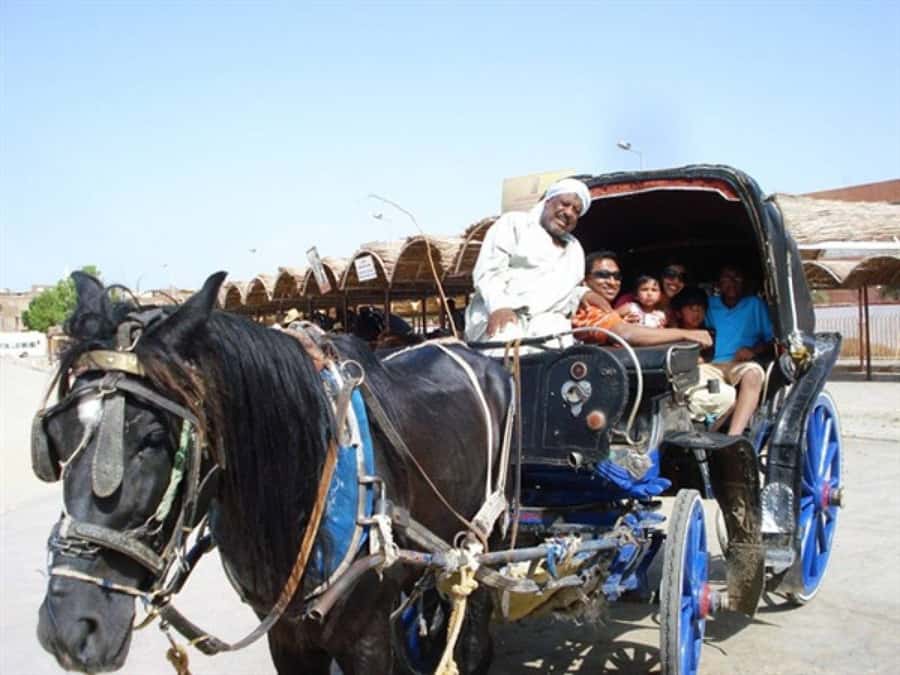
- Private horse carriage ride around Luxor with hotel pickup and drop-off
- Mosque of Abu Haggag: a living place of worship with roots over 3,400 years old
- Souq time to see local shopping rhythms and bargain culture up close
- Luxor Temple: Ramses II era architecture around 1400 BC
- Optional Karnak Sound & Light if you choose that add-on
- Skip the ticket line where tickets are part of the included stops
Hotel Pickup to Horse Carriage: How the 150 Minutes Work
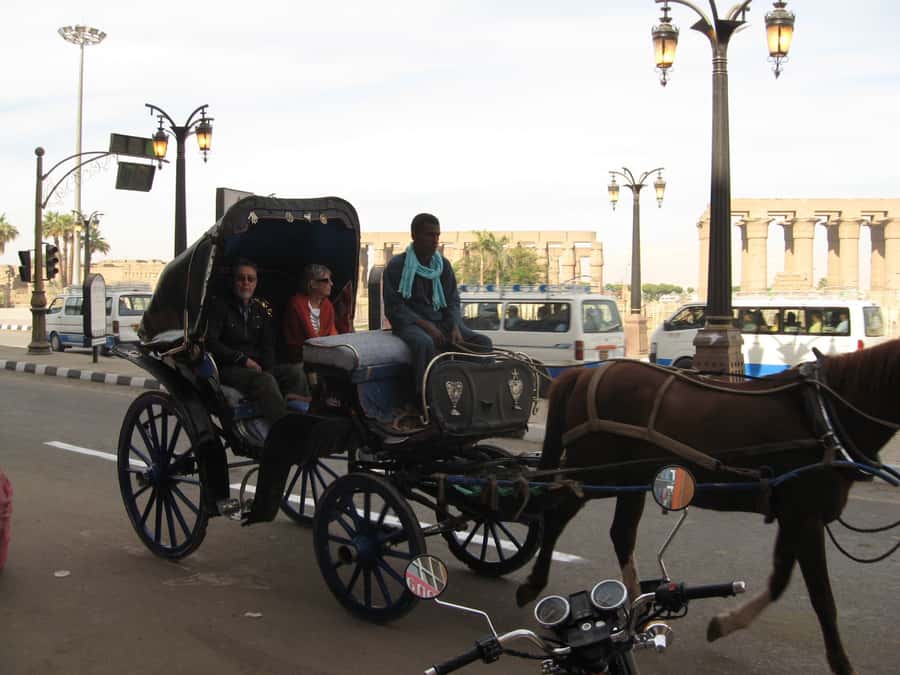
This is one of those tours that starts the day gently. You meet your guide at your hotel in Luxor, then get transferred onto a private horse carriage for a ride designed to last about 150 minutes.
That timing matters. Luxor can feel huge when you’re rushing between sites. Here, the carriage slows everything down. You’re not sprinting from one photo spot to another. Instead, you get a guided loop that mixes landmark stops with local street views—so the day feels like a real walk around the city, just with wheels and shade breaks.
Also, because it’s a private group, you’re not trapped in a crowd pace. Your guide can explain as you go, and you can linger for photos without feeling like you’re holding up a tour bus line.
A small practical note: there’s no mention of onboard storage, and large bags and luggage aren’t allowed, so pack light. Keep the basics you’ll actually need—camera, water if you like, and sunglasses—and plan to buy any small extras on the route if you want them.
You can also read our reviews of more city tours in Luxor


Through a Historic Village: Seeing Luxor Before the Big Stones
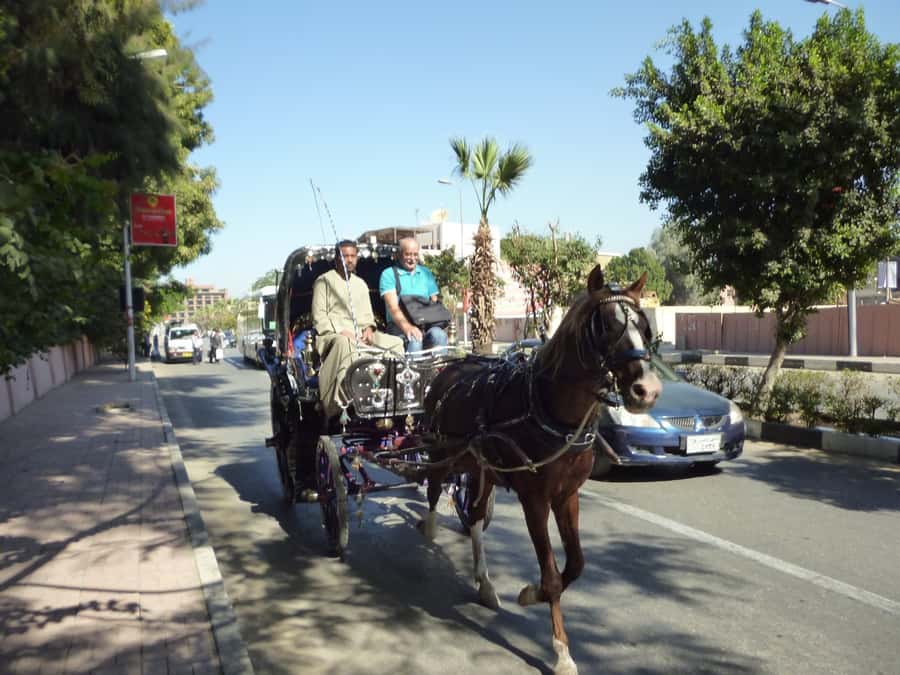
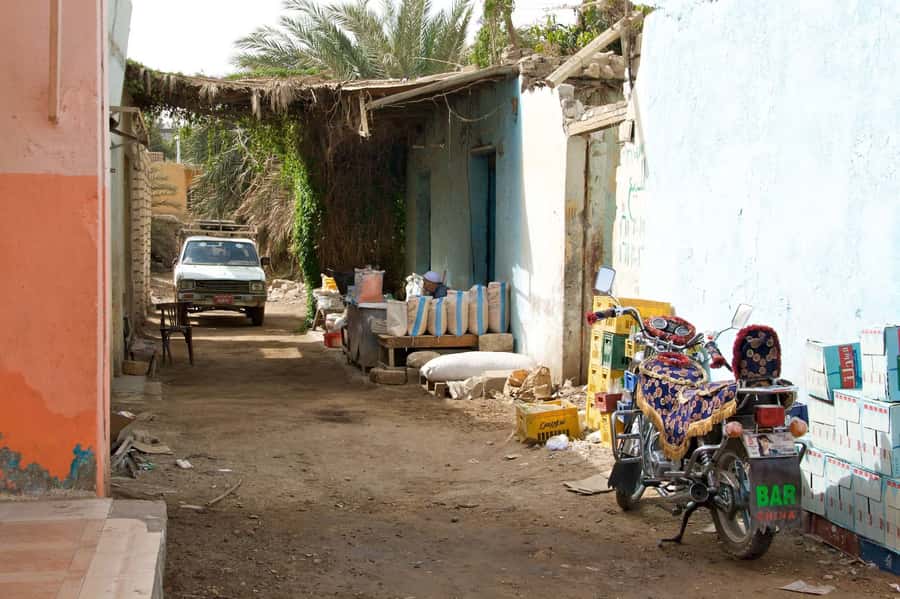
Before you reach the big monuments, you’ll pass through a historic village area. This is one of the smartest parts of the route because it frames what you’re seeing later.
Luxor isn’t just temples. It’s homes, daily routines, and neighborhoods that existed alongside—and around—Egypt’s ancient reputation. Even if you only get a short slice of village life, it helps you understand the city as a place people live in, not a theme park.
Your guide uses this first segment to set context: what the setting is like now, how traditions show up in daily life, and what to notice as you move toward older religious and ceremonial sites. The value here isn’t “more sights,” it’s better orientation. Once you understand the rhythm of the area, the landmarks feel more connected instead of random.
If you’re heat-sensitive, you’ll probably want to time your photography carefully during the brightest moments. The carriage pace helps, but Luxor sun doesn’t care about your itinerary.
Mosque of Abu Haggag: A 3,400-Year-Plus Place of Worship
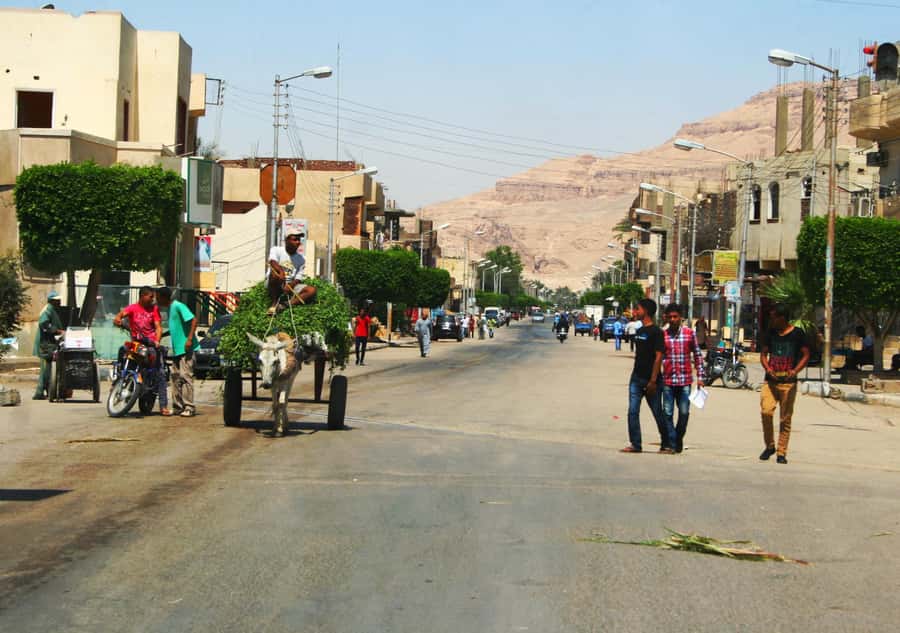
One stop you’ll feel quickly is the Mosque of Abu Haggag. This isn’t a “look but don’t touch” kind of site. It’s described as one of the oldest places of continuous worship in the world, with a history dating back over 3,400 years.
That “continuous worship” detail changes how you should look at it. Instead of treating the mosque like a static monument, think of it as a living layer in Luxor’s timeline—where newer structures stand in a place that has mattered for an extremely long time.
Your guide walks you through what makes this location important, and you get a chance to see how the mosque fits into the surrounding city fabric. The best takeaway is perspective: Egypt’s religious landscape isn’t only ancient ruins. It’s still active and still part of the community.
Souq and Local Shopping Culture: Buy, Look, and Learn the Rules
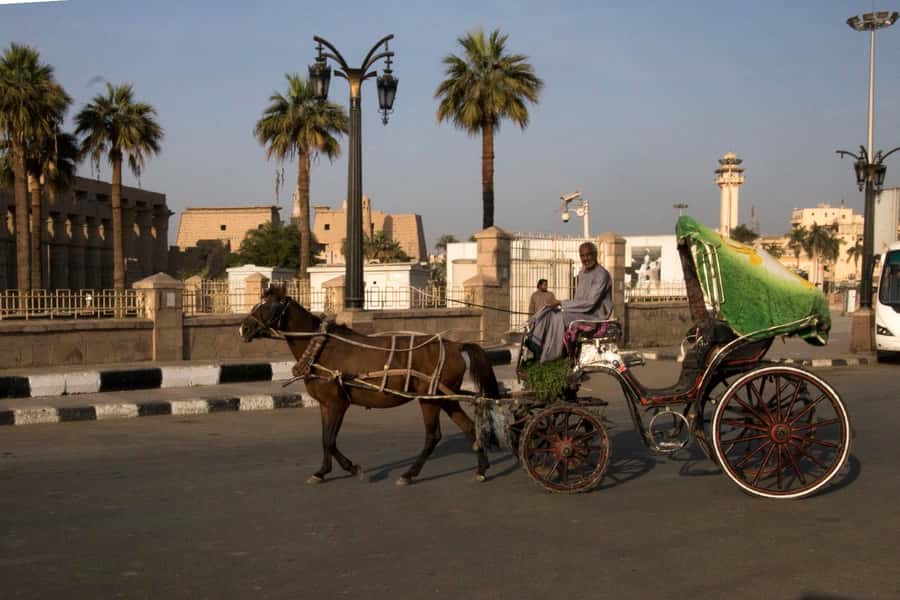
After the mosque, you’ll head through the souq, a busy shopping area where locals and visitors hunt for local goods and bargains. This segment is valuable because markets don’t just sell stuff—they show how people interact.
Here’s what you’ll likely notice:
- How people move through narrow spaces while staying focused on what they want
- How merchants present items and how bargaining works in everyday conversation
- The mix of locals and travelers in one place, which makes the atmosphere feel more like a day-to-day market than a staged attraction
Your guide’s role really shows up here. They can point out what you’re seeing and how to approach the market in a way that feels respectful and easy. In one of the most praised experiences, the guide Adam shared current life in Egypt—not only the past—so the souq felt like a window into daily culture rather than just a shopping stop.
If you want to shop, keep expectations realistic. Plan to browse first, then decide. For photos, avoid blocking foot traffic. And if you’re prone to strong sun glare, sunglasses aren’t optional. Luxor light can make everything look great in your phone, but it also tires your eyes fast.
Coptic Christian Churches Along the East Bank: Layers You Can Actually See
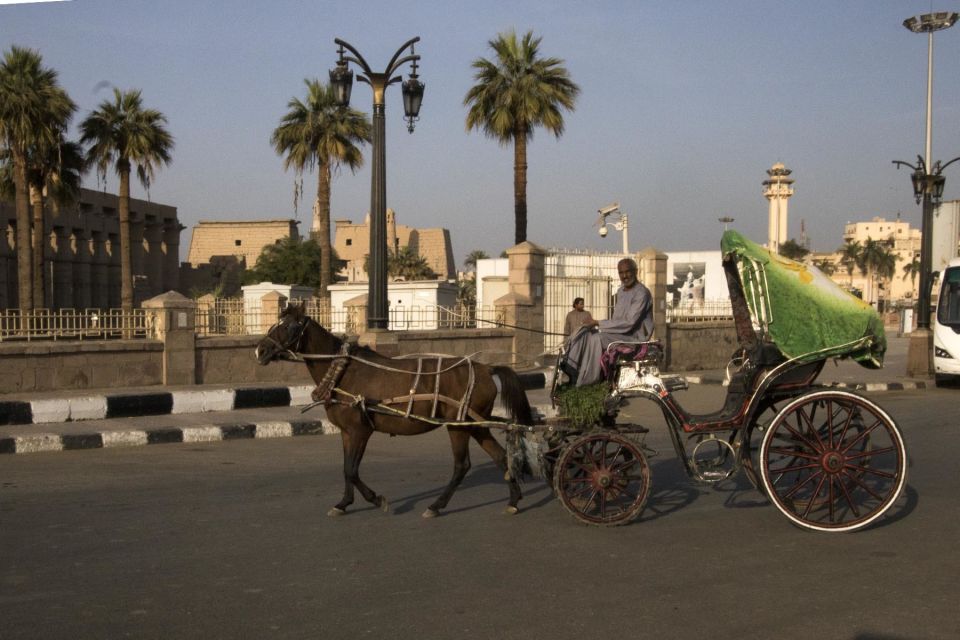
Next comes the religious “layering” that you only understand once you’re standing where it all overlaps. The tour route includes Coptic Christian churches built along the east bank.
This part matters because many visitors come to Luxor with a narrow view of what the city is. But Egypt’s history and belief systems stack over time. Seeing Coptic churches on this route reminds you that the east bank is not only about pharaonic monuments. It’s also where communities worshiped, built, and rebuilt across centuries.
Your guide explains what you’re looking at, which turns “random doors in a street” into something meaningful. Even if you don’t go inside every church, the point is the visual and geographic relationship—how the city’s religious life sits beside its ancient identity.
A few more Luxor tours and experiences worth a look


Luxor Temple and Ramses II: The Monument Stop That Feels Personal
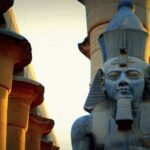
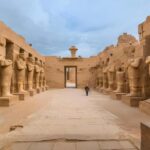
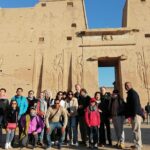
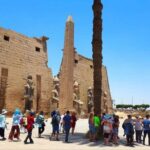
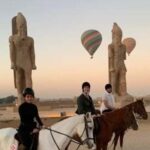
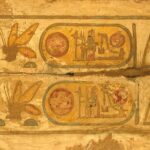
Then you reach Luxor Temple, built by Ramses II around 1400 BC. This is the kind of stop where your carriage loop pays off. You’ve already seen the city’s present-day life, so the temple doesn’t feel like something dropped in from another planet. It feels like a core part of Luxor’s story.
Luxor Temple is also a great final “anchor” because it connects to scale and design. Even if you don’t memorize architectural terms, you’ll sense the intention: grand entrances, ceremonial spaces, and an overall plan meant to impress visitors—then and now.
Your guide brings context to the site, and you also get practical help: the tour includes skip-the-ticket-line, which can save time if lines form at the entrance. That’s one of those small perks that helps the day feel smoother.
Photography tip: at temple entrances and key viewpoints, try to give yourself one minute without rushing. Luxor temples reward slow looking. The details are there, even if you’re in a moving schedule.
Optional Karnak Sound & Light: When the Night Tells the Story
If you select the option, you’ll also enjoy the Sound & Light Show in Karnak. This add-on changes the feel of the trip—less walking, more atmosphere.
A sound-and-light show works best when you’ve already learned the basics from a guide during the day. That’s exactly how this tour is set up: you finish your city route and monument time, then shift into a narrative presentation at Karnak. You’ll likely appreciate the show more because the earlier stops put Luxor’s sacred geography into context.
Keep your expectations realistic: it’s entertainment plus interpretation, not a replacement for seeing the sites in daylight. But as a final chapter, it can be a very easy way to end the day with a stronger story arc.
Price and Value: Why $12 Can Make Sense Here
At $12 per person, this tour can be good value—mostly because you’re paying for three things at once:
- Hotel pickup and drop-off, which matters in Luxor where getting across areas can take time
- A guided carriage ride with multiple stops, not just one monument photo op
- Inclusion of key sights like Abu Haggag and Luxor Temple, with ticket-line skipping
The biggest value point is that it’s not only about famous temples. It includes the souq and the religious mix along the east bank, which many quick tours skip. Even if you’re not shopping, the market portion helps you understand the city’s day-to-day energy.
One caveat: your “bang for buck” depends on your willingness to do a relaxed, guided route rather than a fast march of every possible site. If you want nonstop ticketed attractions for hours, this may feel too calm. If you want an intelligent, local-feeling introduction, it’s priced like a smart first or second day activity.
What to Expect Day-of: Comfort, Clothing, and Photos
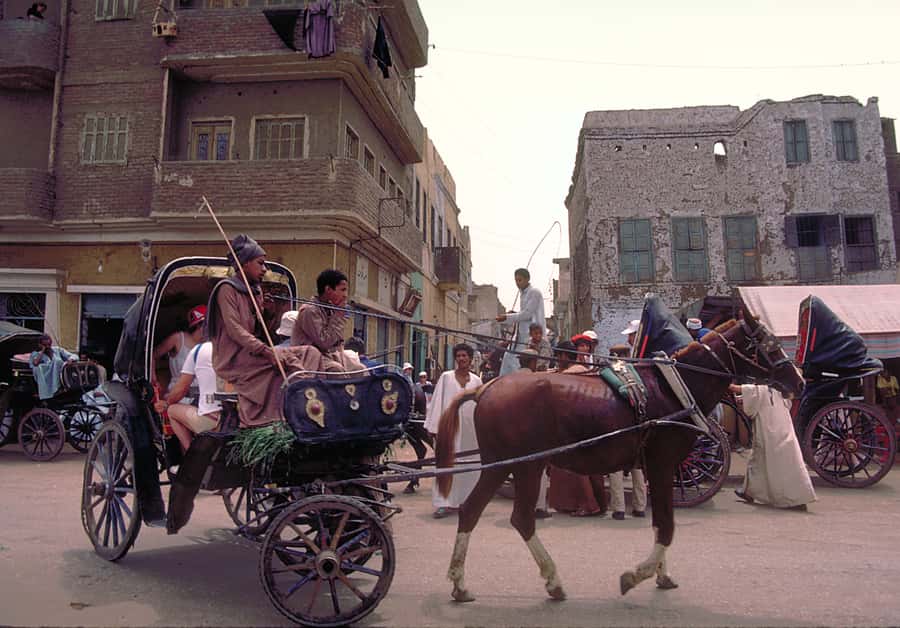
You should plan for a warm day and sun glare. The activity notes sunglasses as a must, and that’s honestly a good sign. A carriage tour is all about sightlines, and bright light makes it hard to enjoy the view without protecting your eyes.
You’re also told not to bring luggage or large bags. That’s mostly for safety and ease. Pack small. Keep your day bag light enough to carry comfortably during boarding and moving around stops.
For photos, bring your patience. Carriage riding means you’ll occasionally stop and start, and the best shots may happen during short moments—like temple edges, mosque areas, and market views. If you can, keep your camera accessible rather than buried deep in a bag.
Finally, listen closely when your guide talks. The most praised parts of this tour are how guides share not just historical context, but current Egyptian life—how people live, what daily routines look like, and how traditions show up now. That makes your photos feel more than just images.
Who This Tour Suits Best (and Who Might Prefer Something Else)
This tour is a strong match if you want:
- A relaxing, slower way to see Luxor
- A route that mixes landmarks with local streets and markets
- A guide who can explain what you’re seeing and connect it to today’s culture
- A private experience without a large group crowding your space
It may not be the best fit if you:
- Want a long list of monuments with minimal guide conversation
- Get restless with a ride-based format
- Need a tour that accommodates bulky luggage (since large bags aren’t allowed)
If you’re traveling as a couple, solo, or small group, the private setup can feel especially worth it. You get the “city introduction” feeling without the pressure of group logistics.
Should You Book This Luxor Horse Carriage City Tour?
If your ideal Luxor day is guided, local, and unhurried, I think this is worth booking. It hits the big landmarks—Abu Haggag and Luxor Temple—while also giving you the pieces most visitors miss: the souq rhythm and the religious layers along the east bank.
I’d especially recommend it as:
- Your first day in Luxor (so you get oriented quickly)
- A lighter day if you’ve got heavy temple mornings planned
- A budget-friendly way to see more than one major site without a frantic pace
Just go in knowing it’s a carriage ride and street-focused tour. If you want to sprint from monument to monument, you might feel under-satisfied. But if you want Luxor to feel like a living city—while still seeing the essential sights—this is a very practical pick.
FAQ
How long is the Luxor city tour by horse carriage?
The tour lasts about 150 minutes.
Is this a private tour?
Yes, it’s listed as a private group.
Where do you get picked up from?
Pickup is included from all East Bank side hotels in Luxor, and you also get dropped back at your hotel.
Is there an English-speaking guide?
Yes. The tour includes a live English tour guide.
What major sights are included during the ride?
You’ll see the Mosque of Abu Haggag, a souq, Coptic Christian churches along the east bank, and Luxor Temple built by Ramses II. A historic village is also included as part of the route.
Is the Sound and Light Show in Karnak included?
It’s included only if you select that option.
Do I need to buy tickets or wait in line?
The tour includes skip-the-ticket-line.
What should I bring, and what isn’t allowed?
Bring sunglasses. Luggage or large bags are not allowed.
What are the cancellation and payment options?
There’s free cancellation up to 24 hours in advance for a full refund, and there’s a reserve now & pay later option.