REVIEW · LUXOR
5 Days Tour of Luxor and Aswan
Book on Viator →Operated by D.Done travel Egypt · Bookable on Viator
Luxor and Aswan hit hard—in the best way. In five days, you’ll move through royal tombs, blockbuster temples, and the long drive to Abu Simbel, all with private A/C transfers and hotel pickup. I love how the route covers both “famous” sites and the smaller, character-filled stops like the Colossi of Memnon. The main thing to watch: entrance fees and a guide aren’t included, so your real budget will be more than the base price.
What makes this work is the way D.Done travel Egypt handles the flow. In the past, operators like Mohamed (and Mohammed 1st and Mohammed 2nd) have been praised for being reliable, easy to reach, and careful with comfort—plus support when travel plans go sideways. One possible drawback is that the days are full, so you’ll want comfortable shoes and the mindset that you’re seeing a lot, not lingering everywhere.
In This Review
- Key highlights I’d plan around
- Why Luxor and Aswan feel like one big story
- Price and logistics: what the $140 covers (and what doesn’t)
- Day 1 in Luxor: tombs, terraces, and the Colossi of Memnon
- Day 2: optional hot air balloon, then Karnak and Luxor Temple
- Day 3: Edfu temple perfection, then Kom Ombo’s dual dedication
- Day 4: Philae on Agilkia Island, High Dam, and the Unfinished Obelisk
- Day 5: Abu Simbel’s long day and why it’s worth it
- What you’ll actually experience on this private format
- Entrance fees, tipping, and the guide question (so you don’t get surprised)
- Who this tour suits best
- Should you book this Luxor–Aswan–Abu Simbel tour?
- FAQ
- What’s included in the 5 Days Tour of Luxor and Aswan?
- Are entrance fees included for the sites in the itinerary?
- Is the hot air balloon ride included?
- Do I get a guide included with the tour?
- Is this tour private?
- Can I cancel for a full refund?
Key highlights I’d plan around
- Private hotel pickup and return: you start and end stress-free.
- A packed “south Egypt essentials” route: Luxor to Aswan with temple stops built in.
- Optional hot air balloon in Luxor: a sunrise-style view if you’re up early.
- A long Abu Simbel day: plan for the 8-hour block and bring snacks/energy.
- Entrance fees not included: budget ahead so you’re not surprised at ticket points.
Why Luxor and Aswan feel like one big story
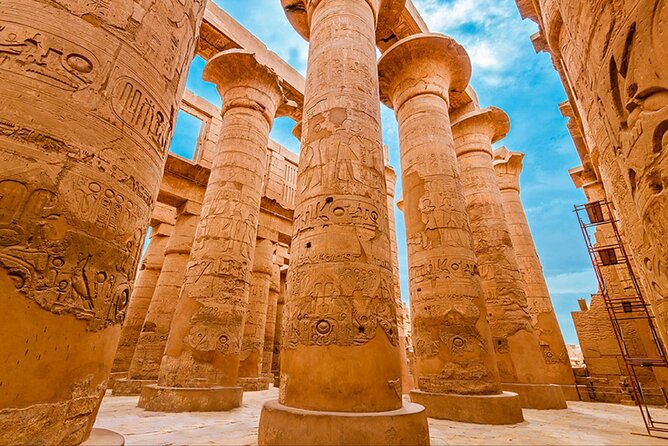
Luxor and Aswan aren’t two separate trips. They’re chapters. Luxor is where you get the dense concentration of royal tombs and grand temple complexes tied to Amun and the pharaohs. Aswan shifts the mood. It’s temples, Nubian-era echoes, Nile engineering with the High Dam, and then the heavy wow factor of Abu Simbel.
This tour’s value is that it links those chapters with private air-conditioned vehicle transfers. That matters because the distances between stops add up fast. When you’re moving in comfort, you can spend your energy on the ancient stuff instead of logistics.
It’s also built for travelers who want “major hits” without the hassle of stitching together separate day trips. The route covers Luxor Temple and Karnak, then Edfu and Kom Ombo on the way down the river, and finally Philae, the High Dam, and Abu Simbel.
A few more Luxor tours and experiences worth a look


Price and logistics: what the $140 covers (and what doesn’t)
The base price is $140 per person for an approximate 5-day tour. Included are:
- Lunch
- All transfers by a private air-conditioned vehicle
- Pickup from your hotel and return
Also noted: pickup is offered, group discounts may apply, and you’ll use a mobile ticket.
What’s not included is where your actual “all-in” cost can change:
- Entrance fees for the sites listed
- Tipping
- Guide
- Hot air balloon (optional)
Two practical tips:
- Since entrances and guides aren’t included, it’s smart to set aside extra money up front. Temple and tomb tickets can add up quickly in Egypt.
- If you care about context, plan how you’ll handle interpretation. The tour data says a guide isn’t included, so you might hire a site guide locally or bring your own plan for audio/apps.
The good news: the itinerary includes at least a couple of free or lower-cost moments (like the Colossi of Memnon being listed as free in the schedule, and Aswan also listed as free for one segment). Those small wins help.
Day 1 in Luxor: tombs, terraces, and the Colossi of Memnon
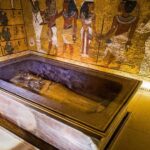
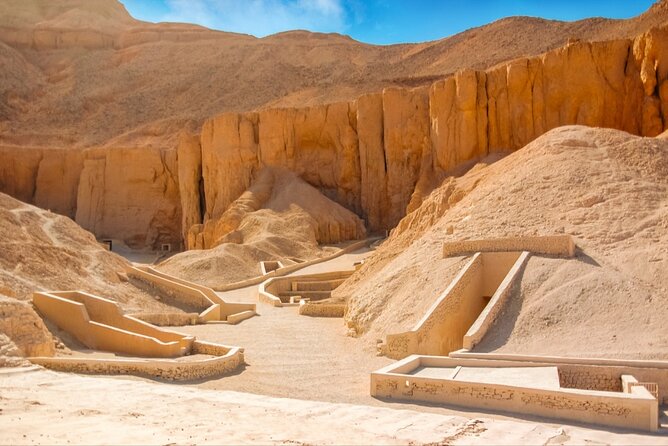
Day 1 is pure old Egypt power. You start with the Valley of the Kings. This is the place where the pharaohs hid their tombs away from the public eye. You’ll spend about 2 hours there. Even without getting too technical, you can feel what the site is doing: it’s not one monument, it’s a whole royal world tucked into cliffs.
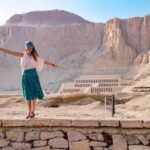
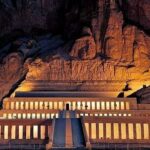
Next comes Temple of Hatshepsut at Deir el Bahari (about 2 hours). Hatshepsut’s story is one of those Egypt details you remember. You’re looking at architecture that tries to sell authority through stone—terraces, dramatic layout, and the sense that you’re walking through a royal message.
Then you move to Temple of Medinet Habu (about 1 hour 30 minutes). This one is worth giving time to. The reliefs and dedication to Amun show you how “temple as propaganda” worked—religion and politics braided together.
You close the day with the Colossi of Memnon for about 30 minutes, listed as free. These statues are huge. Even if you only spend a short window there, you get the scale fix your brain craves after hours of careful looking in tombs and temples.
Possible drawback to plan for: Day 1 is a lot of walking in a compressed time window. If you’re the type who likes to stop and read every sign, you might feel rushed. I’d treat it as a “see first, absorb later” day, then use your remaining time for deeper curiosity.
Day 2: optional hot air balloon, then Karnak and Luxor Temple
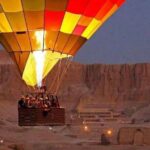
Day 2 starts with an optional hot air balloon ride in Luxor. It’s set up as an early morning option, and the idea is simple: you get a different view of the city’s temple geometry before the day warms up. If you’re into photography or you just like seeing how all those sites sit together, this is the kind of optional add-on that often becomes your best memory from the trip.
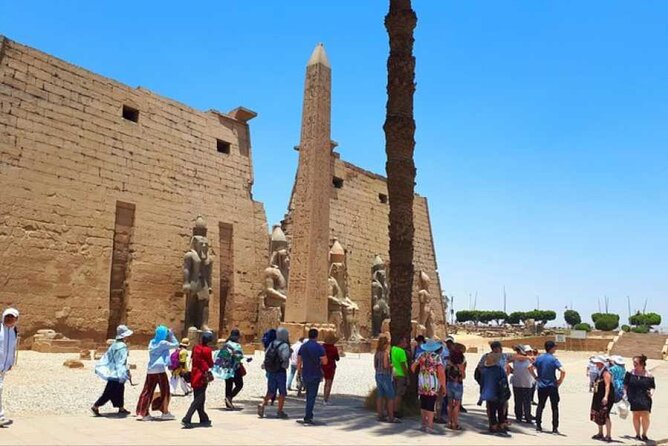
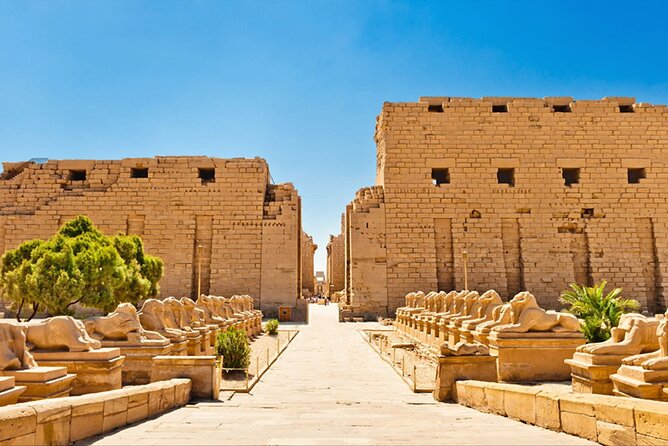
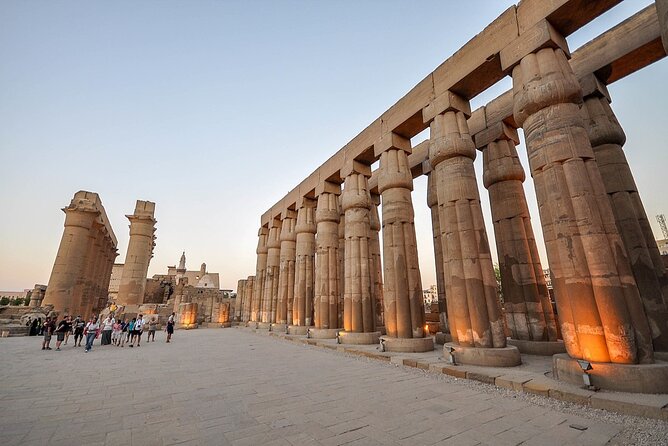
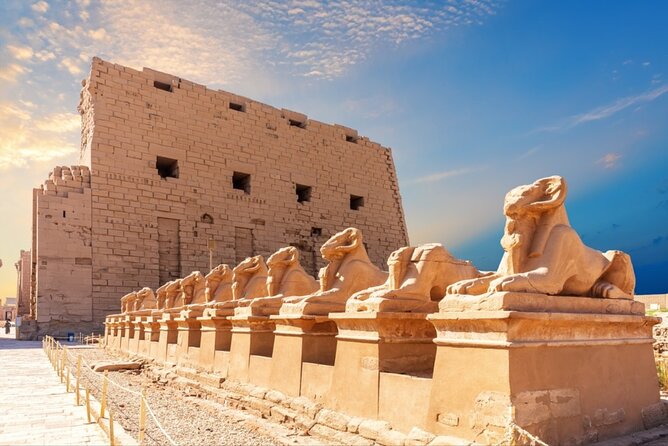
After that, you spend time in Karnak Temple (around 3 hours). Karnak is the kind of place that doesn’t behave like a normal “one building” attraction. It’s massive, layered, and easy to understand why it feels endless. Give yourself time. If you sprint, you’ll miss the feeling of scale.
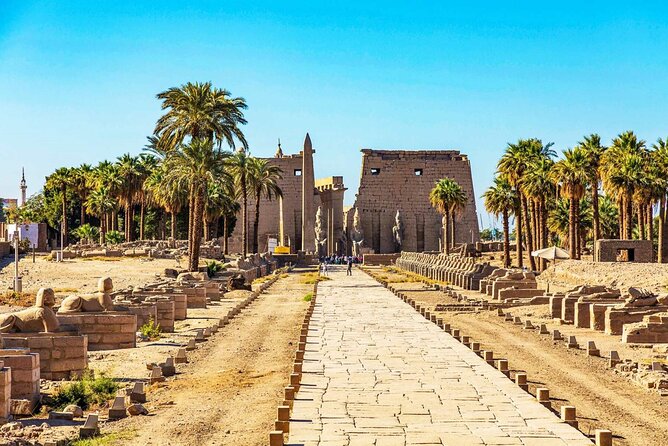
Then you wrap with Luxor Temple (about 2 hours). Luxor Temple tends to feel more human in scale than Karnak, even though it’s still grand. It also helps you connect what you saw in Karnak to a more coherent “walkable” temple experience.
My practical take: day 2 is ideal if you want a balance between sensory awe and actual breathing room. The balloon (if you do it) pulls you out of the heat and crowd rhythm, and Karnak + Luxor Temple give you two different temple “moods” in one day.
Day 3: Edfu temple perfection, then Kom Ombo’s dual dedication
Day 3 has travel time baked in, which is good. It prevents the trip from feeling like one endless temple marathon.
You transfer from Luxor to Edfu, with a stop along the way at two remarkable temples listed as free and totaling about 2 hours. The schedule doesn’t specify the names of those two sites in the data you provided, so you should expect them to be added context stops rather than the headline moments.
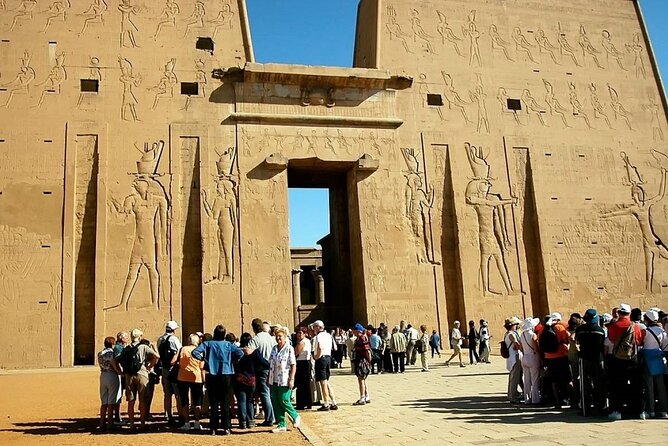
Then you arrive at the star of the day: Temple of Horus at Edfu, where you’ll spend about 2 hours. This is a well-preserved temple experience. The big win here is that the structure is easier to read visually than some sites that are more fragmentary. You can pay attention to layout and symbolism instead of trying to piece together what used to be standing.
After Edfu, you head to Temple of Kom Ombo (about 2 hours). This temple is dedicated to Sobek and Horus, and that dual focus is the point. It’s not just “another temple.” It’s a different theological pairing, and it often feels like you’re seeing Egypt’s religious thinking in two voices at once.
Watch-out: Day 3 is still a temple-heavy day, but it’s more varied. If your feet are starting to complain, pack a little extra caution here. Edfu and Kom Ombo are the kind of places where you’ll keep wanting to go back one more step to line up your view.

Day 4: Philae on Agilkia Island, High Dam, and the Unfinished Obelisk
Day 4 slows the emotional pace slightly while still delivering variety.
First: Temple of Philae on Agilkia Island (about 3 hours). Philae is the kind of place that changes how you experience Egyptian temples. Being on an island gives it a natural boundary—water, light, and the feeling that you’ve arrived somewhere “specific,” not just another stop on a route. It’s dedicated to the goddess Isis, and that matters because Isis shows up everywhere in Egyptian religion, especially in themes of protection and renewal.
Next: Aswan High Dam (about 2 hours). This is where the trip widens beyond ancient stone. You’re looking at modern Egypt’s progress—an engineering monument that reshaped the river and how communities live. It’s also a useful contrast after days of temples built for millennia.
Then you visit the Unfinished Obelisk (about 1 hour 30 minutes). This stop is a favorite kind of attraction for people who like “how it was made.” An unfinished project shows you process in a way polished monuments can’t.
My advice: day 4 is a great day to move at “camera pace” for Philae, but “thinking pace” at High Dam and the unfinished obelisk. These last two are the stops where a little curiosity goes a long way.
Day 5: Abu Simbel’s long day and why it’s worth it
If you do only one “wow” day on this trip, make it Abu Simbel.
The Abu Simbel Temple Complex is scheduled for about 8 hours. The Great Temple is dedicated to Amun, Ra-Horakhty, Ptah, and Ramesses II. At the entrance, you’ll see four colossal seated statues of Ramesses II, each over 20 meters tall. Inside, you’ll find intricate reliefs showing battles, worship, and royal ceremonies—so it’s not just monumental, it’s narrative.
Then you also see the smaller temple: Temple of Hathor and Nefertari, dedicated to Hathor and Queen Nefertari. The facade includes statues of Ramesses II and Nefertari, plus smaller figures related to their children.
This stop works because scale and storytelling hit at the same time. You look at the entrance statues and your brain registers “power.” Then you go inside and it shifts to “what that power was used for.”
The only real drawback: it’s a long day. Eight hours can feel like a lot, especially if you’re the type who likes slow travel. If you have energy, this is the day you’ll feel most rewarded. If you don’t, treat it like a focused mission: hydrate, protect your feet, and accept that the goal is to see.
What you’ll actually experience on this private format
A key detail is that this is a private tour/activity, meaning only your group participates. With a route like this—multiple temples across several days—privacy matters. You’re less likely to feel swallowed by a bus-tour herd. It also makes it easier to manage your pace when you hit a stop you love more than expected.
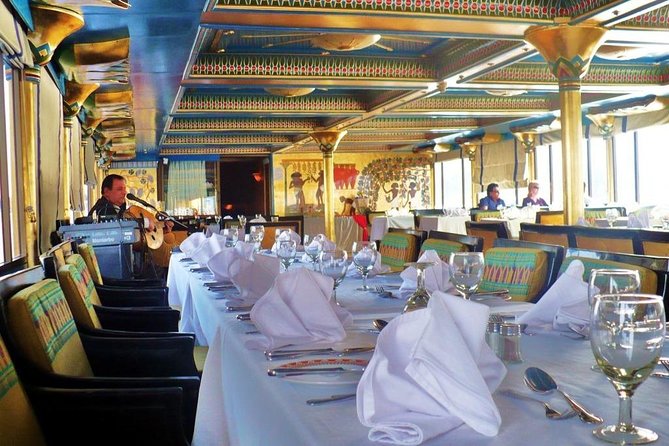
You’re also traveling by private air-conditioned vehicle, with lunch included. That combo is practical. South Egypt days can feel hot and long, and A/C transport reduces the “travel fatigue tax” that can wreck the experience.
And based on prior feedback connected to this operator, the human side seems strong. People have specifically praised Mohamed and Mohammed (including Mohammed 1st / Mohammed 2nd) for being friendly, reliable, and helpful when things go wrong—like coordinating when luggage was delayed due to a flight issue. That kind of support isn’t glamorous, but it’s the difference between a smooth trip and a day full of “where is my bag?” stress.
Entrance fees, tipping, and the guide question (so you don’t get surprised)
The trip lists entrance fees as not included, and guide as not included too. That means you should assume ticket costs and interpretation costs are on you.
Here’s the practical way to handle it:
- Decide whether you want a guide-style experience or a self-paced one.
- If you’re going self-paced, download offline info or plan a reading strategy before each site.
- If you want guided interpretation, budget for hiring guides at key stops (Karnak, Valley of the Kings, Abu Simbel are common places where a guide can add value fast).
Tipping isn’t included. That’s normal in Egypt, but you should still plan for it so it doesn’t become a last-minute scramble.
Also, the schedule has some free listed moments. Those are small budget helpers, but don’t let them fool you into thinking the trip is “cheap.” The big costs here are still the entrance fees.
Who this tour suits best
This is a strong fit if you:
- Want a five-day route that covers Luxor, Aswan, and Abu Simbel without stitching together multiple separate bookings
- Prefer private, A/C transfers and a hotel pickup/return model
- Like seeing the major temple sites plus a few bonus-style stops along the way
- Are okay with a schedule that’s busy and temple-focused
This might be less ideal if you:
- Want lots of downtime built in
- Get overwhelmed by “see a lot” days
- Need a deeply guided, fully interpretive experience included in the price (since guides aren’t included)
Should you book this Luxor–Aswan–Abu Simbel tour?
I’d book it if you want the classic south Egypt storyline in one smooth package—temples, tombs, a modern contrast with the High Dam, and the big finale of Abu Simbel. The biggest reasons to choose it are private transport, hotel pickup/return, and the way the route stacks major sites efficiently.
I’d also make your decision after a quick budget check. Because entrance fees, tipping, and optional balloon + guide costs aren’t included, your total trip cost will be higher than $140. If you’re comfortable covering those extras and you’re mentally prepared for a packed week, this is a solid, value-forward way to see the region.
FAQ
What’s included in the 5 Days Tour of Luxor and Aswan?
Lunch is included, along with all transfers by a private air-conditioned vehicle and pickup service from your hotel and return.
Are entrance fees included for the sites in the itinerary?
No. Entrance fees for the mentioned sites are not included.
Is the hot air balloon ride included?
No. The hot air balloon is listed as optional and is not included.
Do I get a guide included with the tour?
No. A guide is listed as not included.
Is this tour private?
Yes. It’s a private tour/activity, and only your group participates.
Can I cancel for a full refund?
Yes. Free cancellation is available if you cancel up to 24 hours in advance of the experience start time for a full refund.