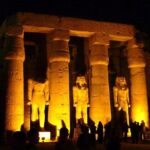
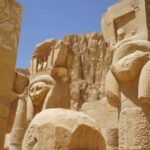
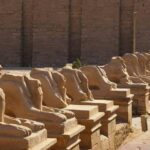
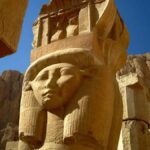
Stone tombs, and one clever queen. This West Bank outing stitches together the afterlife ambition of the Valley of the Kings with the standout power story of Queen Hatshepsut, plus a quick stop at Amenhotep III’s surviving giants. It’s priced low on paper, but the real value comes from what you’ll see inside the tombs and how the guide frames what it all meant.
I particularly liked two things. First, the tour’s tomb selection is practical and detail-heavy, including KV 11 (Ramses III) and its painted ritual scenes, plus other decorated tombs where you can spot major artistic choices like Nut stretching across the ceiling. Second, the flow is easy to fit into a Luxor schedule: hotel pickup, private air-conditioned transport, bottled water, and a full hour for you to wander Hatshepsut’s temple courtyards at your own pace.
One consideration: entrance fees are not included in the base price, and the tomb stops are time-boxed (think short visits inside), so you’ll want to be ready to prioritize what you most want to see before you go in.
In This Review
- Key things to know before you go
- Valley of the Kings: Where royal tombs hide in plain sight
- Ramses III’s KV 11: Painted rituals and the Tomb of the Harpers
- Ramesses IX and Merneptah: Color, layout, and who Howard Carter found
- Deir el-Bahari: Hatshepsut’s temple and the power of posing
- Colossi of Memnon: A short, free hit of Amenhotep III
- Price and logistics: what the $20 actually buys
- How the day runs: half-day timing with a private-vehicle rhythm
- Guides and interpretation: why Amro and Hany keep getting praised
- Who should book this Luxor West Bank mix of tombs and temples?
- Should you book this tour?
- FAQ
- Is hotel pickup and drop-off included?
- How long is the tour?
- Are bottled water and transport included?
- Are entrance fees included?
- Is lunch included?
- Is there a time at Hatshepsut Temple to explore on your own?
- Is the Colossi of Memnon stop free?
- Can I cancel for a full refund?
- Is a guide always included?
Key things to know before you go
- Valley of the Kings focuses on decorated New Kingdom tombs—including 63 tombs and chambers in the wider area
- KV 11 (Ramses III) is a standout, with colorful painted reliefs and the Tomb of the Harpers nickname tied to blind harpists
- You’ll see major symbolism like goddess Nut above Ramesses IX’s sarcophagus space (even if some paint has deteriorated)
- Hatshepsut’s temple includes time to self-explore for about an hour in the courtyards and hieroglyphic zones
- Colossi of Memnon is quick but free, with 20 minutes at the two giant statues marking Amenhotep III’s mortuary temple site
Valley of the Kings: Where royal tombs hide in plain sight
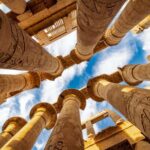
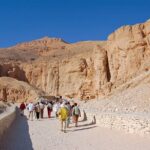
The West Bank of Luxor has a quiet intensity to it, and the Valley of the Kings makes that feeling concrete. This is where many New Kingdom pharaohs—and privileged nobles—were buried in rock-cut tombs, with painted scenes tied to mythology, beliefs, and funerary rituals. The overall site is huge in scope: it’s known for 63 tombs and chambers, each with its own interpretation of the afterlife.
You don’t just get a general sweep. The day is structured so you start with a longer base block (about two hours for the Valley) and then step into a handful of specific tombs. That works well if you want a solid sense of the place without spending your whole trip stuck in one long line of corridors.
The drawback is also simple: tomb time is limited. You’ll see a lot, but you won’t have hours to absorb every wall. If you’re the type who needs to sit with one tomb’s details for a long stretch, you may wish the visits were longer.
A few more Luxor tours and experiences worth a look
Ramses III’s KV 11: Painted rituals and the Tomb of the Harpers
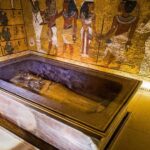
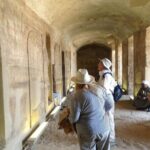
KV 11 is the kind of tomb that makes the Valley of the Kings feel like more than stone. Ramses III’s tomb is known for complex painted decoration, including sunken reliefs with ritual texts such as the Litany of Ra and the Book of Gates. You’ll also see Ramses presented to the gods—this is propaganda, belief, and art all folded into one corridor.
What I love about this stop is the mix of the expected and the surprising. KV 11 includes religious material in the main painted program, but there are also more secular-looking scenes tucked into side rooms. These show foreign tributes, with examples like highly detailed pottery imported from the Aegean, plus boats and royal armory imagery. It’s a reminder that ancient Egypt wasn’t sealed off—it absorbed and recorded connections.
Then there’s the detail that gives the tomb one of its alternative names: blind harpists. The tomb’s decorations around music and performers are what people connect to that nickname, and it’s the kind of theme a good guide can explain in a way that makes the images click instead of just pass by.
Ramesses IX and Merneptah: Color, layout, and who Howard Carter found
After KV 11, the other tombs shift the mood from epic ritual scenes to a more specific focus on design choices and artistic space.
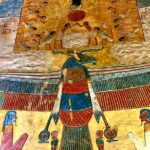
Ramesses IX’s tomb (visited for around 20 minutes) is worth it because of the visible scale and decoration density. Even though some of the paintings have deteriorated over time, the tomb is described as one of the most decorated, with ceiling artwork above the sarcophagi showing goddess Nut stretched across the space. That kind of overhead placement matters: it turns the ceiling into part of the burial story, not just decoration.
You also get context for who Ramesses IX was—appointed crown prince while older brothers had passed before him—so the tomb isn’t floating in time. It has a human lineage behind it, and the art supports that story with scale and symbolism.
Next is Merneptah’s tomb (Tomb 8), another good match for short-visit format because the description highlights what makes it structurally different. Howard Carter discovered it in 1903, and the tomb is noted for how it changes the axis design: instead of the jogged axis used since the time of Horemheb, this one is built on a single axis. The entrance is also described as considerably wider than earlier tombs.
If you care about architecture as much as paintings, these notes help you notice what you’re looking at. You’re not just looking at walls—you’re seeing how builders solved the problem of directing movement, sightlines, and ceremony inside the burial space.
Deir el-Bahari: Hatshepsut’s temple and the power of posing
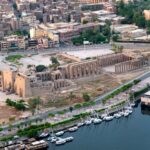
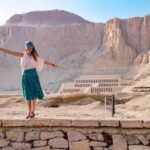
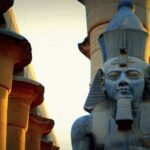
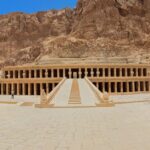
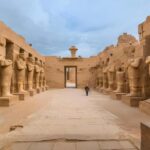
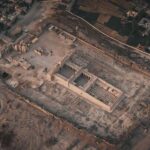
If the Valley of the Kings is about the afterlife, Hatshepsut’s temple is about authority in the real world—turning politics into stone. At the Temple of Hatshepsut (El Dir El Bahari), your guide introduces the temple’s history and the story of Queen Hatshepsut, who ruled Egypt for nearly 20 years in the 18th Dynasty. She was the daughter of Thutmosis I, and the tour frames her as the only pharaonic woman to rule ancient Egypt, including the note that she posed as a male to gain the throne.
On a practical level, this stop is built for pacing. You get about an hour of free time to explore at your leisure as you move through the large courtyards and look closely at hieroglyphic decorations. That matters because Hatshepsut’s temple is the kind of place where the best experience is part walking, part slowing down, part letting the view and carvings work on you.
There’s also a travel-balance win here. After walking in tomb corridors, it’s refreshing to stand in open courtyards with time to wander. The temple time doesn’t feel like a rushed check-off; it’s more like a chance to switch gears from “inside the story” to “around the story.”
The only caveat: since entrance fees for the day are listed as optional, you’ll want to plan for that so the hour doesn’t get shortened by budget surprises at the ticket window.
Colossi of Memnon: A short, free hit of Amenhotep III
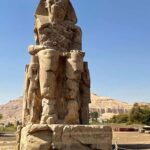
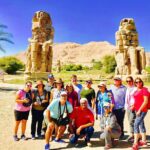
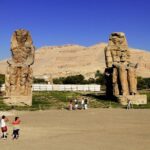
The day ends with the Colossi of Memnon, two giant statues that mark the site of Amenhotep III’s mortuary temple. What’s left is dramatic—two towering remnants standing on the West Bank while the larger temple is gone. This is a quick stop (about 20 minutes), but it’s strategically placed to give you closure: you’ve seen tombs, you’ve seen a queen’s temple, and then you finish at a “what remains” monument.
The tour information notes the Colossi stop as free, which is a nice budget bonus. Even if you only take a few photos and read the basics on site, the statues work as an anchor point for the broader West Bank theme: monumental plans for eternity, compressed into the fragments we can still visit.
If you’re hoping to spend more time here—just watching, not moving—that short window might feel tight. But as a finale, it makes sense.

Price and logistics: what the $20 actually buys
At $20 per person, this tour is easy to justify on value. You’re paying for hotel pickup and drop-off in Luxor, private air-conditioned transport, and bottled water. Those are the parts that usually cost extra when you stitch together your own day with taxis and ticket lines.
The part that can change your real total: entrance fees. Entrance fees are marked as optional at $15 per person, and the tombs and Hatshepsut temple are clearly described as not included in the standard admission. In other words, you should expect to add entrance costs to the base price.
Lunch is also optional at $15 per person. That’s useful if you want it built in, but if you prefer to eat on your own, you have that choice. Either way, knowing it’s not included helps you avoid the classic mid-day budget shock.
So the value equation looks like this: low-cost sightseeing with most of the transport handled. Your main variable is whether you choose the optional entrance-fee add-on and whether you want lunch packaged in.
How the day runs: half-day timing with a private-vehicle rhythm
The overall duration is listed as about 4 to 5 hours, which makes this a smart plan if you want West Bank hits without turning the day into a marathon. The schedule includes a long enough window for the Valley of the Kings area (about two hours), then shorter tomb stops around 20 minutes each, then about an hour at Hatshepsut’s temple, and finally a brief 20-minute finish at the Colossi.
Hotel pickup and drop-off matters more than you might think in Luxor. You don’t have to coordinate your own transport to the West Bank, and you avoid that moment of figuring out meeting points while you’re already tired. The private air-conditioned vehicle also keeps things comfortable between sites, especially when distances between stops add up.
You’ll also be dealing with a mobile ticket system, which is generally easier than print-only logistics. You’ll just need to keep your phone ready for the tour materials when the time comes.
One other note: the tour offers an option where there is no guide if that option is selected. If you can choose, I’d treat guided interpretation as the heart of the experience here, because the tomb descriptions are packed with specific details (texts, symbolism, layout changes) that become much more meaningful with someone to connect the dots.
Guides and interpretation: why Amro and Hany keep getting praised
The biggest praise thread in the feedback is about explanation quality—guides who make ancient Egypt feel clear and coherent. Names that show up include Amro, described as an expert in Egyptology who shared incredible stories about the pharaohs and the architecture used for burials, with real passion and clarity. Hany also gets a mention, including that he spoke Japanese well and shared knowledge politely and clearly.
There’s also evidence of multi-language support from a French-speaking guide named Allam, described as speaking French very well in separate Luxor planning. Even if you’re not traveling in those languages, it signals that the provider can match guides to language needs.
Why does this matter for you? Because the tour’s stops are short. When time is limited, you win when someone helps you notice what you’d otherwise miss: ritual texts like the Litany of Ra, the meaning behind a tomb nickname tied to blind harpists, the way Nut’s placement shapes the sarcophagus space, or the architectural shift toward a single axis in Merneptah’s tomb.
If you’re paying extra for entrances, you also want your guide to be worth it. Based on the strongest feedback patterns, the guide component is usually where the value lands.
Who should book this Luxor West Bank mix of tombs and temples?
This tour fits best if you want a structured overview with standout stops, not a slow-browse day. You’ll enjoy it if you’re interested in New Kingdom burial practices, you like seeing specific tomb programs rather than only exterior views, and you want a full hour of breathing room at Hatshepsut’s temple.
It’s also a good choice for first-time Luxor visitors. The Valley of the Kings introduces the big concept—rock-cut burials for pharaohs and nobles—while the Hatshepsut temple gives you a major political figure story and open-air space to absorb the setting.
If you’re the type who needs long solo time in one tomb or you want to read hieroglyphic details without any time pressure, you might find the short tomb visits a little limiting. In that case, you could consider a longer tomb-focused option instead.
Should you book this tour?
Book it if you want a time-efficient West Bank highlight day with transport handled and bottled water included, and you’re okay adding entrance fees on top of the base price. The strongest reason to book is the combination: KV 11’s specific ritual-and-secular artistic mix, then Ramesses IX and Merneptah for color and layout, then Hatshepsut’s temple with a full hour to wander.
Skip it or rethink if you dislike paying extras for entrances, because the day’s core sites are not bundled into the $20. Also reconsider if you want lots of slow time inside tombs; the schedule is built to show several spaces, not one at length.
If you do book, I’d plan your budget for entrances and decide in advance whether you’ll choose the optional guide or the no-guide option. With the guide included, the tour’s short visits tend to feel like informed stops rather than quick glances.
FAQ
Is hotel pickup and drop-off included?
Yes. The tour includes hotel pickup and drop-off in Luxor.
How long is the tour?
It runs about 4 to 5 hours (approx.).
Are bottled water and transport included?
Yes. Bottled water is included, and transport is by private air-conditioned vehicle.
Are entrance fees included?
No. Entrance fees are optional (listed as $15 per person), and the tomb and temple admissions are noted as not included.
Is lunch included?
Lunch is not included. It’s optional at $15 per person.
Is there a time at Hatshepsut Temple to explore on your own?
Yes. You get free time of about 1 hour to explore the temple courtyards and hieroglyphic decorations at your leisure.
Is the Colossi of Memnon stop free?
The Colossi of Memnon stop is listed as free, with about 20 minutes there.
Can I cancel for a full refund?
Free cancellation is allowed up to 24 hours in advance for a full refund. If you cancel less than 24 hours before the start time, the amount paid is not refunded.
Is a guide always included?
There is a note that the tour offers no guide if the no-guide option is selected.