REVIEW · LUXOR
Private Half Day East Bank Tour
Book on Viator →Operated by Travelling To Egypt · Bookable on Viator
Two temples, one unforgettable East Bank route. I love seeing Luxor Temple in its New Kingdom glory, tied to the big yearly Opet Festival, and I love how Karnak Temple stretches across over a thousand years of building. One thing to keep in mind: this is a 5-hour day, so the pace is efficient rather than slow and linger-everywhere.
The big practical win is the setup: you get private hotel pickup and return by car, an Egyptologist guide, admission tickets included, and even a bottled water for each person. You’re also issued a mobile ticket, so you’re not juggling paper as you move between sites.
The only “watch the clock” part is that each stop is about two hours. If you want a long, relaxed photo hunt, you may wish you had a full day instead of a focused half-day.
In This Review
- Key points to know before you go
- Why Luxor’s East Bank is the smart half-day choice
- Price and Logistics: what $69 really buys you
- Luxor Temple: the Opet Festival temple you can walk through
- Karnak Temple Complex: how to handle 200 acres of holy stone
- What the Egyptologist guide adds (and why it matters)
- How to get the most from five hours on the East Bank
- Who this private East Bank tour suits best
- Should you book the Private Half Day East Bank Tour?
- FAQ
- How long is the Private Half Day East Bank Tour?
- What is the price per person?
- Does the tour include hotel pickup and drop-off?
- Are the admission tickets included for Luxor Temple and Karnak?
- Is the tour private or a shared group?
- Is water included?
- What payment or ticket method will you use at the sites?
- Is tipping included?
- Is there a child car seat available?
- What is the cancellation policy?
Key points to know before you go
- Hotel pickup and return by private car keeps your day simple and time-efficient.
- Admission tickets are included for Luxor Temple and the Karnak Temple Complex.
- Each temple gets about two hours, enough for the highlights without feeling rushed in a chaotic way.
- An Egyptologist guide helps you connect the buildings to the gods and festivals they served.
- A bottled water is included, so you start hydrated and ready to walk.
- Mobile ticket cuts down on last-minute stress at entrances.
Why Luxor’s East Bank is the smart half-day choice
If your time in Luxor is limited, the East Bank is the move. You’re concentrating on the two heavy-hitters that most first-timers dream about: Luxor Temple and Karnak Temple. Both are on the east side of the Nile, and both are tied to the religious heart of ancient Thebes.
What makes this area especially satisfying is that you’re not just looking at “ancient stuff.” You’re seeing how temple life, royal power, and ceremony worked in real space. Luxor Temple connects to the Opet Festival world of processions and state religion, while Karnak shows the sheer scale of Egyptian building ambition—made across centuries, not just one reign.
For a half-day tour, the pairing also helps your brain. You start with a temple complex that feels more intimate in layout, then you move to Karnak where the Great Hypostyle Hall and monumental entrances reset your expectations of size.
You can also read our reviews of more private tours in Luxor

Price and Logistics: what $69 really buys you
At $69 per person for a private half-day, you’re paying for more than transportation. You’re paying for a guide, included entry, and a smooth plan that handles the messy parts that can otherwise eat your time.
Here’s what matters for value:
- Private car pickup and return: Instead of working out taxis or figuring out routes, you’re driven straight between sites and back.
- Egyptologist tour guide: Temple visits are better when someone explains what you’re looking at and why it mattered.
- Admission tickets included: These are not an add-on cost you discover later.
- Bottled water included: It’s small, but it’s the kind of detail that makes a day feel cared for.
- All services charges and taxes included: Less surprise math at the end.
The main tradeoff is time. This day is built to cover the highlights of two major sites in about five hours. If your travel style is “I’ll only go if I can spend ages inside,” you may want a longer option. But if you want real temple power without the full-day commitment, this price-to-coverage ratio makes sense.
One more practical note: this is private, meaning only your group participates. You also may see group discounts listed on the offer, but the tour itself is set up for just your party.
Luxor Temple: the Opet Festival temple you can walk through
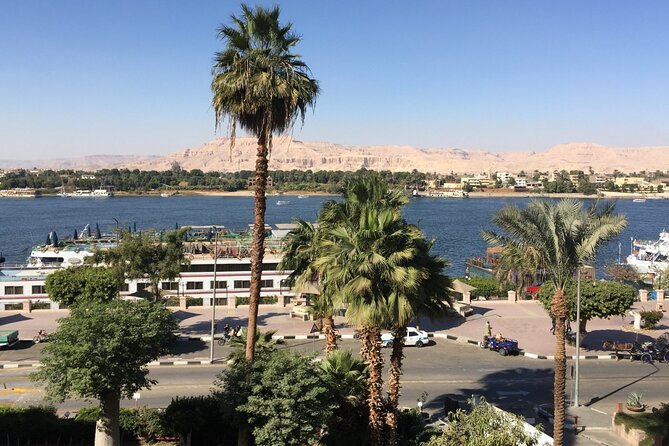
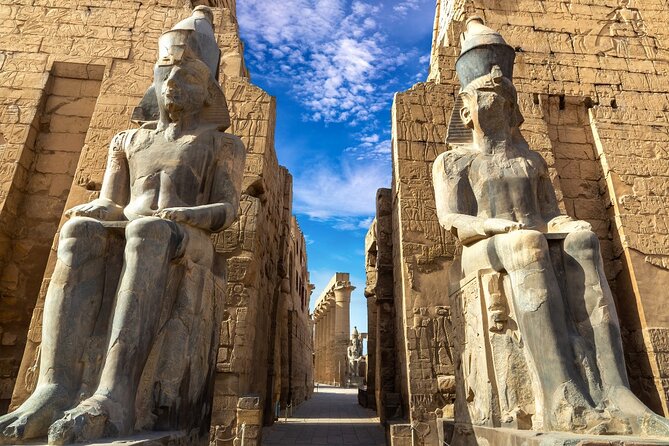
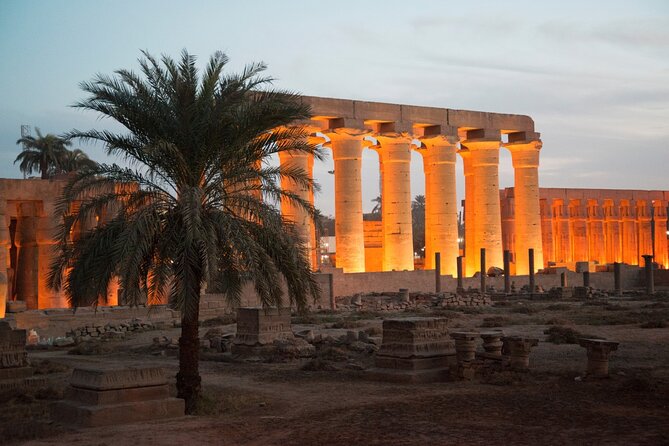
Luxor Temple is in the city of Luxor on the east bank of the Nile, and it’s tied to the Theban Triad—Amun, Mut, and Khonsu. That matters because it changes how you read the carvings and sanctuaries. You’re not staring at decoration; you’re seeing a functioning religious complex tied to specific gods and ceremonies.
Your visit centers on the classic elements you’ll want to know:
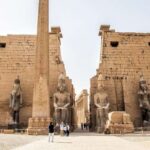
- The First Pylon at the entrance, a huge statement of authority
- A peristyle courtyard that opens up the space
- A hypostyle hall (columns everywhere), plus sanctuaries deeper in
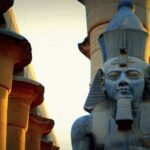
- Colossal statues and intricate reliefs that make the walls do the talking
Luxor Temple also connects to a famous idea: an avenue of sphinxes once linked Luxor Temple and the Karnak complex. Even if you’re only seeing remnants, the concept is powerful. It helps you visualize how people moved between sacred spaces during major festivals.
A practical way to enjoy this stop is to let the guide time your attention. Early on, focus on the big layout and the entrance axis. Later, shift toward the detailed reliefs and the symbols tied to the gods. That rhythm makes the temple feel bigger than its physical size.
Potential drawback here: two hours is a solid amount of time, but Luxor Temple can reward you if you like lingering in specific corners. If you get “detail-locked” on carvings, you may need to choose a few areas to go deeper.
Karnak Temple Complex: how to handle 200 acres of holy stone
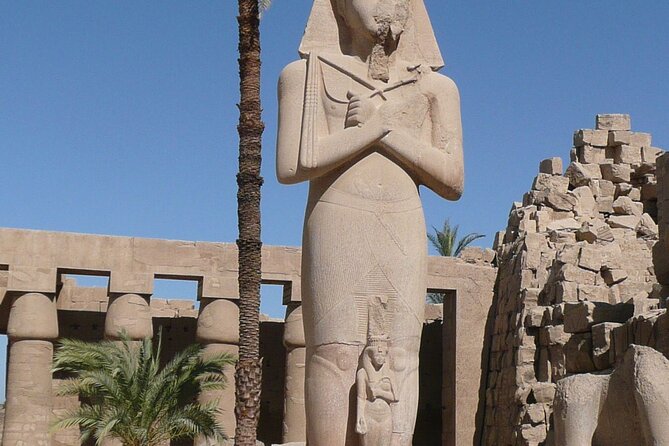
Karnak Temple Complex is one of the largest temple complexes you can visit on Earth, and the scale can be hard to absorb without help. The complex covers about 200 acres and was developed over more than 1,000 years—from the Middle Kingdom through later periods, including the Ptolemaic era.
It’s primarily dedicated to Amun, but you’ll also see places connected with Mut and Khonsu. That mix is one reason Karnak feels like a city. It’s not one building; it’s an evolving sacred landscape created by successive rulers.
Your two-hour focus on Karnak is built around the must-sees:
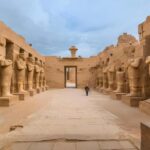
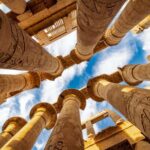
- The Great Hypostyle Hall, with its towering columns
- Various precincts, including areas surrounded by mudbrick walls
- Monumental pylons, marking entrances and transitions
- Obelisks and statues that show royal priorities
- The Festival Hall of Tuthmosis III, another key anchor point
Here’s my advice for making Karnak feel manageable: don’t try to see everything. Try to understand the “main story.” Start by getting your bearings—where the main entrances and ceremonial halls are. Then let the guide connect the spaces to what they were used for.
If you love architecture, Karnak can feel like a living timeline. Different pharaohs left their stamp, and the result is a layered sense of ambition: Egypt didn’t build temples once and move on. It kept returning, expanding, and reworking the sacred core.
The possible drawback is the opposite of Luxor Temple. Karnak can feel overwhelming even with a plan. Two hours works best if you keep one goal in mind, like “I want to experience the Hypostyle Hall and understand how the precincts connect.” Trying to do everything can turn into a blur.
What the Egyptologist guide adds (and why it matters)
This tour is built around an Egyptologist guide, and that’s the part that most impacts the quality of your time. Temple walking can be impressive on its own. But the moment someone explains what the spaces were for—how they relate to gods, festivals, and royal messaging—everything clicks.
In the tone of the best guides in Egypt, the goal isn’t just facts. It’s storytelling that helps you interpret what’s in front of you. One of the strongest themes in the feedback for this experience is that the guide approach blends professionalism with an easy, fun energy, plus clear explanations of culture.
You’ll also appreciate how that matters for your pace. When you know what to look for, you spend less time guessing and more time seeing. Instead of “pretty carvings,” you get “this relief is part of a larger idea.” It makes even familiar views feel fresh.




How to get the most from five hours on the East Bank
A half-day plan can feel rushed if you show up without a strategy. Here’s how to make this one feel smooth:
First, think in two chunks: Luxor Temple first, then Karnak second. That order works because Luxor gives you context and visual footing before Karnak throws you into scale.
Second, accept that you’ll be doing a lot of walking. The tour includes two major complexes and private transport between them, which helps, but the core activity is still moving through temple grounds and inside main halls. Wear shoes you trust.
Third, plan your photos with your priorities. At Luxor Temple, try for the entrance and major courtyard viewpoints, then choose a small number of relief details to study. At Karnak, make the Great Hypostyle Hall a “sit and look” moment rather than a quick stop.
Fourth, use the included bottled water as your hydration anchor. Don’t save it for later. Drink steadily as the day goes on.
Finally, if you have time outside the tour window, you might enjoy the Nile Corniche for views and a low-key atmosphere, or pop into the Luxor Museum if you’re chasing artifacts. Just keep expectations realistic: this specific half-day plan focuses on the two temple complexes.
Who this private East Bank tour suits best
This tour is a great match if you want:
- A focused highlights day rather than a full itinerary marathon
- Two big temples with time to understand what you’re seeing
- Private pickup and return so your day doesn’t depend on public transport timing
- Included admission and a mobile ticket, so you can move efficiently
It’s also a strong option for couples and small groups who want a quieter experience than a large group bus day.
If you’re traveling with kids, keep in mind that a child car seat isn’t available. Also, while “most travelers can participate,” this type of temple visit involves walking and being on your feet for extended periods.
Should you book the Private Half Day East Bank Tour?
Book it if you want the cleanest way to hit Luxor Temple and Karnak without turning your vacation into logistics. For the price, the big value is the combination of private transport, an Egyptologist guide, and included entrance tickets—all wrapped into a time-efficient five hours.
Skip (or consider a longer option) if your travel style is slow and obsessive about details. With only about two hours per site, you’ll be choosing what to prioritize rather than spending unlimited time in every doorway and corner.
If you’re trying to balance “I want to see the best of Luxor” with “I don’t want to burn the whole day,” this plan makes a lot of sense.
FAQ
How long is the Private Half Day East Bank Tour?
It runs for about 5 hours.
What is the price per person?
The price is $69.00 per person.
Does the tour include hotel pickup and drop-off?
Yes. You get a private car from your accommodation and return.
Are the admission tickets included for Luxor Temple and Karnak?
Yes. Admission tickets are included for both stops.
Is the tour private or a shared group?
It’s a private tour/activity, and only your group will participate.
Is water included?
Yes. A bottled water is provided for each person.
What payment or ticket method will you use at the sites?
You’ll use a mobile ticket.
Is tipping included?
No. Tipping is not included.
Is there a child car seat available?
No. A child car seat is not available.
What is the cancellation policy?
You can cancel for a full refund up to 24 hours in advance of the experience start time.