REVIEW · LUXOR
Amazing Luxor East and West Bank Guided Tour with Lunch From Luxor Airport/Hotel
Book on Viator →Operated by Egypt Gift Tours · Bookable on Viator
Luxor can feel overwhelming, but this day is built to simplify it. You get a full East and West Bank walkthrough with an English-speaking Egyptologist and door-to-door A/C transport. It also works well if you want the key sights without turning your trip into a logistics puzzle.
I especially like how the plan pairs the big names with the stories behind them, from Hatshepsut at Deir el Bahari to Karnak’s enormous scale. I also like the small-group format, capped at 15 people, and the way guides such as Mr Hatem keep the visit organized and clear.
One watch-out: entrance fees and lunches add up, and you’ll want cash for drinks and tipping. Also, while entrance fees are said to be paid by card, some card machines may not work in the field, so come prepared.
In This Review
- Key things to know before you go
- Why this Luxor East and West Bank day works so well
- Door-to-door pickup and A/C transport: the real time-saver
- Valley of the Kings: tombs, secrecy, and what you’ll actually be told
- Temple of Hatshepsut at Deir el Bahari: why this queen’s story matters
- Colossi of Memnon photo stop and lunch: how to make the break count
- Karnak Temple: the “2000 years” scale that feels real
- Luxor Temple: where Amenhotep III meets Ramesses II
- Price and logistics: what the $100 really covers
- Who this tour suits best (and who should think twice)
- Should you book this Luxor day?
- FAQ
- How long is the Luxor East and West Bank guided tour?
- What stops are included on the itinerary?
- Is lunch included?
- Are entrance fees included in the tour price?
- Do I need to pay entrance fees by card?
- Is pickup and drop-off included?
- How big is the group?
- What should I bring for tipping and drinks?
Key things to know before you go
- Small group (max 15) means you’ll move at a more human pace through the sites.
- Egyptologist-led storytelling helps the temples and tombs make sense, not just look impressive.
- Valley of the Kings guidance stays outside tombs, so expect explanations before you enter selected tombs.
- Lunch is included, but beverages are not, so plan for extra cash.
- Entrance fees are not included, and some tombs need extra tickets.
- A/C pickup and drop-off saves you time on both sides of the Nile.
Why this Luxor East and West Bank day works so well
This tour is designed as a “get your bearings fast” day in Luxor. Instead of picking just one side of the Nile, you cover both: the West Bank for pharaonic tombs and the East Bank for the main temple complexes. In about 8 hours, you get a strong sweep of what makes Luxor feel like one giant open-air archive.
The value is in the combination. You’re not just buying tickets to monuments; you’re buying someone to connect the dots with a guide who focuses on what matters for understanding each stop. And you’re not left to figure out rides between sites because round-trip pickup and drop-off are part of the package.
The second value piece is pacing. A smaller group helps you avoid the slow shuffle that can happen with large coaches. You’ll still have walking, but you’ll spend more time looking and learning, less time waiting.
You can also read our reviews of more guided tours in Luxor
Door-to-door pickup and A/C transport: the real time-saver
If you’ve ever tried to hop between Luxor sights on your own, you know the biggest hidden cost is time. Here, you’re picked up from your Luxor hotel, Nile cruise, or the airport, then returned afterward. That means you start the day without hunting for transport and you end it without negotiating your way back.
The vehicle is A/C, which matters in Luxor. Your day spans multiple areas across both banks, so comfort isn’t a luxury detail; it’s a practical one. You’ll also have bottle water during the tour, which is helpful while you’re moving between monuments.
One practical detail: credit card entry rules can be inconsistent depending on the exact site. The tour data says you’ll pay entrance fees by card, but you should still keep some cash handy for small extras like drinks and tips.
Valley of the Kings: tombs, secrecy, and what you’ll actually be told
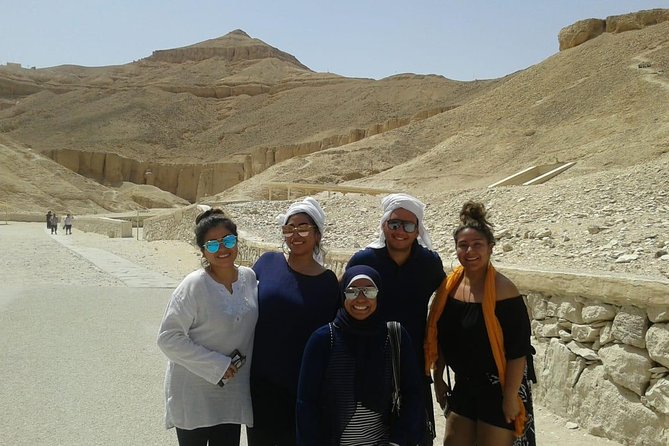
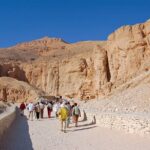
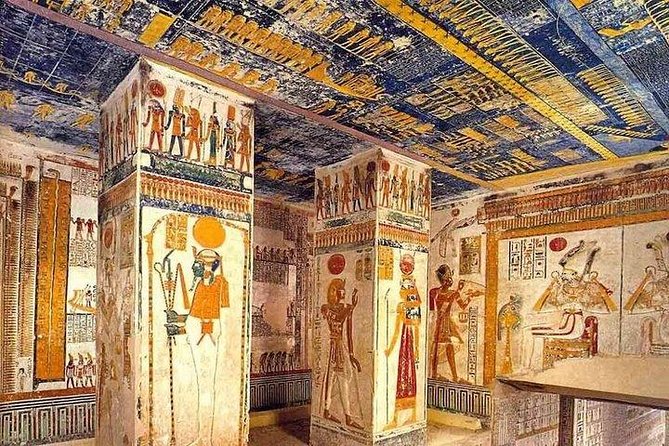
The West Bank day starts at the Valley of the Kings, where New Kingdom pharaohs carved tombs into the mountains. The concept was simple but dramatic: hide the treasures and protect the mummies. The setting alone does part of the teaching, since the tombs are tucked into the rock.
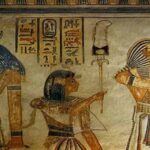
Here’s how the tour handles the most important nuance: your guide explains the tombs from the outside, since guidance inside tombs isn’t part of the plan. That means you’ll get the background you need before you enter selected tombs that are open for visitors. Then, you can focus on looking without the rhythm of constant narration inside.
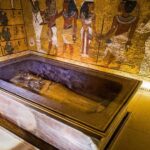
You’ll explore three selected tombs from the open ones. Plan on about 1 hour 30 minutes at this stop, and remember that the admission ticket isn’t included in the tour price. If you’re hoping to see specific tombs beyond the standard selections, note that the tombs of Tut Ankh Amun, Seti I, and Ramses VI require extra tickets.
Possible drawback? The Valley can feel tight and dim inside. If claustrophobia is an issue for you, it’s smart to ask your guide about which tombs are open and what you should expect before choosing to enter.
Temple of Hatshepsut at Deir el Bahari: why this queen’s story matters
Next comes Deir el Bahari, home to the Mortuary temple of Hatshepsut. This stop works because it turns stone into context. You’re not just seeing a temple façade; you’re learning how Hatshepsut—described as the only pharaonic woman to reign—managed rule for about 22 years.
The setting is also a reason to pay attention. Deir el Bahari has a sense of design and ceremony that makes it easier to understand why her temple became so meaningful in Egyptian memory. With a guide providing the story, the symbolism lands better than it would if you just walked through on your own.
You’ll spend about 1 hour here, and again, entrance fees aren’t included. The “efficiency” of this stop is a big plus: it’s long enough to absorb the details, but not so long that you lose momentum for the rest of the day.
A small consideration: like most temple sites in Luxor, you’ll likely be in direct sun at times. If you’re sensitive to heat, pack light sun protection and a quick way to cool off during breaks.
Colossi of Memnon photo stop and lunch: how to make the break count
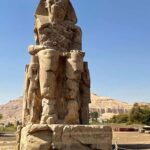
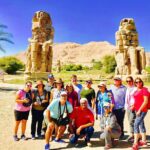
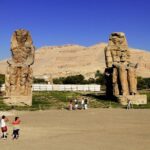
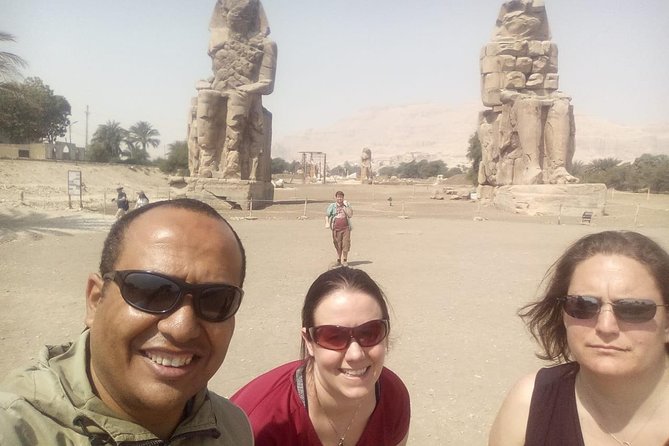
After Deir el Bahari, the tour moves toward the West Bank finale with a photo stop at the Colossi of Memnon. These statues are huge—17 meters—and they make a memorable frame for a break in the day. Even if you’ve seen photos before, seeing them in person helps scale what you’ve been imagining all morning.
This is also when lunch enters the picture. Lunch is included at a local restaurant, but beverages are not included, so budget for extras. Expect about 10 minutes for the statue stop, then time to eat.
One smart decision point: the tour description includes driving, but there’s a useful idea from experience in Luxor. If your operator offers an option for a boat ride after lunch across the Nile, it can be a nice change from more road time, especially if you want different views and a calmer break. Don’t assume it’s automatically included—just treat it as a potential upgrade if it’s offered during your day.
Keep the lunch expectations practical. This is a break to refuel so you can handle Karnak and Luxor Temple later. You’ll be grateful if you plan to slow down a bit, hydrate after the meal, and save your energy for the big temple walk.
A few more Luxor tours and experiences worth a look


Karnak Temple: the “2000 years” scale that feels real
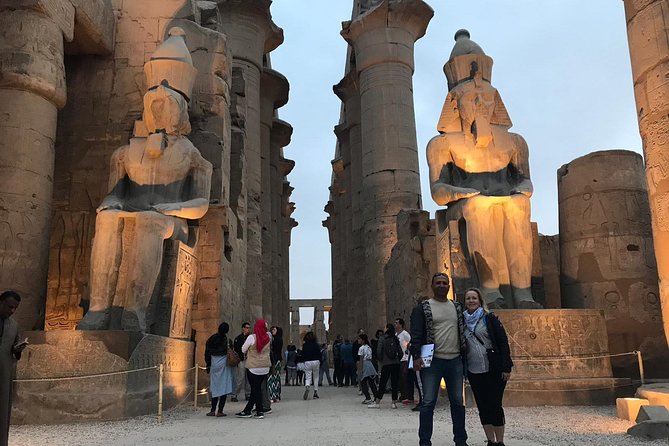
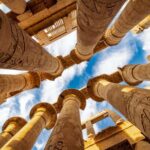
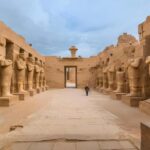
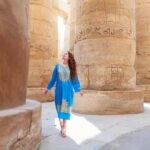
Karnak Temple is the East Bank showstopper in size. It’s described as the largest temple ever built, constructed over about 2,000 years, spanning roughly 63 acres. That’s a lot to take in, so the guide’s role matters here. Without context, Karnak can turn into an exhausting maze of pillars and pylons.
You’ll have about 1 hour 30 minutes for Karnak. That’s enough time to see the main highlights and understand how the space connects to Egyptian gods and legends, rather than rushing through everything. You’ll be looking at enormous halls and pillars that make the scale feel tangible.
The biggest drawback risk is simple: fatigue. Karnak can be physically demanding because it’s vast and sunny. If you’re going to use your energy well, lean on your guide’s framing. Ask for the top “why it was built” explanations so you don’t just collect photos.
Entrance fees are not included, and you’ll need to pay them separately. Keep in mind card payment is requested, but carrying cash is still wise for small extras and tipping.
Luxor Temple: where Amenhotep III meets Ramesses II
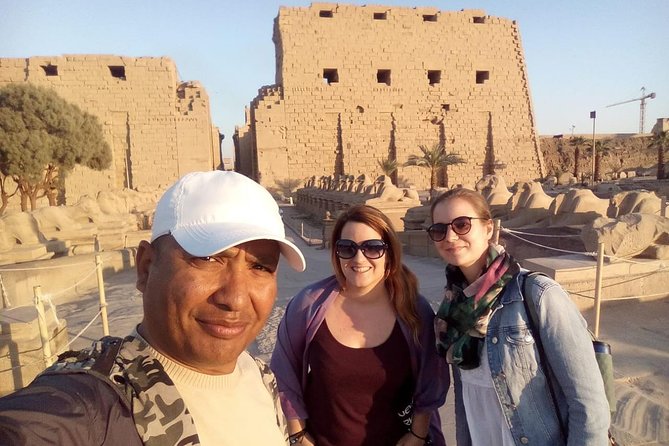
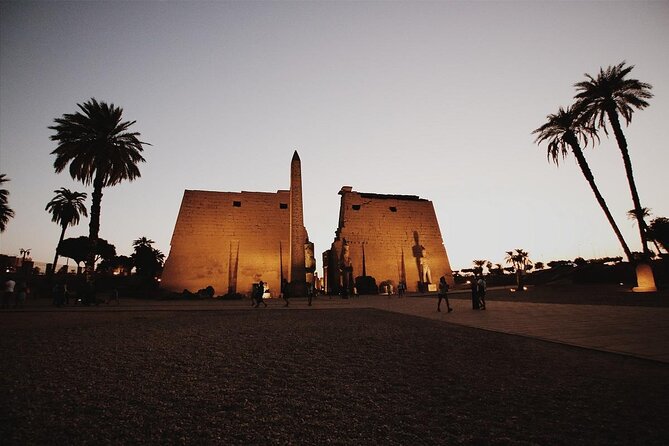
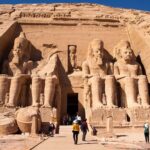
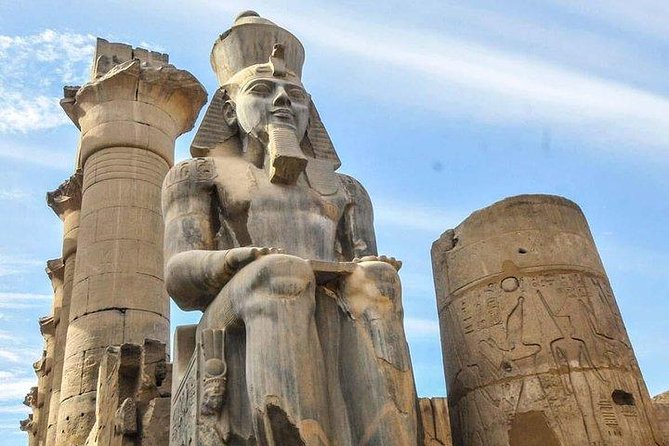
After Karnak, the day ends at Luxor Temple. This is a more focused experience than Karnak, which can feel like a whole civilization spread across stone. Luxor Temple gives you a strong sense of a smaller but dramatic sacred complex, including its obelisk and statues.
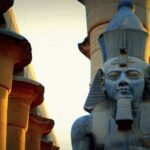
The temple is connected to multiple reigns. The obelisk and statues were first built by king Amenhotep III in the 18th Dynasty, then completed later by Ramesses II in the 19th Dynasty. If you like seeing how different rulers left their mark, this is a great final stop to tie themes together.
The site is also described as showing ancient Egyptian, Christian, and Islamic features. That’s one reason Luxor Temple can feel special at the end of the day: you’re not only looking at the pharaonic world. You’re also seeing how later cultures reused sacred spaces.
You’ll have about 1 hour here. It’s long enough to appreciate the key pieces without rushing. Then you’ll be transferred back to your hotel in Luxor.
A practical note: by the time you reach Luxor Temple, you’ve likely spent hours in the heat and walking between sites. Take your time with photos, but prioritize the guide’s explanations so the last hour feels meaningful, not just scenic.
Price and logistics: what the $100 really covers
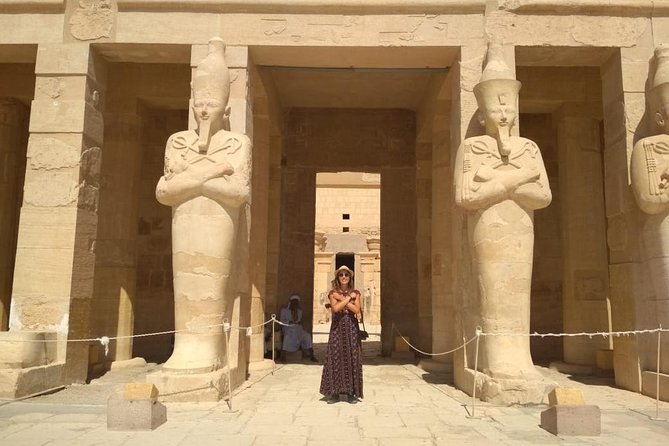
At $100 per person, the tour price is most compelling because it includes the parts that are hard to DIY smoothly. You get pickup and drop-off, an A/C vehicle, an Egyptologist English-speaking guide, water during the tour, and lunch. For many people, those inclusions are what turn a “good idea” into an easy day.
What’s not included is just as important. Entrance fees to the sights are extra. In particular, tombs like Tut Ankh Amun, Seti I, and Ramses VI require extra tickets if they’re not part of the selected tombs you’re scheduled to visit. Lunch includes the meal, but beverages aren’t included, and the tour doesn’t cover guide or driver tipping.
Also remember this: the tour data says you’ll pay entrance fees by card, and one review experience raised a real-world concern that some credit card machines may not work. So, I’d plan on a mix: keep card payment as your default, but bring enough cash for the moments card payment won’t help.
If you’re trying to travel with minimal spending surprises, this tour is still a good deal, but you should treat it as a base price plus entrance fees plus drinks/tips.
Who this tour suits best (and who should think twice)
This is a strong fit if you want a structured, guided day that hits the headline monuments on both banks. The East Bank temples and West Bank tombs are a lot to coordinate, and the small-group cap at 15 keeps it from feeling like a cattle-call.
It’s also a great choice for first-time Luxor visitors. The guide’s role helps you understand burial rituals, temple purpose, and why specific places matter historically and religiously. And the itinerary avoids the common mistake of spending too long in one site while leaving the other bank for later.
You might think twice if:
- You’re sensitive to heat and long days of walking.
- You’re hoping for specific tombs beyond what’s selected, since some require extra tickets.
- You dislike planning for extra cash, since drinks and tipping are not covered.
On the other hand, most travelers can participate, and the transport and timing are built to keep you moving without too much downtime.
Should you book this Luxor day?
Yes, if you want an efficient East and West Bank overview with real guidance. This tour is at its best when you value structure: pickup, A/C transport, a professional Egyptologist, and a lunch break that keeps the day from collapsing into exhaustion.
I’d book it if Karnak and Luxor Temple are on your list and you also want the West Bank tomb experience without guessing your way through timings. The small-group size is a meaningful quality boost, especially at busy sites.
Just go in with two practical expectations: plan for entrance fees on top of the tour price, and bring cash for drinks and tipping even if card payment is available. If you do that, you’ll get a full, readable Luxor day where the monuments connect instead of feeling like random stops.
FAQ
How long is the Luxor East and West Bank guided tour?
The tour runs for about 8 hours.
What stops are included on the itinerary?
It includes the Valley of the Kings, the Temple of Hatshepsut at Deir el Bahari, a photo stop at the Colossi of Memnon, Karnak Temple, and Luxor Temple.
Is lunch included?
Yes. Lunch at a local restaurant is included, but beverages are not included.
Are entrance fees included in the tour price?
No. Entrance fees for the sights are not included. Some tombs also require extra tickets.
Do I need to pay entrance fees by card?
The tour data indicates you will need to pay entrance fees to the sightseeing by card.
Is pickup and drop-off included?
Yes. Pickup and return drop-off are included from your Luxor hotel, Nile cruise, or the airport.
How big is the group?
The maximum group size is 15 travelers.
What should I bring for tipping and drinks?
You should carry cash for water, drinks during lunchtime, and tipping to the guide and driver.