REVIEW · LUXOR
Private Tour to Valley of the Queens, Valley of the Artisans, and Habu Temple
Book on Viator →Operated by Nile Holiday · Bookable on Viator
A royal tomb tour hits different when it’s private. This West Bank plan strings together the Valley of the Queens, the workmen’s world of Deir el-Medina, and the striking Habu Temple of Ramses III in about 5 hours. I like that you see queens and royal family members first, then switch to the artisans who built the tombs. I also love that the day includes entrance fees and transport, so you’re not burning time on ticket math. One drawback: explanations can vary by guide, and the West Bank can feel harsh in the heat, so come ready with patience and water.
Because it’s private, you control the pace. You’ll start with pickup from your Luxor hotel or Nile cruise, then head west to the Theban Necropolis zone and move site to site with an air-conditioned vehicle. If you want well-timed stories without feeling rushed, this style works well.
In This Review
- Key highlights you’ll feel right away
- Why this West Bank tour hits harder than the usual route
- Price and Logistics: what $57 per person actually buys
- Stop 1: Valley of the Queens (Ta-Set-Neferu) and the royal family story
- What you’ll see during the 1-hour visit
- A fair heads-up
- Stop 2: Deir el-Medina (Valley of the Artisans) and the workers behind the tombs
- What’s included in the 1-hour Deir el-Medina stop
- Why this stop is such good value
- Stop 3: Medinat Habu (Habu Temple) and Ramses III in memorial mode
- What the temple scenes are showing you
- How this stop feels when you’re tired (in a normal way)
- The private guide factor: when it elevates the day and when it doesn’t
- Timing, transport, and comfort for a 5-hour West Bank run
- A smart way to use your time
- What makes each stop worth your money (quick but honest)
- Tips to get the best day possible
- Should you book this private Luxor West Bank tour?
- FAQ
- How long is the private tour?
- Where does pickup happen?
- What sites are included?
- Are entrance fees included in the price?
- Is a guide included?
- Is Queen Nefertari tomb included?
- Can I get a refund if I cancel?
Key highlights you’ll feel right away
- Queens first, then the people who built the tombs in the same tour window
- Deir el-Medina’s Set Maat connection: the workers’ settlement and temple space
- Ptolemaic touch at Deir el-Medina, including the Hathor and Maat temple
- Ramses III at Medinat Habu (Habu Temple) with battle and festival-style scenes
- Fewer-fuss logistics: pickup, bottled water, air-conditioned transport, entrance fees included
Why this West Bank tour hits harder than the usual route
The West Bank of Luxor is packed with famous names, but the best feeling comes when the tour gives you context. This one does it in a clean sequence: royalty in the Valley of the Queens, then the artisans in Deir el-Medina, then a pharaoh’s memorial at Habu Temple. It’s the same era energy, just from three different angles.
I also like that the sites lean a bit less tourist-heavy than the top-two list. That matters because you get time to focus on details without feeling herded. And with a private guide, you can ask real questions as you walk instead of hoping someone covers them at the end.
You can also read our reviews of more private tours in Luxor
Price and Logistics: what $57 per person actually buys
At $57 per person for about 5 hours, the value is strong because your essentials are bundled. You get hotel or Nile cruise pickup and drop-off, private air-conditioned transfers, a qualified Egyptologist guide, and all entrance fees for the stated sites. Bottled water is included, which is not a small detail when conditions can feel harsh.
There’s also a practical scheduling advantage. This is commonly booked around 51 days in advance, which tells me it’s a popular window for people who want the West Bank day planned and off their mind early.
The main “cost wrinkle” to watch is the Queen Nefertari tomb add-on. It’s listed as closed and would be an extra cost in EGP if it becomes open. So if that tomb is your must-see, keep that in mind.
Stop 1: Valley of the Queens (Ta-Set-Neferu) and the royal family story
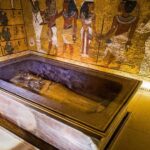
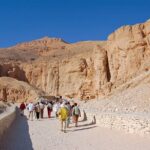
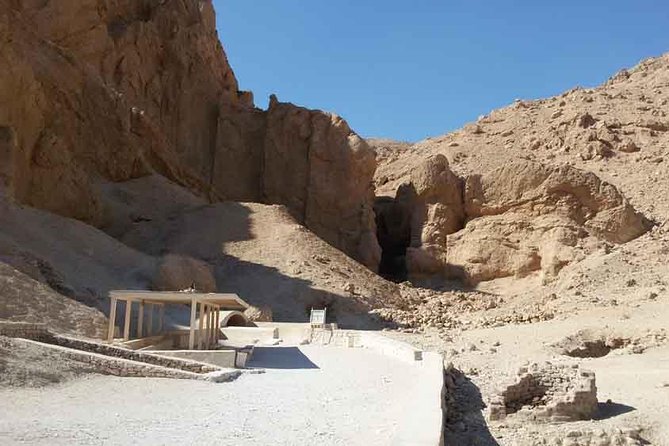
Your day starts at the Valley of the Queens. In ancient terms, it was known as Ta-Set-Neferu, meaning the place of beauty. More than 90 tombs are known here, and the typical structure is an entrance passage, a few short halls, and a sarcophagus chamber.
This is where the tour earns its keep: you don’t just see “a valley.” You’re walking through a place tied to wives and sons of pharaohs. That makes the names and relationships matter as you move from tomb to tomb.
What you’ll see during the 1-hour visit
You’ll visit three tombs on this stop, with a focus on queens and sons of kings. The tour information highlights several names, including Sitre (wife of Ramses I) as an early possibility, plus tombs connected to Amun-her-khepeshef, Seth-her-khopsef, Khaemwaset, and other Ramessid-era individuals.
Why this matters for you: it’s easier to connect emotionally when the guide gives you family links and the why behind each name. It also helps you avoid the most common valley-tour problem—wandering and forgetting who you’re actually looking at.
A fair heads-up
This is a tomb visit, and tomb environments can feel tough in the heat. One review complaint centered on harsh conditions, so plan for it like it’s part of the deal. Wear breathable layers, take your time, and rely on the included bottled water.


Stop 2: Deir el-Medina (Valley of the Artisans) and the workers behind the tombs
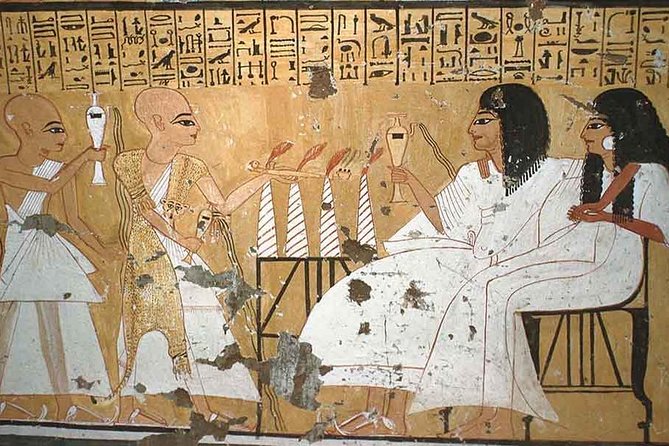
After the queens, you head to Deir el-Medina, also called the Valley of the Artisans. The settlement’s name is tied to Set Maat, meaning the place of truth. That alone gives you a different mental frame: you’re not just seeing monuments built for eternity. You’re seeing the community connected to how those monuments came to life.
This site is tied to the New Kingdom, and the tour info places it across the 18th, 19th, and 20th dynasties (1550–1080 BC). During that era, this community housed the artisans and workmen who helped construct the royal tombs in the Valley of the Kings. So you’re seeing the “workshop” side of the story.
What’s included in the 1-hour Deir el-Medina stop
You’ll explore the ruins of the village settlement and then add two key elements:
- A Ptolemaic temple dedicated to Hathor and Maat
- Two decorated tombs attributed to Sennedjem and Inherkau
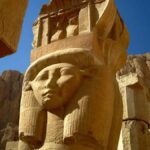
The Ptolemaic temple is described as a small building inside a mud brick enclosure wall, which helps you picture how layered the site is. It didn’t stop being meaningful; later periods left their own marks.
Why this stop is such good value
If you only do the headline tomb valleys, you get the official side of ancient Egypt. Deir el-Medina adds the human side: people who did skilled labor, lived in a community, and helped create the tombs other people came to revere. It’s the difference between seeing the stage and seeing the crew.
This is also the stop where the “private guide” advantage becomes real. When your guide can explain how a settlement like this functioned, the ruins start making sense fast.
Stop 3: Medinat Habu (Habu Temple) and Ramses III in memorial mode
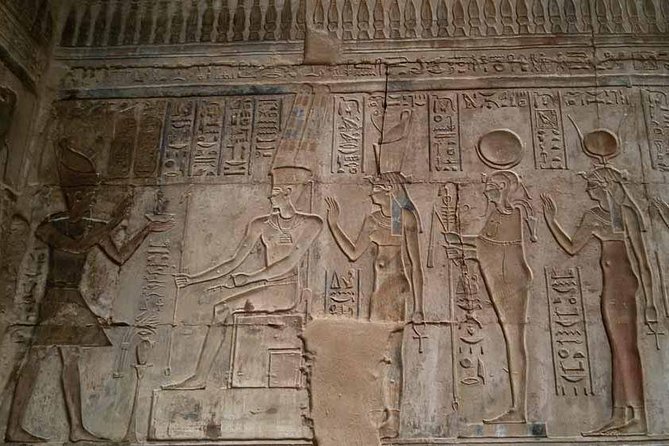
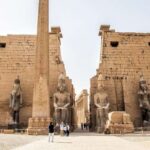
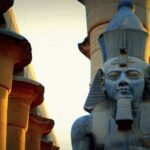
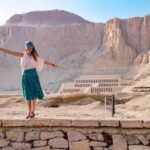
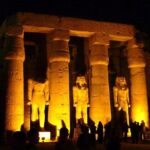
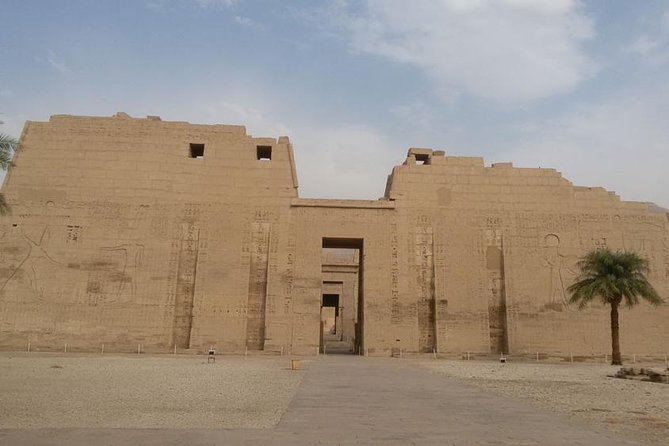
Your final stop is the Temple of Medinat Habu, better known as Habu Temple, dedicated to King Ramses III. The tour info calls it the last great warrior pharaoh of the New Kingdom period (1550–1080 BC). Whether you come for the battles or the art, the temple format is built to communicate power.
This temple is described as the best-preserved of the New Kingdom memorial temples. That makes it a smart capstone after the valleys, because you’re moving from burial spaces and village ruins into a full temple complex.
What the temple scenes are showing you
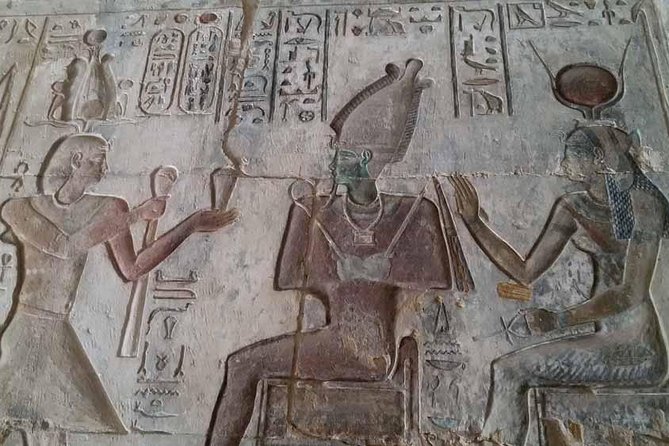
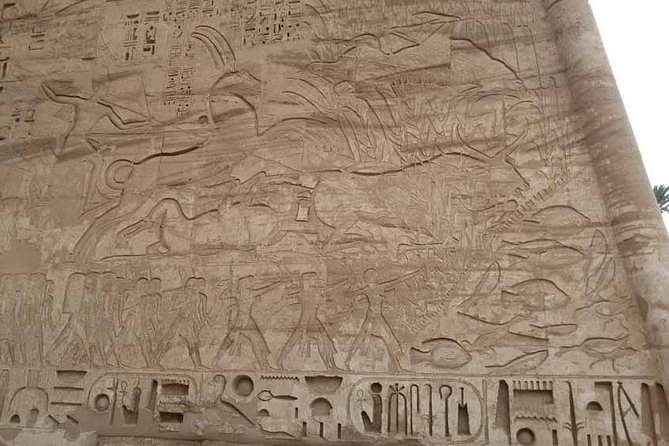
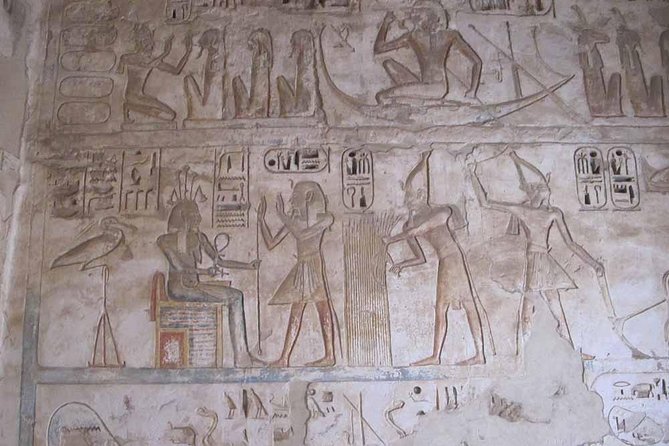
The decorations focus on military scenes and texts tied to the victories of the king. You’ll also see rituals and festivals—so it’s not only war. The temple is painting a full public image: victory, tradition, and ceremony.
The tour information also notes an attached royal palace on the south side and an open forecourt. On the sides of the temple, you’ll find priests’ dwellings and administrative units. That means you can get a sense of how the complex functioned beyond the main walls.
How this stop feels when you’re tired (in a normal way)
After two valleys, temple walking can feel like a lot. The good news: this is a set visit with a clear arc, and then you’re transferred back to Luxor. One-hour at Habu is usually enough to see the big story without turning the day into a marathon.
The private guide factor: when it elevates the day and when it doesn’t
The biggest swing factor on a private tour is the guide. In this kind of West Bank day, a great guide can keep names, dynasties, and themes from blending together. In the feedback you’ll see patterns: some guides like Azab, Moses, Hesham, Ali, and Ash were singled out for strong storytelling and helpful answers.
That said, guidance depth can vary. One experience flagged that there wasn’t much explanation during tomb time, even though free time was appreciated. So think about your own style. If you want lots of spoken context inside the tombs, ask your guide to keep the narrative coming while you walk. If you’re the type who wants to look closely and ask only a few questions, the “private + pace” format should still work.
Timing, transport, and comfort for a 5-hour West Bank run
The tour is about 5 hours, which is a practical length for Luxor. It’s long enough to do three distinct sites, but short enough that you’re not paying for a whole day of heat.
Transport is handled by a private air-conditioned vehicle with pickup and drop-off at your Luxor hotel or Nile cruise. That matters because the West Bank drive and the transition between sites can take time. Here, you’re not juggling taxis or arranging transfers at the end.
You also get bottled water during the tour. It’s a small line item on paper, but it’s exactly what you’ll want when conditions can feel harsh.
A smart way to use your time
This itinerary is structured: queens first, artisans next, Habu last. Don’t fight the flow. Let the day build meaning as you go. When you reach Deir el-Medina, it clicks because you’ve already seen the end result in the queens’ tombs.
Then, at Habu, you can connect the memorial style to what the builders and workers made possible.
What makes each stop worth your money (quick but honest)
You’re paying for more than access. You’re paying for “story order.”
- Valley of the Queens gives you royal identity and tomb context, with three tomb visits and key names tied to Ramses-era family members.
- Deir el-Medina turns the light toward the artisans and workmen, with Set Maat framing and named tombs of Sennedjem and Inherkau.
- Habu Temple ends with preserved New Kingdom memorial temple art, including battle scenes plus rituals and festivals tied to Ramses III.
Add in entrance fees and transport, and the per-person cost becomes easier to justify. If you were to pay those pieces individually, you’d likely spend a lot more time and money.
Tips to get the best day possible
A private tour can still go sideways if you don’t plan a little. Here are practical moves that match what this route is like.
First, bring a simple list of what you want answered. Questions like who these figures were, how Deir el-Medina connects to the royal tombs, and what the battle scenes are trying to communicate help your guide tailor the talk.
Second, expect that conditions can be harsh. Build in pauses, take water, and don’t rush tomb-to-tomb. One of the best parts of private time is that you can slow down when you need to.
Third, if you already visited Habu Temple, you might want to ask about swaps in the wider West Bank plan. Some people have had flexibility on similar private days, including adding other West Bank sites, so it’s worth asking once you confirm your guide.
Should you book this private Luxor West Bank tour?
I’d book it if you want a focused West Bank day that goes beyond the obvious. The combo of queens, artisans/workmen, and Ramses III at Habu gives you a full picture without turning it into a giant itinerary.
Skip it (or ask more questions before you pay) if you only want minimal guidance or you’re worried about explanation quality. Since guide communication can vary, it’s smart to clarify how much narrative time you want, especially during tomb visits.
If you want a day that’s efficient, includes the basics, and brings you to the kinds of sites that often get missed, this one is a strong pick.
FAQ
How long is the private tour?
The tour is approximately 5 hours.
Where does pickup happen?
Pickup and drop-off are offered at Luxor hotels and Nile cruise locations.
What sites are included?
You visit the Valley of the Queens, the Valley of the Artisans (Deir el-Medina), and the Temple of Medinat Habu (Habu Temple of Ramses III).
Are entrance fees included in the price?
Yes. Entrance fees for the mentioned sites are included.
Is a guide included?
Yes. The tour includes a qualified Egyptologist tour guide.
Is Queen Nefertari tomb included?
No. The Queen Nefertari tomb has an extra cost if it becomes open, and it must be paid directly in EGP.
Can I get a refund if I cancel?
Yes. You can cancel up to 24 hours in advance for a full refund.